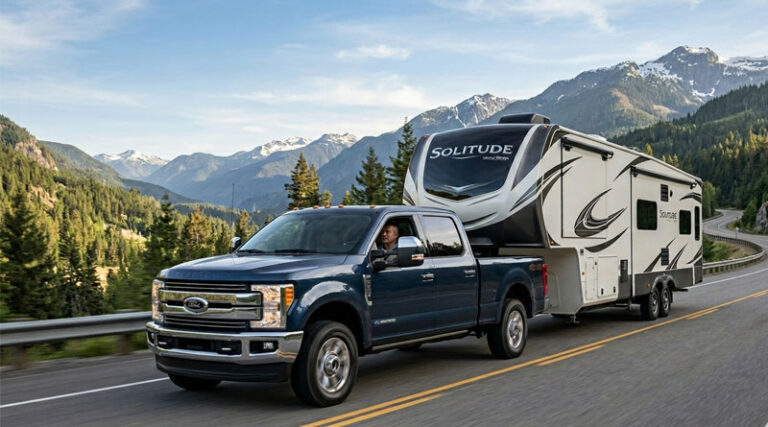
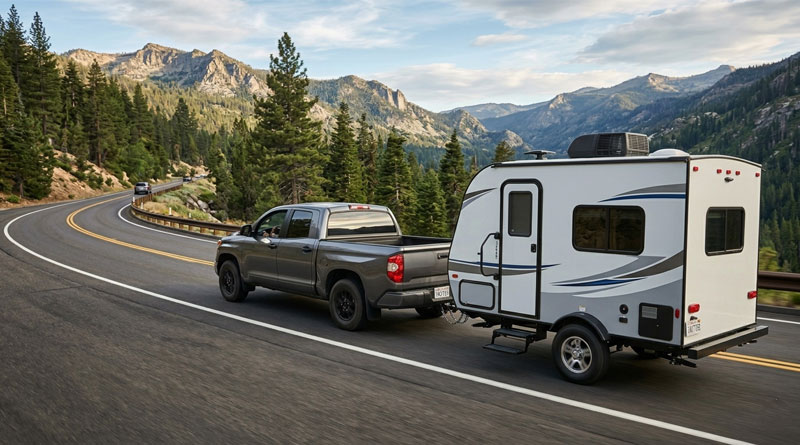
If you tow a trailer, your vehicle needs help to stop safely, and that’s where a proportional brake controller comes in. Unlike older, jerky systems, this smart device senses how hard you’re braking and applies the trailer’s brakes with the same force. This means smoother stops and less wear on your gear. In this article, we’ll break down the best proportional brake controllers on the market—simple to use, reliable, and built to keep you safe.
1. Timilge Trailer Brake Controller

- Axle Capacity: Supports 1 to 4 axles (2 to 8 brakes)
- Display Type: Real-time LED digital voltage delivery screen
- Wiring Interface: 4-wire configuration (Power, Stop Light, Ground, Brakes)
- Leveling Requirement: Automatic sensing requires no manual leveling
The Timilge Trailer Brake Controller is a highly responsive proportional system designed to mirror the braking intensity of your tow vehicle. By automatically sensing deceleration, it ensures that whether you are performing a gradual stop or an emergency maneuver, the trailer responds in kind. This intelligence significantly reduces the “push” felt from heavy loads, creating a much smoother and more controlled driving experience for both short hauls and long-distance towing.
Safety is a priority with this model, featuring an easy-to-read LED display that allows drivers to observe vehicle conditions and voltage delivery in real time. The ability to adjust both the quantity of braking power and the sync rate makes it versatile for various street conditions and trailer types. With quick-connection wiring ports, the installation process is streamlined, making it a reliable choice for drivers who prioritize both safety and ease of use.
Pros: Responsive proportional braking, easy-to-read LED display, no leveling required.
Cons: Basic visual interface compared to high-end models.
See the Timilge Trailer Brake Controller
2. Lrichy Brake Controller

- Compatibility: Replaces Brake-EVN 8508220; fits Ford, GM, RAM, and Toyota
- Braking Force: Manual override lever for instant braking application
- Diagnostics: LED display with real-time alarms and diagnostic info
- Axle Support: Designed for 1-4 axle systems (up to 8 brakes)
The Lrichy Brake Controller stands out for its internal sensors that intelligently adjust for elevation changes, such as hills, to deliver consistent stopping power. It is marketed as a smoother alternative to older time-delay models, providing a modern proportional feel that reacts to the vehicle’s speed and braking intensity. The inclusion of a manual lever allows for quick overrides, which is a vital safety feature when navigating tricky terrain or sudden stops.
Installation is relatively straightforward thanks to the included brackets and screws, though users should note that vehicle-specific harnesses are sold separately. The manufacturer emphasizes customer satisfaction with a generous two-year warranty, reflecting confidence in the unit’s durability. The clear digital display keeps the driver informed of settings and potential alarms, ensuring that you are never left guessing about the status of your trailer’s connection during transit.
Pros: Intelligent hill adjustment, smooth proportional braking, manual override lever.
Cons: Plug-and-play harness not included in the box.
See the Lrichy Brake Controller
3. REDARC Tow-Pro

- Sensor Technology: Intelligent 6-axis motion sensor with active calibration
- Dual Modes: Proportional “Everyday Mode” and user-controlled “Off-Road Mode”
- Connectivity: Bluetooth-enabled for mobile app and CarPlay integration
- Stability Control: SwayStop Plus technology to correct trailer instability
The REDARC Tow-Pro is a premium, high-tech solution for those who demand the best in trailer control. Its standout feature is the 6-axis sensor, which allows for smooth braking and advanced sway control. Unlike traditional boxy controllers, this unit offers a sleek remote or app-based interface, even integrating with Apple CarPlay and Android Auto. This allows drivers to adjust gain and monitor performance directly through their vehicle’s existing infotainment system for maximum convenience.
Designed to withstand the harsh conditions of the Australian Outback, this controller is built for durability and professional-grade performance. It offers two distinct braking modes, making it just as capable on the highway as it is on rugged off-road trails. With a 15-minute installation time for most 7-pin connections, it combines high-end technology with user-friendly setup. It is the ideal choice for heavy-duty RVs and campers where safety and stability are paramount.
Pros: Advanced 6-axis sensor, CarPlay/Android Auto compatibility, excellent sway control.
Cons: Higher price point than standard digital controllers.
4. briidea Proportional Brake Control

- Safety Features: Built-in overcurrent, short circuit, and fault detection
- Boost Function: Adjustable braking force based on weight distribution
- Mounting: Flexible mounting at any angle or position
- Interface: LED display for output voltage and boost levels
The briidea Professional Proportional Brake Controller is engineered for precision, utilizing high-precision motion sensors to sync trailer braking with the vehicle’s deceleration. A unique highlight is the boost function, which allows users to fine-tune the braking force based on the specific weight distribution of the load. This prevents the trailer from either “tugging” or “pushing” the vehicle, resulting in a more balanced and safer driving experience that reduces wear on both braking systems.
The unit prioritizes long-term safety with its advanced electronic protection measures, including fault detection that alerts the driver to electrical issues immediately. While it can be mounted anywhere, the manufacturer recommends an under-dash placement to keep the view clear while remaining accessible for manual adjustments. It is particularly well-suited for heavy-duty commercial or boat trailers where frequent use and varying weights require constant, reliable adjustment and high durability.
Pros: Customizable boost levels, comprehensive fault protection, very flexible mounting.
Cons: Boost settings may require manual fine-tuning for different loads.
See the briidea Proportional Brake Control
5. Gihdfer Trailer Brake Controller

- Installation: Plug-and-play setup with 360-degree mounting flexibility
- Vehicle Fitment: Compatible with Ram, Silverado, and other major truck brands
- System Support: Handles 2, 4, 6, or 8 brake systems
- Dynamic Adjustment: Automatically detects deceleration to reduce sway
The Gihdfer Trailer Brake Controller is a versatile and compact unit designed for broad compatibility with popular truck models like the Ram and Silverado. Its proportional braking system is designed to dynamically adjust pressure, which is essential for reducing trailer sway during sudden stops. By ensuring the trailer brakes efficiently alongside the tractor, it minimizes the mechanical stress on the towing vehicle, potentially extending the life of your brake pads and rotors.
The space-saving design is a major selling point, as it can be installed at any angle without cluttering the cab. The clear LED screen ensures that the driver can monitor the system at a glance, allowing for quick adjustments if road conditions change. Included with a mounting bracket and all necessary screws, this package offers a complete out-of-the-box solution for drivers who want a reliable, easy-to-operate controller that doesn’t require a complex setup or a massive footprint.
Pros: Very compact design, universal truck compatibility, easy plug-and-play use.
Cons: Minimalist display may provide less detail than split-screen models.
See the Gihdfer Trailer Brake Controller
6. CURT TriFlex

- Sensor Type: Triple-axis motion-sensing accelerometer
- Terrain Handling: Third axis provides power adjustments for hills
- Form Factor: Slim, low-profile design for improved knee clearance
- Capacity: Operates up to 8 brakes simultaneously
The CURT TriFlex is known for its sleek, modern aesthetic and its highly responsive triple-axis accelerometer. This technology allows the unit to be incredibly precise, providing smooth stops by measuring motion in three dimensions. This third axis is particularly useful when driving on inclines or declines, as the controller can dynamically increase or decrease power based on the angle of the road. This ensures consistent braking performance regardless of the terrain.
Beyond its internal tech, the TriFlex features a unique bracket system that maximizes dashboard clearance, making it a great choice for smaller cabs or drivers who prefer a low-profile look. The interface is intuitive, allowing for quick gain adjustments on the fly. As part of the CURT lineup, it benefits from a reputation for reliability and high-quality construction. It is a solid, mid-range proportional controller that balances advanced motion sensing with a very functional, unobtrusive design.
Pros: Excellent hill performance, slim low-profile shape, responsive triple-axis sensor.
Cons: Interface is less modern compared to Bluetooth-integrated units.
7. Kohree Trailer Brake Controller Kit
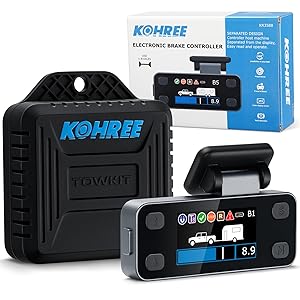
- Unit Design: Split-system with separate LCD display and controller
- Processing Power: Four 32-bit chips for linear braking validation
- Sensitivity: 9 levels of boost for tailored weight response
- Leveling: Automatic leveling for simplified initial setup
The Kohree Trailer Brake Controller Kit introduces an innovative split-design that separates the main controller from the display. This allows the user to mount the LCD screen on the windshield or dashboard for perfect visibility while hiding the actual controller unit in a rear panel or under the seat. This setup is powered by four 32-bit processor chips, which work together to ensure that the braking signal is processed and validated with extreme precision for a linear, comfortable feel.
With 9 levels of boost sensitivity, this kit offers more granular control than almost any other unit on the market. This allows drivers to perfectly match the braking response to the specific weight of the trailer, whether it is an empty cargo hauler or a fully loaded travel trailer. The inclusion of a Type-C data cable and automatic leveling further modernizes the experience, making it a high-tech choice for users who want a customized, clean-looking installation without sacrificing safety.
Pros: Highly visible split-display, 9 boost levels, high-speed quad-chip processing.
Cons: More components to mount compared to all-in-one units.
See the Kohree Trailer Brake Controller Kit
Understanding Proportional Brake Controllers: A Comprehensive Guide to Towing Safety
Towing a trailer—whether it is a massive fifth-wheel RV, a horse trailer, or a utility hauler—fundamentally changes the physics of your vehicle. One of the most critical components in managing this change is the brake controller. Among the different types available, the proportional brake controller stands out as the gold standard for safety, efficiency, and comfort. Understanding how these devices work, how to install them, and how to calibrate them is essential for any serious tower.
What is a Proportional Brake Controller?
A proportional brake controller is an electronic device installed in a tow vehicle that manages the electric brakes of a trailer. Unlike “time-delay” controllers, which apply a fixed amount of pressure after a specific amount of time, a proportional controller uses sensing technology to mirror the braking action of the tow vehicle.
If you tap your brakes lightly, the trailer applies light pressure. If you slam on your brakes in an emergency, the trailer immediately applies heavy pressure. This synchronization ensures that the trailer is neither “pushing” the truck nor being dragged like an anchor, leading to a much more stable towing experience.
The Technology Behind Proportional Braking
The heart of a proportional controller is a component called an accelerometer. This is a small internal sensor that measures inertia and changes in velocity. When you press the brake pedal in your truck, the accelerometer detects the rate at which the vehicle is slowing down.
Most modern units, such as the REDARC Tow-Pro or the CURT TriFlex, use triple-axis or even six-axis accelerometers. These advanced sensors can distinguish between a flat road, a steep incline, or a sharp descent. This allows the controller to adjust the voltage sent to the trailer brakes dynamically, compensating for gravity so that the braking force remains consistent regardless of the terrain.
Key Features to Look For
When selecting a proportional brake controller, several features can significantly impact your towing experience:
1. Axle Capacity
Not all controllers are built for every load. Most standard units support 1 to 4 axles (2 to 8 brakes). It is vital to ensure the controller’s power output matches the number of magnets on your trailer’s braking system.
2. Boost Settings
The “Boost” feature allows you to increase the initial lead of the trailer brakes. This is particularly useful when the trailer is significantly heavier than the tow vehicle. Higher boost levels ensure the trailer begins braking slightly ahead of the truck, keeping the hitch connection “tight” and preventing jackknifing.
3. Manual Override
Every quality controller features a manual slide or button. In the event of trailer sway, the driver can manually activate the trailer brakes without touching the vehicle’s brake pedal. This tension pulls the trailer back into a straight line behind the vehicle.
Installation and Wiring
Installing a proportional brake controller has become significantly easier with the advent of “Plug-and-Play” harnesses. Most modern trucks come equipped with a factory tow package that includes a port under the dashboard.
For vehicles without a factory port, a standard four-wire installation is required:
- Black: 12V Positive Power from the battery.
- White: Ground.
- Red: Connection to the cold side of the brake light switch.
- Blue: Output to the trailer brakes (running to the 7-way plug).
How to Properly Calibrate Your Controller
Having a high-end controller is useless if it is not calibrated correctly for your specific load. Calibration (also known as setting the “Gain”) should be performed every time you change trailers or significantly change the weight of your load.
Setting the Power Gain
To set the gain, find a flat, paved surface where you can safely drive at about 20 to 25 mph. While driving at this speed, use the manual override lever on the controller to apply the trailer brakes fully. Ideally, the trailer should slow the entire rig down firmly without locking the tires.
If the trailer tires skid, the gain is too high. If the braking feels sluggish or the truck feels like it is doing all the work, the gain is too low. Adjust the dial or buttons until you reach the point just below where the trailer wheels lock up.
Adjusting the Boost
Once the gain is set, you can adjust the boost based on the weight of the trailer relative to the truck.
- No Boost: For small trailers or empty loads.
- Boost 1: For trailers roughly equal to the vehicle weight.
- Boost 2 or 3: For heavy trailers or large campers that outweigh the tow vehicle.
The Importance of Leveling and Mounting
Because proportional controllers rely on inertia sensors, the mounting angle used to be a major concern. Older models had to be mounted perfectly level and parallel to the direction of travel to work correctly.
However, modern “auto-leveling” units can be mounted at almost any angle and in any orientation. Despite this flexibility, it is always recommended to mount the unit within easy reach of the driver. In an emergency sway situation, you do not want to be fumbling under the dash to find the manual override.
Maintenance and Troubleshooting
Like any electrical system, brake controllers require occasional maintenance. The most common point of failure is not the controller itself, but the 7-way plug at the back of the vehicle. Corrosion in the plug can lead to intermittent “Trailer Disconnected” warnings on your controller’s display.
Regularly cleaning the contacts with electrical cleaner and applying dielectric grease can prevent these issues. Additionally, ensure that the trailer’s ground wire is securely attached to the frame, as a weak ground is the leading cause of “weak” or “surging” trailer brakes.
Summary: Why Proportional is the Right Choice
While time-delay controllers are often cheaper, they lack the nuance required for safe modern towing. A proportional controller reduces the wear and tear on your truck’s brakes by ensuring the trailer carries its own weight during stops. More importantly, it provides a level of predictability and safety that can be the difference between a controlled stop and a dangerous collision.
By investing in a high-quality proportional brake controller and taking the time to calibrate it correctly, you ensure that every journey—whether across town or across the country—is as safe as possible.