When you’re backpacking, every ounce in your pack matters. But you still need clean, safe water to drink. The best ultralight water filters remove germs while adding almost no weight to your setup. In this guide, we’ll compare the lightest, most reliable filters on the market—from squeeze systems to quick-dip options. No fluff, just simple picks to help you stay hydrated and moving fast on the trail.
1. Sawyer Mini
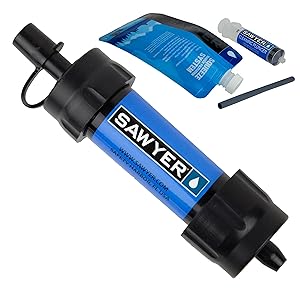
- Weight: 2 oz
- Filter pore size: 0.1 microns
- Filter Material: Hollow Fiber
- Effective against: Bacteria, protozoa,
- Longevity: Up to 100,000 gallons
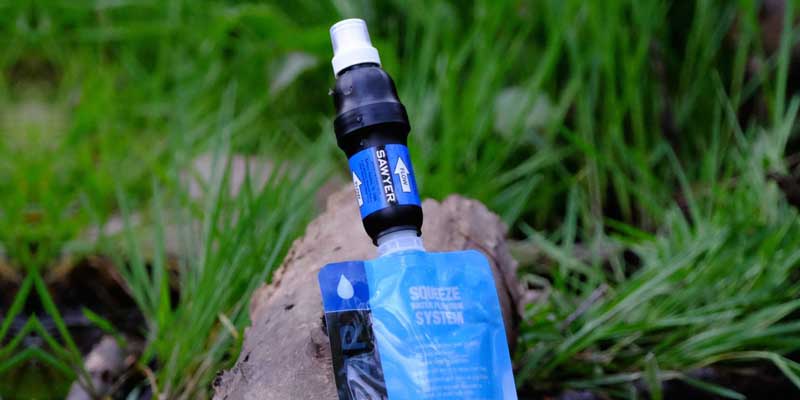
Sawyer Mini is a trail-tested, lightest, and versatile filtration system available for backcountry adventures. This filter weighs just 2 ounces and can fit easily in your palm. This filter provides absolute filtration meaning that it will remove 99.99% of all bacteria, such as salmonella, cholera, and E.coli, and 99.99% of all protozoa such as giardia and cryptosporidium.
There is an easy-to-use drinking pouch included. You can also drink directly from the water source with the help of an included straw. The filter can also be connected to hydration pack tubing, or you can screw it onto standard disposable water and soda bottles.
The filter has a high number of tiny ‘U’ shaped hollow fiber micro-tubes. These micro-tubes trap contaminants effectively while allowing decontaminated water to freely pass through at a high flow rate. Sawyer Mini offers a 0.1-micron pore size. This makes it impossible for harmful bacteria and other contaminants to pass through the filter.
The filter membrane life is up to 100,000 gallons and it can be cleaned and reused almost indefinitely with no expensive cartridges to replace. The backwashing is easy and it restores up to 98.5% of the filter’s flow rate.
Sawyer Mini is great for outdoor adventures like hiking and camping. It has no moving parts, or batteries and does not require pumping. There’s nothing to fail. It’s a solid piece. As long as you keep it from freezing and damaging the internal filter pores.
What I like: Very compact, very light, high flow rate, the taste is good (depending on the water source)
What I don’t: Drinking from a water source with a 4-inch straw can be challenging.
2. LifeStraw Personal Water Filter
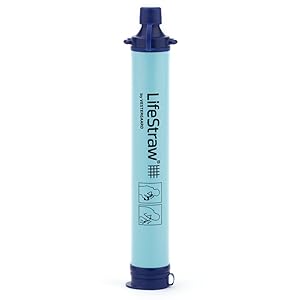
- Weight: 1.62 oz
- Long-lasting: Filters 264 gallons (1,000 liters)
- Ultimate survival tool, no shelf life, easy to clean and store
- Durable and ultralight
- Removes bacteria, parasites, and microplastics
LifeStraw uses advanced hollow fiber membrane technology which contains no chemicals such as iodine and uses no batteries or moving parts. It filters to 0.2 microns removing 99.99% of bacteria and protozoa. LifeStraw filters a minimum of a thousand liters which is 264 gallons. This is equivalent to a year of clean drinking water. LifeStraw works especially well in silty and muddy water as the membrane filters out particulate matter. The flow rate is quite high, it’s like drinking through a thick straw. LifeStraw removes bacteria and protozoa but will not remove chemicals, heavy metals, and viruses. However, these contaminants are extremely rare in the backcountry of North America.
To use LifeStraw you can simply insert it into your water, wait a few moments for the water to soak up the membrane and then suck the water through. When you’re done simply backwash the membrane by blowing the water out.
What I like: Very lightweight, doesn’t leave a terrible aftertaste, affordable
What I don’t: The neckstring is poorly secured to the straw by tiny plastic clips. We recommend not wearing it around your neck. As if you travel this way, it can fall off.
See the LifeStraw Personal Water Filter
3. Sawyer Squeeze
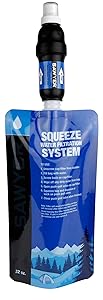
- Weight: 3.2 oz
- Effective Against: Protozoa and Bacteria
- Cartridge/Cycle Life: 3,780,000 liters
- Filter Type: Squeeze
- Filter Rate: 1.7 liters/minute
Squeeze Water Filter by Sawyer is one of the lightest and most packable water filters available on the market. It weighs just 3.2 ounces! And this filter ensures you have access to clean water in the backcountry or anywhere in the world. The filter is extremely easy to use just fill up the pouch, screw the filter directly onto the pouch, and then squeeze the bag to filter water into a bottle.
The filer has a pore size of 0.1 microns for absolute filtration. It can remove bacteria such as salmonella, leptospirosis, cholera, and E.coli, up to 99.99%. It is also effective against protozoa like giardia and cryptosporidium. The filter has a high number of ‘U’ shaped hollow fiber micro-tubes. These micro-tubes trap contaminants and allow the decontaminated water to freely pass through at a high flow rate, thus eliminating the need to store water and reducing the possibility of water contamination after the filtration process.
The Squeeze Filter can be used in many ways. You can either drink directly from the filter or you can fill up your bottle. The Squeeze filter fills up most bottles in less than 20 seconds. Whether you’re hiking, camping, hunting or fishing, this filter is perfect for all your adventures.
What I like: Ultralight, easy to use and compact, lifetime guarantee
What I don’t: The filer does not remove viruses, however, viruses are rarely found in the water in North America.
4. SteriPen Adventurer Opti
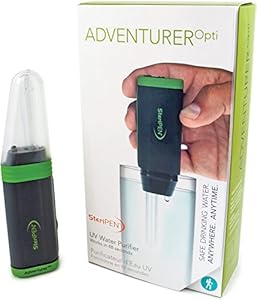
- Filter Type: Ultraviolet
- Removes/Destroys: Protozoa, Bacteria and Viruses, Cysts
- Batteries: 2 CR123
- Weight: 3.8 ounces (with batteries)
This is a lightweight water purifier that uses high-energy ultraviolet light to blast viruses, bacteria, and cysts from your water. These little units are perfect for backcountry hiking, camping trips even international travel.
To purify water, it’s fairly simple. It takes about 48 seconds to purify 16 ounces of water and 90 seconds for a full liter. The UV light breaks down the DNA of viruses, bacteria, and cysts to render them harmless. It works with CR123 batteries which are included in the package. It’s got some advanced electronics that are designed to activate only in there’s enough juice in those batteries to produce the power required to purify your water. If there isn’t enough battery power to run a full cycle, it won’t function and you’ll have to replace the batteries. This is intentional so you don’t end up with partially decontaminated water.
The UV light is undetectable by the human eye but there’s a visible LED light that indicates when the unit is working and shuts off as soon as the full dose of UV has been delivered. Keep in mind that this thing is designed to work with clear unfrozen water. Discoloration and debris can limit the penetration of that UV so you should use pre-filter water if you’re going to use this in any water that’s cloudy or murky.
What I like: Doubles as a flashlight, compact and lightweight, effective against viruses, quick treatment time
What I don’t: Need to monitor batteries closely, does not filter particulate, limited to use with certain containers, does not treat water on threads of the bottle
See the SteriPen Adventurer Opti
5. Katadyn BeFree Microfilter
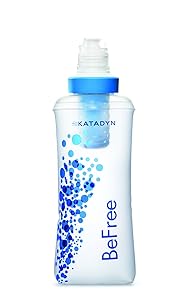
- Weight: 2 oz
- Compact and ultralight hollow fiber filter
- Effective against microorganisms
- Removes bacteria, cysts, and sediment
- Suitable for cloudy water
- Lightweight and portable for on-the-go adventures
Katadyn BeFree Microfilter is a durable and easy-to-use filter that will keep you safely hydrated regardless of your adventure. A flexible and durable HydraPak build 1L bottle carries just enough water to quench your thirst. 0.1-micron hollow fiber filter removes sediment and microorganisms like giardia and cryptosporidium. It can maintain quick and easy hydration for up to 1000 liters depending on the water quality. The filter has an easy clean membrane. Simply fill the bottle and shake or swish it around in a stream or river to clean the sediment out of the hollow fiber filter.
The filter packs down super small and can be stowed away in a pocket or a pack. The cap back on the cap is an easy clean membrane. It is a 0.1-micron hollow fiber filter. It offers almost instant filtration for the water.
What I like: Ultralight, high flow rate, easy to clean, works great on the trail
What I don’t: The only con is the inside smells/tastes of plastic. We’d recommend using lemon juice and soap to help eliminate the smell/taste.
See the Katadyn BeFree Microfilter
6. MSR TrailShot MicroFilter
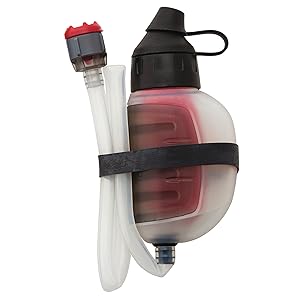
- Weight: 5 oz
- Instant Hydration: Drink directly from the source
- Quick-Deploy: Zero set-up and simple one-handed operation
- Simple to Clean: A few shakes will help restore flow rates in the field; no tools are required
- Tested: Meets U.S. EPA drinking water standards and NSF Protocol P231
MSR TrailShot MicroFilter is a great option for ounce-counting backpackers. It weighs just about 5 ounces and has a flow rate of 1 liter per minute. This filter even lets you drink directly from creeks or other water sources with confidence that the water has been safely treated.
This filter utilizes a hollow fiber construction. The filter meets both EPA and NSF Standards for the removal of bacteria and protozoa. Note that it is not effective against viruses that are too small to be filtered out. TrailShot also removes send and other particulars which enhances the experience of drinking in the backcountry. The filter not only provides a high flow rate but it is also easily clean without any need for tools or chemicals. Depending on water quality the filter can treat up to 2000 water before needing to be replaced.
To filter water, you dip the integrated hose into the water source and use the simple one-handed pump to draw water through the hollow fiber filter through the nozzle. You can transfer water into a bottle or a reservoir or you can drink directly from the TrailShot. You can easily film a one-liter bottle in just 1 minute.
What I like: Drink directly from water sources, ultralight, able to quickly pump liters of water
What I don’t: Need hand pumping
See the MSR TrailShot MicroFilter
7. GRAYL GeoPress
Filtration Rate: 8 seconds, 5 liters per minute.
Filtration Capacity: 350 cycles, 65 gallons/250 L.
Filtration Standards: NSF/ANSI protocols 42 and 53, U.S. EPA standards.
Material: CP4 Grade 1 titanium.
Dimensions: 24 fl. oz. (710 ml) capacity.

The Grayl Geopress Titanium emerges as a versatile and reliable solution for adventurers seeking clean drinking water on their journeys. With its OnePress® global filtration and purification system, this 24 fl. oz. purifier bottle efficiently removes viruses, bacteria, protozoan cysts, chemicals, and microplastics from water sources across all seven continents. Users praise its effectiveness, compact design, and durability, making it an essential companion for outdoor exploration. Despite minor quirks like initial difficulty in pressing and occasional leakage, the Grayl Geopress Titanium stands out for its comprehensive filtration capabilities and convenience.
User feedback underscores the Grayl Geopress Titanium’s ease of use and its ability to deliver clean and great-tasting water even from questionable sources. While some highlight its weight as a drawback for ultralight packing, the bottle’s multifunctionality, including the option to use it for cooking, adds value for adventurers. Overall, the Grayl Geopress Titanium earns accolades for its performance, reliability, and comprehensive filtration capabilities, positioning it as a top choice for individuals prioritizing safety and convenience in their outdoor pursuits.
What I like: Effectively removes a wide range of contaminants
What I don’t: Relatively heavy
8. Platypus GravityWorks 4.0L
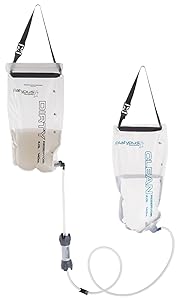
- Weight: 11.5 oz
- Flow rate: 1.75 liters per minute
- Group-ready: 8 liters (4.0L filtered + 4.0L unfiltered)
- Field-cleanable: Easily backflush in 4 seconds
GravityWorks filtration system is created for backpackers and campers who need to filter and transport large volumes of water. The system comes with two 4L reservoirs so you can bring up to eight liters of water back to camp. Although it has a huge capacity, the 4L system still weighs less than most of the conventional water filters on the market today. These features make it a great option for day trips as well as base camping.
This filter is effective against particles, bacteria, and protozoa but not against viruses. If you’re in an area where that is a problem, then you should be looking for an additional filtration system.
The filter is really easy to use. It filters out a lot of water in a very short period. The reservoirs are durable and finishing on the inside is treated with an antimicrobial slime guard. So you have got some protection here.
Depending on the quality of water, it can filter up to 1500 liters of water before it needs to be changed. You are also able to backflush this filter to clean it and to remove any air bubbles.
The last thing is to make sure you store the contaminated dirty water components separately from the clean water to avoid any cross-contamination.
What I like: Works very fast. It takes about a minute and a half to filter out 4 liters of water.
What I don’t: The clean water reservoir doesn’t have an accessible interior. Dirt that gets in there is tough to get out, and then drying the inside of the bag takes a long time.
See the Platypus GravityWorks 4.0L
9. MSR AutoFlow Gravity Filter
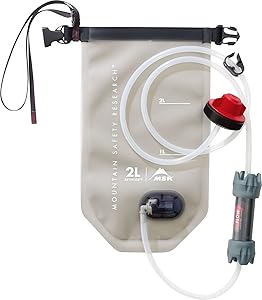
- Weight: 10.5 ounces
- Field-Maintainable
- Remove 99.99% of bacteria, protozoa
- Filters more than 1.75 liters per minute
The supreme ease of the AutoFlow Gravity Filter has converted many backcountry travelers to the ultimate convenience of pump-free water filtration. The newly redesigned out of flow filter offers that same reliable filtration and ease of use in a more compact streamline system. The new AutoFlow system features a reservoir made of a lightweight yet durable film that rolls up tightly and an update closure design that reduces bulk.
The best thing about MSR AutoFlow is that it is not associated with any pumping. You will be using the power of gravity to filter out water. Hence, this water filter comes along with a unique and a one of a kind mechanism, which can deliver impressive results to you. This unique mechanism has also the ability to filter up to 175 liters of water per minute. With the traditional filtering methods, it would never be possible to end up with such highly effective results. A food-grade lining has been used for the construction of this water filter. Therefore, you will be provided with better tasting water by the MSR AutoFlow Gravity Filter.
What I like: Very easy to use, lightweight, great treatment capacity
What I don’t: The bottle adapter is unhygienic, the material is not very durable
See the MSR AutoFlow Gravity Filter
10. Katadyn Hiker Water Microfilter
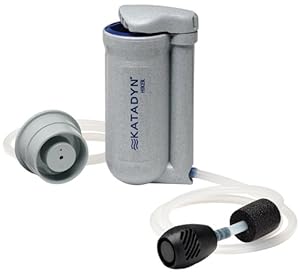
- Weight: 11 oz
- Filter Material: Glass-fiber media
- Field-Cleanable: Yes
- Purifying Element: Activated carbon
- Output: 1 L/min
- Removes: Particles, sediments, giardia, cryptosporidia, protozoa
This is a lightweight backpacking water filtration option. It is a microfilter so it will remove bacteria and protozoa from your water. It is not a purifier and will not remove viruses. The capacity for the hiker is going to be about 200 gallons. This system does use a synthetic cartridge and that is the piece that you will be replacing when this filter cartridge is completely clogged and finished. Katadyn does include some other items to work with the filter to make it more convenient.
Any person who is looking forward to getting their hands on the compact and best water filter will be able to take a look at Katadyn Hiker Water Microfilter. When you are using Katadyn Hiker Water Microfilter, you will not come across the need to carry a gallon of water along with you. It can provide effective results to you by eliminating chemicals and particles from drinking water. Another great feature about Katadyn Hiker Water Microfilter is that it is compatible with the hydration bladders. Therefore, you will not have to go through a lot of hassle when you are using this water filter to fill up your hydration bladder. It comes along with a comprehensive one-year warranty as well.
Pros: Affordable and lightweight, good for hard to reach water sources
Cons: Pump is heavy and difficult to use compared to other filters
See the Katadyn Hiker Water Microfilter
11. MSR MiniWorks EX Microfilter
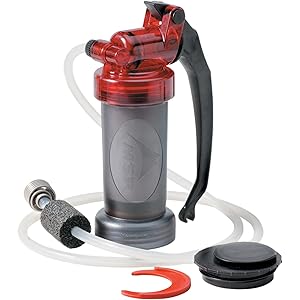
- Weight: 14.6 ounces
- Effective against: Chemicals/toxins and protozoa
- Pore size: 2 µm
- Filed cleanable: Yes
MSR MiniWorks EX Microfilter can be considered as a product that is exclusively designed for the people who spend their time camping, backpacking and hiking. On the other hand, it can also be used during emergencies for survival. The pump is well-known for its efficiency. In other words, the pump in MSR MiniWorks EX Microfilter Water Filter can filter out one liter of water per minute. Therefore, it can help people with group travel as well.
On the other hand, this water filter is compatible with most of the water bottles that come along with a wide mouth. Hence, you will find it an easy task to fill in the water bottles with the help of MSR MiniWorks EX Microfilter. But it doesn’t mean that you will not be able to use this filter with the hydration bladders.
You can also fill them up without going through any hassle. The ability of MSR MiniWorks EX Microfilter to filter out organic compounds, protozoa, and bacteria from water is effective. It delivers clean and odor-free water to you at the end of the day. It overall weighs about 14.6 ounces so it is a little more on the hefty side in the filtration world. But with that easy filtration and purification aspect of the filter, it’s definitely worth the size and weight. We would recommend this to anyone who needs a lot of water quickly and doesn’t have time to fill a bag and wait for gravity to treat your water.
What I like: Awesome construction and extremely well made.
What I don’t: The pumping takes efforts.
See the MSR MiniWorks EX Microfilter
How to Choose an Ultralight Backpacking Water Filter
For ultralight backpackers, every ounce counts. When you are carrying your entire life on your back for days or weeks at a time, minimizing the weight of your gear is essential for comfort, endurance, and injury prevention. However, reducing weight should never mean compromising on safety, especially when it comes to hydration. Clean water is non-negotiable in the backcountry. Choosing the right ultralight water filter requires a delicate balance between weight, speed, ease of use, and protection level. This guide breaks down everything you need to know to select the perfect water treatment system for your next ultralight adventure.
Understanding the Threats: What Are You Filtering?
Before looking at specific filters, it is crucial to understand what you are trying to remove from the water. Backcountry water contaminants generally fall into three categories: protozoa, bacteria, and viruses.
Protozoa and Bacteria
These are the most common threats in North American wilderness areas and many destinations worldwide. Protozoa include organisms like Giardia lamblia and Cryptosporidium, which cause severe gastrointestinal distress. Bacteria include E. coli, Salmonella, and Campylobacter. Most standard backpacking microfilters utilize hollow fiber membrane technology with a pore size of 0.1 microns, which physically blocks 99.999% of these organisms. If you are hiking primarily in the United States, Canada, or Europe, a filter that tackles bacteria and protozoa is typically all you need.
Viruses
Viruses (such as Norovirus, Hepatitis A, and Rotavirus) are much smaller than bacteria and can pass right through a standard 0.1-micron microfilter. Viruses are generally a concern in highly developed or heavily trafficked areas with poor sanitation, or in certain international travel destinations. To eliminate viruses, you need a water purifier rather than a standard filter, or you must supplement your filtration with chemical treatment or ultraviolet (UV) light.
Types of Ultralight Water Filters
Ultralight backpackers generally favor filtration systems that rely on gravity, physical squeezing, or chemical reactions rather than heavy, mechanical hand pumps. Here are the primary categories utilized by lightweight hikers.
Squeeze Filters
Squeeze filters have exploded in popularity and are currently the undisputed champions of the ultralight backpacking community. These systems consist of a small, lightweight hollow-fiber filter unit that screws directly onto a flexible plastic reservoir or a standard smartwater bottle. To use it, you fill the reservoir with dirty water, attach the filter, and squeeze the bottle to force water through the mouthpiece into your clean container or directly into your mouth. They are incredibly lightweight (often weighing between 2 to 3 ounces), highly affordable, and offer a fast flow rate.
Gravity Filters
Gravity filters utilize the natural force of gravity to pull water through a filtration element. You fill a large “dirty” bag with water, hang it from a tree branch, connect a hose to the filter, and let the water drain down into a “clean” reservoir. While the setup might weigh slightly more due to the extra hoses and bags, the weight can be distributed among a group. The primary benefit of gravity systems is that they require zero physical effort. You can set up the system, go pitch your tent or cook dinner, and return to liters of clean water.
Chemical Treatments
Chemical purification options, such as chlorine dioxide tablets or liquid drops, represent the absolute lightest option available to backpackers. A full treatment kit can weigh less than an ounce and take up virtually no space in your pack. Chemicals kill bacteria, protozoa, and viruses. The downsides are logistical: chemical treatments require a dwell time (often 30 minutes to 4 hours depending on water temperature and the presence of Cryptosporidium) before the water is safe to drink. They can also leave a slight chemical aftertaste, though chlorine dioxide is much more palatable than older iodine treatments.
UV Purifiers
Ultraviolet light purifiers use a small, handheld electronic wand to destroy the DNA of microbes, rendering them harmless. They are incredibly fast (usually taking about 90 seconds per liter) and treat viruses as well as bacteria and protozoa. However, they require batteries, can fail electronically, and are ineffective in turbid or muddy water because the UV rays cannot penetrate suspended sediment.
Key Factors to Evaluate When Choosing
When comparing different models, weigh these specific performance metrics against your personal hiking style and the environments you plan to explore.
Weight and Packed Size
In the ultralight world, this is your starting point. Aim for a filtration mechanism that weighs under 3 ounces for solo setups. Remember to account for the “wet weight” of the system, as a filter holding residual water will weigh slightly more on the trail than it did dry at home. Look for compact designs that can easily slide into a backpack’s exterior mesh pocket for quick access during short breaks.
Flow Rate and Field Maintainability
A filter with a slow flow rate becomes a chore, especially at the end of a long, grueling high-mileage day. Look for filters that boast a flow rate of at least 1 to 2 liters per minute. Crucially, consider how easily that flow rate can be restored on the trail. Squeeze filters inevitably clog over time with silt and organic matter. Ensure your chosen filter can be “backflushed” in the field—either with an included syringe or a simple flip-cap adapter—to clean out debris and restore peak performance.
Durability and Lifespan
Ultralight gear sometimes sacrifices durability for weight savings. Lightweight squeeze bags are notoriously prone to bursting under high pressure. If you choose a squeeze system, consider replacing the stock bags with more durable, aftermarket TPU reservoirs, or rely on standard, rigid PET plastic water bottles. Additionally, look at the manufacturer’s rated lifespan. Many modern hollow-fiber filters are rated to clean tens of thousands of gallons, meaning a single unit can last you through multiple thru-hikes if properly maintained.
The Freezing Vulnerability
If you hike in the shoulder seasons or at high elevations, you must be aware of the fatal flaw of hollow-fiber membrane filters: freezing temperatures. If a filter contains residual water and is exposed to sub-freezing temperatures, the water inside the microscopic tubes will expand, cracking the internal structure. This ruins the filter completely, and the terrifying part is that the damage is invisible to the naked eye. If you expect freezing overnight temperatures, you must sleep with your filter inside your sleeping bag to keep it warm. If you don’t want to worry about this risk, chemical treatments are a safer bet for cold-weather expeditions.
Matching Your Filter to Your Environment
The best filter for a desert hike is rarely the best filter for a forested alpine environment.
Clear, Abundant Water Sources
If your trail follows clear alpine streams, lakes, and springs, a standard squeeze filter is unbeatable. The water has little sediment to clog the fibers, and you can quickly filter on the go without waiting for chemical reactions or carrying heavy settling reservoirs.
Turbid, Muddy, or Stagnant Water
If you are hiking in arid regions where water sources consist of muddy cattle tanks or stagnant potholes, hollow-fiber filters will clog almost instantly. In these environments, chemical treatments or a gravity system that allows sediment to settle to the bottom of the bag before filtering are highly preferred. Alternatively, you can use a coffee filter or a bandana to pre-filter the chunkier debris before running it through your primary microfilter.
Conclusion
There is no single “perfect” filter for every scenario, but for the vast majority of ultralight backpackers, a compact hollow-fiber squeeze filter offers the best combination of low weight, rapid flow, and reliable protection against common backcountry pathogens. By assessing your expected water conditions, understanding how to maintain your equipment on the trail, and protecting your gear from freezing, you can confidently stay hydrated while keeping your base weight as low as possible.