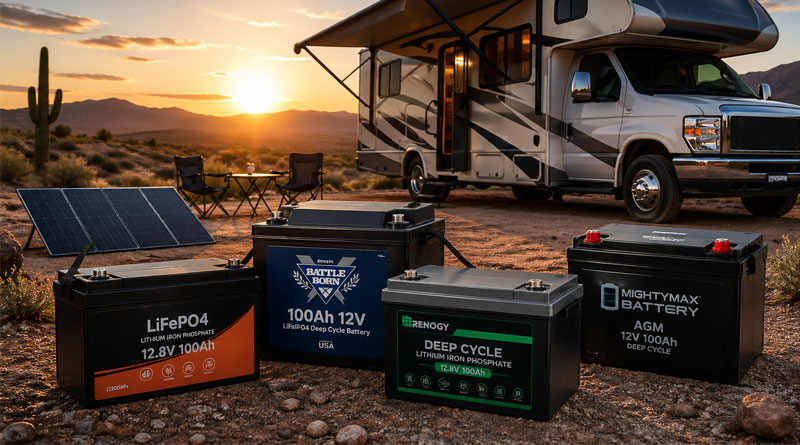
If you love camping away from crowded RV parks with no hookups—called boondocking—you need a battery that can handle days without recharging. Regular RV batteries often fall short, leaving you without power for lights, fans, or your fridge. That’s why picking the right battery is key. In this guide, we’ll break down the best RV batteries for boondocking in simple terms, so you can stay powered up anywhere.
1. Interstate Batteries 12V 35Ah SLA AGM Battery

- Capacity: 35Ah at 12V
- Technology: Sealed Lead Acid AGM / VRLA
- Dimensions: 7.76 x 5.16 x 6.26 inches
- Terminal Type: Flag Terminal
The Interstate Batteries 12V 35Ah model is a dependable entry-level choice for small-scale boondocking needs. Utilizing Absorbed Glass Mat (AGM) technology, this battery is completely spill-proof and maintenance-free, eliminating the need to check water levels. It is an excellent fit for small solar setups or as a replacement for portable power stations used during off-grid camping trips.
Since 1952, Interstate has built a reputation for trustworthy power. This unit is designed to handle rechargeable cycles efficiently while providing a safe, valve-regulated experience that prevents overpressure. While smaller than standard house batteries, it excels in specialized applications like emergency lighting or small solar energy storage, offering a positive, hassle-free experience for campers who value brand reliability.
- Pros:
- Completely maintenance-free and spill-proof
- Compact size fits tight compartments
- Trusted brand with a 12-month warranty
- Cons:
- Lower capacity not suitable for large RVs
- Flag terminals may require adapters
2. ExpertPower EXP33-12V 33Ah SLA AGM Battery

- Service Life: 12 years in float service
- Construction: Rugged AGM Technology
- Terminals: M6 Bolt-down
- Operating Range: Wide temperature tolerance
The ExpertPower EXP33 is a ruggedly constructed 12V battery designed for consistent performance in off-grid environments. Its AGM technology ensures that the electrolyte is absorbed, providing a vibration-resistant and spill-proof power source. This battery is particularly well-suited for trailers and small RV setups where reliable standby power is needed for essential electronics or small solar storage systems.
One of the standout features is its impressive 12-year designed float life, which signifies long-term reliability as a backup solution. It is a user-friendly, maintenance-free option that requires no upkeep after the initial installation. Whether you are powering a mobility scooter or a small marine backup, this battery offers broad compatibility and a durable general-purpose solution for boondockers.
- Pros:
- Long 12-year designed float service life
- Highly resistant to vibration and leaks
- Simple, maintenance-free installation process
- Cons:
- Small 33Ah capacity limits appliance usage
- Heavy for its size compared to lithium
3. UPLUS BCI Group 31M Dual Purpose Marine Battery

- Ratings: 105Ah and 825CCA
- Design: Dual-purpose Starting/Deep Cycle
- Build: Thick full-frame cast plates
- Support: 24-month local warranty
The UPLUS BCI Group 31M is a versatile powerhouse that combines the high cranking power needed to start engines with the deep-cycle capacity required for boondocking. With 105Ah of energy, it can power RV lights and navigation devices for extended periods. Its dual-purpose nature saves significant space and weight by eliminating the need for separate starter and house batteries.
Durability is a core strength of this battery, featuring extreme vibration resistance to withstand the rough roads often encountered during boondocking. The thick, full-frame cast plates ensure a longer lifespan and superior strength under heavy use. Backed by a 24-month warranty and local California support, it is an outrageously dependable choice for those who need high performance and reliability.
- Pros:
- Powerful 825CCA starts engines up to 350HP
- Extreme resistance to road and wave vibration
- Space-saving dual-purpose design for RVs
- Cons:
- Large Group 31 size requires more space
- Very heavy at over 60 pounds
4. Weize Deep Cycle AGM 12 Volt 100Ah Battery

- Specs: 100Ah at 12V
- Discharge: 1150A Max current
- Shelf Life: 1-3% monthly self-discharge
- Temp Range: 5°F to 122°F discharging
The Weize 100Ah AGM battery is a heavy-duty deep-cycle solution perfect for serious boondocking setups. Its large capacity and high maximum discharge current of 1150A make it capable of handling demanding appliances like trolling motors or RV house systems. Because it uses AGM technology, it remains maintenance-free and leak-proof, allowing you to enjoy your travels without frequent acid checks.
A key advantage of this Weize model is its low self-discharge rate, which ensures the battery remains ready for use even after months of storage. It operates effectively across a wide temperature range, making it suitable for both winter camping and summer adventures. Durable and mature in its technology, this 12V battery provides dependable off-grid service backed by quality customer support.
- Pros:
- High 100Ah capacity for long-term power
- Excellent low self-discharge for easy storage
- Broad operating temperature range
- Cons:
- Standard 1-year warranty is relatively short
- Requires significant space for installation
5. Renogy Deep Cycle AGM 12 Volt 100Ah Battery

- Connectivity: Supports unlimited series/parallel
- Safety: Sealed design with high stability
- Peak Power: 1100A max (5 seconds)
- Temp Range: -4°F to 140°F operation
Renogy is a world-renowned name in solar, and their 100Ah AGM battery lives up to that reputation. This battery is designed for extreme performance, featuring an upgraded electrolyte formula that maintains discharge efficiency even in freezing conditions. It is ideal for boondockers who want a safe, stable battery that can power heavy appliances like fridges, microwaves, and laptops consistently.
The sealed design is a major benefit, sparing users from the intricate internal troubleshooting required by some lithium or flooded alternatives. It supports flexible configurations, allowing you to expand your battery bank through series or parallel connections to meet your specific needs. With over 230,000 units sold, this is a battle-tested and highly trusted power source for off-grid living.
- Pros:
- Superior performance in extreme cold/heat
- Easily expandable for larger battery banks
- Highly safe chemistry with minimal maintenance
- Cons:
- Premium price compared to basic AGM models
- Heavy build requires sturdy mounting
6. DJLBERMPW 12V 100Ah LiFePO4 Battery

- Life Cycles: 4,000 to 15,000 deep cycles
- Weight: 23 lbs (1/3 of Lead-Acid)
- Protection: 100A BMS with low-temp cut-off
- Rating: 1280Wh of usable energy
The DJLBERMPW 12V 100Ah lithium battery represents the next generation of boondocking power. Weighing only 23 lbs, it is incredibly portable and easy to carry compared to bulky lead-acid counterparts. It features a sophisticated 100A Battery Management System (BMS) that includes a low-temperature cut-off, ensuring the battery remains safe during charging in harsh, cold winter environments.
This LiFePO4 battery offers an incredible lifespan, capable of thousands of cycles which can translate to 10 years of service. It supports fast charging, reaching full capacity much quicker than AGM batteries. For those looking to scale their power, it allows for expansion up to 400Ah in parallel or series, making it a highly versatile and lightweight choice for modern RV and marine systems.
- Pros:
- Extremely lightweight and portable design
- Massive cycle life for long-term value
- Advanced BMS with low-temp safety cut-off
- Cons:
- High initial investment cost
- Requires lithium-compatible chargers
7. Power Queen 12V 100Ah LiFePO4 Battery

- Cells: Grade-A LiFePO4 Cells
- Cycle Life: 13x more cycles than lead-acid
- Energy: 1280Wh total capacity
- Protection: Integrated 100A BMS
Power Queen’s 12V 100Ah lithium battery is built for those who demand consistent and stable power during their off-grid stays. Utilizing Grade-A LiFePO4 cells, it delivers smoother performance and higher energy density than traditional batteries. Its Group 31 size makes it a direct replacement for many standard RV battery boxes, but at only 24 lbs, it is much easier to handle and install.
The integrated 100A BMS provides full protection against overcharging and overheating, which is vital for peace of mind while deep in the woods. This battery is ideal for building large solar banks, as it supports up to 4S4P configurations. With a low self-discharge rate and a lifespan up to three times longer than lead-acid, it is a smart long-term investment for any boondocking trailer.
- Pros:
- Premium Grade-A cells for stable voltage
- Exceptional energy density in a lightweight hull
- Easily handles up to 15,000 cycles
- Cons:
- Higher upfront cost than AGM options
- Needs careful charging in sub-zero temps
How to Choose RV Batteries For Boondocking
Boondocking, or dry camping, is the ultimate test for your RV’s electrical system. Without a pedestal to plug into, your batteries are the only thing keeping your lights on, your water flowing, and your devices charged. Choosing the right battery can mean the difference between a relaxing getaway and a frustrating night in the dark. This guide breaks down everything you need to know about selecting the best RV batteries for boondocking.
Understand the Types of Deep Cycle Batteries
When shopping for RV batteries, you must choose “deep cycle” batteries. Unlike “starter” batteries designed for high bursts of power to turn an engine, deep cycle batteries are built to provide steady power over long periods and handle repeated discharging and recharging.
Flooded Lead-Acid (FLA)
These are the most affordable and traditional choice. They require regular maintenance, specifically checking and refilling distilled water levels. They must also be vented because they release gas during charging. While cheap, they are heavy and have a shorter lifespan if not meticulously maintained.
Absorbent Glass Mat (AGM)
AGM batteries are a significant upgrade for boondockers. They are sealed, maintenance-free, and spill-proof. They handle vibration much better than flooded batteries and have a lower self-discharge rate. While more expensive than FLA, they are highly reliable and can be mounted in various orientations.
Lithium Iron Phosphate (LiFePO4)
Lithium is the gold standard for boondocking. These batteries are roughly one-third the weight of lead-acid and can be discharged almost completely (100% Depth of Discharge) without damage, whereas lead-acid should only be discharged to 50%. They charge faster and last 10 times longer, though the upfront cost is much higher.
Capacity Matters: Amp Hours (Ah) Explained
Battery capacity is measured in Amp Hours. A 100Ah battery can theoretically provide 1 amp for 100 hours or 10 amps for 10 hours. However, with lead-acid (AGM or FLA), you only have about 50Ah of “usable” energy. With a 100Ah lithium battery, you get nearly the full 100Ah. To choose the right capacity, you need to calculate your daily energy consumption by adding up the wattage of all appliances you plan to use.
Discharge and Charging Rates
Consider how much power you need at once. If you plan to run a microwave or a coffee maker through an inverter, you need a battery that can handle a high “Max Discharge Current.” Most 100Ah lithium and AGM batteries can handle around 100A continuous, but check the specifications if you have high-draw appliances. Additionally, look for batteries with low self-discharge rates so they don’t lose power while your RV is in storage.
Operating Temperature and Environment
Boondocking often takes you into extreme climates. Lead-acid batteries lose efficiency in the cold, but they can be charged below freezing. Lithium batteries, however, cannot be charged if the internal temperature is below 32°F (0°C) unless they have a built-in heater or a “low-temperature cut-off” BMS feature. If you camp in winter, ensure your battery setup accounts for these temperature limitations.
Size and Mounting
Batteries come in standard sizes known as “Group” sizes. Group 24, 27, and 31 are common for RVs. Before buying, measure your battery box to ensure the new unit fits. Lithium batteries offer more flexibility since they don’t need to be upright or vented, allowing you to move your battery bank inside the RV for better temperature control and weight distribution.
BMS: The Brain of the Battery
If you choose lithium, the Battery Management System (BMS) is vital. A high-quality BMS protects against overcharging, short circuits, and overheating. This “brain” ensures your expensive investment doesn’t get damaged by an electrical fault or extreme weather, making your off-grid experience safer and more reliable.
Cost vs. Long-Term Value
While a flooded battery might cost $100 and a lithium battery $400, the lithium battery often proves cheaper over time. Because lithium lasts for 3,000+ cycles compared to 300 cycles for lead-acid, you may go through ten sets of lead-acid batteries before needing to replace one lithium bank. For the frequent boondocker, the long-term savings in weight, performance, and replacements make lithium the superior value.