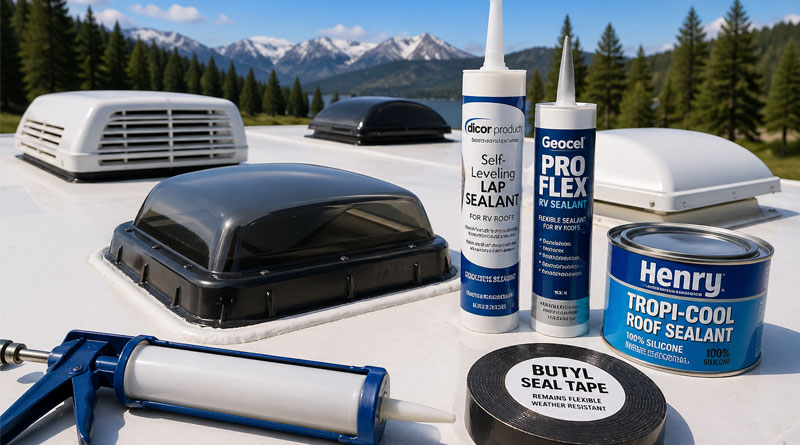
Ensuring your RV stays dry requires selecting sealants for roof vents to prevent water intrusion. These specialized adhesives are formulated to bond with diverse roofing membranes while remaining flexible enough to withstand road vibrations and extreme temperature changes. This guide highlights top-rated products designed to provide a durable, long-lasting barrier for your vents, skylights, and antennas.
1. BEEST Non-Leveling RV Roof Lap Sealant

- Consistency: Non-sag, non-leveling formula
- Technology: Hybrid silicone elastomeric
- Application: Vertical surfaces, walls, and doors
- Safety: Non-toxic and UV resistant
BEEST Non-Leveling RV Roof Sealant is a high-performance solution for those tricky vertical areas where standard lap sealants would simply run. Its hybrid silicone technology offers the durability of silicone with the flexibility of an elastomer, ensuring the seal remains intact through harsh weather and road travel. This versatile caulk is specifically designed for roof edges, window frames, and doors, providing a reliable waterproof barrier that dries quickly.
Because it maintains its shape upon application, it is ideal for overhead repairs where precision is required. The non-toxic formula is safe for both indoor and outdoor use, offering peace of mind for families. Whether you are a professional or a DIY enthusiast, this American-made sealant provides exceptional value by preventing expensive water damage to your camper’s structural walls and ventilation units.
- Pros:
- Perfect for vertical and overhead use
- Quick-drying hybrid silicone tech
- Safe, non-toxic, and UV resistant
- Cons:
- Does not flow to fill deep gaps
- Thicker bead is harder to smooth
2. PAULINN Self Leveling Lap Sealant White 4 Pack

- Fluidity: TRUE self-leveling action
- Cure Time: Sets in 30 mins; Full cure 24 hrs
- Temp Range: 40-104°F (Dry or Wet)
- Safety: Odorless and non-toxic
PAULINN Self Leveling Lap Sealant is the easiest way to ensure a watertight finish around flat roof fixtures. Designed with excellent fluidity, it flows into cracks and levels itself out to provide a smooth, professional seal around vents and skylights. It is incredibly user-friendly, fitting into a standard caulking gun, and can even be applied to damp surfaces in emergency situations during a trip.
This sealant is engineered to withstand the rigors of travel, remaining flexible to absorb vibrations without shrinking or cracking. The non-toxic and odorless formula makes it a safe choice for indoor repairs, such as sealing around bathroom skylights or kitchen sinks. While it bonds well with metal and wood, note that EPDM rubber roofs require a primer first to ensure the most durable adhesion possible.
- Pros:
- Rapid 30-minute initial set time
- Can be applied to wet or dry surfaces
- Safe for indoor and outdoor repairs
- Cons:
- Requires primer for EPDM rubber
- Only suitable for horizontal surfaces
3. Kohree Self-Leveling White RV Roof Sealant

- Leveling Speed: Self-levels within 30 seconds
- Working Temps: -40° F to 200° F
- Compatibility: EPDM, TPO, PVC, Aluminum
- Features: Elastic and breathable formula
Kohree RV Roof Sealant is built for speed and durability, leveling itself into a flat surface within just 30 seconds of application. This rapid leveling ensures that gaps around roof vents and seams are quickly and efficiently sealed against moisture intrusion. Its wide material compatibility makes it a versatile maintenance tool for various camper roofs, from rubber membranes to metal or fiberglass surfaces.
One of its most impressive attributes is its all-weather performance, remaining elastic in extreme temperatures ranging from -40°F up to 200°F. This high thermal stability prevents the caulk from cracking as your RV roof expands and contracts under the sun. The low-odor, harmless formula ensures a safe application process, providing a long-lasting waterproof seal that eliminates the need for frequent and annoying resealing tasks.
- Pros:
- Extremely fast self-leveling effect
- Wide temperature resistance range
- Bonds to almost all roofing materials
- Cons:
- Must use immediately after opening
- Requires careful surface cleaning
4. WELLUCK Self Leveling RV Roof Sealant 4PC

- Working Time: 10 mins (24 hr full cure)
- Hybrid Tech: Bonds in any weather (0-104°F)
- Elasticity: Withstands intense vibrations
- Compliance: Low odor and low VOC
WELLUCK’s RV roof sealant uses hybrid technology to offer a secure secondary seal that is especially effective for roof edges and air vents. It provides a generous 10-minute working time, allowing you to apply it meticulously before it starts to cure. The product levels itself effortlessly, creating a smooth finish that protects against leaks even in the most extreme temperature fluctuations seen during cross-country travel.
This sealant is particularly favored for its high elasticity, which allows it to absorb the shocks and vibrations of highway driving without losing its grip. It is compatible with EPDM, TPO, and even aluminum or glass, often without the need for a separate primer. With its low-odor and low-VOC formulation, it offers a user-friendly experience that keeps your motorhome or trailer roofing secure for years to come.
- Pros:
- Generous 10-minute working time
- Highly elastic to absorb road shock
- No primer needed for most surfaces
- Cons:
- Requires 24 hours for a full cure
- Sensitive to very high humidity
5. Alpha Systems 1021 Self-Leveling Sealant

- Application: Horizontal/flat surfaces only
- Utility: Vents, antennas, and skylights
- Formula: Low VOC and paintable
- Protection: Prevents air and moisture intrusion
Alpha Systems 1021 is a specialized self-leveling sealant designed specifically for horizontal applications in the recreational vehicle industry. It is highly effective for sealing around critical roof components like vents, antennas, and skylights, where a flat, even seal is necessary to prevent leaks. The formula is designed to withstand all weather conditions, providing a durable barrier that stops moisture and air from intruding into your living space.
One of the unique features of this sealant is that it is paintable once fully cured, allowing you to match your roof’s aesthetic perfectly. The low-VOC formula is a safer choice for the environment and the user, although it does require adequate ventilation during application. This product is a reliable choice for RV owners looking for a professional-grade, custom-finish sealant that prioritizes structural integrity and long-term weather resistance.
- Pros:
- Paintable for a seamless finish
- High performance on flat surfaces
- Effective air and moisture barrier
- Cons:
- No supplier warranty included
- Requires mask/ventilation for safety
6. Ziollo Self-Leveling EPDM RV Roof Lap Sealant

- Coverage: 25 linear feet per 10oz tube
- Composition: Solvent-free, non-hazardous
- Mechanism: Flows around vents and seams
- Durability: UV and temperature swing resistant
Ziollo RV Roof Lap Sealant is engineered to provide long-lasting protection that outlasts standard sealants. With each 10oz tube covering approximately 25 linear feet, it is an economical choice for sealing large roof seams and multiple vents. The formula is solvent-free and non-hazardous, meaning it won’t produce harsh chemical fumes that can disrupt your camping experience, making it safe for families and pets.
This sealant stays flexible across a vast temperature range, from desert heat to mountain frost. It flows smoothly around fixtures, doing half the work for you by creating professional-looking results even for beginners. By resisting UV exposure and road vibrations, Ziollo helps you avoid the dreaded “find that drip” game at 2 a.m., ensuring that your adventure remains dry and worry-free throughout the season.
- Pros:
- Exceptional coverage per single tube
- Solvent-free and non-toxic formula
- Stays flexible in extreme climates
- Cons:
- Full cure takes time to achieve
- Slightly higher initial investment
7. Liquid Rubber Self-Leveling RV Lap Sealant

- Coverage: 22 linear feet per tube
- Consistency: High-flow self-leveling design
- Compatibility: EPDM, TPO, Fiberglass, Metal
- System: Part of complete RV roof system
Liquid Rubber RV Lap Sealant is a high-flow formula designed to create a completely smooth, waterproof seal around horizontal roof details like AC units and skylights. Its design ensures it levels on its own, filling the smallest gaps to prevent water intrusion. This sealant is engineered to move with your RV as temperatures change and the vehicle vibrates on the road, providing a durable, flexible barrier that lasts.
It is a crucial part of a complete RV roof system and works best when paired with seam tapes and roof coatings for full leak-proof protection. Proper surface prep is essential, as this product will not adhere to existing silicone. Once the surface is clean and dry, it provides a strong bond to various materials like EPDM and fiberglass, ensuring that your camper’s roof fixtures stay secure and dry during your journeys.
- Pros:
- Excellent flow for smooth horizontal seals
- Highly flexible barrier moves with RV
- Bonds strongly to EPDM and fiberglass
- Cons:
- Will not adhere to existing silicone
- Not intended for vertical surfaces
How to Choose Sealants For RV Roof Vents
Selecting the best sealants for RV roof vents is one of the most important preventative maintenance tasks a camper owner can perform. RV roofs are constantly exposed to the elements, from the searing sun and intense UV rays to heavy rain and freezing snow. Because your vehicle is mobile, the seals around your roof vents, antennas, and AC units are also subjected to constant road vibrations and structural flexing. Using a high-quality, specialized lap sealant is the only way to ensure these joints remain watertight and protect your motorhome from structural rot and mold damage.
Self-Leveling vs. Non-Sag Sealants
The first decision you need to make is choosing between self-leveling and non-sag (non-leveling) sealants. This depends entirely on where you are applying the product. For flat, horizontal roof surfaces—like the base of a roof vent or a skylight—self-leveling sealants are ideal. They have a lower viscosity, allowing the caulk to flow slightly and level itself into a smooth, even surface that perfectly covers the seam. However, if you are sealing a vertical vent on the side of your RV or an overhead area, you must use a non-sag sealant. A self-leveling product will simply run down the wall, creating a mess and leaving the gap unsealed.
Material Compatibility and Adhesion
Before buying a sealant, you must identify your RV’s roofing material. Most modern campers use EPDM (Ethylene Propylene Diene Monomer) or TPO (Thermoplastic Olefin) rubber membranes. These materials are sensitive to petroleum-based products, which can cause them to swell and degrade. Ensure your chosen sealant is specifically rated for your roof type. Furthermore, check if a primer is required. While many modern hybrid sealants are primer-free on materials like metal or fiberglass, EPDM often requires a primer to ensure the bond is strong enough to last several years of travel.
UV Resistance and Longevity
Direct sunlight is the greatest enemy of roof sealants. Standard hardware store caulk will often become brittle, yellow, and crack within a few months of exposure. Professional RV sealants are “UV stabilized,” meaning they contain additives that prevent the molecular breakdown caused by the sun. This keeps the sealant flexible and white, allowing it to move with the RV as it expands and contracts during temperature changes. Long-term color stability and flexibility are the hallmarks of a high-quality product that won’t require yearly reapplication.
Flexibility and Elongation
RVs flex and twist significantly as they navigate bumpy roads and highways. If a sealant is too rigid, it will pull away from the surface, creating microscopic cracks that allow water to enter. When comparing products, look for high “elongation” or “elasticity” ratings. Some top-tier sealants can stretch up to 300% of their original size before failing. This elasticity is what keeps the seal waterproof even as your RV chassis twists and turns. A sealant that can absorb road shock is essential for long-term leak prevention.
Application Conditions and Cure Time
Consider the environment where you will be performing the maintenance. Some sealants require perfectly dry surfaces and specific temperature windows (usually between 40°F and 100°F) to bond correctly. However, if you are performing an emergency repair on the road, look for hybrid sealants that can be applied to damp or wet surfaces. Additionally, pay attention to the “set time” versus “full cure time.” A fast-setting sealant (30 to 60 minutes) is great if rain is expected, though it may take 24 to 48 hours for the product to reach its maximum strength.
Eco-Friendly and Safe Formulas
Historically, lap sealants were made with harsh solvents that produced strong odors and high levels of VOCs (Volatile Organic Compounds). Modern manufacturing has introduced solvent-free and non-toxic options that are much safer for the user and the environment. If you plan to work on your RV while people or pets are inside, choose an odorless, non-hazardous formula. This ensures that chemical fumes aren’t drawn into the living space through the vents you are trying to seal.
Conclusion
Choosing the best sealants for RV roof vents requires matching the consistency to the application angle and ensuring compatibility with your roofing membrane. By prioritizing UV stability, high elasticity, and safe formulations, you can create a durable barrier that protects your investment for years to come. Regular inspections and a proactive approach to resealing your vents will save you thousands of dollars in water damage repairs and keep your camper ready for any adventure.