Ditching the traditional black tank is the ultimate power move for any off-grid enthusiast. Managing waste on the road doesn’t have to involve frantic searches for dump stations or the lingering scent of harsh blue chemicals. Composting toilets have revolutionized nomadic living, turning a logistical headache into a sustainable, odor-free process. Whether you’re a weekend warrior in a van or a full-time RVer, finding the right throne is essential. Explore our unconventional guide to the top-tier waste solutions available today!
1. BOXIO Toilet – Portable Mini Composting Toilet
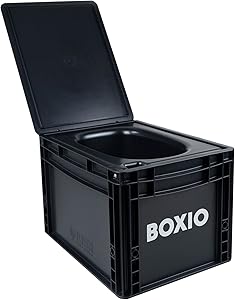
- Urine Canister Capacity: 5 liters (8-10 uses)
- Weight: 6.2 lbs
- Load Capacity: 330 lbs
The BOXIO is a masterclass in German engineering, proving that bigger isn’t always better when it comes to nomadic sanitation. Wrapped in a rugged, stackable Euro-box aesthetic, this unit is built for those who treat every square inch of their van or car as prime real estate. It strips away the complexity of traditional plumbing, replacing it with a minimalist, chemical-free system that thrives in the tightest of quarters. If you value stealth and stability, this compact powerhouse provides a surprisingly sturdy seat that belies its featherweight 6.2-pound frame.
Functionally, the BOXIO excels at keeping things fresh by utilizing a simple yet effective separation system. By pairing the 5-liter urine canister with organic hemp litter, you effectively eliminate the “sewage” smell common in portable potties. It’s a low-tech, high-reliability companion for hunters, fishers, and minimalist campers who want to avoid the “walk of shame” to a public vault toilet. While its smaller capacity means more frequent pit stops for maintenance, the ease of cleaning and the sheer portability make it an indispensable tool for the truly mobile adventurer.
- Pros:
- Extremely compact and portable
- Hygienic and odor-free design
- No chemicals or water required
- Cons:
- Smaller capacity requires more frequent emptying
- Urine canister size might be limiting for longer trips
2. YITAMOTOR Portable Camping Toilet – RV Travel Toilet

- Dimensions: 15″D x 18″W x 17″H
- Fresh Water Tank: 3.17 gallons
- Waste Water Tank: 5.28 gallons
- Load Capacity: 275 lbs
The YITAMOTOR is a bridge between the traditional home experience and the rugged reality of the wilderness. While it leans more toward a portable flush system than a biological composter, its inclusion in the conversation is vital for those not yet ready to manage dry waste. It offers a familiar interface, featuring a double-spout flush that ensures the bowl stays clean without needing a constant water hookup. For families or those on extended road trips, the generous 5.28-gallon waste tank provides a significant buffer between necessary disposals.
Safety and cleanliness are at the forefront here, with a sealed slide valve that acts as a fortress against leaks and unsavory aromas. You won’t need batteries or external power to operate the pump, making it a reliable choice for deep-woods excursions where technology often fails. It’s built to withstand the rigors of travel with a 275-pound weight capacity and a footprint that fits easily into most RV bathrooms. It’s the “comfort pick” for travelers who want a sturdy, pressurized flush experience while parked far from civilization’s modern conveniences.
- Pros:
- Generous tank capacities for extended use
- Efficient double-flush system
- Effective odor-blocking slide valve
- Cons:
- Requires water for flushing
- Not a true composting toilet (more of a portable chemical toilet)
3. TRELINO Composting Toilet Evo S Gray

- Dimensions: 13″ x 15.4″ x 11.7″
- Urine Container Capacity: 1.2 gallons
- Solid Waste Container Capacity: 1.6 gallons
- Load Capacity: 330 lbs
The TRELINO Evo S is where high-end design meets environmental ethics. Crafted from recyclable ABS plastic, this sleek gray unit looks more like a piece of modern furniture than a bathroom fixture. It is specifically tailored for the “van life” aesthetic, where visual appeal is just as important as functionality. Beyond its looks, the TRELINO is a powerhouse of efficiency, utilizing a sophisticated separation and drying method that stops odors before they even begin. It’s a sophisticated, chemical-free way to maintain your dignity in a 60-square-foot living space.
Despite its small stature, it supports a whopping 330 pounds, offering a sense of stability that many plastic toilets lack. The containers for liquids and solids are independent, allowing for quick, mess-free disposal that respects the “Leave No Trace” philosophy. It’s a liberating piece of equipment for the environmentally conscious traveler who wants to skip the dump station entirely. While the 1.6-gallon solids capacity requires a bit more mindfulness during long-haul trips, the lack of maintenance and moving parts makes it a top contender for the simplified, modern adventurer.
- Pros:
- Compact size, ideal for small spaces
- Highly effective odor prevention
- Chemical and water-free operation
- Cons:
- Smaller capacity requires more frequent emptying
- Solid waste capacity might be tight for longer trips
4. TROBOLO WandaGO Composting Toilet

- Dimensions: 12.3” (H) x 15.0” (D) x 13.4” (W)
- Weight: 10.4 lbs
- Load Capacity: 330.7 lbs
- Uses: 10-20 urine, 8-12 defecation
The TROBOLO WandaGO redefines the “portable potty” by introducing ergonomic height adjustment, a feature rarely seen in the camping world. This unit can be used at its base height for easy storage or elevated to a standard 17.2 inches, providing a comfort level that mirrors a residential bathroom. For travelers with knee issues or those who simply dislike squatting in a tiny van, this is a game-changer. Its SafeShell System is another highlight, ensuring that even on bumpy backcountry roads, everything stays contained and scent-free.
In terms of performance, the WandaGO relies on a precision-engineered diversion system that keeps liquids and solids strictly apart. This separation is the secret sauce to its odorless operation, as it prevents the anaerobic conditions that cause rot. The built-in urine level indicator is a thoughtful touch, taking the guesswork out of maintenance and preventing messy overfills. While it does require a dry medium like wood shavings to manage solids, the trade-off is a completely waterless, electricity-free experience that lets you stay off-grid indefinitely without sacrificing the basic comforts of home.
- Pros:
- Compact, lightweight, and portable
- Adjustable and ergonomic seat height
- Odorless and spill-proof design
- Cons:
- Capacity may require semi-frequent emptying
- Requires dry medium for solid waste
5. NOMAD by OGO Portable Compost Toilet
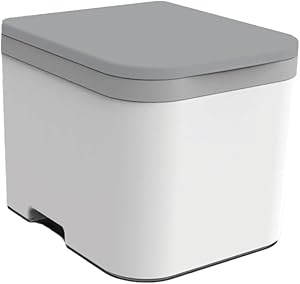
- Power Requirement: No electric, no plumbing
- Waste System: Urine diverting, fits 8-gallon bags
- Odour Control: Separation design
- Manufacturing: Made in the USA
The NOMAD by OGO is the rugged utilitarian’s dream. It’s designed for the messy, unpredictable world of truck campers, hunting blinds, and primitive boating. By stripping away the need for electricity and complex mixing arms, OGO has created a nearly indestructible unit that prioritizes raw function over flair. It uses a standard 8-gallon bag system for solids, making the cleanup process as simple as taking out the kitchen trash. It’s the ultimate “set it and forget it” solution for those who want to spend more time exploring and less time tinkering.
What makes the NOMAD truly special is its adaptability. Without the need for a 12V power source or a vent fan, it can be dropped into any vehicle or shelter and become instantly operational. The urine-diverting tech remains top-tier, ensuring that your living space stays fresh even in high temperatures. While you do have to manually manage the waste bags, the simplicity of the system means there are no mechanical parts to break when you’re 50 miles from the nearest paved road. It’s a testament to American-made durability and straightforward design.
- Pros:
- No electricity or plumbing required
- Effective odor-free urine diverting system
- Compact and space-saving design
- Cons:
- Requires active management of solid waste bags
- No integrated fan for ventilation
6. OGO™ Compost Toilet – Electric Mixing

- Power: Electric mixing
- Solid Waste Capacity: 25-30 uses
- Urine Bottle Capacity: 2.4 gallons
- Load Capacity: Up to 550 lbs
The OGO™ Electric is the luxury sedan of composting toilets. Designed for those who demand the highest level of performance, this unit features an electric agitator that does the heavy lifting of mixing waste with the composting medium. This ensures optimal breakdown and maximum odor suppression with zero effort on your part. It’s a heavy-duty beast, supporting up to 550 pounds, making it one of the most robust units on the market. If you’re living in a tiny home or a high-end RV, this is the system that feels the most like a permanent residential fixture.
Convenience is baked into every detail, from the 2.4-gallon urine bottle to the sensor that alerts you when it’s time to empty. The 25-30 use capacity for solids means you can go weeks without worrying about maintenance, making it perfect for long-term boondocking. While it does require a 12V connection to power the mixer and fan, the payoff is a completely odor-free environment and a cleaner composting process. It’s an investment in comfort and peace of mind, backed by high-quality USA-based manufacturing and a sleek, contemporary design that fits any modern interior.
- Pros:
- Excellent odor control with separation and electric mixing
- High-quality, durable construction (USA-made)
- Large waste capacity for extended use
- Cons:
- Requires electrical power for mixing function
- Higher initial cost compared to non-electric models
How to Purchase Your Ideal RV Composting Toilet
Investing in a composting toilet isn’t just a purchase; it’s a fundamental shift in how you experience the road. When you decide to buy, you are moving away from the “black tank blues” and toward total autonomy. However, because this is a significant investment—both financially and in terms of your daily comfort—the purchasing process requires more than just clicking “add to cart.” You need a strategic approach to ensure the model you choose fits your vehicle, your lifestyle, and your budget.
Step 1: Audit Your Physical Constraints
Before you even look at a price tag, you must measure your space. RV bathrooms are notorious for their awkward angles and tight footprints.
- Height Clearance: Some composting toilets, like the OGO Electric, are taller to accommodate the mixing mechanism. Ensure you can comfortably sit without your head hitting a cabinet or the ceiling.
- The “Lid Factor”: Does the lid open vertically or at an angle? If your toilet is tucked under a counter or a shelf, you might not be able to open it fully to use or empty it.
- Emptying Radius: Look at how the containers come out. Do they slide out the front, or do you have to lift the top of the toilet off? If your bathroom is tiny, you might not have room to maneuver a full 5-gallon container out the door.
Step 2: Choose Your Technology Level
Purchasing decisions often come down to “Active” vs. “Passive” systems.
- Active Systems: These include electric fans and agitators (like the OGO). They are more expensive but offer the best odor control and longest time between emptying. If you live in your RV full-time, the higher purchase price is usually worth the convenience.
- Passive Systems: These are purely manual (like the BOXIO or TRELINO). They are significantly cheaper and have no electronic parts to fail. They are ideal for weekenders or those who want a “fail-proof” system for remote expeditions.
Step 3: Analyze Consumable Costs
When purchasing, consider the “hidden” long-term costs. Composting toilets require a bulking agent. Popular choices include coco coir, peat moss, or hemp litter.
- Availability: Can you find the medium at a local hardware store, or do you have to order it online?
- Storage: If you buy a unit that requires a lot of medium, do you have a dry place in your RV to store a 10lb brick of coco coir?
- Bags: Units like the NOMAD use 8-gallon bags. Factor in the cost of high-quality, compostable bags into your monthly budget.
Step 4: The Sourcing Strategy
Where you buy matters as much as what you buy.
- Amazon: Ideal for quick shipping and easy returns. Most of the top brands listed above have official storefronts here, which provides a layer of buyer protection.
- Direct from Manufacturer: Buying directly from companies like OGO or TRELINO often gives you access to better customer support and extended warranties. Sometimes they offer “bundle” deals that include the composting medium and extra containers.
- Specialized RV Outfitters: If you are unsure about installation, buying from an RV-specific retailer might allow you to bundle the purchase with a professional installation service.
Step 5: Review the Return Policy
This is critical: **Once a toilet has been used, it is almost never returnable.** When your package arrives, do a “dry fit” immediately. Place it in your RV bathroom, sit on it, and test the clearance. If it doesn’t feel right, return it while it’s still brand new in the box. Check the seller’s policy on shipping damage, as these units are often heavy and can occasionally crack during transit.
Step 6: Plan Your Installation Accessories
Rarely is a toilet a “standalone” purchase. When buying, check if you also need:
- Ventilation Kits: If the unit has a fan, you’ll need a hose and a through-wall or through-roof vent.
- Mounting Brackets: In a moving vehicle, you don’t want your toilet sliding around. Check if the unit comes with floor mounting hardware or if you need to purchase it separately.
- Power Adapters: For electric models, ensure you have the right 12V wiring or a 110V adapter if you plan to use shore power.
Step 7: Final Evaluation of Value vs. Price
Don’t just buy the cheapest option. A $300 toilet that smells or breaks after three months is more expensive than a $1,000 unit that lasts a decade. Look at the material quality—UV-resistant plastics and stainless steel hardware are signs of a product that can handle the humidity and vibration of RV life. By following these steps, you’ll ensure that your purchase isn’t just a piece of plastic, but a ticket to a cleaner, more sustainable life on the open road.