Embarking on your first kayaking adventure is an exciting journey, and choosing the right gear is the first step toward success. For beginners, sit-on-top kayaks offer the ultimate blend of stability, safety, and ease of use. Unlike traditional sit-inside models, these kayaks feature an open deck design that eliminates the feeling of confinement and makes boarding a breeze. In this comprehensive guide, we review the top beginner-friendly sit-on-top kayaks on the market to help you find the perfect match for your water adventures.
1. Perception Rambler

- Boat Length: 13 feet 6 inches
- Boat Width: 34 inches
- Boat Weight: 78 lbs
- Maximum Capacity: 550 lbs
The Perception Rambler is an incredibly versatile and stable tandem kayak manufactured in the USA, making it an outstanding choice for paddlers of all skill levels. Its spacious, molded-in seat design ensures that getting in and out of the water is completely hassle-free. Designed to handle various aquatic environments, this boat performs beautifully on flat lakes, ocean bays, light surf, or slow-moving rivers. The inclusion of removable padded seats and an adjustable backrest ensures that your extended paddling trips remain comfortable and supportive throughout the afternoon.
What truly sets this kayak apart is its family-friendly adaptability, featuring an additional molded-in center seat specifically designed for kids or your family dog. Multiple built-in footrest options effortlessly accommodate paddlers of different heights, ensuring an ergonomic posture for everyone on board. Storage is also highly generous, featuring a large rear open cargo area that easily fits a cooler, dry bags, and other essential gear. While it is heavier than solo models, its exceptional stability and high weight capacity offer unmatched peace of mind for beginners.
Pros:
- Highly versatile tandem design with an extra molded center seat for a child or pet.
- Exceptional 550 lb maximum weight capacity accommodates multiple riders and heavy gear.
- Multiple molded-in footrest positions ensure comfort for paddlers of all sizes.
Cons:
- At 78 lbs, it is relatively heavy and can be challenging for a single person to transport.
- The wider 34-inch beam makes it stable but reduces overall tracking speed.
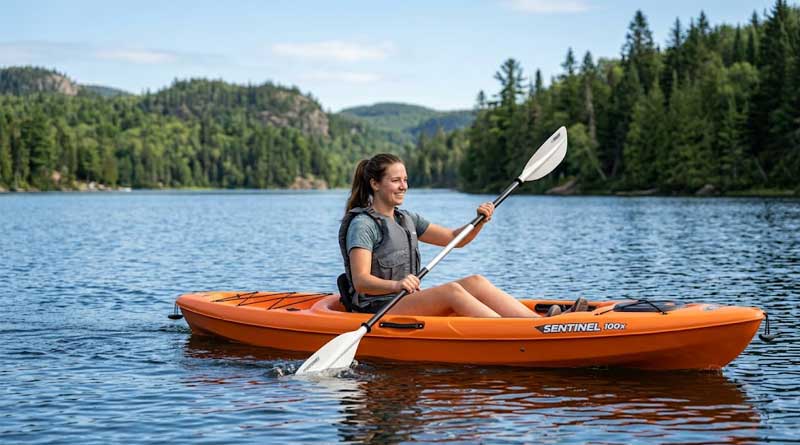
2. Pelican Sentinel 100X

- Boat Length: 9 feet 6 inches
- Boat Weight: 44 lbs
- Seating System: Ergolounge cushioning
- Total Rod Holders: 4 built-in holders
The Pelican Sentinel 100X stands out as a premier compact option for beginners who prioritize easy transportation and storage without sacrificing on-water performance. Weighing only 44 pounds and measuring under ten feet in length, this lightweight vessel can be effortlessly loaded onto a vehicle roof rack by a single person using the molded-in side carrying handles. On the water, comfort is elevated by the integrated Ergolounge seating system, which features extra-thick cushioning alongside an extra-high and wide padded backrest to minimize fatigue during long paddling sessions.
Anglers and recreational paddlers alike will appreciate the thoughtful storage solutions built into this boat. It comes equipped with the innovative ExoPak removable storage compartment, allowing you to conveniently pack all your gear at home and simply drop it into the rear tank well upon arrival at the waterside. This compartment also includes two vertical rod holders, which complement the two built-in flush-mount rod holders on the hull. This generous configuration gives beginners ample room to organize gear while exploring their local waterways.
Pros:
- Extremely lightweight and compact hull makes loading and storage simple for solo paddlers.
- Ergolounge seating provides superior lower back support and extra-thick cushioning.
- Removable ExoPak compartment simplifies gear packing and organization before leaving home.
Cons:
- Shorter waterline length limits tracking straight and reduces maximum cruising speed.
- The weight capacity is lower compared to larger ten-foot or twelve-foot recreational kayaks.
3. Pelican Sentinel 80X

- Boat Length: 7 feet 9 inches
- Boat Weight: 34 lbs
- Maximum Capacity: 225 lbs
- Hull Material: RAM-X Polyethylene
The Pelican Sentinel 80X is an ultra-lightweight and highly stable option designed specifically for those seeking maximum simplicity and peace of mind on the water. Built with a specialized twin-arched multi-chine hull, this compact craft offers excellent initial stability, ensuring a secure ride and making it incredibly easy to step in and out of. Safety is further enhanced through integrated foam flotation blocks placed strategically inside the hull, combined with a flatter bottom profile that gives beginners absolute confidence across calm waters.
Constructed from patented RAM-X high molecular weight polyethylene, this durable boat boasts incredible impact resistance while requiring minimal material to build, keeping the total weight at a remarkable 34 pounds. This featherlight profile ensures it can fit inside many larger SUVs or be carried down to the shore with absolute ease. For gear management, it features a functional stern tank well complete with secure bungee tie-downs and a dedicated bottle holder, making it fully equipped for enjoyable short day trips around local lakes and slow streams.
Pros:
- Weighs just 34 lbs, making it one of the easiest hard-shell kayaks to transport.
- Twin-arched multi-chine hull provides excellent rock-solid stability for nervous beginners.
- Patented RAM-X material resists heavy impacts and easily bounces off rocks or logs.
Cons:
- The short 7’9″ frame is not suitable for taller individuals or paddlers over 225 lbs.
- Suboptimal tracking and speed mean it requires more effort to paddle long distances.
4. Pelican Catch Mode 110

- Boat Length: 10 feet 8 inches
- Boat Weight: 63 lbs
- Maximum Capacity: 375 lbs
- Seating System: ERGOBOOST Adjustable Chair
The Pelican Catch Mode 110 is engineered specifically for beginner anglers who want a stable, dependable platform for fishing without the steep learning curve of a professional tournament boat. Utilizing an advanced tunnel hull configuration, this kayak delivers exceptional stability that allows you to confidently stand up on the wide, flat deck platform to cast your lines or reel in large fish. Safety is prioritized through a unique manufacturing process that embeds extra flotation inside the hull, ensuring the vessel meets or surpasses rigid ABYC standards.
Comfort is a prominent highlight here, thanks to the premium ERGOBOOST seating system, which ranks among the most comfortable fishing chairs available. The seat can be folded to raise your viewing position by an extra six inches, providing an improved sightline over the water while remaining outfitted with an EVA pad and under-seat storage. Weighing 63 pounds, it stays lighter than many competing fishing kayaks in its class, enabling solo loading. Three flush-mount rod holders keep your gear organized and within arm’s reach at all times.
Pros:
- Tunnel hull offers a rock-solid deck platform that allows safe stand-up casting and reeling.
- ERGOBOOST chair elevates by six inches to provide a superior vantage point for fishing.
- High weight capacity of 375 lbs accommodates heavier paddlers and substantial fishing gear.
Cons:
- The wide, stable hull is built for fishing stability rather than tracking speed.
- At 63 lbs, it is noticeability heavier to lift compared to standard recreational models.
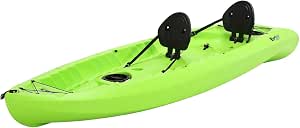
5. Lifetime Kokanee Sit-On-Top Kayak
- Hull Material: High-Density Polyethylene (HDPE)
- UV Protection: Integrated UV inhibitors
- Paddling Options: Solo or Tandem configuration
- Storage Features: One under-deck storage hatch
The Lifetime Kokanee Sit-On-Top Kayak features a brilliant hybrid design that provides beginners with the ultimate flexibility to switch seamlessly between solo and tandem paddling configurations. Constructed from blow-molded high-density polyethylene, this rugged watercraft is treated with advanced UV protection to prevent cracking, peeling, or fading from sun exposure. The hull shape is engineered for optimal stability, giving new paddlers total peace of mind on calm lakes, slow-moving rivers, and quiet ocean inlets while learning the basics of proper paddling technique.
Comfort inside the cockpit is fully customizable, utilizing two adjustable quick-release seat backs that can be repositioned depending on whether you are paddling alone or with a partner. Multiple integrated footrest positions are built into the floor walls to support paddlers of varying heights, making it an excellent shared family boat. For gear security, a central storage hatch is built right beneath the deck floor, complementing open cargo areas to hold clothing, snacks, and personal items securely while enjoying your time on the water.
Pros:
- Highly versatile design allows for easy reconfiguration between solo and tandem riding.
- UV-protected HDPE construction provides great impact resistance and weather durability.
- Adjustable quick-release seat backs and multiple footrests comfortably support various riders.
Cons:
- The basic seat backs offer less padding compared to premium ergonomic lounge chairs.
- Tracking can feel slightly loose when paddling solo due to the tandem-optimized hull shape.
How to Choose the Best Sit-on-Top Kayak for Beginners
Entering the world of kayaking opens up incredible opportunities for exploration, fitness, and relaxation. However, walking into a specialty outdoor store or browsing online can quickly become overwhelming due to the sheer variety of hull shapes, lengths, weights, and configurations. For beginners, a sit-on-top kayak is universally recognized as the safest and most intuitive platform to master. Understanding the core technical parameters of these boats ensures you invest in a model that perfectly matches your body type, storage capacity, and preferred paddling destination.
Understanding Hull Design and Stability
The hull is the foundational shape of the bottom of the kayak, and it directly dictates how the boat responds when you step onto it, paddle across a current, or encounter small waves. For beginners, stability is the most important factor to consider, and it is divided into primary stability and secondary stability. Primary stability refers to how steady the boat feels when resting on flat, calm water. Secondary stability refers to the boat’s ability to resist capsizing when it is tilted on its edge or subjected to moving water.
Multi-Chine and Twin-Arched Hulls
Many beginner-focused recreational models, such as the Pelican Sentinel series, employ a multi-chine or twin-arched hull. A chine refers to the angle where the bottom of the boat meets the side wall. A multi-chine hull mimics a soft V-shape with distinct steps along the edges. This design maximizes surface area contact with the water, providing incredible primary stability. It gives beginners that rock-solid feeling where the kayak refuses to wobble when boarding, letting you focus entirely on your paddling stroke without worrying about tipping over.
Tunnel and Pontoon Hulls
Angling and standing models, like the Pelican Catch Mode 110, utilize a tunnel or pontoon hull architecture. This design features a deeply recessed center channel flanked by two wide outer ridges, mimicking a catamaran. This hull shape maximizes stability along the outermost edges of the craft. The primary benefit is a completely flat, non-slip deck platform that allows a paddler to stand up completely to cast a fishing line, scan the water, or stretch their legs. If you have balance concerns or want to fish, a tunnel hull provides the highest level of stability available.
Analyzing Technical Dimensions: Length vs. Width
The physical dimensions of a kayak determine how it handles tracking, speed, maneuverability, and ease of transport. Tracking refers to the kayak’s ability to travel in a straight line when you paddle. In general, length and width exist in a constant engineering trade-off that paddlers must evaluate based on their specific needs.
| Kayak Metric | Short Hull (Under 10 Feet) | Long Hull (11 to 14 Feet) |
|---|---|---|
| Primary Tracking | Lower tracking; tends to zig-zag slightly with each stroke. | Excellent tracking; glides straight over long distances. |
| Maneuverability | High; turns quickly to avoid obstacles and rocks. | Lower; requires wider turning arcs in tight spaces. |
| Cruising Speed | Slower; higher water resistance per stroke. | Faster; efficiently slices through water currents. |
| Transport & Storage | Easy; fits inside SUVs, truck beds, or small wall racks. | Requires dedicated roof racks or large storage spaces. |
Width, often referred to as the beam, directly correlates to stability. A wider kayak (31 to 34 inches) offers a spacious cockpit and a forgiving ride, making it perfect for beginners. However, a wider beam creates more drag, meaning it takes more physical effort to paddle long distances. Narrower kayaks slice through the water faster but can feel twitchy and unstable to an unexperienced paddler.
Weight Capacity and Gear Displacement
Every kayak comes with a strict maximum weight capacity rating calculated by the manufacturer. A common beginner mistake is assuming that if a kayak is rated for 250 pounds, a 250-pound person can safely ride in it. In reality, you must factor in the concept of operational weight capacity, which is typically 70% to 80% of the maximum limit.
Calculating True Capacity Needs
To determine your required weight capacity, you must add your body weight, the weight of your paddle and safety vest, and the weight of all gear you plan to carry, such as coolers, tackle boxes, anchors, and dry bags. If a kayak is overloaded past its operational capacity, it sits too low in the water line. This increased draft compromises hull tracking, makes turning sluggish, and causes water to constantly wash over the deck through the scupper holes, leading to a wet and cold experience.
Material Selection and Durability
The material composition of your kayak dictates its overall weight, resistance to abrasions, longevity under the sun, and price point. The vast majority of beginner sit-on-top models are constructed using forms of plastic polyethylene due to its legendary durability and affordable manufacturing cost.
- High-Density Polyethylene (HDPE): Used in rugged models like the Lifetime Kokanee, this material offers incredible impact resistance. It can scrape over river rocks, drag across gravel launch ramps, and withstand accidental drops without puncturing or cracking.
- Patented RAM-X Polyethylene: Utilized by Pelican, this high molecular weight material features advanced thermoforming technology. It creates a hull that is significantly lighter than standard rotomolded plastic while retaining a high memory factor, meaning the hull resists denting and restores its original shape after an impact.
- UV Protection Additives: Because sit-on-top kayaks spend hours exposed to direct sunlight, it is vital to select a boat with built-in UV inhibitors. Without UV protection, solar radiation breaks down plastic polymers over time, leading to color fading, brittleness, and eventual cracking along structural stress points.
Ergonomics, Seating, and Cockpit Comfort
You will often spend several consecutive hours sitting inside your kayak, making cockpit ergonomics a critical purchasing factor. A poorly designed seating area can lead to lower back pain, hip cramping, and leg numbness, quickly ruining an otherwise perfect day on the water.
Premium Frame Chairs vs. Molded Cockpits
Advanced seating systems like the ERGOBOOST or Ergolounge designs provide elevated frame supports wrapped in breathable, quick-drying mesh or thick foam padding. These seats keep your hips positioned properly relative to your knees, promoting efficient paddling posture and relieving pressure on your tailbone. Simpler, molded-in seating configurations are highly durable and easy to clean, but they generally require aftermarket padded seat inserts if you plan to stay out on the water for full-day excursions.
Footrest Management
Proper bracing is essential for generating power in your paddle stroke. When you pull your paddle through the water, you should push off with your foot on the corresponding side to transfer energy through your core. Look for kayaks that feature molded-in multiple footrest positions or adjustable sliding foot pegs. This ensures that whether you are five feet tall or over six feet tall, your knees remain slightly bent and firmly braced against the hull for maximum control and stability.
Solo vs. Tandem Configurations
Before purchasing, you must decide whether you want to paddle exclusively alone or share your experiences with friends, children, or pets. Tandem kayaks, like the Perception Rambler, are longer and wider, offering massive weight capacities and incredible stability. They are perfect for families or couples who want to explore together. However, they are heavy to transport and require coordinated paddling teamwork. Hybrid models, such as the Lifetime Kokanee, feature adjustable center seat tracks, allowing you to reposition a single seat into the absolute center of the boat for balanced tracking when paddling solo, giving you the best of both worlds.