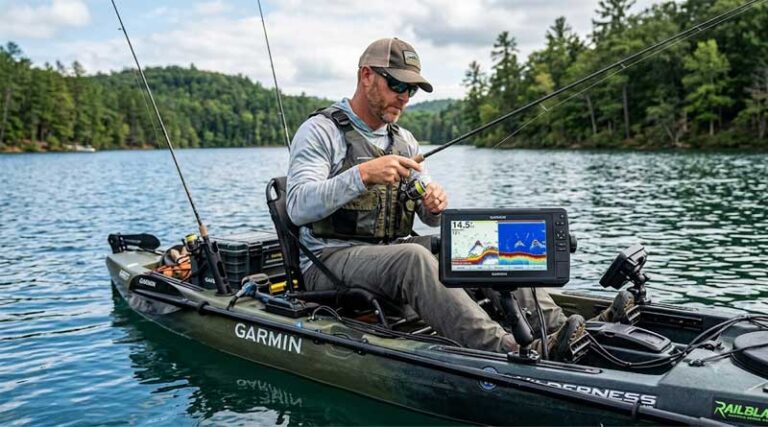
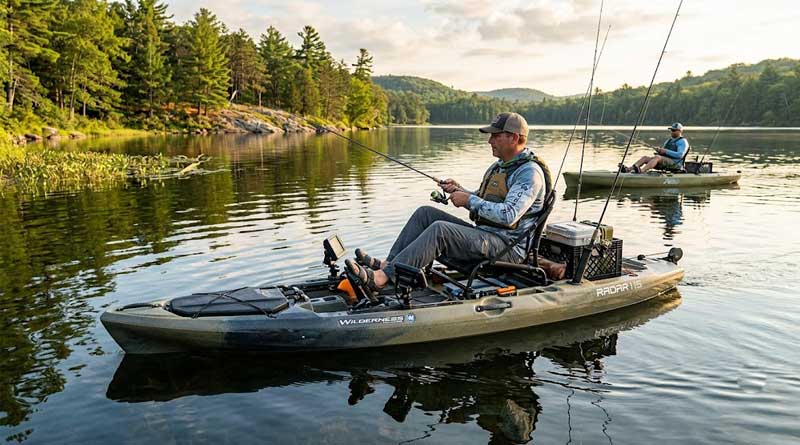
Pedal-drive fishing kayaks have transformed modern kayak angling by offering seamless hands-free propulsion, allowing you to cast, navigate, and hold position in current without constantly picking up a paddle. Whether you are navigating tight inland creeks or fishing open coastal waters, switching to pedal power dramatically increases your efficiency on the water. With various drive mechanisms, modular designs, and hull profiles available today, finding the right pedal kayak comes down to matching your transport limits, storage constraints, and specific fishing style.
1. Reel Yaks Radar Modular Fishing Kayak

- Overall Length: 10 Feet
- Weight Capacity: 430 lbs
- Hull Type: Modular W-Hull
- Drive Mechanism: Propeller Pedal System
The Reel Yaks Radar solves the classic storage problem by splitting into lightweight sections that fit directly into car trunks or tight apartment closets. You do not need roof racks or trailers to transport this kayak, making spontaneous fishing trips hassle-free.
Despite its split design, the wide W-hull maintains excellent stability on open water. Integrated accessory tracks, flush-mount rod holders, and watertight storage make it fully ready for fishing right out of the box without requiring extra modifications.
Pros:
- Easy to transport in vehicle trunks without roof racks
- High weight capacity for a 10-foot kayak
- Responsive forward and reverse propeller drive
Cons:
- Assembly required at the launch site
- Modular joints add structural points to inspect over time
2. Old Town Sportsman PDL 106

- Overall Length: 10 Feet 6 Inches
- Max Capacity: 450 lbs
- Hull Weight: 107 lbs
- Drive Mechanism: Instant Forward/Reverse PDL Console
The Old Town Sportsman PDL 106 is a top-tier option built around a ultra-stable pontoon-style hull. Its primary strength lies in its low-maintenance drive system, which features an intuitive docking mechanism for shallow launches and landings.
Anglers will appreciate the breathable mesh seating with superior lumbar support, keeping you comfortable during full days on the water. A built-in universal transducer mount makes installing fish finders quick and straightforward without drilling unnecessary hull holes.
Pros:
- Exceptional stability and durable hull construction
- Instant, quiet forward and reverse pedal drive
- Comfortable adjustable seat with great lumbar support
Cons:
- Heavy hull makes solo car-topping challenging
- Higher price point compared to entry-level models
3. BKC Brooklyn 12.0 Pro Pedal Kayak

- Overall Length: 12 Feet
- Hull Weight: 70 lbs
- Hull Material: High-Density Polyethylene
- Drive Mechanism: Bicycle-Style Propeller Drive
The BKC Brooklyn 12.0 Pro combines a 12-foot performance hull with a lightweight 70-pound frame, giving anglers improved tracking and speed over longer distances. The hand-operated rudder controls allow for tight turns and precise tracking in windy conditions.
Storage management is excellent thanks to dual watertight hatches and a spacious rear cargo bay secured with bungee cords. The aluminum frame seat keeps you upright and cool, while built-in rod holders leave your deck clutter-free during active casting.
Pros:
- Longer hull provides superior speed and tracking
- Lightweight hull relative to its overall 12-foot length
- Dual watertight hatches keep extra gear dry
Cons:
- Longer body requires more storage space at home
- Turning radius is wider than shorter 10-foot models
4. Albott Modular Fishing Kayak

- Overall Capacity: 420 lbs
- Drive Weight: 11 lbs
- Drive Mechanism: Push-Style Fin Drive System
- Hull Material: Heavy-Duty HDPE
The Albott Modular Fishing Kayak stands out by utilizing a lightweight fin drive system rather than a propeller. Fins flutter beneath the hull, making it far easier to glide quietly through shallow waters or weed-heavy spots where propellers often tangle.
Its breakdown frame makes transport straightforward using internal grab handles on each module. Stainless steel hardware and a durable HDPE hull resist wear, making this an adaptable option for recreational anglers and rental operators alike.
Pros:
- Fin drive navigates shallow and grassy waters easily
- Modular breakdown layout simplifies loading and storage
- Corrosion-resistant stainless steel rudder hardware
Cons:
- Fin drives require manual swapping or adjustment for reverse
- Assembly steps add time prior to launching
5. Pelican Catch HDII Premium Angler

- Drive Mechanism: HyDryve II Fin System
- Seating System: Ergocast G2 Adjustable Chair
- Accessory Mounts: 4 Integrated Gear Rails
- Rod Storage: 3 Flush-Mount Rod Holders
The Pelican Catch HDII features the refined HyDryve II pedal drive, engineered for smooth operation around aquatic vegetation. Combined with hand-controlled rudder steering, it provides accurate tracking whether you are trolling open water or navigating structural shorelines.
Comfort is a focal point of this model, featuring the Ergocast G2 seating system which adjusts easily for optimal pedaling posture. Four integrated accessory rails provide plenty of surface space for mounting cameras, fish finders, and additional rod holders.
Pros:
- HyDryve II fin drive cuts through water vegetation smoothly
- High-comfort, fully adjustable Ergocast seating system
- Four accessory rails allow wide customization
Cons:
- Hull material can show cosmetic scratches over rocky bottoms
- Fin drive lacks instant reverse compared to rotational props
How to Choose the Right Pedal-Drive Fishing Kayak
Selecting the ideal pedal-drive fishing kayak requires balancing drive technology, hull design, physical space, and gear customization. Pedal kayaks represent a noticeable investment over traditional paddle models, but the advantage of hands-free fishing makes them well worth the upgrade when selected properly.
Understanding Drive Systems: Rotational Propeller vs. Flexible Fins
The primary decision when choosing a pedal kayak revolves around the mechanism that moves you through the water. Modern kayaks use either rotational propellers or push-style fin systems, each with clear operational advantages.
Rotational Propeller Drives
Propeller systems operate like a bicycle. You pedal in full circular rotations to turn an underwater propeller. Their defining feature is instant reverse capability: simply pedal backward, and the kayak stops or reverses immediately. This makes propeller drives ideal for holding position near docks, standing timber, or windy shorelines.
Flexible Fin Drives
Fin drives use side-to-side sweeping motion under the hull, similar to penguin flippers. These systems excel in shallow water and grassy environments because the fins can be pressed flat against the bottom of the hull to avoid hitting rocks or catching submerged weeds.
- Propeller Drive
- Open water, deep lakes, structure fishing
- Instant forward and reverse
- Prone to catching submerged weeds
- Fin Drive
- Shallow water, grassy marshes, rivers
- Low profile, weed-resistant
- Requires levers or manual shifts for reverse
Hull Dimensions and Performance Trade-Offs
Hull geometry directly impacts how your kayak handles, tracks, and supports weight. Choosing the right length and width depends on where you fish most often.
Kayak Length
- 10 to 11 Feet: Highly maneuverable, easier to store, and lighter to transport. Great for small ponds, tight creeks, and solo anglers loading onto vehicle tops.
- 12 Feet and Above: Higher top speed, superior straight-line tracking, and better glide per pedal stroke. Ideal for large lakes, open bays, and coastal fishing.
Kayak Width and Stability
Kayak width generally ranges from 31 to 36 inches. Wider hulls offer excellent primary stability, allowing anglers to stand up and cast comfortably. However, wider hulls create more surface drag, requiring slightly more pedaling effort over long distances.
Transport and Storage Solutions
Before purchasing, measure your storage area and consider how you will move the kayak from your home to the water. Pedal kayaks are heavier than traditional paddle kayaks due to drive hardware and reinforced hulls.
Standard Rigid Hulls
Single-piece polyethylene hulls offer maximum durability and rigid structural integrity. However, hulls weighing over 80 pounds require a heavy-duty kayak cart, trailer, or specialized roof-rack loader for solo transportation.
Modular Take-Apart Hulls
Modular kayaks break apart into two or three distinct sections using heavy-duty latching systems. This design allows you to store the kayak inside closets or transport it within standard vehicle trunks, completely removing the need for roof racks or trailers.
Seat Comfort and Ergonomics
Because pedaling places continuous force through your lower back and legs, high-back frame seats with breathable mesh are essential. Look for seats with adjustable track rails that let you fine-tune the distance to the pedals based on your leg length. Proper leg extension prevents knee strain during long days on the water.
Fishing Readiness and Accessory Customization
A well-rigged fishing kayak keeps your essential tools organized and within arm’s reach while pedaling. Look for these integrated features:
- Accessory Tracks: Aluminum or composite rails that let you slide in fish finders, rod holders, and cup holders without drilling into the hull.
- Transducer Recesses: Protective scupper cavities built under the hull that keep fish finder transducers safe from scraping bottom.
- Watertight Storage: Dry hatches for protecting car keys, tackle boxes, and extra clothing from splash.
- Rudder Controls: Smooth, hand-operated steering levers positioned alongside the seat for responsive course corrections while pedaling.
Final Decision Checklist
To narrow down your search, match your primary needs against these final factors:
- Choose a modular hull if you live in an apartment or lack roof-rack transport.
- Choose a fin drive if you fish heavily weeded flats or shallow river beds.
- Choose a propeller drive if you need precise positioning and instant reverse around structure.
- Choose a 12-foot hull if speed and long-distance open water travel are your main priorities.