Choosing AGM batteries for RV adventures is essential for reliable off-grid power and maintenance-free operation. These sealed, vibration-resistant units provide consistent energy for appliances and lighting while offering superior durability compared to flooded lead-acid alternatives. Our guide highlights the top-rated models to ensure your motorhome remains powered throughout every journey, regardless of the terrain.
1. Interstate 24M-AGM Dual Purpose Battery
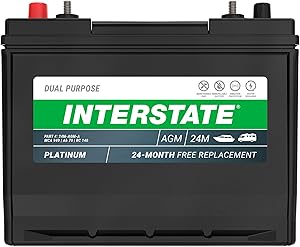
- Capacity: 70Ah at 12 Volts
- Cranking Amps: 750 CCA
- Technology: Pure Lead AGM
- Group Size: 24M
The Interstate 24M-AGM is a versatile dual-purpose powerhouse designed for both engine starting and deep-cycle house power. Its pure lead construction allows it to outlast conventional alloy batteries by up to three times, making it a rugged choice for demanding RV environments.
This battery excels in vibration resistance and fast recharging, ensuring you spend more time enjoying the outdoors and less time monitoring levels. It provides reliable force for lights and appliances while maintaining enough cranking power to start your motor effortlessly every time.
- Pros:
- Dual-purpose starting and cycling
- Fast recharging capabilities
- Superior vibration resistance
- Cons:
- Lower Ah for long boondocking
- Higher initial price point
2. NPP NPD12-200Ah Heavy Duty AGM Battery
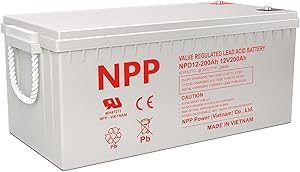
- Capacity: 200Ah High-Capacity
- Resistance: Ultra-low ~3mΩ
- Discharge: 1400A Peak (5s)
- Design Life: Up to 10 Years
The NPP NPD12-200Ah is a massive energy reservoir built for heavy-duty RV house systems and off-grid solar storage. Its high 200Ah capacity reduces the depth of discharge, which significantly improves system stability and extends the battery’s overall lifespan during frequent use.
Designed to handle high-current surge loads, this battery manages inverter peak loads and motor surges with total confidence. The sealed AGM construction is completely maintenance-free and spill-proof, making it safe for indoor installation in RV compartments or dedicated battery rooms.
- Pros:
- Massive 200Ah energy reserve
- Handles high inverter loads
- Long float service life
- Cons:
- Extremely heavy unit
- Large physical footprint
3. Optima BlueTop D34M Dual Purpose Battery

- Cranking: 750 CCA / 870 MCA
- Technology: SpiralCell 99.99% Pure Lead
- Resistance: 15x Vibration Resistant
- Terminals: Dual SAE & Stud
The Optima BlueTop D34M features unique SpiralCell technology that consistently outperforms standard flat-plate batteries. It provides a reliable 750 cold cranking amps, ensuring your RV or boat starts quickly even in the most adverse weather conditions while powering accessories.
This maintenance-free unit is exceptionally durable, boasting vibration resistance that is fifteen times higher than traditional flooded batteries. The dual-terminal design offers versatile mounting options and easy connections for both starting leads and deep-cycle house wiring for maximum convenience.
- Pros:
- Unmatched vibration resistance
- Very fast charging speeds
- Versatile dual-terminal setup
- Cons:
- Limited 55Ah capacity
- More expensive per amp hour
4. Interstate DCM0100 Deep Cycle Mobility Battery

- Capacity: 110Ah at 12 Volts
- Group Size: Industry Group 29
- Technology: VRLA Spill-Proof AGM
- Terminals: Insert with Bolt
Interstate’s DCM0100 is a professional-grade deep-cycle battery specifically developed for high-demand applications like solar storage and RV house power. It is rated as a top performer for heavy-discharge usage, offering more cycles and a longer life than standard lead-acid alternatives.
This 110Ah battery is completely sealed and maintenance-free, utilizing VRLA technology to eliminate overpressure and spills. Its universal fit makes it an ideal replacement for various 100Ah or 110Ah applications, providing “Outrageously Dependable” power for your off-grid camping needs and electronics.
- Pros:
- High 110Ah deep cycle capacity
- Rigorous 7-point quality testing
- Maintenance-free VRLA design
- Cons:
- Not suitable for engine starting
- Heavy for a single unit
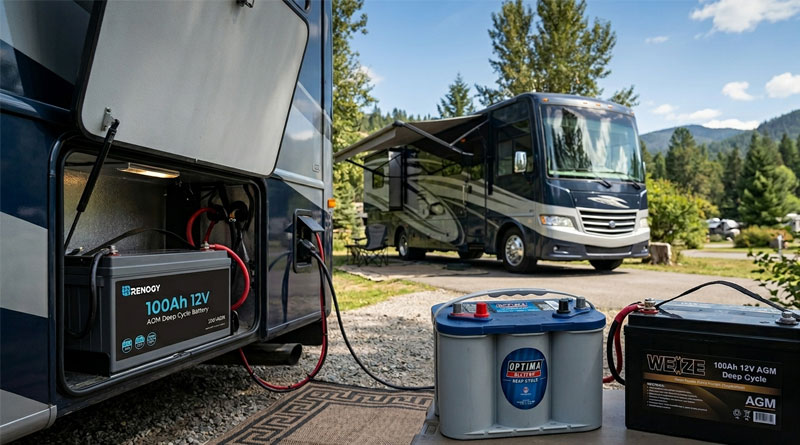
5. Renogy 12V 100Ah Deep Cycle AGM Battery

- Self-Discharge: Below 3% Monthly
- Current: 1100A Max Discharge
- Temp Range: -4 to 140°F
- Capacity: 100Ah at 12V
Renogy is a global leader in solar technology, and this 100Ah AGM battery lives up to that reputation with extreme performance. It features an upgraded electrolyte formula that maintains outstanding discharge capabilities even in extreme temperatures ranging from -4°F to 140°F.
The battery boasts a high 1100A peak discharge current, making it capable of powering heavy appliances like microwaves and coffee makers. With a monthly self-discharge rate below 3%, it offers a long shelf life and requires less frequent maintenance charging during storage.
- Pros:
- Great for extreme temperatures
- Very low self-discharge rate
- High peak discharge current
- Cons:
- Max 4 units in parallel
- Heavy lifting required
6. Weize BCI Group 24M Dual Purpose Battery

- Capacity: 90Ah Reserve Power
- Starting: 550 CCA
- Charge: Up to 5x Faster
- Resistance: 20x Vibration Resistant
The Weize Group 24M is a high-performance dual-purpose battery that combines starting power with deep cycling capability. Powered by advanced AGM technology, it offers low internal resistance and high output, providing twice the cycle life of traditional flooded marine batteries.
One of its standout features is the ability to charge up to five times faster than standard batteries, significantly increasing efficiency at the campsite. It is nearly maintenance-free and built to withstand intense vibrations, ensuring safety and longevity in rugged RV or marine applications.
- Pros:
- Exceptional 90Ah for Group 24
- Very fast charging capability
- Highly vibration resistant
- Cons:
- Lower 550 CCA starting power
- Sensitive to overcharging
7. VEVOR 12V 200Ah Rechargeable AGM Battery

- Capacity: 200Ah Massive Storage
- Peak Current: 1400A (5 seconds)
- Self-Discharge: Low Rate
- Technology: Sealed Valve-Controlled
The VEVOR 12V 200Ah battery is a heavy-duty solution designed specifically for RV solar systems and off-grid backups. It stores a substantial amount of energy, allowing you to run lights, fridges, and communication facilities for extended periods without needing a recharge.
This battery utilizes a sealed valve-controlled system that requires no water refills or maintenance. It offers a discharge rate seven times higher than standard batteries, ensuring stable operation when starting electrical devices while resisting high temperatures and maintaining a compact profile for its capacity.
- Pros:
- High energy storage capacity
- Great for solar off-grid use
- Maintenance-free sealed design
- Cons:
- Not for engine starting
- Requires professional charger
How to Choose AGM Batteries for RV
Selecting the ideal power source for your recreational vehicle is more than just finding a battery that fits in the tray. The right Absorbed Glass Mat (AGM) battery can transform your camping experience from one of constant power anxiety to total off-grid freedom. In this guide, we will explore the critical factors you need to consider to make an informed investment in your RV’s electrical system.
Understanding the AGM Advantage
Before diving into the specifications, it is important to understand why AGM technology is often preferred over traditional flooded lead-acid batteries. AGM batteries use a fiberglass mat to “absorb” the electrolyte, making them spill-proof and allowing them to be mounted in almost any orientation. They are maintenance-free, meaning you never have to check water levels, and they are significantly more resistant to the vibrations of the road.
Assessing Your Energy Needs
The first step in choosing a battery is determining your daily energy consumption. Most RV batteries are rated in Amp Hours (Ah). To calculate your needs, list every appliance you plan to run (lights, fridge, water pump, fans) and estimate how many hours a day each will be used. A common setup involves two 100Ah batteries in parallel to provide 200Ah of total capacity. Remember that for the longest life, you should only discharge an AGM battery to 50% of its total capacity.
Deep Cycle vs. Dual Purpose
If you are looking for a battery to power your RV’s living quarters (the “house” system), you should prioritize deep-cycle batteries. These are designed to be discharged slowly over a long period. However, if you need a battery that can also start your RV’s engine, a dual-purpose battery provides the high cranking amps (CCA) needed for ignition while still offering decent deep-cycle performance. Identifying which role the battery will play is crucial for longevity.
Battery Group Size and Physical Fit
Batteries come in standard BCI group sizes (such as Group 24, 27, 29, or 31). These sizes determine the physical dimensions and terminal locations. Before purchasing, measure your battery box or compartment. An AGM battery with massive capacity is useless if it cannot fit in your designated storage area. Ensure you have enough clearance for cables and proper ventilation, even though AGM batteries off-gas much less than flooded ones.
Weight and Build Quality
In the world of lead-acid batteries, weight is often an indicator of quality. Heavier batteries typically contain more lead and thicker plates, which translates to better deep-cycle performance and a longer service life. High-quality brands like Interstate and Renogy use pure lead or specialized alloys to enhance conductivity and reduce internal resistance. While heavy batteries are harder to install, they generally offer a better return on investment over several years.
Voltage and Series/Parallel Connections
While most RV systems are 12V, some owners choose to connect two 6V AGM batteries in series to create a robust 12V bank. Alternatively, connecting 12V batteries in parallel increases your available Amp Hours while maintaining 12V. When building a battery bank, always use identical batteries (same brand, model, and age) to ensure they charge and discharge evenly. Mixing old and new batteries will lead to premature failure of the new unit.
Charging Requirements
AGM batteries require specific charging profiles. Most modern RV converters and solar charge controllers have an “AGM” setting. Charging an AGM battery on a standard lead-acid setting can lead to overcharging and “drying out” the glass mats, which ruins the battery. Verify that your current charging system is compatible with AGM technology or be prepared to upgrade your controller to protect your investment.
Climate and Temperature Performance
If you plan on camping in extreme cold or intense heat, check the battery’s operating temperature range. Some AGM batteries, like those from Renogy, feature upgraded electrolyte formulas that allow for better discharge performance in freezing temperatures. Extreme heat can shorten the life of any battery, so if your battery compartment is near the engine or in direct sun, look for models with high-temperature resistance.
Warranty and Brand Trust
A battery is a significant purchase, so look for a solid manufacturer’s warranty. Reputable brands usually offer at least a 12-month to 2-year replacement warranty. Brands like Interstate have a massive network of dealers, making it easier to get a replacement if you encounter issues while traveling across the country. Customer reviews can also provide insight into how a battery performs in real-world RV conditions over several seasons.
The Cost Factor
While AGM batteries cost more upfront than flooded lead-acid batteries, their “cost per cycle” is often lower. Because they last longer, require no maintenance, and are safer to use inside the vehicle, the value proposition is high for serious RVers. Balance your budget with your expected frequency of use; if you only camp twice a year, a mid-range model may suffice, but full-time boondockers should invest in the highest quality available.