
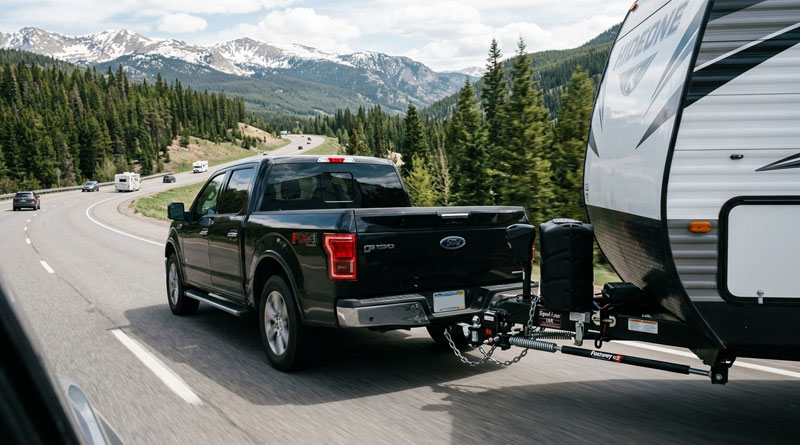
Maintaining trailer stability is critical for safe towing, especially when facing crosswinds or passing heavy trucks. The right sway control hitches use advanced weight distribution and friction technology to keep your trailer centered and your tow vehicle level. Our guide explores top-rated options that eliminate dangerous fishtailing and enhance steering control for a stress-free and secure towing experience.
1. VEVOR Sway Control Weight Distribution Hitch

- Capacity: 1,500 lbs tongue / 15,000 lbs gross
- Material: Forged high-tensile alloy steel
- Shank: 2-inch solid steel construction
- Adjustment: Adaptive leveling with tilt-head design
The VEVOR Sway Control hitch is a heavy-duty powerhouse designed for long-distance towing in challenging conditions. Its four-way dynamic stability system effectively neutralizes inertia from all directions, ensuring your trailer remains balanced during sudden lane changes. The forged alloy steel construction provides exceptional resistance to metal fatigue, making it a reliable choice for those hauling maximum loads through wind or snow.
This system excels at redistributing tongue weight across all axles, which significantly improves braking response and steering precision. The adaptive leveling system allows for quick height calibration without full disassembly, saving time during setup. With a double-layer electroplating process, the components resist rust and environmental corrosion, ensuring the hitch maintains its structural integrity and aesthetic appeal over years of frequent use.
- Pros:
- High 1,500 lb tongue weight capacity
- Easy real-time tilt adjustments
- Superior all-weather rust protection
- Cons:
- Very heavy unit to handle
- Installation requires heavy-duty tools
2. CURT 17063 Round Bar Weight Distribution Hitch

- GTW Rating: 10,000 to 14,000 lbs
- Lubrication: Dual integrated grease zerk fittings
- Spring Bars: 31-3/16 inch forged steel bars
- Finish: Carbide black powder coat
The CURT 17063 offers a remarkably smooth and quiet towing experience thanks to its integrated lubrication system. By featuring easy-access grease zerks on the hitch head, it eliminates the annoying metal-on-metal grinding noise common in weight distribution systems. This hitch provides excellent load leveling, ensuring your trailer and tow vehicle remain perfectly horizontal for improved tire traction and reduced strain on your rear suspension.
Built with a fabricated head and long forged steel spring bars, this unit is designed for reliability under heavy stress. It fits standard 2-inch receivers and comes with a pre-torqued 2-5/16-inch trailer ball, simplifying the initial setup process. The durable carbide black powder coat finish protects against the elements, making it an ideal long-term investment for RV owners and contractors hauling heavy equipment across the country.
- Pros:
- Quiet operation via zerk fittings
- High weight capacity for large RVs
- Includes pre-torqued trailer ball
- Cons:
- Round bars reduce ground clearance
- Grease can be messy during storage
3. Reese Pro Round Bar Weight Distribution Hitch

- Capacity: 8,000 lbs GTW / 800 lbs TW
- Fitment: Fits trailer frames up to 7 inches
- Shank: 8.5-inch deep drop shank included
- Brackets: No-drill clamp-on design
The Reese Pro Round Bar hitch is a versatile solution specifically engineered for camper and RV enthusiasts. It utilizes tapered spring bars that provide constant weight distribution over the axles, resulting in superior ride comfort and stability. This kit is remarkably user-friendly, featuring a no-drill installation process with clamp-on brackets that fit large trailer frames, making it compatible with a wide range of modern travel trailers.
The system includes a high-strength steel head and a pre-installed 2-5/16-inch hitch ball to get you on the road faster. With its 8.5-inch drop shank, it is particularly useful for lifted trucks or vehicles with high hitch receivers. This Reese Pro kit effectively manages trailer sway while leveling your load, providing the security needed for safe highway travel and the durability required for rugged campsite access.
- Pros:
- No-drill, easy clamp installation
- Deep drop shank for tall vehicles
- Tapered bars improve ride quality
- Cons:
- Lower weight capacity than rivals
- Limited to 7-inch frame sizes
4. Equal-i-zer 4-Point Sway Control Hitch

- Sway Control: Integrated 4-point friction system
- Ratings: 12,000 lbs GTW / 1,200 lbs TW
- Compatibility: Works with surge brake systems
- Bracket Range: 27″ – 32″ from coupler center
The Equal-i-zer 4-Point hitch is widely considered the gold standard for integrated sway control. Unlike systems that rely on add-on friction bars, this hitch uses four distinct points of friction built into the head and brackets to combat sway before it starts. This design provides maximum resistance against passing semi-trucks and side winds, offering a level of confidence and security that is unmatched in the weight distribution market.
By effectively transferring tongue weight to all axles, the Equal-i-zer ensures the front tires of your tow vehicle remain firmly planted for optimal steering and braking. It is engineered to work with almost any bumper-pull trailer, including those with surge brakes. While it requires the separate purchase of a hitch ball, its professional-grade performance and ability to eliminate stressful towing situations make it a favorite for full-time RVers.
- Pros:
- Best-in-class 4-point sway control
- Highly effective weight transfer
- Compatible with surge brakes
- Cons:
- Hitch ball must be bought separately
- Can be noisy during slow turns
5. REESE Pro-Series Friction Sway Control

- Function: Adjustable friction sway resistance
- Attachment: Spring locking pin system
- Versatility: Left or right side mounting
- Construction: Heavy-duty steel components
The REESE Pro-Series 83660 is a dedicated friction sway control unit designed to complement your existing ball mount setup. This device applies adjustable friction to resist lateral trailer movement, keeping your load steady and centered behind your vehicle. It is an ideal add-on for drivers who already have a weight distribution hitch but need extra sway protection for larger trailers or frequently windy driving routes.
Installation is straightforward, utilizing two spring locking pins for quick attachment and removal. The ability to customize the friction level allows you to fine-tune the performance based on your trailer’s weight and current road conditions. Its heavy-duty construction ensures dependable resistance on every trip, and the dual-side compatibility means you can add a second unit on the opposite side for even greater stability during heavy hauls.
- Pros:
- Affordable add-on sway protection
- Very quick to install/remove
- Easily adjustable friction levels
- Cons:
- Must be removed when reversing
- Requires a sway control ball tab
6. Camco Eaz-Lift Adjustable Sway Control

- Control: On/off lever for road conditions
- Mechanism: Double friction pads for reduction
- Side: Specific for right (passenger) side
- Material: Heavy-duty powder-coated steel
The Camco Eaz-Lift 48380 provides a convenient way to minimize trailer sway caused by passing traffic and wind gusts. Featuring double friction pads, this unit provides constant resistance to keep your trailer tracking straight. A standout feature is the on/off control, which allows the driver to quickly disengage the system when navigating dangerous or icy road conditions where sway control could interfere with traction.
This kit comes complete with all necessary hardware, including a slide bar, crank handle, and friction plate. It is designed for easy attachment using socket and spring clips, making it simple to detach when putting your RV into storage. For passenger-side mounting, this heavy-duty steel unit is a reliable and cost-effective method to enhance the safety and ease of towing your camper or utility trailer.
- Pros:
- Effective double friction pad design
- Easy on/off toggle for icy roads
- Simple clip-on attachment system
- Cons:
- Right side mounting only
- Not a full weight distribution kit
7. Camco Eaz-Lift Elite 1,000lb Hitch Kit

- Rating: 12,000 lbs GTW / 1,200 lbs TW
- Setup: Pre-installed 2-5/16″ hitch ball
- Control: Manually adjustable external sway bar
- Bars: Interchangeable universal spring bars
The Camco Eaz-Lift Elite is a comprehensive “ready-to-tow” kit that combines weight distribution with manually adjustable sway control. By evenly spreading the trailer’s weight across the vehicle’s axles, it significantly improves towing stability and prevents sagging. The kit is highly convenient, arriving with the hitch ball and sway control ball already torqued to specification, allowing for a much faster initial installation than many competitors.
This system features interchangeable spring bars that can be mounted on either side of the hitch head, providing flexibility for different trailer setups. The external sway control bar can be fine-tuned via a simple clamp adjustment, ensuring you have just the right amount of resistance for your specific load. Supporting up to 12,000 lbs, it is a robust and complete package for any serious travel trailer or cargo hauler.
- Pros:
- Complete kit with pre-installed ball
- Adjustable sway control intensity
- High 12,000 lb towing capacity
- Cons:
- External sway bar adds complexity
- Large components require storage space
How to Choose Sway Control Hitches
Towing a trailer is a balancing act. When you’re cruising down the highway, your trailer is subjected to various external forces—wind gusts, the air pressure from passing semi-trucks, and uneven road surfaces. These forces can cause “trailer sway,” a dangerous fishtailing motion that can lead to a total loss of vehicle control. Choosing the best sway control hitch is the most effective way to prevent this phenomenon. This guide will walk you through the technical aspects and practical considerations to help you find the right setup for your needs.
1. Understand the Difference Between Weight Distribution and Sway Control
While they are often sold together, weight distribution and sway control are two different things. A weight distribution hitch uses spring bars to lever the tongue weight of the trailer forward onto the front axle of your tow vehicle. This keeps your truck level and prevents the “squat” that lightens your front steering. Sway control, however, specifically targets the side-to-side motion. Many high-end hitches, like the Equal-i-zer, integrate both functions into one unit, while others use an add-on friction bar to manage sway.
2. Proportional Integrated Sway Control vs. Friction Bars
There are two primary ways a hitch manages sway. Integrated sway control uses the actual tension of the weight distribution spring bars to create friction points that hold the trailer in line. These are generally more expensive but offer superior performance because they are “always on” and don’t require extra parts to be attached. Friction bars are separate telescoping devices that connect the trailer frame to the hitch head. They are affordable and effective for smaller trailers, but they must be loosened or removed when reversing to prevent damage to the bar.
3. Match the Hitch to Your Tongue Weight
Every hitch is rated for a specific “Tongue Weight” (TW) and “Gross Trailer Weight” (GTW). It is a common mistake to buy a hitch with the highest rating possible, but this can actually be detrimental. If you use a 1,500 lb rated hitch on a trailer with only 400 lbs of tongue weight, the spring bars will be too stiff, leading to a bouncy, uncomfortable ride and potential trailer frame damage. Always aim for a hitch where your actual tongue weight falls in the middle of the hitch’s rated range.
How to Calculate Tongue Weight
Tongue weight should generally be 10-15% of your total loaded trailer weight. If you are towing a 7,000 lb camper, your tongue weight should be between 700 and 1,050 lbs. You can measure this using a dedicated tongue weight scale or a commercial truck scale (CAT scale).
4. Round Bar vs. Trunnion Bar Styles
Weight distribution hitches come in two main styles: Round Bar and Trunnion Bar. Round bars enter the hitch head from the bottom and are generally more affordable and offer a bit more vertical “flex,” which can improve ride quality on bumpy roads. However, they hang lower and can reduce ground clearance. Trunnion bars enter from the side of the hitch head. They offer a higher weight capacity and better ground clearance, making them the preferred choice for heavy-duty towing and off-road campsite access.
5. Ease of Installation and Daily Use
Some hitches require drilling into your trailer frame, while others use clamp-on brackets. If you have a rental trailer or a frame with propane tanks and battery boxes in the way, a no-drill clamp-on system is much easier to work with. Additionally, consider the “hitch-up” process. Systems that use chains are generally easier to snap into place but offer less sway control. Systems that use rigid L-brackets provide better sway control but may require the use of a “lift-assist” bar to get the spring bars into place.
6. Noise Considerations
Sway control hitches are notoriously noisy. Because they rely on friction to stop sway, you will often hear popping, grinding, and creaking sounds during slow-speed turns, such as when navigating a parking lot. Some models, like the CURT round bar series, include grease zerk fittings to lubricate the pivot points, which significantly reduces noise. Others offer “sway brackets jackets” (nylon inserts) to quiet the friction points. If you value a silent ride, look for models that prioritize lubrication or use specialized materials to dampen sound.
7. Maintenance and Durability
A sway control hitch is a mechanical device exposed to road salt, rain, and extreme heat. Look for hitches with high-quality finishes, such as carbide powder coating or electroplating, to prevent rust. Friction-based systems will eventually wear down their internal pads, so check if replacement pads are available. Lubrication is also key—regularly greasing the hitch ball and the sockets where the spring bars enter the head will ensure the system operates smoothly and lasts for many years.
8. Compatibility with Surge Brakes
If you are towing a boat trailer, you likely have “surge brakes,” which rely on the trailer’s coupler sliding forward to engage the brakes. Some sway control hitches can interfere with this sliding motion. If your trailer has surge brakes, you must choose a hitch specifically rated for them, like the Equal-i-zer. Avoid simple friction bars with surge brakes, as they can prevent the brakes from engaging or disengaging properly.
9. Adjustability for Multi-Vehicle Use
If you plan on using the same hitch for different trailers or with different tow vehicles, look for a hitch with a highly adjustable “shank.” The shank is the part that goes into your truck’s receiver. An adjustable shank allows you to raise or lower the hitch head to ensure the trailer is perfectly level, regardless of how high the truck’s rear end sits. Most quality kits include a standard shank, but deep-drop shanks are available for lifted trucks.
10. Brand Reputation and Safety Standards
When you are hurtling down the highway with 10,000 lbs behind you, you want a hitch from a brand that conducts rigorous safety testing. Stick with established names like Equal-i-zer, CURT, Reese, and Camco. These companies test their hitches to SAE J684 standards for safety and durability. They also offer robust customer support and easily accessible replacement parts, which is vital if a small component like a snap pin or bracket gets lost at a campsite.