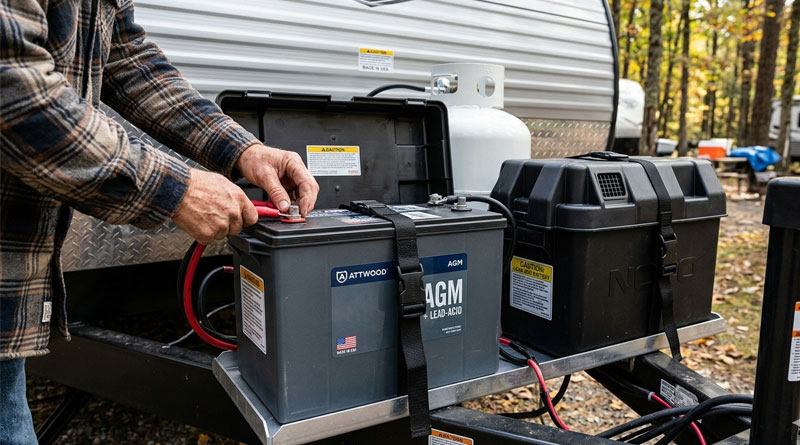
An RV battery box keeps your power source safe, secure, and protected from weather and road vibrations. Whether you camp often or just hit the road on weekends, the right box prevents dangerous spills and makes hookups simple. In this article, we’ve rounded up the best RV battery boxes for different budgets and needs—so you can pick a tough, reliable option without any hassle.
1. NOCO HM408 4D Commercial-Grade Battery Box

- Compatibility: Group 4D batteries
- Durability: Impact resistant to -40°F
- Safety: USCG and ABYC certified
- Features: Acid reservoir and full ventilation
The NOCO HM408 is a powerhouse of protection designed for heavy-duty commercial, marine, and RV batteries. Its rugged construction is built to withstand extreme environments, remaining impact-resistant even in temperatures as low as -40 degrees Fahrenheit. The box features a specialized acid reservoir that safely collects leaks, preventing damage to your vehicle’s compartment.
Installation is simplified by a four-corner fastening system and a captive lid that stays secure during transit. Large cable entry holes accommodate heavy-gauge wiring, while the full-flow ventilation system ensures that dangerous battery gases are released safely. This box offers total peace of mind for owners of larger 4D batteries who require uncompromising structural integrity.
- Pros:
- Extreme cold-weather durability
- Large cable entry ports
- Integrated acid collection reservoir
- Cons:
- Bulky footprint for small spaces
- Limited to single 4D batteries
2. Seachoice USCG-Approved Group 24 Battery Box

- Material: Acid-resistant polyethylene
- Dimensions: 10.5 x 7.25 x 10 inches
- Standards: Meets ABYC E-10 and USCG 183.420
- Inclusions: Strap and mounting hardware
The Seachoice Group 24 Battery Box provides a reliable and cost-effective solution for securing standard RV and marine batteries. Constructed from high-quality, acid-resistant polyethylene, it acts as a sturdy barrier against leaks and physical impacts. The lid is thoughtfully designed to allow easy access for wiring, ensuring your cables stay organized and protected from accidental contact.
This kit is remarkably user-friendly, coming complete with a heavy-duty hold-down strap and all necessary mounting hardware. By meeting stringent USCG and ABYC safety standards, it ensures that your battery is housed in a compliant and secure manner. It is an excellent choice for budget-conscious RVers who refuse to compromise on essential safety certifications during their travels.
- Pros:
- Affordable and reliable protection
- Includes full mounting kit
- Acid-resistant material construction
- Cons:
- Basic design without smart features
- Fits only Group 24 batteries
3. SUNAPEX Smart Battery Box Power Center

- Power Ports: USB, PD Type-C, and Cigarette Socket
- Monitoring: Integrated digital voltmeter
- Protection: 16A and 30A circuit breakers
- Compatibility: Group 24, 27, and 31 batteries
The SUNAPEX Smart Battery Box transforms a standard battery into a versatile DIY power station. Equipped with a digital voltmeter and various output ports, it allows you to charge devices directly from the box while monitoring your battery’s health in real-time. The reinforced honeycomb structure provides exceptional impact resistance, ensuring the internal electronics remain safe during rugged off-road adventures.
Safety is a priority with this smart box, featuring integrated circuit breakers that automatically cut power during overloads. The design includes ergonomic side handles for easy portability and dual-sided filtered vents that maintain airflow while blocking moisture. Whether you are using it for an RV, boat, or solar setup, this power center offers unmatched functionality and device protection for modern campers.
- Pros:
- Versatile multi-port power station
- Real-time battery voltage monitoring
- Fits multiple battery group sizes
- Cons:
- More expensive than standard boxes
- Complex for simple storage needs
4. Camco Vented RV/Marine Battery Box
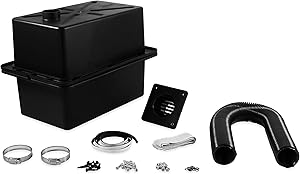
- Ventilation: Integrated vent hose and grille
- Fitment: Single Group 24 battery
- Safety: USCG CFR 183.420 compliant
- Components: Includes foam tape and mounting plate
The Camco 55371 is specifically designed for indoor storage compartments where ventilation is mandatory. This vented battery box includes a complete kit with a hose and louvered grille, allowing hazardous hydrogen gases to be safely expelled outside the RV. Its heavy-duty construction shields the battery from physical collisions and environmental contaminants, ensuring a longer lifespan for your power source.
Meeting all USCG and ABYC specifications, this box is a reliable choice for maintaining safety standards. The included foam tape and mounting hardware provide a secure, rattle-free installation within your camper’s storage area. For RVers who store their batteries inside a living or storage bay, the Camco vented system is an essential upgrade to prevent dangerous gas buildup.
- Pros:
- Complete venting kit included
- Prevents hazardous gas accumulation
- Sturdy and collision-resistant
- Cons:
- Requires drilling for vent exit
- Limited to Group 24 size
5. NOCO Snap-Top BG27 Heavy-Duty Battery Box
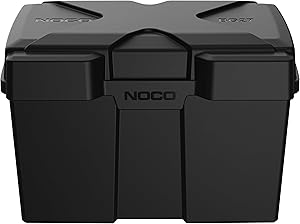
- Material: Reinforced honeycomb lattice
- Temperature: Impact resistant to -20°F
- Installation: Pre-drilled internal pilot holes
- Routing: Multi-directional cable entry ports
The NOCO Snap-Top BG27 represents a significant redesign in battery housing, offering superior structural rigidity. Its unique honeycomb lattice structure makes it one of the most rugged boxes available, capable of withstanding impacts in freezing temperatures. The snap-top lid fits perfectly to prevent accidental contact with terminals while allowing for optional ventilation holes for enhanced airflow when needed.
Users will appreciate the simplified installation process, which offers both a direct-mount option via pre-drilled holes or a traditional strap-mount system. The enhanced cable entry ports allow for routing from multiple directions, providing flexibility for complex RV wiring setups. Resistant to acid, gas, and UV rays, this heavy-duty box is built to endure the most demanding travel conditions year after year.
- Pros:
- Highly rigid honeycomb design
- Flexible cable routing options
- No-strap mounting capability
- Cons:
- Snap-top can be tight to open
- Slightly heavier than standard boxes
6. Camco Double Battery Box for GC2 or Group 24

- Capacity: Two 6V GC2 or two 12V Group 24
- Material: Corrosion-resilient polymer
- Inner Dimensions: 21.5 x 7.37 x 11.18 inches
- Hardware: Includes 2 straps and 4 clamps
The Camco Double Battery Box is the ideal solution for RVers running a dual-battery bank. This heavy-duty container is designed to hold two 6V GC2 batteries or two 12V Group 24 batteries side-by-side. Made from a corrosion-resilient polymer, it ensures that any acid leaks are contained, protecting your RV’s frame and storage compartment from long-term damage and rust.
This box is particularly popular among boondockers who use 6V battery series configurations for increased capacity. It meets USCG and ABYC specifications when paired with 6V batteries, ensuring your high-capacity setup remains safe and compliant. With two included straps and mounting clamps, this double box provides a secure and stable foundation for your camper’s expanded electrical system during transit.
- Pros:
- Fits dual 6V GC2 batteries
- Excellent acid leak containment
- Saves space compared to two boxes
- Cons:
- Very long footprint required
- Heavy when fully loaded
7. Attwood 9067-1 Vented Group 27 Battery Box

- Fitment: Group 27 Series batteries
- Strength: 40-inch, 350lb rated strap
- Material: Acid-resistant polypropylene
- Safety: Integrated ventilation system
The Attwood 9067-1 is a robustly engineered box designed specifically for Group 27 series batteries. Its durable polypropylene construction is acid-resistant and impact-tested across a wide temperature range, from -20°F to +120°F. The box features an integrated ventilation system that allows hazardous gases to escape while its clever design minimizes the risk of water intrusion from the outside.
One of the standout features is the heavy-duty hold-down strap, which is rated to withstand 350 lbs of force—nearly four times the Coast Guard’s minimum requirement. This ensures that even in rough waters or bumpy roads, your battery stays exactly where you installed it. Compliant with ABYC and USCG standards, this Attwood box is a premium choice for securing larger marine and RV batteries.
- Pros:
- Exceptionally strong hold-down strap
- Large Group 27 compatibility
- Excellent water intrusion resistance
- Cons:
- Taller profile than standard boxes
- Basic aesthetic design
How to Choose RV Battery Boxes
Selecting the best RV battery box is about more than just finding a plastic container; it is a vital safety decision that protects your vehicle and your health. Batteries, especially lead-acid types, contain corrosive fluids and emit explosive gases during the charging process. A high-quality box ensures these hazards are contained and safely managed while protecting the battery from vibration and impact. In this comprehensive guide, we will break down the essential factors you must consider to find the perfect housing for your power system.
Understand Battery Group Sizes
The most important factor in choosing a box is ensuring it fits your specific battery “Group Size.” This industry-standard term refers to the physical dimensions of the battery. Common RV sizes include Group 24, Group 27, and Group 31. If you buy a box designed for a Group 24 battery but own a Group 27, the battery simply will not fit. Conversely, putting a small battery in a large box can lead to excessive movement during travel, which can damage the terminals. Always measure your battery’s length, width, and height (including terminals) before purchasing.
Material Durability and Impact Resistance
RV battery boxes are typically made from heavy-duty polymers like polypropylene or polyethylene. However, the quality of these plastics varies significantly. The best boxes are “impact-resistant,” meaning they won’t crack if a heavy object strikes them or if the RV hits a significant pothole. Look for boxes with a reinforced structure, such as NOCO’s honeycomb design, which adds rigidity without adding excessive weight. Additionally, ensure the material is rated for extreme temperatures; low-quality plastic can become brittle and shatter in freezing winter conditions.
Ventilation Requirements
Managing Hazardous Gases
When a lead-acid battery charges, it produces hydrogen gas, which is highly flammable and potentially explosive in enclosed spaces. If your battery is stored inside an RV storage bay or under a bed, you must use a vented battery box. These boxes include ports and hoses that channel gases to the exterior of the vehicle. If your battery is mounted externally on the trailer tongue, a standard box with integrated lid vents is usually sufficient, as the natural airflow will dissipate the gases.
Protecting Against Water Intrusion
While ventilation is necessary, you also want a box that prevents rain and road spray from entering. The best designs feature “full-flow” ventilation that allows air to circulate while utilizing baffled entries to block water. This is particularly important for tongue-mounted batteries that are directly exposed to rain and car wash spray.
Acid Containment and Reservoirs
Batteries can leak or “boil over” if they are overcharged or damaged. Without a box, this acid would eat through your RV’s metal frame or storage compartment floor. A quality battery box should be completely acid-resistant and ideally feature an integrated reservoir at the bottom. This reservoir collects any spilled fluid, keeping it away from the battery’s base and preventing it from leaking onto your vehicle. Check the interior bottom of the box to ensure there are no drainage holes that would allow acid to escape.
Mounting and Security Systems
A battery box is only as good as its mounting system. Most boxes use a heavy-duty nylon strap to hold the lid in place and secure the box to the RV frame. Look for straps with high-strength buckles and a high “break strength” rating (ideally 300 lbs or more). Some modern boxes now offer “strap-free” mounting, where the box is screwed directly into the mounting tray through internal pilot holes. This provides a cleaner look and a more permanent, stable installation for rugged off-road travel.
Smart Features and Power Centers
For modern campers, a simple plastic box might not be enough. “Smart” battery boxes or “Power Centers” include built-in electronics like digital voltmeters, USB ports, and cigarette lighter sockets. These are excellent for boondocking, as they allow you to charge phones or run small appliances directly from the box without complicated wiring. If you choose a smart box, ensure it includes integrated circuit breakers or fuses to protect your devices from power surges.
Environmental and Chemical Resistance
An RV battery box is exposed to more than just rain. It must be able to withstand UV rays from the sun, which can degrade plastic over time, as well as oil, gas, and road salt. UV-resistant materials ensure the box doesn’t turn chalky or crack after a few years of sun exposure. Resistance to automotive chemicals is also vital if the box is located in a storage bay where other maintenance supplies are kept.
Certifications to Look For
To ensure you are buying a safe product, check for certifications from the United States Coast Guard (USCG) and the American Boat and Yacht Council (ABYC). While these are technically marine standards, they are the gold standard for RV safety as well. These certifications ensure the box has been tested for acid containment, ventilation, and the ability to hold the battery secure during high-impact events.
Single vs. Double Battery Configurations
If you have a large power requirement, you might be running multiple batteries. You can either buy two separate boxes or a single “Double Battery Box.” Double boxes are often more space-efficient and easier to secure than two individual units. They are especially popular for those using two 6V GC2 batteries wired in series. Ensure that a double box provides adequate separation or cushioning to prevent the two batteries from rubbing against each other during transit.
Price vs. Long-Term Value
While a basic battery box can be found for under $20, it may lack the UV protection and impact resistance of a $50-100 model. Considering a new RV battery can cost anywhere from $150 to $800, the box is a relatively cheap insurance policy. Investing in a high-quality NOCO or Camco box ensures that your expensive battery is protected from the elements and physical damage, potentially saving you hundreds of dollars in replacement costs and repairs to your RV’s frame.