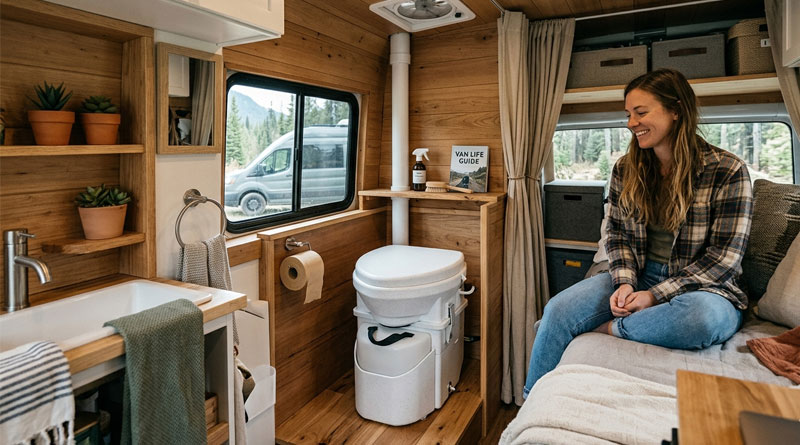
If you live or travel in a van, a composting toilet can be a game-changer. It uses little to no water, separates liquid from solid waste, and turns everything into safe compost. No black tank, no dumping fees, and way less smell. But with so many options on the market, which one is truly best for van life? This guide breaks down the top picks based on size, ease of use, and budget, so you can find the right fit for your home on wheels.
1. Separett Tiny Urine-Separating Toilet
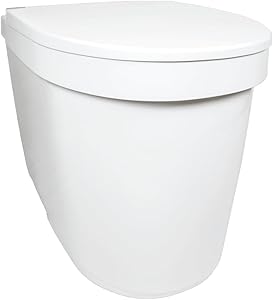
- Type: Self-contained urine-separating
- Capacity: 2-gallon urine container
- Ventilation: Built-in 12V fan system
- Waste: Solids in biodegradable bags
The Separett Tiny is a Swedish-engineered masterpiece designed specifically for the tightest van builds. Its sleek, modern aesthetic mimics a traditional home toilet, but its waterless design saves precious space and weight. The built-in ventilation fan is exceptionally efficient, constantly pulling air through the unit to remove moisture and odors, ensuring your living area stays fresh regardless of the weather outside.
Waste management is remarkably simple with this unit. It features an emptying sensor that alerts you when the liquid container is full, preventing messy overflows. Liquids are stored in a removable internal bottle, while solids are collected in compostable bags for easy disposal. It is a reliable, high-quality choice for van lifers who want a permanent, worry-free bathroom solution without the need for complex plumbing or external tanks.
- Pros:
- Highly effective odor-free fan
- Compact footprint for tiny builds
- Integrated liquid level sensor
- Cons:
- Requires 12V power for fan
- Higher price point than portables
- Requires external venting hole
2. TRELINO Composting Toilet Evo S
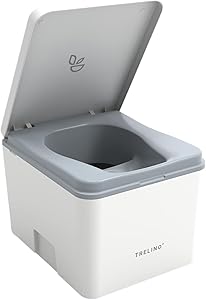
- Dimensions: 13 x 15.4 x 11.7 inches
- Capacity: 1.2 gal urine / 1.6 gal solids
- Weight Limit: Supports up to 330 lbs
- Material: Recyclable ABS plastic
The TRELINO Evo S is the ultimate portable solution for van lifers who value minimalism and durability. Made in Germany, this compact unit features a clean, white design that fits perfectly under benches or in small cabinets. Unlike larger units, it doesn’t require electricity or a fan to function; instead, it relies on effective separation and drying to keep odors at bay, making it truly off-grid ready.
Despite its small size, the Evo S is incredibly robust and can support significant weight. The separate containers for liquids and solids are easy to access and clean, providing roughly 8-11 uses before needing attention. It is a hygienic, chemical-free alternative to traditional porta-potties. For those seeking independence from dump stations in a lightweight, water-resistant package, the Trelino is a top-tier choice that prioritizes simplicity and German engineering.
- Pros:
- No power or fan required
- Extremely lightweight and portable
- Sustainable recyclable materials
- Cons:
- Smaller capacity requires frequent emptying
- No active ventilation for moisture
- Seat height is quite low
3. TROBOLO WandaGO Portable Composting Toilet

- Adjustability: 12.0” or 17.2” seat height
- Weight: Ultralight 10.4 lbs
- Capacity: 10-20 liquid uses
- Safety: SafeShell spill-proof system
The TROBOLO WandaGO offers a unique height-adjustment feature that makes it one of the most ergonomic portable toilets available. By nesting the base, you can switch between a low-profile storage height and a full-size comfortable seating position. This is a game-changer for vans where vertical space is limited during travel but comfort is desired during use. The SafeShell system ensures that liquids stay put even on bumpy roads.
This unit is designed for the active traveler, weighing just over ten pounds while remaining sturdy enough for daily use. It doesn’t require chemicals, electricity, or water, utilizing a simple diverting mechanism to keep waste manageable and odorless. The built-in urine level indicator allows for quick checks, so you never have to guess when it’s time for maintenance. It is an efficient, travel-ready system that blends portability with home-like comfort perfectly.
- Pros:
- Adjustable seat for better ergonomics
- Spill-proof design for travel
- Integrated urine level indicator
- Cons:
- Manual separation monitoring needed
- Plastic look is less “premium”
- Solids capacity is moderate
4. BOXIO Portable Separation Toilet

- Form Factor: Eurobox stackable design
- Dimensions: 14.7″ x 11.8″ x 11.0″
- Capacity: 5L (1.3 gal) urine canister
- Weight: Lightweight 6.2 lbs
The BOXIO toilet is a favorite among minimalist van lifers due to its stackable Eurobox shape. This clever design allows it to be integrated into modular van builds alongside other storage crates effortlessly. It is one of the lightest separation toilets on the market, yet it is robust enough to hold up to 330 pounds. Using the BOXIO system with hemp litter and biodegradable bags makes waste management entirely waterless and chemical-free.
While compact, the 5-liter urine canister handles about 8 to 10 visits, making it ideal for solo travelers or weekend trips. The black design is not only stylish but also incredibly easy to clean and maintain. Because it requires no installation, it can be moved from the van to a tent or car with ease. It is the perfect entry-level composting toilet for those who want a simple, durable, and space-saving alternative to bulky chemical potties.
- Pros:
- Extremely space-saving Eurobox shape
- Very affordable price point
- Virtually indestructible construction
- Cons:
- Very low seating position
- Small capacity requires frequent dumping
- No luxury features or sensors
5. Cuddy Lite Portable Liquid-Diverting Toilet
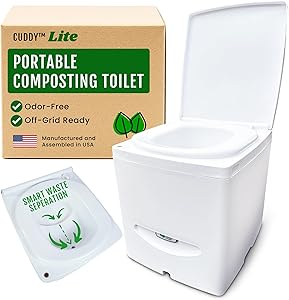
- Indicator: LED liquid full light
- Power: Standard 9V battery (for LED)
- Solids: Removable bin with cover
- Design: XL drop-zone for hygiene
Cuddy Lite is built for life on the move, combining a small footprint with advanced user features. The standout feature is the LED full indicator for liquids, which alerts you before an overflow occurs without requiring a 12V hardwire setup. This makes it a “smart” portable option that runs independently on a 9V battery. The XL drop-zone is another hygiene win, providing a large opening that prevents accidental messes during use.
The unit is designed for flexibility, allowing for either a freestanding setup or a flush-fit installation in tight van bathrooms. Its liquid-diverting system is highly effective at odor control by keeping the waste separate and dry. Maintenance is simplified with a removable solids bin that can be easily lined with a bag. For van lifers who want the features of a high-end composting toilet with the portability of a camping model, the Cuddy Lite is a versatile choice.
- Pros:
- Large, clean drop-zone opening
- Battery-powered LED level alert
- Small enough for tiny van builds
- Cons:
- Requires 9V battery maintenance
- Lacks a built-in agitator
- Higher cost than basic crates
6. OGO Origin Electric Composting Toilet

- Agitator: 12V electric push-button
- Footprint: Compact 15″ x 16″
- Capacity: 25-30 solids uses
- Construction: Durable polypropylene
The OGO Origin is the “smart toilet” of the van life world, replacing the manual crank found on many composting toilets with an effortless electric agitator. With just a tap of a button, the internal motor mixes solids, promoting faster breakdown and better odor control without the physical chore. Its square, Scandinavian design is intended to fit into premium van builds where space and aesthetics are equally important.
Despite its rich feature set, it maintains one of the smallest footprints in the electric category. The 2.4-gallon urine bottle is easy to dump, while the solids bin can handle up to 30 uses, making it ideal for full-time couples. It runs on a low 12V draw and includes quiet fan ventilation to ensure your van smells like a home, not a campsite. If you want a civilized, effortless experience with a high-end look, the OGO Origin is a top contender.
- Pros:
- Push-button agitator saves effort
- Modern, premium appliance look
- High solids capacity for size
- Cons:
- Requires 12V wiring installation
- Heavyweight compared to portables
- Premium price for electric tech
How to Choose Composting Toilet For Vanlife
Living in a van presents unique challenges, especially when it comes to waste management. Traditional RV toilets require a “black tank” and frequent visits to specialized dump stations, which can severely limit your freedom. Composting toilets have become the gold standard for van life because they are waterless, eco-friendly, and drastically reduce the need for infrastructure. However, with different styles ranging from simple crates to electric-powered units, choosing the right one requires careful consideration of your build, lifestyle, and budget.
The Principle of Urine Diversion
Almost all the “best” composting toilets for vans are actually urine-diverting dry toilets (UDDT). The primary source of bad odors in a toilet is the mixing of liquids and solids, which creates anaerobic conditions and sewage smells. By separating the urine into a front bottle and solids into a rear bin, the waste stays dry. Dry solids typically smell like damp earth or mulch rather than sewage. When shopping, prioritize units that have a clear and robust diversion mechanism to ensure long-term odor control.
Size and Footprint: Space is Everything
In a van build, every inch counts. You need to measure not just the toilet itself, but the clearance required for the lid to open and for you to sit comfortably.
Standard Units: These are often wider and deeper, requiring a dedicated bathroom closet or a sliding drawer.
Compact/Portable Units: Models like the BOXIO or Trelino are designed to fit under benches or in small storage compartments.
Consider where the toilet will “live” and whether you need it to be permanent or portable. If you have a small Sprinter or Transit, a compact footprint is usually non-negotiable.
Capacity vs. Emptying Frequency
Capacity determines how long you can stay off-grid before needing to find a disposal point.
Urine Container: Most van toilets have a 1.2 to 2.4-gallon bottle. Depending on whether you are solo or a couple, this usually needs emptying every 2 to 4 days.
Solids Bin: This can last anywhere from a week to a month. Units with agitators (cranks or electric) can handle more waste because they mix it with a medium (like coco coir), compacting it and speeding up the drying process.
If you plan on long stints in the wilderness, look for larger capacities or the ability to carry spare urine bottles.
Odor Control: Active vs. Passive Ventilation
Managing smells is the biggest concern for most van lifers.
Active Ventilation: High-end units like the Separett or OGO use a small 12V fan to constantly pull air out of the toilet and vent it outside the van. This is the most effective way to eliminate odors and manage moisture.
Passive Ventilation: Portable units rely on “cover material” (sawdust, coco coir, or hemp) to dry out solids and block smells. While effective for short trips, active ventilation is superior for full-time living or in humid climates.
Manual Cranking vs. Electric Agitators
To keep the composting process working, the solids bin needs to be mixed periodically.
Manual Crank: You turn a handle on the side after use. This is simple and requires no power, but the handle can be bulky.
Electric Agitator: Units like the OGO use a push-button motor. This is more “civilized” and saves space since there is no side handle, but it requires a 12V power connection.
No Agitator: Portable units usually don’t have these; you simply cover the waste with litter manually. This is the simplest design but requires more “litter” to be stored in the van.
Installation Requirements
Before buying, evaluate your technical skills.
Permanent Install: Requires drilling a hole through your van floor or wall for a vent pipe and wiring into your 12V battery system.
Portable: No installation required. You can use it anywhere and take it out of the van to clean it.
If you are in a temporary build or don’t want to cut holes in your van, a portable, non-vented unit is the best path forward.
Ergonomics and Comfort
Don’t forget that you have to sit on this every day. Some portable units are very low to the ground (11-12 inches), which can feel like squatting. If you have knee issues or simply prefer home-like comfort, look for “full-height” units or those with adjustable seats like the TROBOLO WandaGO. Also, check the “drop-zone” size; larger openings are much easier to keep clean and require less precision during use.
Weight Limits and Durability
Van gear takes a beating from road vibrations. Look for toilets made from high-quality plastics like ABS or polypropylene. These materials are not only durable but also non-porous, meaning they won’t absorb smells over time. Check the weight limit as well—most quality composting toilets support 300+ lbs, ensuring they stay stable even on uneven ground.
Accessories and Consumables
A composting toilet is a system, not just a box. You will need a constant supply of “compost medium” (coco coir blocks, peat moss, or hemp litter) and biodegradable bags. Consider how much space you have to store these supplies. Some brands offer stackable boxes or integrated storage for these items, which can make your daily routine much smoother.
Price and Long-Term Value
Composting toilets are an investment. While a $200 portable crate might seem attractive, a $1,000 electric unit might offer the convenience you need for long-term van life. Consider your “cost per use” and how much you value avoiding the “gross” factor. A well-built unit can last for years and significantly increase the resale value of your van conversion.
Final Verdict: Which is Right for You?
Ultimately, the best composting toilet for your van depends on your power setup and space. If you have a robust electrical system and a dedicated bathroom, an electric, vented unit is worth every penny for the comfort it provides. If you are keeping things simple and mobile, a high-quality portable separation toilet will give you the freedom to go anywhere without the smell or the hassle of a traditional black tank.