If your RV has a fiberglass roof, keeping it sealed is key to avoiding costly leaks. The best RV roof coatings for fiberglass create a durable, waterproof barrier that fights sun damage and cracking. In this article, we break down top-rated coatings that are easy to apply, long-lasting, and safe for your RV’s surface. Read on to find the perfect protection for your home on wheels.
1. Tough Grade RV Flex Coat Rubber Roof Coating

- Coverage: Up to 200 sq. ft. per gallon
- Drying Time: 1 to 1.5 hours (touch)
- Formula: Non-toxic, eco-friendly water-based
- Versatility: Suitable for EPDM, TPO, PVC, and protrusions
Tough Grade RV Flex Coat is an excellent choice for owners looking for a quick-drying, versatile sealant. Its impressive coverage of 200 square feet per gallon makes it a cost-effective solution for larger maintenance projects. The formula is designed to expand and contract with your roof’s movement, ensuring that the seal remains intact despite extreme temperature fluctuations or vibrations during highway travel.
This coating is particularly effective at sealing around roof protrusions like air conditioners and vents where leaks often start. Because it is non-toxic and low-VOC, it is safe to apply in various environments without harsh odors. The rapid drying time allows for multi-coat applications in a single day, significantly shortening your maintenance window while providing a durable, impact-resistant finish that stands up to the rigors of the road.
- Pros:
- Exceptional coverage per gallon
- Environmentally friendly formula
- Very fast initial drying time
- Cons:
- Requires 24 hours for full cure
- Best results require multiple coats
- May need specific surface prep
2. Ziollo RV Roof Silicone Sealant

- Material: 100% Silicone liquid rubber
- Application: No primer needed (except TPO)
- Temp Reduction: Lowers interior up to 15°F
- Warranty: 10-year manufacturer protection
Ziollo RV Roof Sealant is a premium silicone-based solution that prioritizes ease of use and long-term durability. Its “one coat” promise is a major advantage for busy RVers, as it typically requires no primer on fiberglass surfaces. The self-leveling formula flows smoothly across the roof, filling in small cracks and seams effortlessly to create a permanent, waterproof barrier that won’t crack under intense UV exposure.
Beyond waterproofing, Ziollo excels at climate control. The highly reflective white surface can drop interior temperatures by up to 15°F, reducing the strain on your air conditioning unit during summer trips. Whether you are dealing with the dry heat of a desert or the freezing temperatures of a northern winter, this flexible silicone remains pliable. It is a “set it and forget it” system backed by a decade-long warranty for peace of mind.
- Pros:
- One-coat application saves time
- Excellent thermal reflection
- No primer required for fiberglass
- Cons:
- Higher upfront cost than acrylic
- Silicone is hard to paint over
- Surface must be perfectly clean
3. Kohree 100% Silicone RV Roof Coating

- Composition: 100% Silicone formula
- Coverage: 50 sq. ft. per gallon
- Cure Time: 48 hours for full stability
- Packaging: Upgraded aluminum inner bag
Kohree offers a robust silicone coating that specializes in elasticity and breathability. This is vital for fiberglass roofs that may experience subtle shifts; the coating stretches rather than cracking. It creates a permanent bond on various surfaces, making it a versatile tool for general repairs. The upgraded packaging with a larger barrel opening is a thoughtful touch, accommodating wider brushes and rollers for a more efficient application process.
The formula is low-odor and harmless, making it a safe choice for families and pets. While it provides a strong waterproof seal, it also acts as a solar shield, reflecting UV rays to protect the underlying fiberglass from sun-induced degradation. While the coverage is lower than some acrylics, the thickness of the silicone provides a “commercial grade” feel. It is an ideal solution for fixing persistent leaks and refreshing the look of an aging camper roof.
- Pros:
- Superior elasticity prevents cracking
- Harmless, low-odor formula
- User-friendly wide-mouth packaging
- Cons:
- Requires 2-3 coats for best results
- Relatively slow 48-hour cure time
- Lower coverage rate per gallon
4. Countryman Coatings 100% Silicone Top Coat

- Reflectivity: Reflects 90% of UV rays
- Adhesion: Exceeds building code requirements
- Origin: Proudly Made in America
- Water Resistance: Ponding water resistant
Countryman Coatings provides a heavy-duty silicone top coat that is specifically engineered to handle standing or “ponding” water—a common issue on flat RV roofs. This American-made product features industry-leading reflectivity, blocking nearly 90% of UV rays. This can lead to a significant 20% reduction in energy usage, as your interior stays naturally cooler without constant AC. It is a high-solids formula designed to be applied thick and stay put.
One of the standout features of Countryman is its incredible adhesion. It is designed to bond to almost any surface, including existing acrylic or urethane coatings, without the need for a primer. This versatility makes it a “rescue” product for roofs that are aging or failing but are still structurally sound. It allows for a single, thick application that provides professional-level protection against leaks, cracks, and seams with significantly less labor than multi-pass systems.
- Pros:
- Unmatched UV reflection (90%)
- Safe for roofs with ponding water
- Excellent adhesion to old coatings
- Cons:
- Heavy 4.75-gallon pails are bulky
- Requires careful surface cleaning
- Industrial-strength price point
5. Dicor Fiberglass RV Roof Coating System

- Base: 100% Acrylic formula
- Specific Use: Optimized for fiberglass maintenance
- Flexibility: Super flexible elastomeric properties
- Color: Brilliant white aesthetic finish
Dicor is perhaps the most recognized name in RV roofing, and their Fiberglass Roof Coating System is specifically tailored for this substrate. Unlike multipurpose coatings, this 100% acrylic formula is chemically optimized to bond with fiberglass when used with Dicor’s preparatory cleaners. It acts as both a protective shield and a cosmetic upgrade, giving old, chalky, or worn roofs a brilliant white, factory-fresh appearance that looks great and performs better.
The coating is highly elastomeric, meaning it maintains a “rubber-like” flexibility that prevents it from becoming brittle over time. It effectively reflects the sun’s heat, keeping the motorhome interior much cooler during peak daylight hours. While it works best as part of the full Dicor system (including their primer), the result is a professional-grade finish that resists the typical oxidation issues associated with aging fiberglass RV roofs.
- Pros:
- Specialized formula for fiberglass
- Restores a factory-new white look
- Trusted brand in the RV industry
- Cons:
- Requires specific Dicor prep products
- Acrylic is less water-tolerant than silicone
- Needs multiple coats for full depth
6. Liquid Rubber RV Roof Sealant 5 Gallon
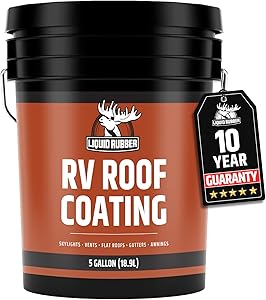
- Safety: Zero VOC, water-based formula
- Longevity: 10 years of trusted protection
- System: Easy 3-step application process
- Container: 5-gallon professional-grade pail
Liquid Rubber RV Roof Sealant is a top-tier elastomeric coating that provides a complete waterproof membrane for fiberglass and other surfaces. It is famous for its “weekend project” simplicity, offering a straightforward 3-step system that includes cleaning, priming, and coating. The result is a seamless, brilliant white finish that blocks solar heat and prevents leaks. Being water-based and zero-VOC, it is one of the safest products to apply and store.
This product is highly flexible and maintains its integrity across all temperatures. One 5-gallon pail is perfectly sized to cover a 30-foot RV with the recommended thickness. It is designed to work in tandem with Liquid Rubber’s seam tapes and lap sealants, creating a unified, watertight system. Backed by a 10-year promise of protection, it is a professional-grade choice for those who want to ensure their camper stays dry for a decade or more.
- Pros:
- Environmentally safe zero-VOC formula
- Long 10-year durability rating
- Easy-to-follow 3-step system
- Cons:
- Primer often required for best results
- Must be stored above freezing
- Pail is heavy for DIY handling
7. BEEST Flexible Liquid Rubber RV Roof Coating

- Origin: Made in Pennsylvania, USA
- Thickness: Requires 1 gal/50 sq. ft.
- Safety: Solvent-free and ultra-low VOC
- Cure Time: 48 hours for maximum strength
BEEST RV Roof Coating is an ultra-strong, flexible liquid rubber sealant that emphasizes UV stability and weather resistance. Manufactured by an American family-owned company, this coating is designed to withstand extreme temperature ranges without degrading. It works as a comprehensive sealer for fiberglass, metal, and even wood, making it a handy all-around product for RV maintenance. The finish is highly reflective, acting as a solar barrier to protect your roof.
The application is remarkably simple, requiring only basic tools like a brush or roller. While it requires 2-3 heavy coats to reach its final protective thickness, the low-VOC, solvent-free formula makes the process pleasant and safe for humans and pets. BEEST recommends a 4-hour wait between coats, with a full cure achieved within 48 hours. It is a reliable, high-coverage option that comes with excellent customer support and a 100% satisfaction guarantee.
- Pros:
- Superior UV and weather resistance
- Eco-friendly and safe around pets
- Strong American-made quality control
- Cons:
- Needs multiple heavy coats
- EPDM surfaces require separate primer
- Longer full cure time (48 hours)
How to Choose RV Roof Coatings For Fiberglass
Fiberglass RV roofs are prized for their sleek look and structural rigidity. However, they are not invincible. Over years of exposure to the sun’s UV rays, fiberglass can oxidize, becoming chalky and brittle. This leads to hairline cracks (crazing) that eventually allow water to seep into the roof’s wooden substrate. Selecting the right coating is the best way to restore the roof’s integrity and avoid a massive repair bill down the line. This guide will help you navigate the technical nuances of fiberglass roof maintenance.
Understand the Coating Types: Silicone vs. Acrylic
The two most common choices for fiberglass roofs are silicone and acrylic (elastomeric) coatings. Each has its strengths and weaknesses.
Silicone Coatings: These are generally considered the “premium” choice. Silicone is 100% waterproof and can handle ponding water (water that sits in a low spot) indefinitely without breaking down. It offers superior UV protection and remains flexible for decades. The downside is that silicone is more expensive and, once applied, nothing else will stick to it—meaning future repairs must also use silicone.
Acrylic Coatings: Acrylics are more affordable and easier to apply for many DIYers. They offer great UV reflection and are highly breathable. However, they do not handle ponding water well and may require more frequent re-application than silicone. They are an excellent choice for well-drained fiberglass roofs that just need a refresh.
The Importance of Reflectivity and Solar Protection
One of the primary benefits of a white roof coating is its solar reflectance. High-quality coatings can reflect up to 90% of the sun’s UV rays. This is critical for fiberglass, as UV exposure is the number one cause of delamination and cracking. Furthermore, a highly reflective roof can lower the temperature of your roof surface by 30°F to 50°F, which translates to an interior that is 10°F to 15°F cooler. This energy efficiency saves money on propane or electricity and makes summer camping much more enjoyable.
Checking for Adhesion and Primer Requirements
Fiberglass is a non-porous surface, which means adhesion is the biggest challenge when applying a coating. While some high-solids silicone coatings claim to be “primer-less,” many acrylic systems require a dedicated primer to ensure the topcoat doesn’t peel off in sheets. Always check the manufacturer’s instructions. If your fiberglass is old and “chalky,” you must thoroughly scrub away the oxidation before applying anything, or the coating will simply bond to the chalky dust instead of the roof.
Coverage Rates and Thickness
When comparing prices, don’t just look at the cost per gallon; look at the coverage rate. Some coatings require 1 gallon for every 50 square feet, while others cover up to 200 square feet. However, for a roof coating to be effective, it must reach a certain “dry mil thickness.” A coating that is too thin will wear out quickly and won’t provide a true waterproof membrane. Generally, you want a finished product that feels like a thick, rubbery skin, not a thin layer of paint.
Application: DIY vs. Professional
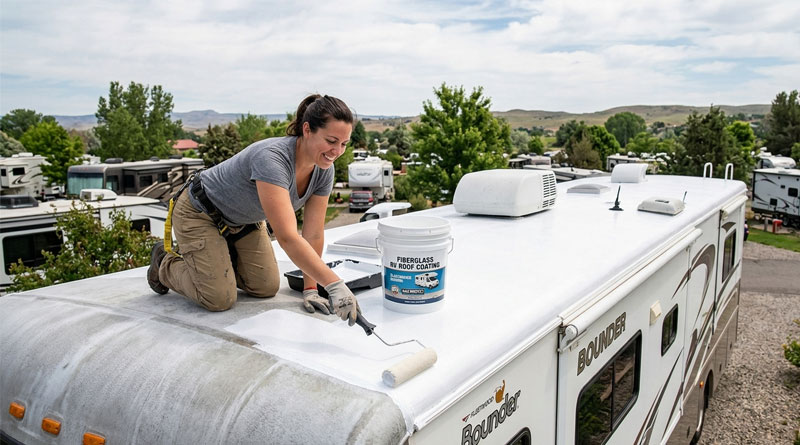
Most RV roof coatings are designed for DIY application using rollers and brushes. If you can paint a room, you can likely coat your RV roof. However, prep work is 90% of the job. You must remove all old silicone caulk (as nothing sticks to it), clean away all grease and dirt, and tape off your side walls to prevent drips. If the thought of spending two days on a ladder is daunting, professional application is an option, though it can cost thousands of dollars compared to a few hundred for materials.
Weather and Temperature Considerations
You cannot apply roof coatings in just any weather. Most products require temperatures between 50°F and 90°F. Humidity also plays a role; high humidity can significantly extend drying times. Perhaps most importantly, you need a “clear window” of at least 24 to 48 hours without rain. If it rains on a fresh acrylic coating, it can wash right off. Silicone is more moisture-tolerant but can still be ruined by a heavy downpour immediately after application.
Durability and Maintenance
A good fiberglass roof coating should last between 5 and 10 years. Silicone typically lasts longer than acrylic. However, even with a coating, you should still inspect your roof every six months. Look for any areas where the coating might have been scraped by a low-hanging branch or where seams might be showing wear. The beauty of these coatings is that they are generally easy to “touch up” if you catch a small issue early.
Compatibility with Roof Components
When coating your roof, you will likely encounter various protrusions like skylights, vents, and antennas. Ensure your chosen coating is compatible with the plastics and sealants used on these items. Many RVers use a “thickened” lap sealant or seam tape on these joints before applying the main coating over everything. This creates a “monolithic” (one-piece) roof that is virtually impossible for water to penetrate.
Weight and Balance
While not a major concern for most motorhomes, remember that several gallons of coating can add 40 to 80 pounds to your roof. For very small, lightweight travel trailers, always ensure you aren’t exceeding the manufacturer’s roof load limits, especially if you also have heavy items like solar panels or storage pods installed. For 99% of RVs, this added weight is negligible compared to the benefit of a dry interior.
Final Checklist Before Buying
Before hitting “buy,” confirm:
1. Total square footage of your roof.
2. Compatibility with fiberglass (look for “fiberglass” on the label).
3. Whether a specific primer or cleaner from the same brand is required.
4. The weather forecast for the next 72 hours.
Taking the time to choose the right product now will save you from the headache of a leaking roof during your next adventure.