When you’re traveling or living in an RV, a small fire can turn into a big emergency fast. That’s why having the right fire extinguisher on board isn’t just smart—it’s essential. But not all extinguishers work well in tight, mobile spaces like RVs. This guide breaks down the best options for your camper or motorhome, focusing on size, ease of use, and what type of fire they fight. Stay safe on the road with the right protection nearby.
1. MaxOut ABC Fire Extinguisher for RV & Marine
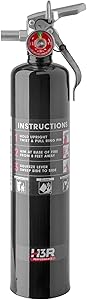
- Fire Class: A, B, and C
- Agent Weight: 2.5 lbs dry chemical
- Discharge Range: Up to 15 feet
- Certifications: UL Listed and USCG Approved
The MaxOut ABC Fire Extinguisher is a professional-grade safety tool tailored for the rigorous demands of RVing and off-roading. Its versatile dry chemical agent is capable of tackling common wood fires, flammable liquid spills, and electrical malfunctions. The non-caking formula is a standout feature, ensuring the powder remains fluid and ready to deploy even after miles of vibration on bumpy backroads.
Beyond its performance, this unit boasts a sleek high-gloss black finish that blends seamlessly into modern vehicle interiors. It includes a rugged steel mounting bracket, ensuring the canister stays secure during transit yet remains easily accessible during an emergency. Being fully rechargeable and backed by a six-year warranty, it represents a long-term investment in your road trip safety and peace of mind.
- Pros:
- Extensive 15-foot effective range
- Refillable for long-term use
- Durable all-steel mounting bracket
- Cons:
- Larger than basic mini-sprays
- Heavier than plastic-head models
- Premium price for high-gloss finish
2. Prepared Hero Mini Fire Spray 2-Pack
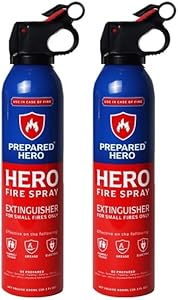
- Formula Type: 100% Organic and Non-toxic
- Container: Compact aerosol spray
- Application: Small household and vehicle fires
- Quantity: 2-Pack bundle
Prepared Hero Fire Spray offers a user-friendly alternative to heavy traditional canisters, making it an excellent secondary defense for RV kitchens. This mini extinguisher is designed for instant deployment, allowing anyone to react quickly to flare-ups without fumbling with pins or heavy valves. The organic formula is completely non-toxic, which is vital in the confined, poorly ventilated environment of a motorhome or camper.
The compact size allows these sprays to fit in glove boxes, bedside tables, or small kitchen cabinets where space is at a premium. While it doesn’t replace a primary UL-rated unit, its ease of use in stressful situations is unmatched. Since it leaves no toxic residue, cleanup after a small kitchen mishap is significantly easier than dealing with the corrosive yellow powder found in traditional ABC extinguishers.
- Pros:
- Extremely easy for seniors/teens
- Safe for pets and environment
- No messy chemical powder residue
- Cons:
- Not for large or deep fires
- One-time use only (not refillable)
- No pressure gauge included
3. Buckeye ABC Multipurpose 2.5 lb 2-Pack

- Valve Material: Anodized Aluminum
- Fire Rating: Class A, B, and C
- Monitoring: Color-coded pressure gauge
- Bracket: Specialized vehicle mount included
The Buckeye 13315 is a commercial-strength fire extinguisher designed for high-vibration environments like RVs and trucks. The anodized aluminum valve assemblies offer superior corrosion resistance and structural integrity compared to plastic alternatives. With an ABC rating, this multipurpose tool is capable of stopping wood, liquid, and electrical fires, providing comprehensive coverage for every corner of your recreational vehicle.
This 2-pack is a smart choice for larger motorhomes, allowing you to place one near the driver’s seat and another in the kitchen or outdoor bay. The color-coded gauges provide an instant status check, ensuring the units are pressurized and ready for action. Included vehicle brackets are specifically engineered to extend the service life of the units by preventing rattling and accidental discharge during long highway hauls.
- Pros:
- Strong anodized aluminum valves
- Excellent value with two units
- Corrosion-resistant construction
- Cons:
- Industrial look may not suit all
- Requires annual inspection/shaking
- Powder can be messy to clean
4. First Alert Marine and Car Fire Extinguisher

- UL Rating: 10-B:C
- Agent: Sodium Bicarbonate
- Safety: Metal pull pin with seal
- Labels: Chemical-resistant waterproof instructions
First Alert’s AUTOMAR10 is a specialized unit designed for the unique fire risks of marine and automotive environments. Rated 10-B:C, it is specifically optimized for flammable liquid and electrical fires, which are the most common threats in RV engine bays and battery compartments. The commercial-grade metal head and trigger assembly provide the durability needed for the bumping and temperature swings common in travel trailers.
The extinguisher features a waterproof and chemical-resistant label, ensuring that the critical 4-step operating instructions remain legible for years, regardless of humidity or exposure. It comes with a secure mounting bracket and strap to prevent it from becoming a projectile in a collision. Trustworthy and simple, this unit utilizes sodium bicarbonate as its extinguishing agent, making it highly effective against grease and fuel-based emergencies.
- Pros:
- Trusted commercial-grade metal head
- Resistant to water and chemicals
- Includes high-security mounting strap
- Cons:
- Not rated for Class A (wood/trash)
- White color shows dirt easily
- One-time use only
5. Ougist ABC Heavy Duty Fire Extinguisher

- Cylinder: Thick-wall steel construction
- Handle: Patented quick-release design
- Weight: 5 lb total unit weight
- Protection: 1-A:10-B:C Multipurpose rating
The Ougist ABC Fire Extinguisher stands out with its patented handle design that eliminates the need for fiddly safety pins during a crisis. This makes it an ideal choice for RV owners who may have limited hand strength or want the fastest possible deployment. The thick-wall steel construction provides a heavy-duty feel that inspires confidence, ensuring the internal pressure is maintained even in high-heat storage conditions inside a parked camper.
This 2.5lb agent model is rated for nearly every fire type you’ll encounter in an RV, from kitchen grease to faulty wiring or upholstery fires. Its high-performance formula is engineered for faster suppression, allowing you to extinguish flames before they consume the small interior space of your vehicle. It is a rugged, dependable backup plan that is easy enough for any family member to operate without prior training.
- Pros:
- Fastest pin-free deployment handle
- Superior thick steel durability
- Highly effective on grease fires
- Cons:
- Heavier than competing 2.5lb models
- Handle takes up more space
- Mounting requires more clearance
6. Kidde 10BC Single-Use Vehicle Extinguisher

- Discharge Time: 8 to 12 seconds
- Pressure: 100 PSI operating pressure
- Construction: All-metal rust-resistant valve
- Support: QR code for digital tracking
Kidde is a household name in fire safety, and their 10BC vehicle extinguisher lives up to that reputation. Specifically designed for Class B and C fires, it excels at neutralizing engine compartment emergencies involving fuel or electronics. The all-metal construction includes a durable valve assembly and an impact-resistant handle, ensuring the device survives the rough-and-tumble environment of a truck or RV storage compartment without failing when needed.
Installation is straightforward thanks to the included UL-approved plastic strap bracket, which keeps the unit snug even during off-road adventures. A quick glance at the pressure indicator tells you if the unit is still in the “green” and ready to use. With a discharge range of up to 8 feet and a 6-year limited warranty, this single-use unit is a cost-effective way to ensure your vehicle meets basic safety standards.
- Pros:
- Reputable brand and warranty
- Impact-resistant metal handle
- Handy QR code for digital info
- Cons:
- Not for wood or paper fires
- Non-rechargeable (single use)
- Strap bracket is basic plastic
7. First Alert REC5 Recreation RV Extinguisher
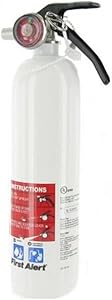
- Rating: 5-B:C Recreational
- Valve: Heavy-duty metal head
- Maintenance: Rechargeable after use
- Gauge: Color-coded corrosion-resistant metal
The First Alert REC5 is specifically marketed for recreational use, prioritizing the portability and durability needed for travel trailers and motorhomes. Its 5-B:C rating is ideal for stopping fast-spreading fires caused by grease, gasoline, or electrical shorts—the most common culprits in RV kitchens and battery setups. Unlike many smaller units, the REC5 is rechargeable, meaning a certified professional can refill it, saving you money and waste over time.
Equipped with a metal pull pin and a safety seal, the unit is protected against accidental discharge or tampering while on the move. The included mounting bracket is designed to meet the demanding needs of travel, ensuring the extinguisher doesn’t vibrate loose on the highway. Simple instructions and a clear, easy-to-read pressure gauge make it a dependable companion for any weekend camper or full-time RVer looking for affordable protection.
- Pros:
- Rechargeable for long-term value
- Compact enough for small campers
- Sturdy metal head assembly
- Cons:
- Lower 5-B rating than some models
- Limited to liquid/electrical fires
- Small capacity for large RVs
How to Choose Fire Extinguishers For RV
Owning a recreational vehicle provides a sense of freedom and adventure, but it also presents unique safety challenges. Fire is one of the most significant risks for RVers because these vehicles are essentially small, mobile houses filled with fuel, propane, high-voltage batteries, and combustible materials. In such a confined space, a small spark can become a catastrophic blaze in seconds. Choosing the right fire extinguisher isn’t just a legal requirement; it is a critical step in protecting your investment and the lives of those on board.
Understanding Fire Classifications for RVs
The first step in choosing an extinguisher is understanding the “ABC” rating system. Fires are categorized by what is fueling them, and different extinguishing agents are designed to handle specific types of flames.
Class A: Fires involving common combustibles like wood, paper, cloth, and many plastics. In an RV, this includes your upholstery, curtains, and cabinets.
Class B: Fires fueled by flammable liquids such as gasoline, oil, and grease. These are common in RV kitchens and engine bays.
Class C: Electrical fires. Given the complex wiring, solar systems, and battery banks in modern RVs, Class C protection is non-negotiable.
Why Multipurpose ABC Extinguishers are Preferred
While some specialized extinguishers only handle B and C fires, most safety experts recommend a multipurpose ABC dry chemical extinguisher for RV interiors. These units use monoammonium phosphate, which is effective on all three major fire classes. Having one tool that can handle a kitchen grease fire just as well as a smoldering cushion simplifies your response during the chaos of an emergency. However, remember that dry chemicals can be corrosive to electronics, which is why some owners keep a clean-agent or BC unit specifically for the engine or battery compartment.
Size and Agent Capacity
Size matters when it comes to fire safety. For a standard RV, a 2.5-pound or 5-pound extinguisher is the recommended baseline. A 2.5-pound unit provides roughly 8 to 12 seconds of discharge time, which is often enough to put out a small flare-up if caught immediately. Larger motorhomes should ideally carry multiple units—one in the kitchen, one near the exit door, and one in an outside storage bay near the utility connections. A “mini” spray can be a great addition for the nightstand, but it should never be your primary fire defense.
Construction Quality: Metal vs. Plastic Valves
When shopping for a fire extinguisher, pay close attention to the valve and head assembly. Cheap extinguishers often use plastic valves, which can become brittle over time or fail under high pressure. For an RV, which experiences constant vibration and temperature extremes, a metal valve (aluminum or brass) is significantly more reliable. Metal valves are also typically part of rechargeable units, whereas plastic valves are almost always found on single-use, disposable models.
Mounting and Accessibility
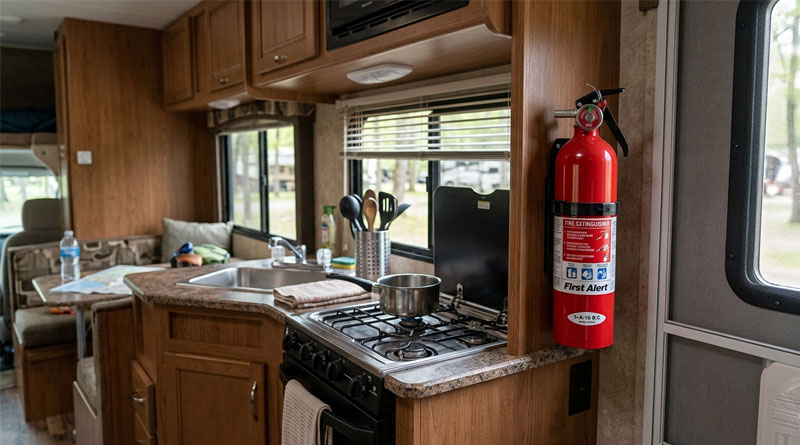
A fire extinguisher is useless if you can’t find it or if it’s buried under a pile of gear. Every extinguisher in your RV must be securely mounted in a high-visibility location. Look for units that include a vehicle-rated bracket. These brackets feature a secondary strap or a heavy-duty clasp to ensure the heavy metal canister doesn’t become a dangerous projectile if you have to slam on the brakes or are involved in a collision. The most common mounting spots are near the main exit door and within reach of the cooking area.
Maintenance and Pressure Gauges
Fire extinguishers are not “set and forget” items. They require regular inspection. Most modern units come with a pressure gauge. You should check this monthly to ensure the needle is still in the “green” zone. For dry chemical extinguishers, the powder can settle and “cake” at the bottom due to road vibrations. A common tip for RVers is to remove the extinguisher once a month, turn it upside down, and tap the bottom with a rubber mallet or your hand to keep the powder loose and ready to flow.
Disposable vs. Rechargeable Units
Disposable extinguishers are generally cheaper upfront but must be thrown away after 6 to 12 years (or after any use). Rechargeable units allow a fire safety professional to refill the agent and repressurize the canister. While rechargeable units have a higher initial cost, they are built with higher-quality components and offer better long-term value. If you use your RV frequently or live in it full-time, investing in a high-quality rechargeable unit with a metal head is the smarter choice.
Specialty Extinguishers for Engine Bays
If you have a Class A or Class C motorhome, the engine bay is a high-risk zone. Many owners install automatic fire suppression systems in these areas. These are specialized canisters that trigger automatically when they sense high heat, flooding the engine compartment with a fire-killing agent without the driver needing to open the hood (which would only feed the fire more oxygen). If you don’t have an automatic system, ensure you have a large BC-rated extinguisher accessible from the outside of the vehicle.
The Importance of Fire Safety Training
Having the best equipment is only half the battle; you must also know how to use it. Remember the P.A.S.S. method:
Pull the pin.
Aim at the base of the fire.
Squeeze the lever.
Sweep from side to side.
Practice visualizing these steps so that your reaction becomes instinctual. In the small, enclosed space of an RV, you usually only have one chance to get it right before the smoke becomes too thick to stay inside.
Final Safety Checklist for RVers
Beyond the extinguisher, ensure your RV is equipped with a working smoke detector, a CO detector, and a propane leak detector. Check the expiration dates on all these devices annually. Fire safety is a layered approach—early detection gives you the time needed to use your extinguisher or, if the fire is too large, to evacuate safely. Always prioritize life safety over property; if you can’t put the fire out in the first 10 seconds, get everyone out and call emergency services immediately.