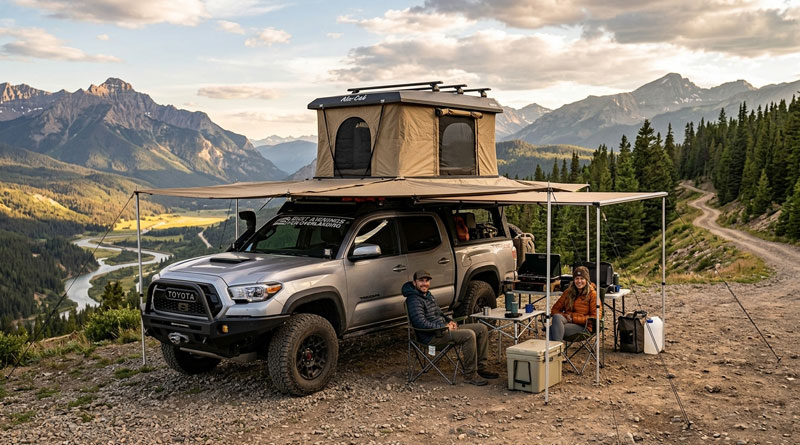
If you love camping off the beaten path, shade can be hard to find. That’s where an overlanding awning comes in. It sets up right on your vehicle, giving you quick cover from the sun or rain. Whether you need a simple pull-out shade or a full screened-in room, the right awning makes cooking, eating, and relaxing way better. Here are the best awnings for overlanding to keep you comfortable on any adventure.
1. ALL-TOP Vehicle Roof Rack Pull-Out Sun Shade

- Coverage: 54 sq.ft (6.6ft x 8.2ft)
- Fabric: 280GSM Polyester-Cotton Ripstop
- Waterproof: PU 10000mm rating
- Protection: UV 50+ Sun Protection
The ALL-TOP Vehicle Awning is a robust pull-out solution that provides generous shade for overlanding enthusiasts. Constructed from heavy-duty 280GSM poly-cotton, it boasts an incredible 10,000mm waterproof rating, ensuring you stay dry during torrential downpours. The telescopic poles feature a reliable twist-lock mechanism for quick one-minute assembly.
This system is built to last with anodized aluminum joints that prevent rust even in salty coastal environments. It includes a comprehensive mounting kit compatible with most roof racks and cargo baskets. The included 1000D PVC storage bag keeps the awning protected from trail debris and UV damage while you are in transit between campsites.
- Pros:
- Extremely high waterproof rating
- Durable rust-resistant aluminum frame
- Adjustable height for uneven terrain
- Cons:
- Requires a roof rack for installation
- Setup is best handled by two people
- Side walls sold separately
2. Overland Vehicle Systems HD Nomadic 270 LTE
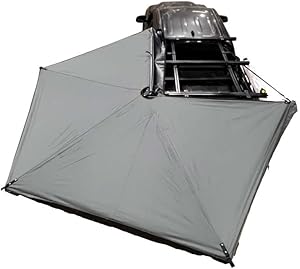
- Coverage: 65 sq. ft of shade
- Technology: Freestanding oversized hinges
- Material: 280G poly-cotton ripstop
- Seams: Heat-sealed leak-resistant seams
The HD Nomadic 270 LTE from Overland Vehicle Systems offers a sophisticated wrap-around design that covers the driver’s side and rear of your vehicle. Thanks to reinforced oversized hinges and heavy-duty rafters, this awning can often be deployed without poles in calm conditions, providing an unobstructed haven for cooking or relaxing.
The dark gray fabric is heat-sealed to prevent leaks, ensuring reliable performance in heavy rainfall. While it works as a standalone unit, the package includes four pivoting aluminum poles and ropes for added stability in high winds. It’s an ideal choice for overlanders who value a spacious, professional-grade shelter that sets up in seconds.
- Pros:
- Wraps around vehicle for rear access
- Semi-freestanding design saves time
- Excellent Four-Year Limited Warranty
- Cons:
- Heavier than standard side awnings
- Increased wind catch due to size
- Premium price point
3. VEVOR Vehicle Retractable Weatherproof Side Awning

- Dimensions: 4.6ft x 6.6ft coverage
- Coating: Black sunshade heat-prevention coating
- Fabric: 280GSM Poly-Cotton Ripstop
- Storage: 1000D PVC weatherproof bag
VEVOR provides a compact and efficient shelter solution perfect for smaller SUVs and trucks. The 38 sq.ft coverage is protected by a unique black sunshade coating that prevents heat build-up under the canopy. This makes it significantly cooler on scorching summer days compared to standard single-layer fabrics used by competitors.
Installation is straightforward with the universal mounting kit, though users should note the brackets are tucked inside the canopy itself. The twist-lock telescopic poles are made from rust-resistant anodized aluminum, ensuring durability. This awning is a fantastic budget-friendly entry into overlanding, offering professional features like UV 50+ protection and a heavy-duty storage bag at a competitive price.
- Pros:
- Internal black coating reduces heat
- Compact size fits smaller vehicles
- Very affordable price point
- Cons:
- Smaller coverage area than others
- Brackets can be hard to find in package
- One-year warranty is shorter than premium brands
4. TIMBER RIDGE 186ft² Oversized Car Side Awning

- Area: Massive 186 sq. ft coverage
- Coating: Blackout coating for full shade
- Material: Combed polyester ripstop
- Ventilation: Three-side open airflow design
The TIMBER RIDGE oversized awning is designed for those who travel with families or large groups. Offering a staggering 186 square feet of shade, this pull-out sunshade dwarfs most competitors. The blackout coating is a key technical feature, providing UPF50+ protection and total light blockage to keep your campsite significantly cooler.
Despite its massive size, the awning maintains stability through a robust frame and adjustable angles on both sides to track the sun. It mounts to almost any roof rack and packs down into a heavy-duty PVC bag. If you need a communal area for dining or gear storage that keeps everyone out of the rain, this oversized model is unbeatable.
- Pros:
- Enormous shade footprint for groups
- Excellent blackout sun protection
- Versatile angle adjustments
- Cons:
- Large size makes it heavy
- Requires significant space to deploy
- Susceptible to wind without proper staking
5. GEERTOP Large Car Awning Tarp for Tailgates

- Size: 196 x 228 inches (approx. 215 sq. ft)
- Weight: Highly portable tarp design
- Poles: 2 adjustable height telescope poles
- Fabric: Durable 210T polyester
GEERTOP offers a versatile tarp-style awning that can be configured in multiple ways depending on your campsite needs. It uses a buckle attachment system to connect to the rear or side of SUVs, vans, and trucks. This flexibility allows for “A-frame” setups for privacy or flat “awning” setups for maximum overhead shade.
Made from tear-resistant 210T polyester, this tarp provides approximately 20 square meters of shading area. Because it isn’t permanently fixed to a roof rack, it is a great option for campers who don’t want a heavy metal system hanging off their vehicle daily. It packs down small, making it a favorite for overlanders who prioritize lightweight and versatile gear.
- Pros:
- Multiple setup configurations
- Large 215 sq. ft coverage area
- Lightweight and easy to store
- Cons:
- More complex setup than pull-out styles
- Fabric is thinner than 280GSM cotton
- Buckles may not fit all custom racks
6. JOYTUTUS Vehicle Roof Rack Sun Shade

- Build: UV-proof polyester with glued corners
- Hardware: Porous adjustable L-brackets
- Speed: 1-minute quick setup/retraction
- Security: Velcro binding and internal storage
The JOYTUTUS 4.6’x6.6′ awning is designed for efficiency and ease of use. Every corner of the polyester fabric is waterproofed and glued to prevent those annoying drips during a storm. The standout feature is the porous design of the mounting brackets, which allows for a high degree of adjustment to fit various roof rails and rack configurations.
Setup is a breeze thanks to the telescopic aluminum poles that lock with a simple twist. It features integrated Velcro straps for quick construction and binding, while side storage compartments keep small accessories handy. This is a reliable, no-nonsense awning that provides essential UV50+ protection for casual campers and serious overlanders alike who value quick deployment.
- Pros:
- Glued corners for superior leak prevention
- Highly adjustable mounting hardware
- Fast one-minute deployment
- Cons:
- Compact size offers limited shade
- Poles can be tricky to lock if over-twisted
- L-brackets require periodic tightening
7. Slumberjack SJK Roadhouse Overland Tarp
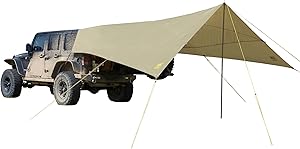
- Type: 3-in-1 versatile vehicle tarp
- Poles: Two 96″ tall heavy-duty steel poles
- Fabric: Durable 68D polyester
- Stakes: 8 super-duty 10″ steel stakes
The Slumberjack Roadhouse Tarp is a legendary piece of gear in the overlanding community, known for its extreme versatility. Its unique attachment system allows it to “hug” the rear of a vehicle, extending your living space directly from the tailgate. This makes it perfect for hunters and campers who want to cook or sleep in their vehicle with the hatch open.
The kit includes tall 96-inch steel poles, allowing even tall campers to walk underneath comfortably. It can be set up as a standard awning, an A-frame for privacy, or even as a standalone shelter without the vehicle. Backed by a Limited Lifetime Warranty, this durable 68D polyester tarp is built to handle the rigors of off-road life.
- Pros:
- Ideal for tailgate-style camping
- Includes very tall, sturdy poles
- Limited Lifetime Warranty
- Cons:
- Requires more staking than rack-mounted awnings
- Steel poles are heavier than aluminum
- Takes longer to pack away neatly
How to Choose Awnings For Overlanding
When you are deep in the backcountry, an awning is more than just a luxury; it is your primary defense against the elements. Choosing the right overlanding awning requires a balance of weight, coverage, durability, and ease of setup. This guide will help you navigate the various styles and technical specifications to ensure your vehicle is equipped for any environment.
Types of Overlanding Awnings
There are three main styles of awnings used in the overlanding community, each with distinct advantages.
Side-Mount Pull-Out Awnings: These are the most common. They bolt to your roof rack and pull out perpendicularly to the vehicle. They are generally the most affordable and fastest to set up for a single person.
270-Degree Awnings: These premium awnings wrap around the side and rear of the vehicle. They provide significantly more shade and allow you to access your kitchen or tailgate under cover. Many high-end 270 awnings are “freestanding,” meaning they don’t require poles in low wind.
Tarp/Tailgate Awnings: These are non-permanent shelters that strap to the vehicle when needed. They are versatile and lightweight but take longer to set up because they require extensive staking and guylines.
Fabric Durability and GSM Ratings
The quality of the fabric determines how well the awning will resist tearing and UV degradation. Look for 280GSM (Grams per Square Meter) polyester-cotton ripstop. This weight provides a good balance between durability and manageability. Ripstop weaving ensures that if a small puncture occurs, it won’t turn into a massive tear. 210T or 68D Polyester is common in lighter tarp-style awnings; while lighter, these are less durable and provide less insulation against the sun’s heat.
Waterproof Ratings: PU1000mm to PU10000mm
A “PU” rating indicates the amount of water pressure the fabric can withstand before leaking. A rating of 3000mm is standard for most high-quality camping gear and will handle moderate rain. Premium overlanding awnings may feature ratings up to 10,000mm. Additionally, look for glued or heat-sealed seams; these prevent water from dripping through the stitching, which is the most common failure point in cheap awnings.
Sun Protection and Coatings
Overlanding often involves exposure to intense high-altitude UV rays. An awning with UV50+ protection is essential to prevent sunburn and protect your gear. Some modern awnings now feature blackout or heat-shield coatings on the underside. These coatings can reduce the temperature under the awning by 5 to 10 degrees, making a massive difference during desert excursions.
Mounting Systems and Compatibility
Before purchasing, verify your vehicle’s mounting capability. Most pull-out awnings require L-brackets that bolt to a roof rack or crossbars. Ensure the brackets provided are made of stainless steel or powder-coated aluminum to prevent rust. If you don’t have a roof rack, you will likely be limited to tarp-style awnings that use straps and buckles to attach to wheels, door frames, or hatches.
Frame and Pole Construction
The internal frame should be made of anodized aluminum. Anodization provides a hard, protective layer that prevents the aluminum from oxidizing and jamming the telescopic poles. Twist-lock mechanisms are the industry standard for height adjustment; ensure they feel sturdy and lock securely. For the most demanding environments, consider “boxed” or “truss” rafters which provide much higher wind resistance.
Wind Resistance and Staking
Awnings are essentially giant sails. Even the most expensive freestanding 270 awning can be destroyed by a sudden gust of wind. Always check that your awning includes heavy-duty stakes and reflective guylines. High-quality kits often include “sand stakes” or “snow stakes” for specific environments. If an awning doesn’t come with decent stakes, plan to upgrade them immediately.
Storage and Transit Covers
Your awning spends most of its life inside a bag on the side of your car. This bag must be made of heavy-duty 1000D PVC to resist UV rot and physical damage from low-hanging branches on the trail. Look for oversized zippers (YKK is preferred) and reinforced stitching on the mounting points of the bag to ensure it doesn’t sag or tear over time.
Weight Considerations
Adding an awning to your roof increases your vehicle’s center of gravity. A lightweight side awning might only weigh 20 lbs, while a heavy-duty 270-degree awning can exceed 60 lbs. Consider your vehicle’s dynamic roof load rating (the weight it can safely carry while moving). If you are already carrying a rooftop tent and fuel cans, a lightweight tarp or side awning may be the safer choice.
Conclusion
The perfect overlanding awning is one that you will actually use. If it is too heavy or complicated to set up, it will stay in the bag. For most solo travelers, a 6.6’x8.2′ pull-out awning offers the best mix of value and speed. For those building a professional rig for long-term travel, a 270-degree wrap-around model provides the ultimate outdoor living experience.