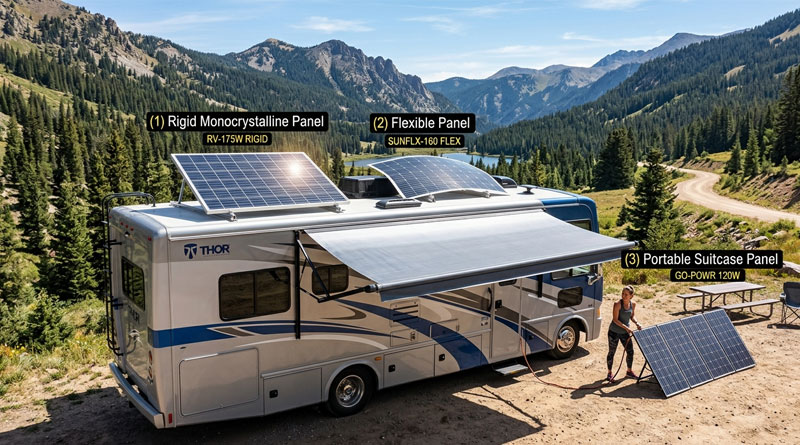
If you love taking your RV off the grid but still want to power your lights, fridge, or devices, solar panels are the perfect solution. They soak up the sun and turn it into free, clean electricity for your adventures. Not all solar panels fit an RV, though—some are too big or too weak. In this article, we’ll show you the best solar panels for RV living, focusing on easy setup, durability, and value for your money.
1. ALLPOWERS SP033 200W Portable Solar Panel
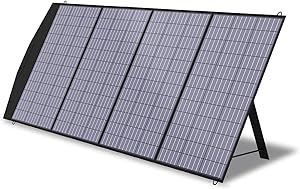
- Efficiency: 23% conversion rate
- Weight: 15.2 lbs (6.92kg)
- Connectivity: Standard MC4 connectors
- Surface: Sturdy PET material
The ALLPOWERS SP033 is an impressive 200W foldable charger designed for travelers who need a balance between power and portability. With its high 23% conversion efficiency, it delivers reliable energy even in compact dimensions. The inclusion of standard MC4 connectors makes it highly versatile, allowing for quick setup with most modern portable power stations or existing RV solar kits.
Its ultra-lightweight profile is one of its best features, folding down significantly for easy storage in tight camper spaces. The PET surface provides a layer of durability against the elements during outdoor use. Whether you are charging a 12V device or a large battery bank, this panel offers a straightforward, user-friendly solution for clean energy on the go.
- Pros:
- Extremely lightweight and easy to carry
- High energy conversion rate
- Simple plug-and-play MC4 setup
- Cons:
- PET surface is less scratch-resistant than ETFE
- Requires frequent cleaning for peak efficiency
- No built-in kickstands
2. Renogy 300W N-Type Portable Solar Suitcase
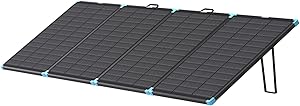
- Cell Tech: N-Type 16BB technology
- Efficiency: Industry-leading 25%
- Rating: IP67 waterproof with ETFE coating
- Wiring: Parallel for shade performance
Renogy’s 300W suitcase sets a new standard with its N-Type cell technology, reaching a massive 25% efficiency. This allows RVers to generate more power in smaller spaces, which is critical for cloudy days or limited roof space. The parallel wiring is a standout feature, ensuring that if one section is shaded by a tree, the rest of the panel continues to produce power.
Setting up is effortless thanks to the rust-proof kickstands, taking less than a minute. Despite its high power output, it remains relatively lightweight and folds into a manageable size. The IP67 rating and ETFE coating ensure it can withstand harsh weather, from hail to extreme heat, making it a rugged choice for serious off-grid adventures.
- Pros:
- Superior 25% conversion efficiency
- Excellent performance in partial shade
- Highly durable ETFE weather protection
- Cons:
- Higher investment cost than standard panels
- Larger footprint when unfolded
- Connectors may require adapters for some brands
3. EBL 200W Waterproof Foldable Solar Panel
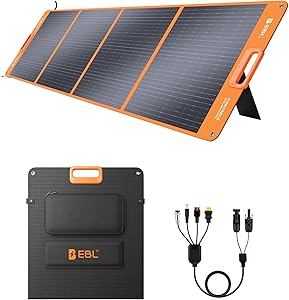
- Material: 840D Oxford cloth and PET lamination
- Connectors: 4-in-1 (XT60, Anderson, DC, Aviation)
- Weight: 17.95 lbs
- Efficiency: 23.5% Monocrystalline cells
The EBL 200W panel is a versatility champion, coming with an upgraded 4-in-1 cable that supports almost every major power station brand. Its monocrystalline cells provide a respectable 23.5% efficiency, ensuring you get the most out of every sunny hour. The construction uses durable 840D Oxford cloth, which is both wear-resistant and water-protected for camping use.
For safety, EBL has integrated surge and short-circuit protection into the design. The panel folds into a convenient briefcase style, making it easy to slide behind a seat or in an RV storage bay. While it is lightweight, the quality of the lamination suggests it will hold up well to repeated folding and unfolding during road trips.
- Pros:
- Incredible 4-in-1 cable compatibility
- Robust 840D Oxford cloth casing
- Certified safety protection technology
- Cons:
- IP65 rating is only splash-proof, not waterproof
- Folding hinges can be stiff initially
- Lacks adjustable angle kickstands
4. 200W Portable Solar Panel with 4 Kickstands

- Lamination: 6-layer ETFE technology
- Setup: 4 built-in adjustable kickstands
- Hardware: 4 high-quality mounting grommets
- Storage: Built-in waterproof zipper bag
This 200W panel prioritizes convenience and durability with its 6-layer ETFE lamination, which is significantly more heat and chemical resistant than standard PET. The four adjustable kickstands allow you to precisely angle the panel toward the sun, maximizing your energy harvest throughout the day. It also features a unique waterproof zipper bag to keep your cables organized and dry.
The addition of grommets around the edges is a thoughtful touch for RVers, allowing the panel to be hung or secured against the side of the vehicle. It converts energy at a high rate of 23.5%, outperforming many conventional panels. With a robust rubber handle and secure front clips, this panel is exceptionally easy to transport securely.
- Pros:
- Adjustable stands for optimal sun tracking
- Premium ETFE material for longevity
- Handy built-in cable storage bag
- Cons:
- Weight is slightly higher than basic models
- Kickstands can be fiddly on uneven ground
- Front clips are made of plastic
5. Renogy 400W 16-Fold Portable Solar Blanket

- Design: 16-fold ultra-compact blanket
- Weight: 16.09 lbs (very light for 400W)
- Certification: UL 61730 safety certified
- Efficiency: 25% N-Type cell technology
The Renogy 400W Solar Blanket is a marvel of engineering, offering massive power in a package that folds down to the size of a backpack. At only 16 lbs, it is over 60% lighter than traditional 400W panels, making it the perfect choice for SUVs, 4x4s, and small campers. Its 16-fold design allows for creative mounting, such as laying it across a windshield or hanging it vertically.
Safety is a priority with this model, as it is UL 61730 certified and built with military-grade ETFE. The 25% efficiency ensures fast charging of large battery banks even in less-than-perfect conditions. It’s an ideal solution for off-roaders who need high-capacity power but have absolutely no room for bulky, rigid solar suitcases.
- Pros:
- Unbeatable power-to-weight ratio
- Extremely small folded footprint
- Multiple versatile installation options
- Cons:
- No rigid stands for ground placement
- Fabric can hold moisture if it rains
- Very expensive compared to rigid panels
6. DOKIO 300W Foldable Solar Panel Kit
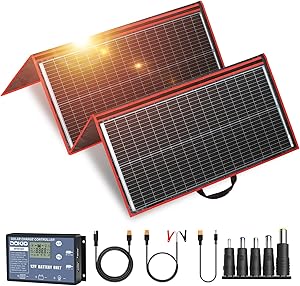
- Included: Standalone PWM charge controller
- Charging: Dual USB ports for direct device charging
- Cables: 9.85ft (3m) long reach cable
- Compatibility: SAE/XT60/Alligator/DC adapters
- Weight: 15.2 lbs
DOKIO’s 300W kit is a complete off-grid bundle that includes its own controller, making it perfect for charging 12V batteries directly. The separate PWM controller protects your system from overcharging while providing handy USB ports for phones and tablets. The long 9.85-foot cable is a major advantage, allowing you to park your RV in the shade while placing the panel in the sun.
The monocrystalline cells are efficient and the panel remains thin and easy to move despite its 300W rating. It is designed for those who need a one-stop-shop kit that works right out of the box with various battery types and power stations. It is a reliable choice for emergency backup or budget-friendly RVing.
- Pros:
- Includes a complete charging controller kit
- Long cable for flexible placement
- Great value for 300W of power
- Cons:
- PWM controller is less efficient than MPPT
- Fabric casing is not meant for heavy rain
- Thin design can catch wind easily
7. Renogy 200W 12V Portable Solar Suitcase

- Controller: Waterproof 20A Voyager (PWM)
- Durability: Rugged canvas case and weather-resistant backplane
- Cells: Grade A+ Monocrystalline
- Stand: Built-in adjustable aluminum kickstand
The Renogy 200W Suitcase is a heavy-duty, plug-and-play solution that comes with the waterproof Voyager charge controller. This kit is specifically designed for 12V battery systems, providing a safe and efficient charge for AGM, Gel, or Lithium batteries. The build quality is exceptional, featuring a rugged protective case meant to last for decades in tough outdoor environments.
With its adjustable aluminum kickstands, you can tilt the panels for maximum exposure. The A+ grade cells ensure that you get consistent power output over the long term. This is a “set it and forget it” type of kit that is perfect for RV owners who want a reliable, durable solar addition without needing to buy extra parts or controllers.
- Pros:
- Professional-grade waterproof controller included
- Extremely durable and long-lasting build
- Easy setup with sturdy aluminum stands
- Cons:
- Heavy compared to fabric folding panels
- Bulky to store in smaller vehicles
- Suitcase latches can be difficult with gloves
How to Choose Portable Solar Panels For Campervan
Choosing the best portable solar panels for your RV is a critical decision for anyone looking to enjoy the freedom of off-grid camping. Unlike permanent roof-mounted systems, portable panels (often called solar suitcases or blankets) give you the flexibility to park your RV in the shade while placing your panels in the direct sun. This guide will walk you through the technical aspects and practical considerations to help you select the perfect power solution for your mobile lifestyle.
Understanding Solar Cell Technology: Monocrystalline vs. Polycrystalline
The heart of any solar panel is the cell itself. Most high-quality portable panels today use Monocrystalline silicon. These cells are made from a single, pure crystal structure, which allows electrons more room to move, resulting in higher efficiency—typically between 20% and 25%. Polycrystalline panels are cheaper and have a blue-speckled appearance but are significantly less efficient (15-17%) and take up more space for the same power output. For RV use, where space is limited, Monocrystalline is almost always the better choice.
Efficiency Ratings and N-Type Technology
Efficiency measures how much of the sun’s energy hitting the panel is actually converted into electricity. While standard panels hover around 22%, newer N-Type cells with multi-busbar (16BB) technology can reach 25%. This 3% difference might sound small, but over a full day of sunlight, it can mean the difference between a fully charged battery and one that leaves you in the dark. Higher efficiency is particularly useful in low-light or cloudy conditions.
Wattage Needs: How Much Power Do You Really Need?
To choose the right wattage, you must calculate your daily energy consumption (Amps or Watts).
100W-200W: Ideal for maintaining a charge for lights, water pumps, and charging phones/laptops.
300W-400W: Necessary if you are running a 12V refrigerator, a CPAP machine, or using an inverter for small appliances like a blender.
Keep in mind that a 200W panel rarely produces exactly 200W; environmental factors usually limit actual output to 70-80% of the rating. Oversizing your array slightly is usually a smart move for RVers.
Form Factor: Suitcases vs. Blankets
Portable panels generally come in two designs.
Solar Suitcases: These are rigid panels that fold in half. They are more durable, often come with sturdy aluminum kickstands, and handle wind better. However, they are heavier and bulkier to store.
Solar Blankets/Foldable Panels: These use flexible materials and can fold 4 to 16 times. They are incredibly lightweight and can be stored in a backpack or under a seat. The downside is they often lack kickstands and can be difficult to angle toward the sun on flat ground.
Surface Protection: ETFE vs. PET
The top layer of the panel protects the cells from the environment.
PET: A cheaper, polyester-based film. It’s lightweight but can degrade over time due to UV exposure and is prone to scratching.
ETFE: A high-strength polymer that is UV-resistant and self-cleaning. It has better light transparency (allowing more energy through) and is much more durable. For full-time RVers, ETFE is worth the extra cost for longevity.
Charge Controllers: PWM vs. MPPT
If you are connecting your panels directly to an RV battery, you need a charge controller.
PWM (Pulse Width Modulation): Cheaper and simpler. It’s effective for smaller systems but loses a significant amount of energy (up to 25%) during the conversion process.
MPPT (Maximum Power Point Tracking): More expensive but up to 30% more efficient. It “tracks” the optimal voltage to deliver the maximum current to your battery. Many portable kits include a basic PWM controller, but upgrading to an MPPT will yield much better results.
Connectivity and Compatibility
Ensure the panel uses connectors that match your setup.
MC4: The industry standard for RV and home solar. It’s waterproof and secure.
Anderson/XT60/DC: Common on portable power stations (like Jackery or EcoFlow).
Look for panels that include a 4-in-1 adapter cable if you plan on using the panel with multiple different devices or power stations.
Portability and Weight
Since you’ll be moving these panels every time you set up camp, weight matters. A 400W rigid suitcase can weigh over 30 lbs, which can be a chore to move. In contrast, a 400W blanket might only weigh 16 lbs. Consider your physical ability and where you plan to store the unit. If you have to dig it out from the back of a crowded storage bay, you’re less likely to use it.
Weather Resistance and Durability
Check the IP (Ingress Protection) rating. An IP67 rating means the panel is fully waterproof and can handle a heavy downpour. IP65 is only splash-resistant and should be brought inside during rain. Since weather is unpredictable when camping, a higher waterproof rating provides peace of mind.
Mounting Options and Kickstands
The angle of your panel can increase output by up to 40% compared to laying it flat on the ground. Rigid suitcases usually have built-in legs. For flexible blankets, look for grommets (metal holes) that allow you to hang the panel from your RV’s awning, a roof rack, or a nearby tree.
Conclusion
The best portable solar panel for your campervan is the one that fits your storage capacity while meeting your daily power needs. For weekenders, a 200W foldable PET panel is often enough. For full-time off-gridders, investing in a 300W or 400W N-Type ETFE panel with an MPPT controller will provide the reliability and efficiency required for a comfortable life on the road.