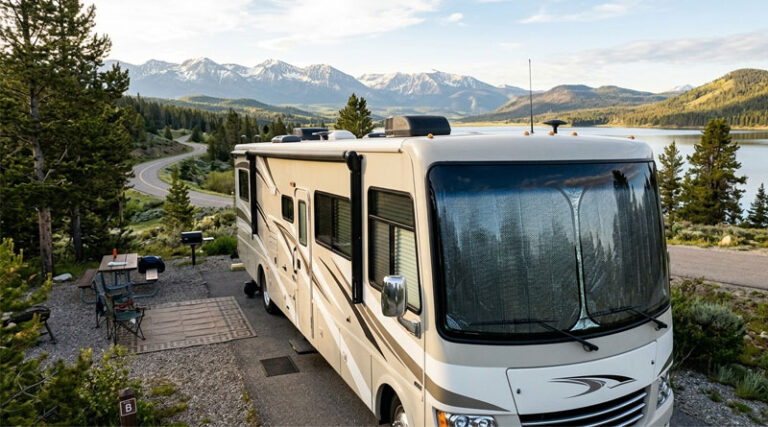
Flat towing a vehicle behind your RV provides the ultimate freedom to explore narrow roads and busy cities without moving your motorhome. To ensure a safe and stress-free journey, selecting the right equipment is paramount. Our guide breaks down the most reliable, durable, and user-friendly tow bars available today to help you find the perfect match for your towing setup.
1. Roadmaster 676 Nighthawk Tow Bar

- Weight Capacity: 8,000 lbs
- Safety Features: Multi-functional amber and red LED lights
- Material: Corrosion-resistant stainless steel and aluminum
- Latch Type: Patented non-binding Freedom Latch technology
The Roadmaster Nighthawk represents the gold standard in modern towing. Its most striking feature is the integrated LED lighting system that mirrors your RV’s turn signals and brakes, significantly increasing visibility during night travel. Built from premium stainless steel, it offers exceptional resistance to the elements and road salt.
Functionality is where the Nighthawk truly shines. The self-aligning arms automatically lock into place as you drive away, while the 400-to-1 force ratio latch ensures you never struggle to unhook on uneven ground. It is a robust, high-capacity bar that combines safety with effortless operation for long-haul travelers who want the very best.
- Pros:
- Enhanced night safety with integrated LEDs
- Effortless non-binding unhooking at any angle
- Large 8,000 lb capacity for heavy vehicles
- Cons:
- Specifically designed for Roadmaster baseplates
- Higher price point than basic models
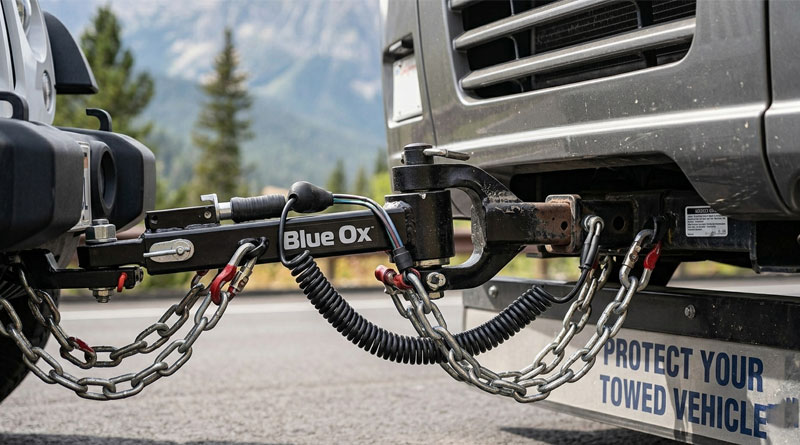
2. Blue Ox BX7420 Avail Tow Bar

- Weight Capacity: 10,000 lbs (Class IV)
- Receiver Size: 2-inch standard receiver
- Warranty: 3-year manufacturer warranty
- Included: Integrated safety cables and rubber boots
The Blue Ox Avail is a powerhouse designed for heavy-duty applications, boasting a massive 10,000-pound rating. Constructed from high-strength steel, it handles wide or narrow vehicles with ease thanks to its self-aligning design. The cinnamon coffee metallic finish adds a touch of style to its rugged functionality.
Convenience is a hallmark of the Avail. The off-set triple lugs and non-binding latches make disconnecting simple even when the terrain isn’t level. It also features protective rubber boots to keep road grime out of the telescoping legs, ensuring smooth operation for years. For heavy SUVs or full-size trucks, this bar offers unmatched peace of mind.
- Pros:
- Top-tier 10,000 lb towing capacity
- Excellent 3-year warranty protection
- Includes safety cables for complete setup
- Cons:
- Heavier unit due to steel construction
- Color may not match all RV aesthetics
3. Universal RV & Car Tow Bar 5000 lbs

- Weight Capacity: 5,000 lbs (2.2 tons)
- Adjustability: 0 to 42.5 inches width
- Coupler Size: Standard 2-inch trailer coupler
- Finish: Corrosion-resistant black powder coat
This Universal Tow Bar is an excellent choice for budget-conscious towers who need a flexible solution. Its highly adjustable width allows it to mount to a variety of vehicle frames, ranging from narrow cars to wider trucks. The commercial-grade steel construction ensures it can handle mid-sized vehicles up to 5,000 lbs safely.
Installation is straightforward with the included mounting brackets, and the industry-standard 2-inch coupler ensures seamless connectivity to your RV. The black powder-coated finish protects the steel from rust and environmental wear. While it lacks the advanced self-aligning features of premium models, its sheer versatility and affordability make it a dependable option for occasional flat towing needs.
- Pros:
- Extremely adjustable for different vehicle widths
- Budget-friendly commercial-grade steel build
- Standard coupler fits most RV setups
- Cons:
- Lacks self-aligning convenience features
- Manual locking requires more alignment effort
4. Blue Ox BX7380 Alpha II Tow Bar

- Weight Capacity: 6,500 lbs (Class III)
- Swivel Design: 3-axis swivel for easy hook-up
- Arms: Auto-locking telescoping legs
- Protection: Integrated rubber grime boots
The Blue Ox Alpha II is specifically designed for owners of mid-sized vehicles. Featuring a 6,500-pound capacity, it strikes a perfect balance between weight and strength. Its 3-axis swivel design simplifies the hook-up process, allowing the arms to find the baseplate tabs even if the RV and car aren’t perfectly aligned.
Safety and storage are top priorities for the Alpha II. It comes equipped with patented non-binding latches that release easily on uneven ground and includes safety cables. When you reach your destination, the bar folds away neatly and stores on the back of the RV, protected by its durable steel construction and weather-resistant rubber boots.
- Pros:
- Highly maneuverable 3-axis swivel design
- Compact foldaway storage on the RV
- Auto-locking arms simplify the setup
- Cons:
- Max tab width limited to 32 inches
- Lower capacity than the Avail model
5. Curt Manufacturing 19745 Adjustable Tow Bar

- Weight Capacity: 5,000 lbs
- Width Range: 26 inches to 41 inches
- Coupler Size: 2-inch trailer ball compatible
- Mounting: Bumper/Frame bolt-on brackets
Curt Manufacturing provides a reliable, entry-level dinghy towing solution with the 19745 Adjustable Tow Bar. Rated for 5,000 lbs, it is ideal for small cars and SUVs. The bar’s primary strength is its adjustability, allowing the width to open and close between 26 and 41 inches to accommodate various mounting points on the towed vehicle.
The brackets securely mount to the vehicle’s frame, providing a stable foundation for travel. While it requires a bit more manual work to align compared to premium telescoping bars, its dependable steel build and durable powder-coated finish ensure it stands up to long-term use. It is a no-nonsense tool for travelers seeking standard-fit mobility without unnecessary complexity.
- Pros:
- Very affordable flat towing option
- Fits wide variety of small vehicles
- Durable corrosion-resistant black finish
- Cons:
- May require bumper trimming for install
- Non-telescoping arms make alignment harder
6. VEVOR Tow Bar 5500 lbs

- Weight Capacity: 5,500 lbs
- Hardware: Grade 8.8 high-hardness bolts
- Safety: Glow-in-the-dark reflective strips
- Included: Safety chains and bumper mounts
The VEVOR Tow Bar is built for utility and visibility. With a 5,500-pound capacity and heavy-duty alloy steel construction, it is designed for everything from camping to farm work. A unique feature is the addition of glow-in-the-dark strips, which provide extra safety and style during nighttime towing operations.
Setup is designed for a “snap-and-go” experience, featuring an adjustable width of up to 41 inches to fit trailers, cars, or trucks. The all-weather components are rust-proof and corrosion-resistant, ensuring longevity regardless of the climate. It effectively functions as a “Swiss Army knife” for towing, offering a high-strength solution with extra safety details included in the box.
- Pros:
- Glow strips enhance night visibility
- Includes safety chains for added security
- High-hardness Grade 8.8 bolts for safety
- Cons:
- Rigid arm design requires precise parking
- Not compatible with motorhome-mounted receivers
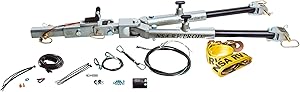
7. NSA RV Ready Brute Elite II Tow Bar
- Weight Capacity: 8,000 lbs
- Integration: Built-in ReadyBrake surge braking system
- Material: Aircraft-grade aluminum (48 lbs)
- Warranty: Limited Lifetime Warranty
The Ready Brute Elite II is a revolutionary all-in-one system that solves two problems at once: towing and braking. It integrates a mechanical surge brake directly into the tow bar, providing proportional braking to the towed vehicle without complex electronics. Crafted from aircraft-grade aluminum, it is incredibly lightweight at only 48 pounds.
User experience is prioritized with non-binding T-latches and rotating clevis connectors, making it a breeze to unhook on any terrain. The mechanical braking system is robust and legally compliant, offering instant response. Proudly made in the USA and backed by a lifetime warranty, this bar is the ultimate investment for serious RVers who want a simplified, highly effective setup.
- Pros:
- Eliminates need for separate braking system
- Lightweight aluminum is easy to handle
- Lifetime warranty on tow bar components
- Cons:
- Requires initial brake cable installation
- Higher upfront cost for integrated tech
How to Choose Tow Bars For Flat Towing
Flat towing, often called dinghy towing or four-down towing, is the process of pulling a vehicle behind a motorhome with all four wheels on the ground. It is the preferred method for many RVers because it eliminates the need for bulky trailers or tow dollies. However, the safety and success of this setup rely almost entirely on the tow bar. Choosing the right one involves understanding weight ratings, hitch types, and convenience features.
Understand the Two Main Types of Tow Bars
Tow bars generally fall into two categories based on where they are mounted. Your choice will depend on your budget and how often you plan to tow.
Motorhome-Mounted Tow Bars
These are the most popular choice for frequent travelers. The tow bar stays in the RV’s hitch receiver when not in use. They usually feature telescoping arms that make it much easier to hook up the vehicle, even if you aren’t perfectly lined up. Most high-end bars from brands like Blue Ox and Roadmaster fall into this category.
Car-Mounted Tow Bars
These bars are attached to the front of the towed vehicle. They are generally more affordable and are often “universal” in fit. While they are great for occasional use or budget builds, they can be more difficult to align and are often more basic in their feature set. They also require you to find a place to store the bar when you reach your destination and unhook the car.
Weight Capacity and Safety Classes
Every tow bar has a maximum weight rating. Exceeding this rating is dangerous and can lead to equipment failure on the highway. Always check your vehicle’s curb weight and add several hundred pounds for fuel and cargo before selecting a bar.
- Class III: Rated up to 5,000 lbs. Ideal for small cars and compact SUVs.
- Class IV: Rated up to 10,000 lbs. Necessary for full-size trucks, large SUVs, and heavy luxury vehicles.
Always choose a tow bar with a capacity that exceeds your vehicle’s weight. Having a “buffer” ensures that the bar can handle the additional stresses of mountain climbs and sudden braking.
The Importance of Non-Binding Technology
One of the biggest frustrations in flat towing is the “binding” of the tow bar. When the RV and the towed vehicle are on uneven ground—such as a gas station entrance or a gravel campsite—the internal latches of the tow bar can become jammed under tension. Non-binding tow bars feature a design that allows you to release the latches even when the bar is under pressure. If you plan to camp in state parks or off-grid locations, non-binding technology is a must-have feature.
Ease of Use: Self-Aligning Arms
Hooking up a towed vehicle by yourself can be a nightmare without self-aligning arms. Premium tow bars feature arms that can extend and pivot independently. You simply get the car close, attach the arms, and as you pull the RV forward, the arms automatically extend to the correct length and lock into place. This eliminates the need for a second person to “spot” you or guide you into a perfect 1-inch target.
Compatibility with Baseplates
A tow bar does not attach directly to the car’s bumper; it attaches to a baseplate, which is a custom-engineered bracket bolted to the car’s frame. Most tow bar manufacturers design their bars to work seamlessly with their own baseplates. For example, a Roadmaster tow bar fits Roadmaster baseplates perfectly. If you want to mix brands—such as using a Blue Ox bar with a Roadmaster baseplate—you will likely need to purchase an adapter. Always verify compatibility before clicking “buy.”
Integrated Features: Braking and Lighting
Modern tow bars often include integrated features that simplify the overall setup. Some bars, like the Roadmaster Nighthawk, include built-in LED light strips that improve safety. Others, like the NSA Ready Brute, include an integrated surge braking system. Since most states legally require a supplemental braking system for the towed vehicle, an all-in-one bar can save you money and installation time.
Maintenance and Longevity
Because tow bars are exposed to road grime, salt, and rain, they require maintenance. Look for bars with “boots”—rubber covers that protect the telescoping arms from debris. Stainless steel and aluminum components are preferred for their corrosion resistance. Periodically cleaning the arms and applying a dry lubricant will keep the mechanism moving smoothly for years of travel.
Conclusion
Choosing the right tow bar for flat towing comes down to matching the capacity to your vehicle and the features to your travel style. If you tow full-time, invest in a motorhome-mounted, non-binding bar with self-aligning arms. If you only tow once or twice a year, a universal adjustable bar may be sufficient. Regardless of your choice, prioritize safety and ease of use to ensure your RV adventures remain the highlight of your journey.