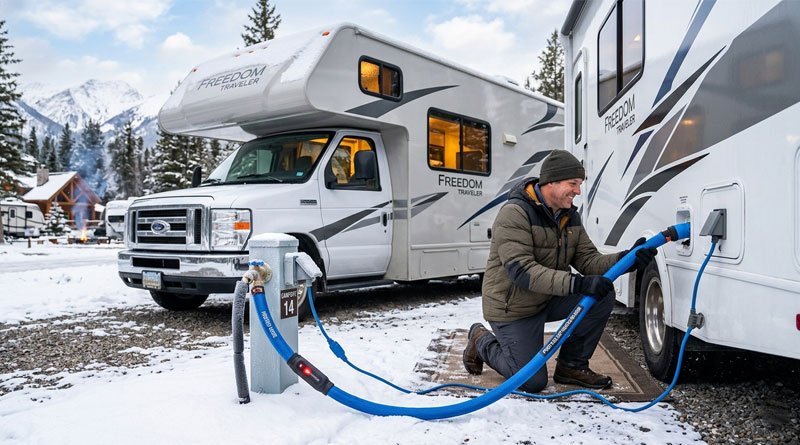
When winter camping hits freezing temps, your RV’s water hose can turn into a solid block of ice—unless you have a heated model. The best RV heated water hoses keep water flowing by using built-in heating elements and insulation. This article reviews top-rated options, comparing durability, thermostat accuracy, and length. Stay warm, avoid frozen pipes, and enjoy hassle-free camping in cold weather with the right hose.
1. WABUPD Heated Water Hose
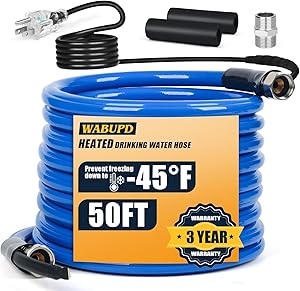
- Heating Element: Thickened German-engineered heating wires
- Construction: 5-layer J-thickened water pipe design
- Freeze Protection: Included dual black insulation cotton for joints
- Warranty: 30-day money back and 3-year service plan
The WABUPD Heated Water Hose stands out due to its superior heating efficiency, powered by thickened wires designed to outperform standard hoses. Its five-layer construction featuring blue rubber and heavy-duty mechanical stamping ensures that the hose remains durable even in harsh environments. The focus on rapid heat conduction makes it a reliable choice for those needing consistent water flow during freezing cycles.
What makes this kit particularly thoughtful is the inclusion of specialized insulation cotton for the connectors. Since joints are typically the most vulnerable point for freezing, this addition provides comprehensive protection. With a professional customer service team promising quick responses and a solid three-year service guarantee, it offers great peace of mind for long-term RV travelers and homeowners alike.
Pros: Excellent heat conduction, durable five-layer build, includes joint insulation.
Cons: Limited technical data on specific wattage or exact temperature activation.
See the WABUPD Heated Water Hose
2. VGUARD RV Water Hose

- Temperature Range: Freeze protection down to -20°F (-28°C)
- Thermostat Logic: Powers on at 47°F and off at 60°F
- Power Output: Heavy-duty UL listed cable at 7 watts/ft
- Material Safety: Lead-free and BPA-free food grade construction
The VGUARD RV Water Hose is a smart solution for cold-weather camping, featuring an energy-saving thermostat that prevents unnecessary power draw. By activating only when temperatures dip toward freezing, it maintains efficiency while ensuring your water stays liquid. The increased wattage per foot provides a significant boost in heating power compared to older models, making it very effective for mid-winter use.
Durability is a key highlight here, as the hose utilizes a wear-resistant PVC jacket and stainless steel connectors to prevent leaks. It is highly versatile, coming with a 3/4 inch GHT adapter to fit standard US water supplies. Whether you are using it for an RV, a garden, or even a chicken coop, the odorless, BPA-free lining ensures the water remains safe for your family.
Pros: Precise thermostat control, high 7W/ft heating power, safe drinking water materials.
Cons: Lower frost protection threshold (-20°F) than some extreme-cold competitors.
3. GEARBONE All-Weather Hose
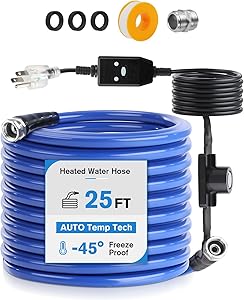
- Extreme Rating: Reliable performance down to -45°F
- Burst Strength: High-pressure resistance of 150+ PSI
- Thermostat: Activates at 40°F with automatic shut-off
- Connectors: Drip-free solid brass with ergonomic grips
Engineered for the most brutal climates, the GEARBONE All-Weather Hose is a high-performance fresh water solution. It is rated for temperatures as low as -45°F, making it one of the most robust options on the market. The intelligent thermostat is tuned to activate at 40°F, ensuring the pipe never overheats during the day while providing consistent heat throughout the night to prevent ice blockages.
This hose is also designed for physical ease of use, featuring an anti-kink composite material that remains flexible even when frozen. The solid brass connectors provide a secure, high-pressure seal that can handle up to 150 PSI, which is essential for the variable pressures found in RV parks. It prioritizes health by using medical-grade, BPA-free internal tubing for pure, odorless drinking water.
Pros: Industry-leading -45°F rating, high burst pressure, very flexible in cold.
Cons: High performance may come at a premium price point compared to basic hoses.
See the GEARBONE All-Weather Hose
4. Bipeoo Antifreeze Water Hose

- Low Temp Rating: Prevents freezing down to -45°F
- Size Options: Available in six lengths from 15FT to 100FT
- Design: Patent-pending integrated smart sensing system
- Fittings: Robust leak-tight stainless steel connectors
Bipeoo introduces a modern design concept with their Antifreeze Water Hose, integrating an intelligent temperature sensing system that is currently patent-pending. This system is designed to handle the extreme midnight drops in temperature common across the United States, effectively thawing ice and maintaining flow down to -45°F. The heavy-duty outer jacket protects the internal electronics from the elements while maintaining flexibility.
The versatility in sizing is a major advantage, allowing users to choose the exact length needed for their specific setup without having excess hose coiled on the ground. Safety is paramount, as the hose is constructed with food-grade materials that are lead-free and odorless. Backed by a three-year warranty and 24/7 customer support, it is a reliable investment for those living in extreme winter conditions.
Pros: Wide range of available lengths, extreme temperature protection, patent-pending tech.
Cons: Stainless steel fittings can be harder to hand-tighten than brass in the cold.
See the Bipeoo Antifreeze Water Hose
5. Nwsuewi Water Hose

- Operating Voltage: 120V advanced heating system
- Temp Capability: Effective protection down to -45°C
- Thread Size: Standard 3/4 inch external threads
- Health Standards: Third-party lab tested lead and BPA free
The Nwsuewi Water Hose represents the fifth generation of their heating technology, refined through millions of tests to ensure zero leakage and maximum durability. It is built to withstand temperatures as low as -45°C, ensuring that even on the coldest winter nights, your water supply remains stable. The use of advanced materials prevents the hose from becoming brittle or cracking under extreme thermal stress.
A standout feature is the commitment to water purity, with third-party laboratory certifications ensuring that every drop is safe for direct consumption by children and the elderly. The hose is designed for easy connection, though the manufacturer recommends using double washers to ensure a perfect seal. With 24/7 service and a comprehensive three-year warranty, Nwsuewi focuses heavily on customer satisfaction and long-term reliability.
Pros: High-grade food safety certification, tested over five generations, excellent customer support.
Cons: May require double washers for a perfect seal on some connections.
6. Camco 25-Ft Hose

- Certification: NSF/ANSI 61 and 372 lead-free certified
- Cord Details: 18AWG 6-foot power cord with LED indicator
- Protection: Freeze protection down to -20°F (-28°C)
- Diameter: 5/8″ ID for high flow rate
Camco is a household name in RV accessories, and their 25-foot heated hose lives up to the reputation. This hose is proudly made in the USA and features a patented design that prioritizes energy efficiency. The thermostat-controlled heating cable only activates when necessary, saving on electricity costs while providing reliable protection down to -20°F. The 6-foot power cord includes an LED indicator so you can confirm at a glance that the system is receiving power.
Health and safety are at the forefront of this product, boasting NSF/ANSI 61 certification for drinking water and compliance with all federal lead-free laws. The 5/8″ internal diameter provides an excellent flow rate compared to narrower hoses, and the machined fittings offer superior corrosion resistance. It is a rugged, reliable choice for seasonal campers who value American-made quality and safety certifications.
Pros: Made in the USA, NSF certified safety, LED power indicator plug.
Cons: Shorter 6-foot power cord may require an extension in some setups.
7. Rylpoint Water Hose for RV

- Pressure Rating: 5-layer structure supports 20kg pressure
- Cold Rating: Prevents freezing down to -47°F
- Fittings: Pure copper 3/4 inch nut connectors
- Response Time: 8-hour customer service response guarantee
Rylpoint offers a robust 120V heated hose that pushes the boundaries of cold-weather performance with a rating down to -47°F. This is achieved through a three-dimensional five-layer reinforced structure that can handle significant water pressure without bursting. The use of pure copper for the end connectors ensures a more durable and reliable thread than standard plastic or thin metal fittings found on cheaper alternatives.
The hose is built with wear-resistant PVC to protect the internal electrical components from being damaged by rough terrain or UV exposure. It is fully compliant with drinking water standards, ensuring no harmful phthalates or odors leach into your fresh water supply. With a 30-day money-back guarantee and a fast-responding support team, Rylpoint provides a high level of security for full-time RVers and outdoor enthusiasts.
Pros: Extremely low temperature rating (-47°F), pure copper fittings, high pressure resistance.
Cons: Manufacturers recommend using a wrench for installation which may be less convenient.
See the Rylpoint Water Hose for RV
8. SZFY Heavy Duty Heated Hose

- Maximum Heat: Internal coil reaches up to 169°F
- Ambient Rating: Freeze protection down to -40°F
- Connector Type: Dual female threads with included male adapter
- Insulation: Black sponge insulation for pipe joints included
- Thread Size: 3/4 inch compatible (noted as 3/6″ in some data)
The SZFY Heavy Duty Heated Hose is built for rapid installation and extreme temperature management. The internal heating coil is highly reactive to ambient changes, capable of reaching an internal temperature of 169°F to combat severe cold down to -40°F. This makes it an essential tool for winterizing an RV or maintaining a garden water supply in high-altitude environments where temperatures drop suddenly.
The design features a five-layer reinforced shell that is strictly inspected for quality. A unique aspect of this hose is the dual female thread configuration, which comes with a double-ended male adapter for maximum versatility during setup. To ensure no weak points exist, black insulation sponges are provided to wrap the joints, preventing them from freezing when exposed to direct wind and snow.
Pros: Very high internal heating capacity, includes male adapter, joint insulation included.
Cons: Internal coil temperature is very high; must be handled carefully when active.
See the SZFY Heavy Duty Heated Hose
How to Choose RV Heated Water Hose for Winter Camping
For many RV enthusiasts, the arrival of winter doesn’t mean the end of the road. However, cold-weather camping brings a unique set of challenges, the most critical being the preservation of your water supply. When temperatures drop below freezing, a standard garden hose will harden and the water inside will turn to ice, potentially bursting the hose or damaging your RV’s internal plumbing. A heated water hose is the essential lifeline that keeps fresh water flowing from the park pedestal to your rig. Choosing the right one requires an understanding of insulation, wattage, safety certifications, and thermostat technology.
Understanding the Core Technology
A heated RV water hose is not just a standard hose with a heater wrapped around it; it is a complex, multi-layered piece of equipment. Most high-quality hoses consist of five distinct layers: the inner drinking-water-safe tube, the heating element, a heat-reflective layer, an insulation layer, and a durable outer jacket. The goal of this construction is to keep the heat generated by the electrical wire trapped inside the hose while protecting the assembly from UV rays and physical abrasion.
Self-Regulating vs. Thermostat-Controlled
There are two primary ways these hoses manage heat. Some use self-regulating heating cables that naturally decrease their heat output as the ambient temperature rises. Others use a fixed-wattage cable connected to a physical thermostat. A thermostat-controlled hose is generally more energy-efficient because it completely shuts off the power when the temperature reaches a certain threshold (usually around 45°F to 50°F) and kicks back on when it nears freezing (around 35°F). When choosing, look for a model with a reliable, waterproof thermostat to avoid running up your electric bill during the day.
Key Factors to Consider Before Buying
Selecting the right hose involves balancing your specific camping environment with the technical specs of the product. Not all “heated” hoses are created equal, and a hose rated for a mild frost in Georgia will not survive a sub-zero night in Montana.
1. Temperature Rating
The most important specification is the minimum temperature rating. Most standard heated hoses provide protection down to -20°F. However, if you plan on extreme winter camping, you should look for premium hoses rated for -40°F or even -45°F. These hoses typically feature thicker insulation and higher wattage-per-foot heating elements. Always choose a hose with a rating slightly lower than the coldest temperature you expect to encounter to provide a safety margin.
2. Length and Diameter
Hose length is a Goldilocks scenario: too short and you can’t reach the faucet; too long and you have excess hose coiled on the ground, which is harder to keep warm. Common lengths are 25, 50, and 75 feet. Measure the distance between your RV’s water inlet and the typical park pedestal. As for diameter, most RV hoses are 5/8 inch. While 1/2-inch hoses are available and easier to store, they provide less water flow and can be more prone to freezing because there is less volume of water to hold heat.
3. Material Safety and Certifications
Since this hose carries your drinking, cooking, and cleaning water, material safety is non-negotiable. Ensure the hose is labeled as “Drinking Water Safe.” Look for certifications such as NSF/ANSI 61, which guarantees the materials are lead-free, BPA-free, and phthalate-free. Hoses not rated for drinking water can leach harmful chemicals and a “rubbery” taste into your water, especially when heated.
Electrical Requirements and Safety
Heated hoses require a 120V AC power source. Most come with a standard three-prong plug that connects to the 15-amp or 20-amp outlet on the campsite pedestal. It is vital to check the length of the power cord attached to the hose; some are as short as 6 feet, which may require an outdoor-rated extension cord if the outlet is far away.
GFCI Protection
Safety is paramount when mixing water and electricity. Always plug your heated hose into a GFCI (Ground Fault Circuit Interrupter) protected outlet. Many modern hoses feature an LED indicator light on the plug, which glows to show that the heating element is active. This is an incredibly helpful feature for a quick midnight check to ensure your water won’t be frozen by morning.
Durability and Connector Quality
The ends of the hose are the most frequent points of failure. Look for heavy-duty machined brass or stainless steel connectors. These are less likely to cross-thread or crack in the cold compared to plastic fittings. Additionally, check if the hose has “strain relief” or “bend supports” at the ends. This prevents the hose from kinking at the connection point, which can restrict flow and damage the heating wire inside.
Insulating the Connections
A common mistake is forgetting that the faucet (spigot) and the RV inlet are not heated by the hose itself. These metal points are the first to freeze. When choosing a hose, check if it comes with additional insulation sleeves or heat tape for the connections. If it doesn’t, you will need to purchase foam pipe insulation or “heat socks” separately to wrap the exposed metal at both ends.
Storage and Maintenance
Heated hoses are generally stiffer than standard hoses due to their multi-layer construction. When the season ends, wait for a sunny day to drain and coil the hose while it is warm and flexible. Storing a frozen, stiff hose can cause micro-fractures in the heating element. Always cap the ends before storage to prevent insects or debris from entering the tube.
Summary of Selection Criteria
- Verify Temperature Needs: Match the hose rating (-20°F vs -45°F) to your destination.
- Check Certifications: Only buy NSF-certified, BPA-free drinking water hoses.
- Measure Twice: Buy the shortest length that comfortably reaches the pedestal to maximize heating efficiency.
- Look for Features: Prioritize hoses with LED power indicators and built-in thermostats.
- Examine Fittings: Choose solid brass or stainless steel over plastic.
Final Thoughts
Investing in a high-quality heated RV water hose is the difference between a cozy winter adventure and a freezing disaster involving burst pipes and expensive repairs. While these hoses are significantly more expensive than standard ones, the protection they offer for your RV’s plumbing and your comfort is invaluable. By focusing on temperature ratings, material safety, and energy-efficient thermostats, you can ensure that your winter travels remain fluid and stress-free.