Harnessing the breeze is a game-changer for off-grid travelers, and finding the right wind turbines can provide a reliable power source when the sun goes down. These compact generators work alongside solar panels to create a hybrid energy system, ensuring your batteries stay charged during overnight stays, coastal camping, or overcast days when solar output is limited.
1. VEVOR 500W Wind Turbine Generator Kit

Rated Power:
- 500W High-efficiency output
Start-up Speed:
- 2.5 m/s low wind threshold
Blade Material:
- Reinforced fiberglass nylon
Controller:
- Integrated MPPT microprocessor
The VEVOR 500W wind turbine is a powerhouse designed for travelers who need serious energy replenishment. Its 5-blade configuration and 47-inch rotor diameter are optimized to capture energy even in moderate breezes, starting as low as 2.5 m/s. The die-cast aluminum body is fully waterproof and corrosion-resistant, making it a rugged choice for coastal RV parks or rainy mountain campsites.
Equipped with an intelligent MPPT controller, this kit effectively manages voltage and current to safely charge 12V battery banks. The dual-bearing system ensures the turbine operates at a relatively quiet 55dB, while the adjustable tail automatically aligns with the wind for maximum efficiency. It is a durable, high-output solution that thrives in wind-rich environments.
Pros:
- High 500W output for heavy power needsMPPT controller included for smart chargingRobust fiberglass blades withstand extreme cold
Cons:
- Larger rotor requires significant mounting space55dB noise may be noticeable at night
2. QUSKLISU 400W Vertical Helix Wind Turbine

Design:
- Vertical axis helix (VAWT)
Noise Level:
- Ultra-quiet under 30dB
Safety Feature:
- Automatic overload stop
Blade Material:
- Oxidation-treated ABS
The QUSKLISU 400W vertical helix turbine is the ultimate choice for RVers who prioritize peace and quiet. Unlike traditional horizontal models, this vertical design produces less than 30dB of noise, making it nearly silent during operation. Its unique aircraft-wing inspired blades capture wind from any direction without needing a tail, which reduces vibration and mechanical stress on your RV mount.
This kit is particularly safe for DIY users, featuring an automatic braking system that stops the rotor once maximum speed is reached to prevent electrical overload. The compact, upright design handles turbulent wind much better than standard windmills, providing a stable energy flow for hybrid solar-wind systems in diverse environments like gardens or campgrounds.
Pros:
- Whisper-quiet operation below 30dBCaptures wind from any direction easilyCompact vertical footprint fits tight spaces
Cons:
- Slightly lower efficiency than horizontal modelsABS blades are less rigid than carbon fiber
3. Pikasola 400W 5-Blade Wind Turbine Kit

Blade Material:
- Lightweight Nylon carbon fiber
Motor Type:
- Three-phase AC permanent magnet
Adjustment:
- Automatic yaw system
Blade Length:
- 23.8 inch high-torque blades
The Pikasola 400W kit is a highly efficient windmill that focuses on capturing maximum energy through its high-torque carbon fiber blades. At nearly 24 inches long, these blades are specifically designed to be lightweight yet rigid, resisting corrosion in salty marine or humid RV environments. The unit features an automatic yaw adjustment system that reads wind direction and rotates the head accordingly.
Internally, the three-phase permanent magnet motor utilizes high-performance NdFeB magnets to ensure a compact size without sacrificing power output. Pikasola prides itself on “real parameters,” meaning the 400W rating is based on rigorous experimental testing rather than inflated marketing numbers. It is a reliable, high-torque generator perfect for maintaining batteries in remote cabins or campers.
Pros:
- Premium carbon fiber blades for durabilityHighly accurate and honest power ratingsAutomatic direction sensing for max capture
Cons:
- Requires a high-quality mount to reduce vibrationAssembly takes longer than vertical models
How to Choose RV Wind Turbines
For the modern nomad, power independence is the ultimate luxury. While solar panels have long been the go-to for off-grid energy, they have one major limitation: they need the sun. This is where RV wind turbines step in. By converting kinetic wind energy into storable electricity, these turbines offer a 24-hour power solution that thrives exactly when solar fails—during storms, overnight, and in the shorter days of winter.
Understanding Horizontal vs. Vertical Axis Turbines
The first decision you will face is the orientation of the turbine blades. This choice affects everything from energy efficiency to how much noise you’ll hear inside your rig.
Horizontal Axis Wind Turbines (HAWT)
These are the traditional “windmill” style turbines. They are generally more efficient at converting wind into energy because the blades always face the wind. However, they require a “yaw” system (a tail) to point them in the right direction and are more susceptible to turbulence and vibration.
Vertical Axis Wind Turbines (VAWT)
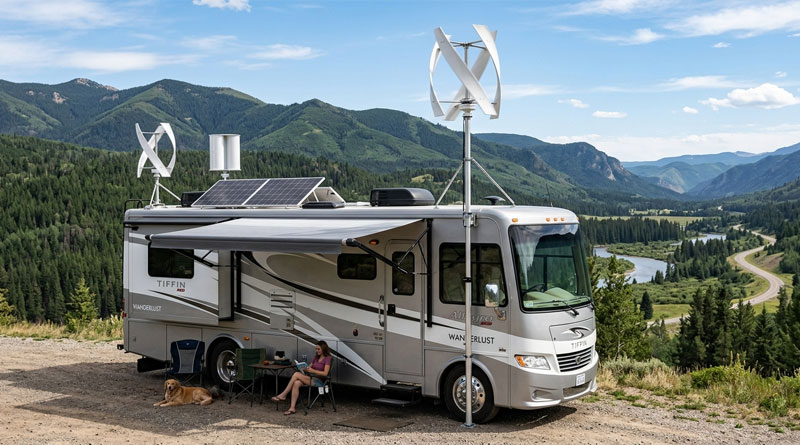
Vertical turbines, like helix or egg-beater designs, don’t care which way the wind is blowing. They are often much quieter and have fewer moving parts, which makes them ideal for mounting directly to an RV where vibration transfer can be an issue. While they are slightly less efficient than horizontal models, their ease of use in gusty, changing winds is a significant advantage.
Key Specifications: Start-up and Rated Wind Speeds
Not all wind is created equal, and neither are turbines. You must look at two specific speed ratings to determine if a turbine will work for your typical camping spots.
Start-up Wind Speed:
- This is the minimum breeze required to get the blades spinning. Most high-quality RV turbines start at around 2.5 m/s (approx. 5.5 mph). If you camp in light-wind areas, a low start-up speed is non-negotiable.
Rated Wind Speed:
- This is the speed at which the turbine reaches its maximum advertised wattage (e.g., 400W or 500W). This is often around 12 m/s (27 mph). It is important to realize you won’t get full power in a light breeze.
Blade Material and Durability
RV turbines are exposed to the harshest elements. Blades made from reinforced fiberglass nylon or carbon fiber are preferred over standard plastic. Carbon fiber is exceptionally lightweight and stiff, allowing the turbine to spin faster and withstand high-speed gusts without deforming or cracking. Additionally, ensure the body is made of die-cast aluminum or oxidation-treated materials to prevent rust if you camp near the ocean.
Managing Noise and Vibration
One of the biggest hurdles for RV wind power is the “thrum” or vibration that can travel through the mounting pole into the RV’s frame. To mitigate this, look for turbines with high-quality dual bearings and aerodynamic blade designs. Vertical turbines are naturally quieter, often operating below 30dB. If choosing a horizontal model, look for a 5-blade design rather than a 3-blade one; more blades typically lead to smoother rotation and lower noise levels at the cost of slightly more weight.
The Importance of a Charge Controller
You cannot plug a wind turbine directly into your battery. You need a charge controller—specifically an MPPT (Maximum Power Point Tracking) controller if possible.
[Image of a wind turbine charge controller wiring diagram]
This device prevents your batteries from overcharging and manages the wild fluctuations in voltage that wind generates. Many kits come with a controller, but ensure it is compatible with your battery type, especially if you use Lithium (LiFePO4) batteries.
Mounting Solutions: Portable vs. Fixed
How you mount the turbine is just as important as the turbine itself. You have two main options:
Pole Mounts
Most RVers use a telescoping pole that attaches to the ladder or a hitch mount. This allows you to raise the turbine high above the “boundary layer” of turbulent air near the ground. Higher is always better for wind consistency.
Fixed Roof Mounts
While convenient, fixed roof mounts are rarely recommended for horizontal turbines due to the vibration. If you must mount to the roof, a vertical helix turbine with rubber vibration isolators is the only viable path to avoid a headache-inducing hum inside the cabin.
Hybrid Systems: The Perfect Off-Grid Combo
The best way to use an RV wind turbine is as part of a hybrid system. Most wind controllers allow you to connect solar panels to the same unit. This creates a “complementary” energy profile: solar works during the calm, sunny day, and wind takes over during the breezy night or stormy afternoon. This synergy drastically reduces the depth of discharge on your batteries, extending their lifespan.
Safety Features to Look For
High winds can be dangerous. A quality turbine should have an automatic braking system (either mechanical or electronic) that kicks in when wind speeds exceed safe limits. Some models also use an electromagnetic braking system that slows the rotor down if the battery is full or if the wind becomes a gale. Without these features, a turbine can literally spin itself into pieces during a serious storm.
Conclusion
Choosing wind turbine requires balancing your power needs with the physical realities of your rig. If you want maximum power and have the space for a tall mast, a 500W horizontal turbine is your best bet. If you prefer a “set it and forget it” silent companion, a vertical helix model is the way to go. By integrating wind into your energy mix, you gain true four-season independence, ensuring that as long as the wind blows, your lights stay on.