Ensuring access to clean, safe drinking water is vital for any road trip, and water filters for RV hoses make it easy. These inline filters attach directly to your exterior water line, removing contaminants and odors before they enter your camper’s plumbing. Our guide reviews top-rated filters that offer high flow rates, long-lasting performance, and easy, tool-free installation for travelers.
1. AQUA CREST RV Inline Water Filter (4 Pack)

- Certification: NSF/ANSI 42 and 372 Certified
- Filtration: KDF and Granular Activated Carbon
- Flow Rate: 0.5 GPM
- Connection: Standard 3/4 GHT fittings
The AQUA CREST RV Water Filter is a highly reliable option for campers who prioritize safety and water quality. It features a robust multi-stage filtration system that utilizes KDF and coconut shell activated carbon to significantly reduce chlorine, heavy metals, and bad odors. Rigorously tested under extreme pressure, this filter ensures a leak-free experience even in varying campground water conditions.
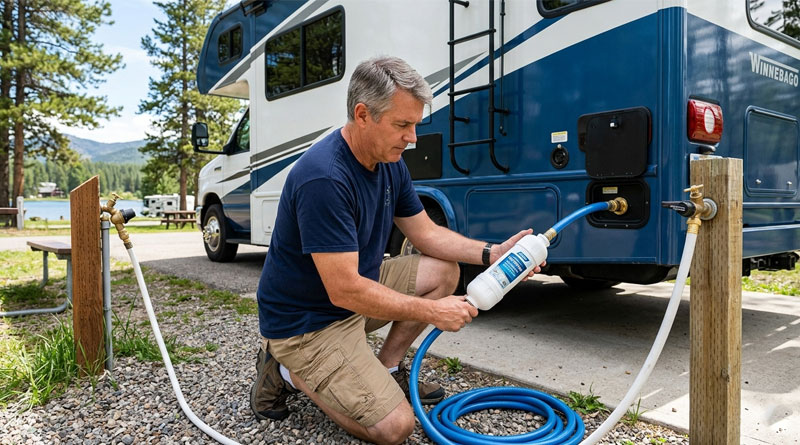
Installation is remarkably simple, taking less than five minutes by hand without the need for additional tools. The included 360-degree flexible hose protector with anti-rust copper heads prevents kinking and reduces strain on your RV’s water inlet. While it doesn’t remove minerals that cause water spots, it effectively provides refreshing, clean water for drinking, gardening, or washing your vehicle throughout a full three-month season.
- Pros:
- Authoritative NSF certification
- Durable anti-rust copper heads
- Triple-tested for pressure stability
- Cons:
- Relatively slow 0.5 GPM flow
- Does not reduce mineral spots
2. CRYSTALA RV/Camper Inline Water Filter (3 Pack)

- Micron Rating: 20-micron pore size
- Technology: GAC and KDF filtration
- Service Life: 3 months per filter
- Accessories: 2 flexible hose protectors
Crystala offers a high-performance inline filter that balances effective contaminant removal with the retention of beneficial minerals. Using advanced Granular Activated Carbon (GAC) and Kinetic Degradation Fluxion (KDF), this filter targets chlorine and sediment while improving the overall taste and smell of your water supply. It is an ideal solution for RVers, boaters, and gardeners seeking a cost-effective way to ensure water safety.
The package includes premium flexible hoses equipped with copper heads and silicone gaskets, specifically designed to eliminate leaks and kinking at the connection point. This setup ensures a smooth, uninterrupted water flow into your camper or marine vessel. With a straightforward installation process that matches any standard 3/4-inch hose, this durable filter provides peace of mind for an entire camping season without requiring complex maintenance.
- Pros:
- Advanced GAC and KDF technology
- Retains beneficial minerals
- Includes two hose protectors
- Cons:
- Standard 20-micron filtration
- Fewer filters than some packs
3. GLACIER FRESH RV/Marine Water Filter (4 Pack)
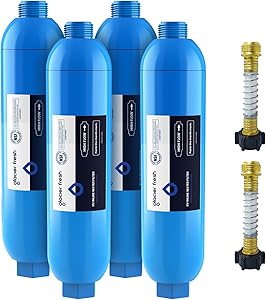
- Chlorine Removal: 97.9% reduction rate
- Rating: 20-micron independent testing
- Materials: Lead-free and BPA-free
- Housing: Reinforced food-grade plastic
Glacier Fresh provides a safe and durable water solution for diverse outdoor activities, ranging from RVing to filling backyard pools. This filter is specifically designed to reduce fluoride, protecting your family’s teeth and digestive systems while significantly improving water clarity. The reinforced food-grade plastic housing is a key safety feature, engineered to withstand high pressure without bursting during heavy use in the summer months.
Each filter in this 4-pack lasts for an entire three-month camping season, delivering large-capacity filtration for drinking and chores. The addition of flexible hose protectors minimizes kinking and reduces the physical strain on your vehicle’s plumbing connections. Whether you are prepping a spa or watering sensitive plants, this inline filter ensures that your water is free from the heavy smells and tastes of chlorine.
- Pros:
- High 97.9% chlorine reduction
- Effective fluoride reduction
- Burst-resistant plastic housing
- Cons:
- 20-micron rating is basic
- Protector hoses may be stiff
4. Bringpure RV Inline Water Filter (2 Pack)
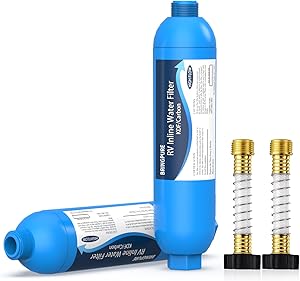
- Certifications: NSF 42 and 372 Certified
- Micron Rating: 20 microns
- Contaminants: Reduces lead and heavy metals
- Installation: Manual tool-free setup
Bringpure focuses on high-quality materials, utilizing KDF and GAC technology to produce safer, healthier drinking water. This filter is NSF 42 certified for reducing 97% of chlorine and NSF 372 certified for lead-free construction, making it a trustworthy choice for marine and RV environments. It effectively handles everything from sediment and rust to fluoride, ensuring your water supply meets high standards for purity.
The heavy-duty anti-kink flexible hose protector included with this set ensures that water flow remains smooth and consistent even when the hose is bent at sharp angles. Because it fits any standard water hose, it is versatile enough for brewing, pet care, or filling fountains. The long-lasting design provides consistent filtration for up to three months, allowing you to enjoy clean water throughout your entire trip without frequent replacements.
- Pros:
- Certified lead-free material
- 97% chlorine reduction rate
- Multi-use versatility for RV/Marine
- Cons:
- Only 2 filters per pack
- Filter can be bulky on faucets
5. Camco Tastepure RV Water Filter (40043)
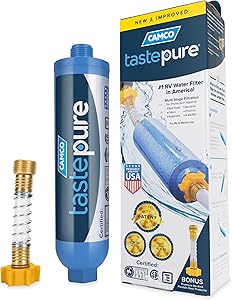
- Filtration: 6-step Hex-Flow Technology
- Origin: Made in the USA
- Standards: NSF/ANSI 42, 53, and 372
- Design: Wide-body high-flow design
The Camco Tastepure is a premium, USA-made filter known for its advanced 6-step Hex-Flow technology. This patented process ensures that water passes through multiple specialized layers, removing silt, sediment, and bacteria. The inclusion of KDF filtration is a critical benefit, as it controls the growth of bacteria and mold within the filter itself while it sits idle between your camping adventures, ensuring long-term hygiene.
Designed with a wide-body profile, this filter maximizes water flow so you won’t experience a significant drop in pressure at the tap. It is fully compliant with all federal lead-free laws and is rigorously tested to meet high NSF standards. The included flexible hose protector keeps your connections safe from strain, making this a durable, high-performance essential for any RV owner who demands the highest water quality possible.
- Pros:
- Advanced 6-step filtration
- KDF prevents internal mold growth
- Wide-body for better flow
- Cons:
- Higher price point per unit
- Heavier than competing models
6. Hourleey RV Inline Water Filter (2 Pack)
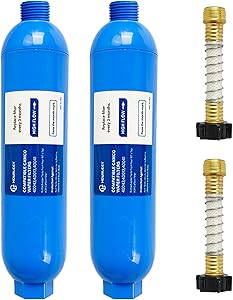
- Micron Rating: 20 microns
- Technology: GAC and KDF combination
- Housing: Food-grade plastic
- Fittings: Standard garden hose compatible
Hourleey offers a straightforward and efficient solution for campers looking to eliminate the metallic tastes and chemical odors common in campground water sources. By combining GAC and KDF filtration, this system targets sediment and chlorine while preventing bacterial growth when the filter is not in active use. The result is a consistently crisp and clean hydrating experience for everything from drinking to filling your RV’s fresh water tank.
The filter housing is made from high-strength food-grade plastic, which has been specifically enhanced to prevent ruptures under pressure. Installation is as simple as following the directional water flow arrow and screwing the filter onto your hose by hand. With a three-month service life, this filter provides a low-maintenance way to enjoy safe water for your pets, your family, and your chores throughout the season.
- Pros:
- Regulates bacteria during inactivity
- Easy tool-free manual setup
- Highly versatile for pets/spas
- Cons:
- 20-micron rating allows silt
- Only includes two filters
7. Stokk RV Water Filter with High-Flow Protection (2 Pack)
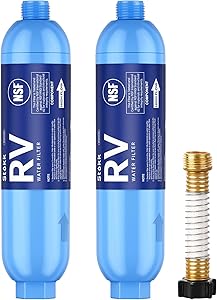
- Micron Rating: 10-micron high-flow protection
- Certification: NSF/ANSI 42 Certified
- Materials: GAC and KDF with copper fittings
- Flow Style: Wide-body efficient design
The Stokk RV Water Filter stands out with its 10-micron internal sediment filter, which offers twice the protection of most standard 20-micron models. This finer mesh effectively removes smaller particles of silt and impurities without sacrificing water pressure, thanks to its wide-body design. It uses premium, lead-free GAC and KDF materials that are independently tested to NSF standards, ensuring your water is free from heavy metals and fluoride.
Durability is a major focus for this model, which features rust-resistant copper fittings and a silicone washer for a tight, leak-free seal. The 360-degree swivel on the flexible hose protector further prevents kinks and connection pressure, extending the life of your equipment. It is an excellent choice for those who need high-flow, high-purity water for RVing, car detailing, or filling home pools.
- Pros:
- Superior 10-micron filtration
- Rust-resistant copper fittings
- Higher flow rate than average
- Cons:
- More expensive per filter
- Fewer replacement units included
How to Choose Water Filters For RV Hose
When you are living on the road, your water source changes with every new campsite. Some campgrounds provide pristine spring water, while others may have aged pipes that introduce rust, sediment, and a heavy chlorine taste into your camper. Choosing the best water filters for your RV hose is the first line of defense in protecting your plumbing system and your health. This guide explores the technical aspects of inline filtration to help you find the perfect balance between purity and water pressure.
Understanding Inline Filtration Technology
Most RV hose filters use a combination of Granular Activated Carbon (GAC) and Kinetic Degradation Fluxion (KDF). GAC is excellent at absorbing chemicals like chlorine and VOCs, which are responsible for bad tastes and odors. KDF, usually a copper-zinc alloy, works through an electrochemical process to remove heavy metals like lead and mercury. More importantly for RVers, KDF also inhibits the growth of bacteria and mold inside the filter when it is not in use. This “bacteriostatic” property is essential because filters often sit in a warm storage bay between trips, making them prime real estate for bacterial colonies.
Micron Ratings: Why They Matter
The “micron rating” of a water filter tells you the size of the particles it can trap. A standard RV inline filter usually has a rating of 20 microns, which is enough to stop visible sand, silt, and large rust flakes. However, if you are camping in areas with very fine sediment or “glacier silt,” you may want to look for a 10-micron or even a 5-micron filter. Be aware that the smaller the micron rating, the more likely the filter is to “clog” or reduce your water pressure over time. Most travelers find that 10 to 20 microns is the “sweet spot” for balancing effective sediment removal with a functional flow rate for showers and sinks.
Flow Rate vs. Filtration Quality
Water pressure is a common complaint among RVers. A filter that provides exceptionally pure water may do so at a flow rate of only 0.5 Gallons Per Minute (GPM), which can make showering feel like a chore. Conversely, “high-flow” filters often feature a wider body or more porous materials to maintain a rate of 2.0 GPM or higher. When choosing a filter, consider your usage. If you are primarily filling your fresh water tank, a slow flow rate is less of an issue. If you are running your RV’s plumbing directly off the city water connection, a wide-body, high-flow design will keep your showers satisfying.
Certifications and Safety Standards
In the world of water filtration, not all “claims” are equal. Look for filters that are NSF/ANSI certified. Standard 42 covers aesthetic effects, meaning the filter is proven to reduce chlorine and improve taste. Standard 53 covers health effects, such as the reduction of cysts or lead. Finally, Standard 372 is a specific certification for lead-free materials in the filter’s construction. A filter that carries these authoritative certifications has been independently tested by a third-party laboratory, giving you the assurance that the product actually does what the label says.
The Importance of Hose Protectors
The weakest point of an inline filter is the connection between the hose and the RV’s water inlet. Because these filters are often long and heavy, they can put significant strain on your RV’s plastic plumbing fittings, potentially leading to cracks or leaks. Most top-tier filters now include a flexible hose protector—a short, spring-reinforced hose that acts as a buffer. This accessory allows the filter to hang vertically, reducing tension and preventing the hose from kinking. Look for protectors with anti-rust copper or brass fittings, as these are much more durable than cheap plastic alternatives.
Service Life and Maintenance
Most inline RV water filters are designed to last for three months or one full camping season. However, your actual service life will depend entirely on the quality of the water you are filtering. If you stay at a campground with high sediment levels, your filter may reach its capacity in just a few weeks. You will know it is time for a change when your water pressure begins to drop significantly or the bad taste returns. To extend the life of your filter, some experts recommend using a dedicated “sediment pre-filter” before the carbon filter to catch the heavy dirt first.
Ease of Installation
One of the main draws of an inline filter is the “no-tools-required” installation. Most models use standard 3/4-inch Garden Hose Thread (GHT) fittings that can be tightened by hand. Ergonomic designs with textured surfaces help you get a better grip when your hands are wet. For the best results, always flush a new filter for at least 30 to 60 seconds before connecting it to your RV. This clears out any loose carbon dust (black water) that can occur during shipping, preventing it from entering your camper’s pipes and fixtures.
Versatility Beyond the RV
While designed for campers, these filters are incredibly versatile. Many owners use them for gardening to reduce chlorine exposure for sensitive plants, or for car washing to prevent mineral buildup on paint. They are also excellent for filling home pools, spas, or pet water bowls. If you plan to use your filter for multiple applications, look for a multi-pack (2, 3, or 4 filters) to save money and ensure you always have a fresh spare ready for your next road trip or chore.
Material Quality and Burst Resistance
Campground water pressure can fluctuate wildly, sometimes spiking high enough to burst a cheap plastic filter. High-quality filters are made from food-grade, reinforced plastic housing that has undergone rigorous pressure testing—sometimes up to 400 PSI. Additionally, check for internal seals and silicone washers at the base of the fittings. A leak at the filter not only wastes water but can also create a muddy mess at your campsite. Investing in a filter with a “triple-precision” test rating or high burst-resistance ensures your water system remains secure throughout the season.