Maintaining your RV’s upper exterior is vital for preventing leaks and costly damage. Roof cleaners and conditioners effectively remove stubborn black streaks, bird droppings, and oxidation while preserving the structural integrity of rubber, fiberglass, or metal surfaces. Regular application ensures your roof remains flexible, UV-protected, and ready for your next outdoor adventure.
1. Ziollo RV Roof Cleaner – Natural Citrus Formula
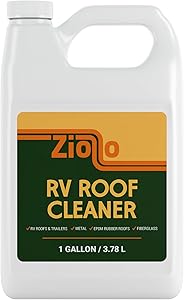
- Coverage: Up to 400 square feet
- Formulation: Citrus-based, VOC-free
- Compatibility: EPDM, TPO, Fiberglass, Metal
- Container Size: 1 Gallon
Ziollo RV Roof Cleaner is a fast-acting, citrus-based solution designed for travelers who prefer natural yet powerful cleaning. It excels at dissolving stubborn black streaks and campfire soot with minimal scrubbing required. One gallon provides enough coverage for a standard 30ft rig, making it a cost-effective choice for seasonal maintenance or preparing your roof for a new protective coating.
This formula is remarkably gentle on the environment and your RV’s hardware, as it contains no bleach or corrosive acids. It safely cleans sensitive EPDM rubber and fiberglass without causing premature drying or damage. Beyond the roof, it works wonders on awnings and solar panels, serving as a versatile all-in-one outdoor cleaner that effectively preps surfaces for sealants.
- Pros:
- Eco-friendly citrus formula
- Minimal scrubbing required
- Safe for solar panels
- Cons:
- Citrus scent may attract bugs
- Requires thorough rinsing
2. Dicor Rubber Roof Deep Cleaning Concentrate
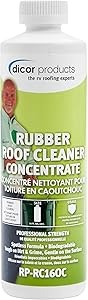
- Concentration: High-strength 16 oz bottle
- Feature: Water-softening elements
- Surface Type: Rubber roofing and exteriors
- Biodegradable: Yes
Dicor is a legendary name in RV roofing, and their RP-RC160C concentrate delivers professional-strength results. This deep-cleaning solution is specifically engineered to combat hard water spotting, thanks to integrated water-softening agents. It effectively lifts deep-seated dirt from rubber membranes, ensuring your roof stays in top condition. The 16 oz concentrate is designed to be mixed with water, providing a powerful cleaning punch in a small package.
Because it is biodegradable and phosphate-free, it is safe for use at most campgrounds. The formula is versatile enough for use on boats, motorcycles, and automobiles, though it shines brightest on RV rubber roofs. It leaves a residue-free surface that is perfectly prepped for secondary conditioning treatments, helping to prevent the chalking and streaking often seen on older motorhomes.
- Pros:
- Prevents hard water spots
- Trusted professional brand
- Very compact for storage
- Cons:
- Requires manual mixing
- Small bottle for large roofs
3. STAR BRITE Premium RV Rubber Roof Cleaner

- Technology: Marine-grade cleaning power
- Application: Spray, brush, and rinse
- Safe For: Rubber, fiberglass, painted surfaces
- History: 50+ years of innovation
STAR BRITE brings five decades of marine-grade cleaning technology to the RV market. This premium cleaner is designed to lift heavy grime without the use of corrosive acids, ensuring your seals and rubber membranes remain intact. It is specifically formulated to prevent drying out, which is the leading cause of roof cracking. The application is straightforward: simply spray the area, brush lightly, and rinse away years of buildup.
The formula is gentle enough for frequent use, making it ideal for the “weekend warrior” who maintains their rig regularly. It performs exceptionally well on painted surfaces and fiberglass, preventing the unsightly white runoff that often streaks down the sides of campers. This reliable cleaner saves both time and physical effort, lifting debris effortlessly to keep your RV looking immaculate.
- Pros:
- Marine-grade durability
- Non-drying formula
- No heavy scrubbing needed
- Cons:
- Spray bottle tires hands
- Higher price per ounce
4. BEEST Super Concentrated RV Roof Cleaner
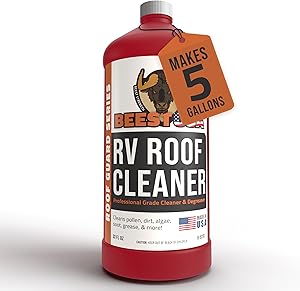
- Yield: Makes up to 5 gallons
- Type: Cleaner and degreaser
- Safety: Biodegradable and plant-safe
- Origin: Made in the USA
BEEST RV Roof Cleaner is a professional-grade degreaser that packs massive value into a 32 oz bottle. Once mixed with water, it produces five gallons of high-powered cleaning solution, enough to tackle the dirtiest trailers or motorhomes. It is particularly effective at removing soot, grease, and moss, making it a favorite for those reviving an older rig or preparing for a new roof coating.
Safety is a priority for this family-owned American company; the formula is non-abrasive and biodegradable, so it won’t harm campsite vegetation or nearby wildlife. Whether you use a pressure washer or a standard mop, the residue-free finish ensures a perfect bond for primers and sealants. It provides an industrial-strength clean while remaining friendly to solar panels and delicate siding.
- Pros:
- Makes 5 gallons of solution
- Powerful degreasing action
- Eco-friendly and plant-safe
- Cons:
- Requires dilution prep
- Can be slippery when wet
5. 303 Products Rubber Roof Cleaner
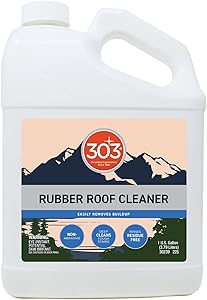
- Usage: 5 oz per 5 gallons of water
- Protection: Rinses residue-free
- Shelf Life: 2 years guaranteed
- Safe For: Rubber, TPO, Solar Panels
303 Products is a staple in the detailing world, and their Rubber Roof Cleaner lives up to the reputation. This formula is exceptionally efficient; just 5 oz mixed into a 5-gallon bucket is enough to dissolve heavy dirt and grime. It leaves the surface completely clean and ready for a secondary protectant, such as the 303 Aerospace Protectant, creating an ultimate UV barrier.
The cleaner is designed to be completely safe for solar panels and RV siding, ensuring that the runoff doesn’t cause damage or staining to other parts of your vehicle. By removing the chalky buildup that naturally occurs on rubber roofs, it keeps your RV looking newer for longer. It is a highly effective maintenance tool for anyone serious about long-term roof preservation.
- Pros:
- Extremely concentrated value
- Residue-free finish
- Safe for all rig types
- Cons:
- Must rinse runoff quickly
- Mixing ratio is specific
6. Bio-Kleen RV Roof Cleaner & Protectant
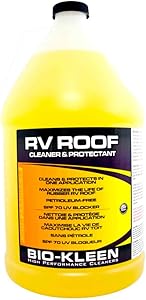
- UV Protection: SPF 70 blocker
- Duration: Up to 6 months protection
- Roof Types: EPDM, PVC, TPO
- Nature: Non-aerosol, biodegradable
Bio-Kleen M02409 is a unique dual-action product that cleans and protects in one step. It is specifically designed to maximize the life of rubber RV roofs by infusing them with an SPF 70 UV blocker. This high level of protection is vital for rigs parked in sun-drenched areas, as it significantly slows down the degradation of EPDM and TPO membranes.
A single application provides up to six months of protection against the elements, reducing the frequency of maintenance sessions. The biodegradable, non-aerosol formula is safe for almost all RV roof types and is remarkably easy to apply. If you are looking to simplify your cleaning routine without sacrificing long-term durability or sun safety, this 1-gallon protectant is a top-tier choice.
- Pros:
- High SPF 70 UV protection
- Cleans and conditions together
- Long-lasting 6-month shield
- Cons:
- Thicker liquid harder to spread
- Requires frequent shaking
7. Walex RV Rubber Roof Cleaner and Conditioner

- Action: Dual cleaner and conditioner
- Targets: Tree sap, bird droppings, grime
- Benefit: Helps prevent roof cracking
- Size: 1 Gallon container
Walex RV Rubber Roof Cleaner and Conditioner is a premium maintenance solution that focuses on both immediate cleanliness and long-term health. It effortlessly removes organic stains like tree sap and bird droppings that can eat away at roof membranes. The standout feature is its conditioning capability, which helps keep rubber flexible and prevents the brittleness that leads to cracking and leaks over time.
Designed for the rigors of RV life, this professional-grade formula provides a deep clean without damaging the roof surface. The convenient 1-gallon size ensures you have plenty of product for regular seasonal checkups. It is an essential addition to any RV cleaning kit, offering a simple way to maintain a spotless roof while investing in the longevity of your motorhome.
- Pros:
- Prevents rubber cracking
- Strong organic stain removal
- No separate conditioner needed
- Cons:
- Stronger chemical scent
- May require some agitation
How to Choose RV Roof Cleaners And Conditioners
The roof is arguably the most critical part of an RV, yet it is often the most neglected. Without proper cleaning and conditioning, an RV roof can develop leaks, cracks, and mold, leading to thousands of dollars in repairs. Choosing the right products involves more than just picking a bottle off the shelf; you must understand your roof material and the specific environmental challenges your rig faces.
Identify Your Roof Material First
Before you purchase a cleaner, you must know what your roof is made of. Most modern RVs use one of four materials: EPDM (Ethylene Propylene Diene Monomer), TPO (Thermoplastic Polyolefin), Fiberglass, or Aluminum. EPDM and TPO are rubber-based and require non-petroleum-based cleaners to prevent swelling or damage. Fiberglass and metal are more resilient but can still be scratched by abrasive cleaners. Always check your owner’s manual or a manufacturer’s label to ensure compatibility.
Cleaner vs. Conditioner: Do You Need Both?
A cleaner is designed to remove dirt, soot, tree sap, and bird droppings. A conditioner, however, is meant to treat the material—specifically rubber roofs—to keep them flexible and UV-resistant. While some products are “two-in-one” solutions, many experts recommend a separate deep-cleaning step followed by a dedicated protectant. Conditioning is especially vital for rubber roofs to prevent “chalking,” where the roof sheds a white powdery substance that streaks down the sides of your RV.
The Danger of Harsh Chemicals
It can be tempting to use household cleaners like bleach or ammonia to tackle tough stains. However, these chemicals can be disastrous for an RV roof. Bleach can dry out rubber membranes, causing them to become brittle and crack. Ammonia and petroleum distillates can dissolve the adhesives holding your roof together or cause the rubber to swell and pull away from the frame. Stick to products specifically formulated for RVs that are labeled as biodegradable and safe for rubber or fiberglass.
UV Protection: Your Roof’s Sunscreen
The sun is the primary enemy of your RV roof. UV rays break down the polymers in rubber and fiberglass, leading to oxidation and structural failure. When choosing a conditioner or protectant, look for high SPF ratings or UV blockers. A good protectant acts as a sacrificial layer, absorbing the sun’s energy so your roof membrane doesn’t have to. In high-sun areas like the Southwest, a conditioner with UV blockers should be applied at least every three to six months.
Concentrate vs. Ready-to-Use
Cleaning products usually come in two forms: concentrates that you dilute in a bucket of water, and ready-to-use sprays. Concentrates are generally more cost-effective for large rigs and deep cleaning sessions, as one small bottle can often make several gallons of solution. Ready-to-use sprays are convenient for “spot cleaning” bird droppings or tree sap as they happen. If you have a large motorhome, starting with a concentrate for the seasonal deep clean is usually the smartest financial move.
Application and Safety Gear
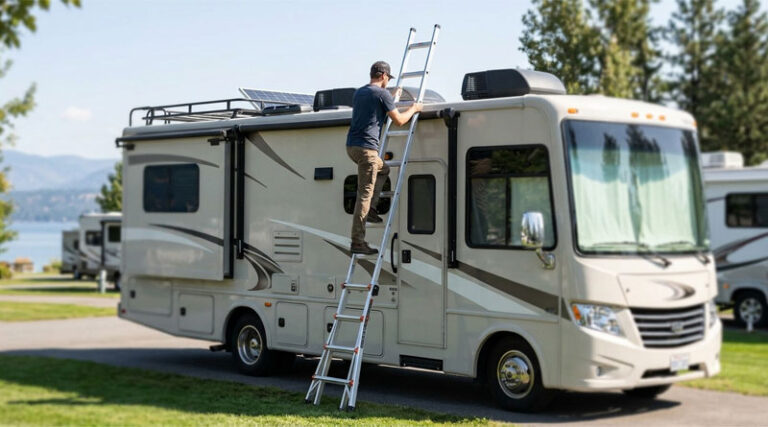
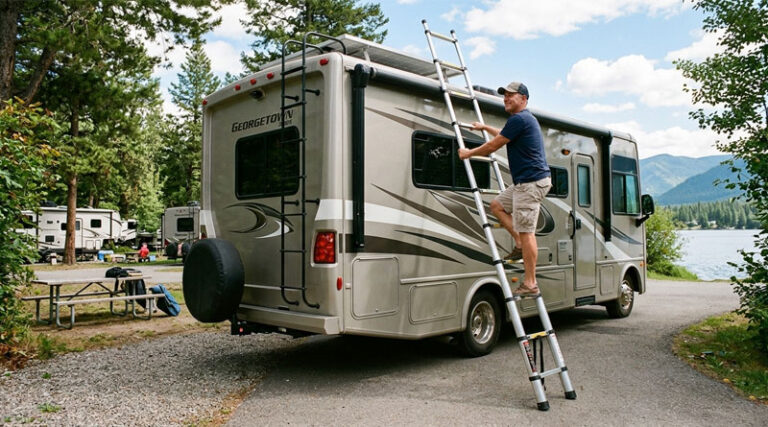
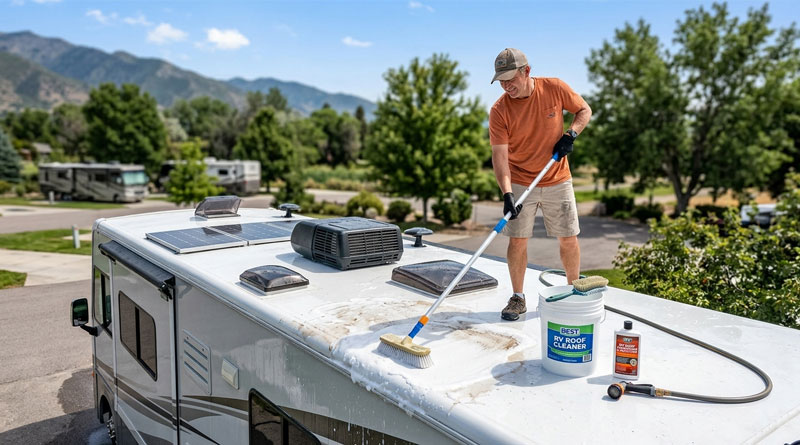
Cleaning an RV roof involves working at height, often on a surface that becomes extremely slippery when wet. Safety should be your first priority. Use a sturdy ladder and wear non-slip shoes. A soft-bristle brush with an extension handle is the best tool for agitating dirt without damaging the roof membrane. Avoid using stiff wire brushes or high-pressure power washers too close to the surface, as these can tear rubber or damage seals and vents.
Runoff and Side-Wall Protection
When you rinse your roof, the dirt and cleaning chemicals will run down the sides of your RV. If the cleaner isn’t designed properly, it can leave “black streaks” or strip the wax off your siding. To prevent this, many experienced RVers wet down the sides of the rig before starting on the roof and keep the sides wet throughout the process. Choosing a “residue-free” cleaner can significantly reduce the amount of post-roof cleaning required for the rest of your vehicle.
Environmental Impact
Since most RV roof cleaning happens outdoors or at a campsite, the chemicals you use will likely end up in the ground or local water systems. Look for products labeled as “biodegradable” and “phosphate-free.” Citrus-based cleaners are often a great middle ground, providing effective degreasing power without the environmental toll of harsh synthetic detergents. Being a responsible traveler means ensuring your maintenance routine doesn’t harm the nature you’ve come to enjoy.