
Connecting your rig to power can be a challenge when campsite outlets don’t match your camper’s configuration. Plug-in adapters ensure you stay powered up by bridging the gap between residential sockets and high-amperage RV inlets. Whether you need to charge batteries at home or adapt to a 50-amp pedestal, our guide highlights the most reliable connectors for safe travel.
1. RVGUARD 30 Amp to 110 Volt Locking Adapter
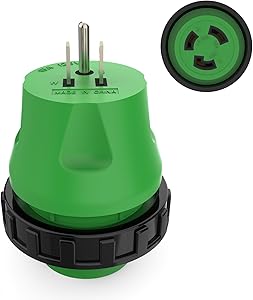
- Connectors: 15A Male (5-15P) to 30A Locking Female (L5-30R)
- Rating: 125V / 1875W
- Safety: Threaded waterproof locking ring
- Design: Compact straight-style plug
The RVGUARD locking adapter is a specialized tool designed for campers who use a twist-lock power inlet. Unlike traditional “dogbone” adapters that dangle from the side of the rig, this straight-style plug saves space and provides a direct, secure connection. It is the perfect solution for supplying power to low-draw appliances or keeping your house batteries topped off while the RV is parked in your driveway or a storage unit.
Constructed with safety in mind, it features a threaded ring that creates a weather-resistant seal when locked into your RV’s power port. The vibrant green color makes it easy to spot in low-light conditions, ensuring you don’t leave it behind. While it is limited to residential power draws, its robust build and waterproof features make it an essential accessory for any camper with a 30-amp locking system.
- Pros:
- Compact space-saving design
- Secure waterproof locking ring
- Highly visible green color
- Cons:
- Not for high-draw AC units
- Only fits twist-lock inlets
2. RVGUARD Surge Protected RV Adapter Cord

- Protection: 3600 Joules surge absorption
- Overload: Built-in 15A resettable circuit breaker
- Wire Gauge: Heavy-duty 10/3 AWG copper
- Certification: ETL Listed whole product
This RVGUARD adapter cord goes beyond simple conversion by offering a sophisticated safety net for your electrical system. With 3600 Joules of surge protection and a built-in circuit breaker, it shields your expensive RV electronics from voltage spikes and over-current scenarios. This is particularly useful when plugging into older residential outlets that might not have modern safety features, providing peace of mind during battery charging or storage.
The 2-foot cord is built with premium 10/3 gauge wire and a flame-retardant, UV-resistant jacket to withstand harsh outdoor elements. An LED power indicator lets you know at a glance if the connection is active. Since the entire unit is ETL listed, it meets much higher safety standards than cheaper competitors. It is a rugged, reliable bridge that ensures your camper stays protected while connected to standard 110V power.
- Pros:
- Integrated surge and overload protection
- Durable 10/3 AWG copper wiring
- Resettable circuit breaker button
- Cons:
- Bulkier than standard adapters
- Higher price for safety features
3. Nilight 15A to 30A Heavy Duty Adapter Cord
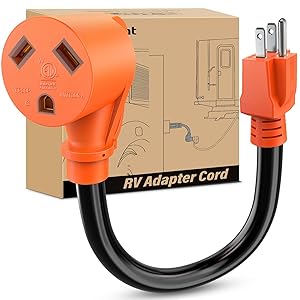
- Material: 100% pure copper 10 AWG wire
- Jacket: Flame retardant STW PVC sheath
- Certification: ETL Certified safety standards
- Length: 13.8-inch flexible cord
The Nilight RV Power Adapter is a heavy-duty “dogbone” style cord designed for maximum conductivity and flexibility. Using full 10-gauge stranded copper wires, it minimizes heat buildup and ensures your appliances receive steady power. It is ideal for running low-power items like refrigerators or microwaves when you only have access to a standard 15-amp residential outlet. The STW jacket is engineered to resist wind, rain, and snow, making it a true four-season accessory.
Nilight focuses on long-lasting durability with a heat-resilient PVC sleeve that protects against abrasion and UV damage. This adapter is ETL certified, guaranteeing it adheres to the same safety metrics as UL-listed products. While it is intended for temporary use and shouldn’t be used to run heavy loads like high-BTU air conditioners, it provides a safe and flexible way to maintain your camper’s systems during home prep or storage.
- Pros:
- Excellent electrical conductivity
- Highly flexible in cold weather
- Resistant to extreme outdoor elements
- Cons:
- Temporary use rating only
- Lacks integrated surge protection
4. CircleCord 30 Amp to 15 Amp Dogbone Adapter

- Feature: Ergonomic finger grip handles
- Visibility: Unique blue color jacket
- Rating: 15A Male to 30A Female / 1875W
- Jacket: UV-resistant STW water-resistant
CircleCord’s dogbone adapter stands out in the market for its user-friendly design and high visibility. The unique blue color isn’t just for aesthetics; it helps you quickly find the cord in a crowded storage tote full of black and yellow cables. One of its best features is the ergonomic grip handle on the female end, which makes plugging and unplugging the heavy 30-amp connector significantly easier and safer, especially in wet conditions where hands might slip.
Constructed with molded plugs and 10-gauge copper wiring, this ETL-listed adapter is built for heavy-duty outdoor use. The STW jacket provides excellent resistance to water and UV rays, preventing the cord from becoming brittle over time. It is a practical, well-engineered solution for connecting your RV to residential 110V power for battery maintenance or minor interior work, offering better ergonomics than most standard “no-frills” adapters.
- Pros:
- Easy-to-use grip handles
- High-visibility blue color
- Rugged water-resistant construction
- Cons:
- 12-inch length may be short for some
- Grip handles add a little bulk
5. Camco Heavy Duty PowerGrip Adapter
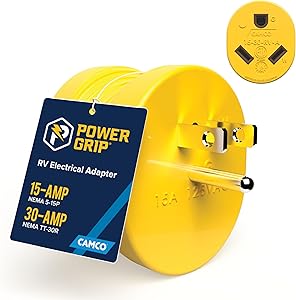
- Form Factor: Compact puck-style design
- Grip: Contoured non-slip shape
- Wiring: Durable 14/3-gauge copper
- Safety: ETL listed to UL standards
The Camco PowerGrip 55223 is a favorite among minimalist RVers due to its incredibly compact, puck-style design. Instead of a cord, this adapter uses a solid, contoured housing that provides a firm grip for easy removal from tight receptacles. It efficiently converts a standard 15-amp residential outlet to a 30-amp RV connection, making it one of the most portable power solutions available for home charging or small camper vans.
Despite its small size, it is fully certified and ETL listed, meeting strict UL and CSA safety standards. The patented design focus on ergonomics means you won’t struggle with “frozen” plugs during disconnects. While the 14/3-gauge wiring is lighter than some dogbone models, it is perfectly suited for the 1875W rating. If you want a space-saving tool that fits in a glovebox or small storage cubby, this Camco adapter is hard to beat.
- Pros:
- Extremely compact and portable
- Patented easy-pull grip design
- Highly durable molded housing
- Cons:
- Lower gauge wire than dogbones
- Can block adjacent outlets
6. ELEGRP 50 Amp to 30 Amp RV Adapter

- Function: 50A Male (14-50P) to 30A Female (TT-30R)
- Tech: Overheat Protection (OHP) Technology
- Power: Rated for 30A / 125V / 3750W
- Build: 10/3 AWG with flame-retardant jacket
The ELEGRP adapter is a must-have for 30-amp RV owners who visit modern campgrounds where only 50-amp pedestals are available. It features proprietary PBE Technology, which includes integrated overheat protection and superior weather resistance. This ensures that even during high-wattage use in the summer sun, your connection remains stable and safe. It effortlessly converts a 4-prong 50-amp outlet to a 3-prong 30-amp receptacle for your motorhome.
This dogbone is built with 100% pure copper and a heavy-duty STW PVC sleeve that stays flexible in extreme cold while resisting UV damage. The ergonomic finger-grip handles on both ends are a standout feature, allowing for safe removal from tight campground pedestals without straining the cord. It is UL compliant and offers a level of thermal stability that makes it one of the safest high-to-low amperage converters on the market.
- Pros:
- Advanced overheat protection tech
- Enables 50-amp pedestal use
- Firm ergonomic finger grips
- Cons:
- Specifically for 50-to-30 conversion
- Slightly heavier than home adapters
7. RVGUARD 30 Amp to 110 Volt Adapter with LED
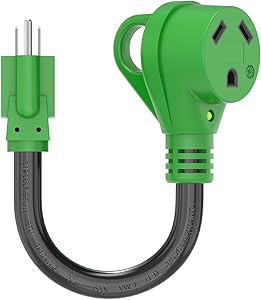
- Indicator: Integrated LED power light
- Handle: Ergonomic disconnect handle
- Wire: 10/3 AWG pure copper
- Certification: Full ETL/cETL certified
This RVGUARD 12-inch dogbone adapter is a straightforward, high-quality solution for connecting your 30-amp camper to a 15-amp home outlet. The standout feature is the integrated LED power indicator, which provides a visual confirmation that juice is flowing before you even step inside your rig. This saves time and frustration when troubleshooting power issues. The heavy-duty 10/3 gauge wiring ensures the cord won’t overheat while maintaining your batteries or running basic electronics.
Equipped with an ergonomic disconnect handle, this adapter allows you to unplug with ease, keeping your fingers safely away from the metal prongs. The molded design is incredibly durable, featuring a flame-retardant and UV-resistant sleeve that protects against the wear and tear of life on the road. It is a fully certified safety tool that offers a more reliable and user-friendly experience than standard non-illuminated cords.
- Pros:
- Instant visual power confirmation
- Safe-pull disconnect handle
- High-quality thick 10/3 wiring
- Cons:
- Limited to 15-amp input
- Handle adds length to the plug
How to Choose Camper Plug-In Adapters
Electrical systems in the RV world are rarely a “one size fits all” situation. Depending on the age of the campground, the size of your rig, and whether you are parking at home or in a remote site, you will eventually find yourself staring at an outlet that doesn’t match your power cord. Choosing the right adapter is about more than just making things fit; it’s about ensuring your camper’s delicate electronics are safe from overheating, surges, and mechanical strain.
Understanding NEMA Ratings and Plug Types
The first step in choosing an adapter is deciphering the “alphabet soup” of NEMA ratings. Most standard household outlets are NEMA 5-15 (15-amp). Most medium-sized campers use NEMA TT-30 (30-amp), while larger luxury coaches use NEMA 14-50 (50-amp). Some rigs also feature twist-lock inlets, known as L5-30R. You must match the “male” end of the adapter to the power source (the outlet) and the “female” end to your RV’s power cord. Using the wrong adapter can result in a physical mismatch or, worse, an electrical hazard.
Dogbone vs. Puck Adapters: Which is Better?
Adapters generally come in two shapes: “dogbones” (short lengths of heavy-duty cable) and “pucks” (solid molded blocks). Puck adapters are extremely compact and great for storage, but they can be difficult to remove if they fit tightly, and they often block the adjacent outlet on a pedestal. Dogbone adapters are preferred by many full-timers because the short cable reduces strain on the outlet and provides more flexibility. Additionally, dogbones often feature larger handles that make plugging and unplugging much safer and easier on the hands.
The Critical Role of Wire Gauge
When you are adapting power from a 15-amp residential source to a 30-amp RV inlet, the thickness of the wire inside the adapter matters immensely. Wire thickness is measured in “gauge,” where a smaller number means a thicker wire. A 10-gauge (10/3) wire is standard for 30-amp service because it can handle the current without overheating. Cheaper adapters may use 14-gauge wire, which is thinner and prone to melting if you try to run an air conditioner or space heater. Always prioritize 10-gauge copper wiring for maximum safety.
Integrated Safety Features: Surges and Overloads
High-end adapters now include integrated safety technology like surge protection and circuit breakers. A 30-amp RV can easily try to draw more power than a 15-amp household circuit can provide, which can lead to tripped breakers or melted wires. Adapters with built-in circuit breakers act as a “first line of defense,” tripping at the adapter level before the heat reaches your home or RV wiring. Similarly, surge-protected adapters (measured in Joules) protect your rig’s circuit boards from lightning or grid instability.
Weatherproofing and Durability
RV adapters spend their lives on the ground, in the mud, and under the blistering sun. Look for cords with an STW rating (Service, Thermoplastic, Weather-resistant). This indicates the jacket is designed for heavy-duty outdoor use. UV resistance is equally important; without it, the plastic will become brittle and crack within a single season. If you have a twist-lock system, ensure the adapter includes a threaded locking ring to keep water from seeping into the connection during heavy rainstorms.
Certification and Safety Standards
Electricity is not the place to look for a “bargain” from an unbranded source. Ensure your adapter is ETL or UL listed. These certifications mean the product has been independently tested to meet strict North American safety standards. Be wary of products that claim only their *parts* are certified; the entire assembled adapter should carry the safety mark. This ensures that the molding, the wiring, and the connection points are all engineered to handle the rated electrical load without failing.
Ergonomics: Handles and Grips
It sounds like a minor detail until you are trying to disconnect a cord in a rainstorm with cold hands. Standard plugs can be incredibly difficult to pull apart once they’ve been connected for a few days. Look for adapters with ergonomic handles, finger loops, or “PowerGrip” contours. These features allow you to pull the plug straight out, which prevents the metal prongs from bending and keeps your fingers away from live electrical contacts. It also reduces the chance of damaging the cable’s internal wires over time.
Power Indicators and Visibility
Modern adapters often feature LED power indicators. These small lights are surprisingly useful because they tell you instantly if the pedestal or outlet is actually providing power. If your RV lights aren’t coming on, the LED light on the adapter helps you narrow down whether the issue is at the source or within your rig. Furthermore, choosing a brightly colored adapter (green, blue, or yellow) makes it easier to find in a storage bin and harder to trip over when it’s plugged in outside at night.