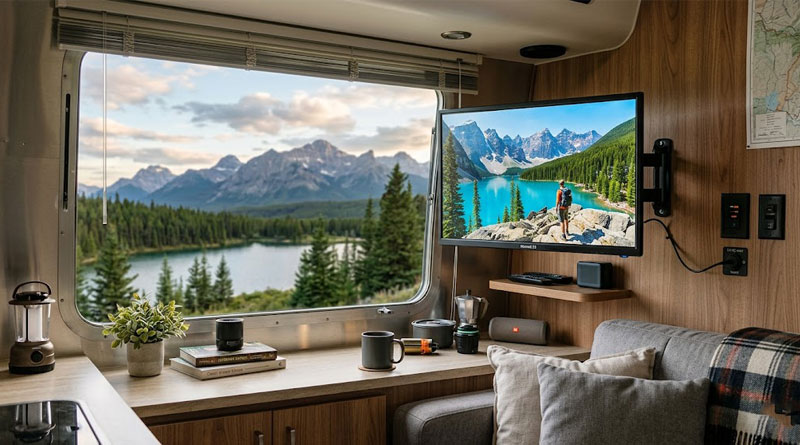
Trading the grid for the open road shouldn’t mean sacrificing your favorite cinematic escapes. For the modern nomad, a 12-volt TV is more than a luxury; it is a tactical addition to the mobile lifestyle. These specialized displays thrive on direct DC power, bypassing the energy-sapping inefficiency of inverters. Whether you are boondocking in the desert or docked at a coastal marina, our curated selection of 12V televisions ensures your entertainment remains as limitless as your wanderlust.
1. FREE SIGNAL TV Transit 32-inch 12 Volt RV TV

- Screen Size: 32-inch LED screen
- Resolution: 1366 x 768 HD
- Power: AC/DC (12V DC native)
- Inputs: 3 HDMI, USB
The FREE SIGNAL TV Transit stands out as a heavyweight contender in the mobile display market, prioritizing durability and signal stability. This unit is specifically engineered to handle the physical rigors of travel, featuring a lightweight frame and internal circuitry designed to mitigate the electrical noise often found in vehicle power systems. Its 32-inch screen strikes a perfect balance, offering a large enough canvas for movie nights without overwhelming the limited wall real estate of a standard travel trailer or camper van.
Versatility is the name of the game here, as the Transit includes both a native 12V DC connection and an AC adapter for traditional wall outlets. While it foregoes built-in smart features, the inclusion of three HDMI ports makes it a dream for users who prefer their own tech stack, like a Roku or a gaming console. Backed by dedicated tech support, it remains a reliable workhorse for those who want a straightforward, high-performance monitor that won’t give up when the road gets bumpy.
- Pros:
- Dual AC/DC capability for flexible setups
- Generous port selection with 3 HDMIs
- Rugged, vibration-resistant build quality
- Cons:
- 728p resolution lacks the crispness of Full HD
- Requires external hardware for streaming apps
2. Westinghouse 24-Inch 12 Volt RV TV with Built-in DVD Player

- Screen Size: 24-inch HD LED
- Resolution: 720p HD
- Special Feature: Built-in DVD player
- Inputs: HDMI, USB, VGA
Westinghouse delivers a clever solution for the space-conscious traveler with this 24-inch combo unit. By integrating a DVD player directly into the chassis, it eliminates the need for extra shelving and messy cable runs, which is a massive win for smaller van builds or cab-over bunks. The 720p display is bolstered by progressive scan technology, which effectively smooths out fast-moving action scenes, ensuring that your classic movie collection looks surprisingly sharp on a compact screen.
Beyond its disc-playing capabilities, this model is a Swiss Army knife of connectivity. It features VGA and PC audio inputs, allowing it to pull double duty as a workstation monitor for digital nomads. While it requires an inverter for direct 12V battery integration, its low power draw makes it an efficient choice for those already running a basic solar setup. It’s a nostalgic yet practical piece of tech that keeps your physical media alive while staying ready for modern streaming sticks.
- Pros:
- All-in-one DVD design minimizes clutter
- Can be utilized as a high-quality PC monitor
- Includes V-chip for family-friendly viewing
- Cons:
- Requires an inverter for 12V RV use
- Non-smart interface feels slightly dated
3. SYLVOX 24-inch Smart 12 Volt RV TV with Google OS
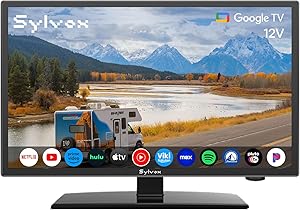
- Operating System: Google TV
- Resolution: 1080P Full HD
- Power: DC (9-32V) / AC (110V)
- Connectivity: WiFi, Bluetooth, HDMI, USB, RJ45
If you refuse to leave your premium streaming experience behind, the SYLVOX 24-inch Smart TV is your best bet. Powered by the Google TV ecosystem, it offers a level of software sophistication rarely seen in the 12V market. You get native access to the Google Play Store, built-in Chromecast, and a voice-activated remote that lets you search for “Nature documentaries” or “The Office” without typing a single letter. It essentially brings the living room “smart home” vibe into the wilderness.
Hardware-wise, SYLVOX hasn’t cut corners. This unit features a wide-voltage protection circuit (9V-32V), which is critical for protecting the delicate internal electronics from the “dirty” power often generated by vehicle alternators or fluctuating solar controllers. The 1080p Full HD resolution provides a significant jump in clarity over standard 720p models, and the dual HiFi speakers deliver audio that punches well above its weight class. It is a high-tech, ruggedized hub for the truly connected traveler.
- Pros:
- True 1080p resolution for superior detail
- Sophisticated Google TV OS with voice control
- Robust wide-voltage protection for DC safety
- Cons:
- Premium features come with a higher price tag
- Menu navigation can be slow on weak Wi-Fi
4. Pyle 21.5-Inch 1080p LED RV TV with DVD Combo

- Screen Size: 21.5-inch LED
- Resolution: 1080p Full HD (1920×1080)
- Special Feature: Slot-in DVD player
- Power: 12/24 Volt Car Adapter included
The Pyle 21.5-inch model is a masterclass in maximizing utility within a tiny footprint. While many small-screen TVs compromise on resolution, Pyle packs a full 1920×1080 display into this compact chassis. The result is an incredibly dense pixel count that makes high-definition content look spectacular, even when you’re sitting just a few feet away in a cramped dinette or sleeping loft. The 178-degree viewing angle ensures that colors remain true even if you’re watching from an awkward side-seat.
What makes this Pyle unit truly shine is its “slot-in” DVD player, which keeps the profile slim while providing a foolproof way to watch movies when you’re far out of cellular range. It’s also uniquely compatible with both 12V and 24V systems, making it a viable choice for larger buses or heavy-duty trucks. With a plethora of legacy inputs like RCA and VGA alongside modern HDMI, it’s a versatile bridge between old-school media and modern high-definition gaming.
- Pros:
- High pixel density with Full HD resolution
- Supports both 12V and 24V power systems
- Exceptional 178-degree viewing angles
- Cons:
- The 21.5-inch screen may feel too small for main living areas
- Audio quality is thin compared to larger models
5. Audiobox 32-Inch Smart 12 Volt RV TV with webOS Hub

- Screen Size: 32-inch LED HDTV
- Resolution: Full HD 1080p
- Operating System: webOS Hub (Smart TV)
- Connectivity: Dual-band WiFi, Bluetooth 5.0, HDMI ARC, USB
The Audiobox 32-inch Smart TV feels less like an RV appliance and more like a centerpiece for a high-end mobile theater. Utilizing the webOS Hub—the same polished interface found on LG’s flagship home TVs—it provides a snappy, intuitive user experience. The included Magic Remote is the star here, allowing you to point and click on the screen like a computer mouse, which makes navigating Netflix or YouTube significantly less frustrating than traditional directional pads.
Audiobox has also addressed the common “RV Wi-Fi” struggle by including dual-band WiFi and Bluetooth 5.0. This means better signal stability when you’re parked at the edge of a campground’s range and the ability to wirelessly beam audio to a set of outdoor speakers for a drive-in movie feel. The 1080p panel offers vibrant colors and deep blacks, making it a top-tier choice for enthusiasts who want the “big rig” entertainment experience without the power-hungry 120V overhead.
- Pros:
- Premium webOS interface with Magic Remote
- Dual-band WiFi for better connectivity in remote areas
- 1080p resolution on a generous 32-inch screen
- Cons:
- Magic Remote requires a bit of practice to master
- Slightly higher power draw than smaller competitors
6. SYLVOX 22-inch 12 Volt Smart Marine TV with DVD Player

- Design: Marine-grade triple protected circuit boards
- Operating System: Google TV with Chromecast
- Special Feature: Built-in DVD player
- Resolution: 1080P Full HD, frameless design
The SYLVOX Marine TV is built for the “worst-case scenario” traveler. Originally designed for the humid, salt-heavy environments of sailboats and yachts, its internal circuit boards are triple-protected against corrosion and moisture. For an RVer, this translates to extreme longevity, especially if you frequently travel to humid coastal regions or leave your rig in storage during the off-season. Despite its rugged armor, it features a stunning frameless design that looks incredibly modern.
This unit is a rare “everything” device, combining 1080p resolution, Google TV smart features, and a built-in DVD player. It effectively bridges the gap between old-world physical media and futuristic streaming. Because it is marine-grade, it is built to withstand more vibration and impact than almost any other TV on this list. It is an investment in durability for those who plan to take their adventures off the paved path and into the salt air or high humidity.
- Pros:
- Immune to moisture and salt-spray corrosion
- Incredible feature density (Smart TV + DVD)
- Sleek, frameless aesthetic fits any decor
- Cons:
- Higher cost due to marine-grade engineering
- Small 22-inch screen limits viewing distance
7. Continuus 24-inch 12V RV Smart TV with Android OS

- Operating System: Android TV
- Resolution: 720p HD
- Power: AC/DC (12V native)
- Special Features: Google Assistant, Chromecast built-in
Continuus has built a reputation for crafting displays that feel specifically “RV-first” rather than adapted from home use. Their 24-inch model features a reinforced chassis specifically designed to resist the warping and internal component loosening that can occur during thousands of miles of road vibration. Running on the Android TV platform, it provides a very familiar, user-friendly interface that prioritizes content discovery and voice-enabled navigation through Google Assistant.
Though it sticks to a 720p resolution, the frameless design makes the picture feel larger and more immersive than traditional thick-bezel monitors. It’s highly efficient on native 12V power, making it a fantastic companion for off-grid enthusiasts who need to watch every watt. With its stable mounting points and streamlined setup process, this TV is the “set it and forget it” choice for travelers who want reliable smart features in a package that can take a beating.
- Pros:
- Ruggedized chassis designed for road vibration
- User-friendly Android TV interface
- Very low power consumption for off-grid use
- Cons:
- 720p resolution isn’t as sharp as 1080p rivals
- Limited internal storage for large apps
Navigating the 12-Volt TV Marketplace: An In-Depth Acquisition Guide
Procuring a 12-volt TV for your recreational vehicle is not as simple as walking into a big-box retailer and grabbing the latest sale item. Standard televisions are designed for the stable environment of a house—consistent 120V AC power, climate control, and a stationary life. In contrast, an RV TV is a piece of specialized equipment that must survive “earthquakes” every time you drive down a highway and “power surges” every time you start your engine. To make the right purchase, you must understand the technical intersections of electrical engineering, spatial geometry, and digital connectivity. This guide provides a 1000-word deep dive into the nuances of buying the perfect mobile display.
The Architecture of Power: Understanding DC Efficiency
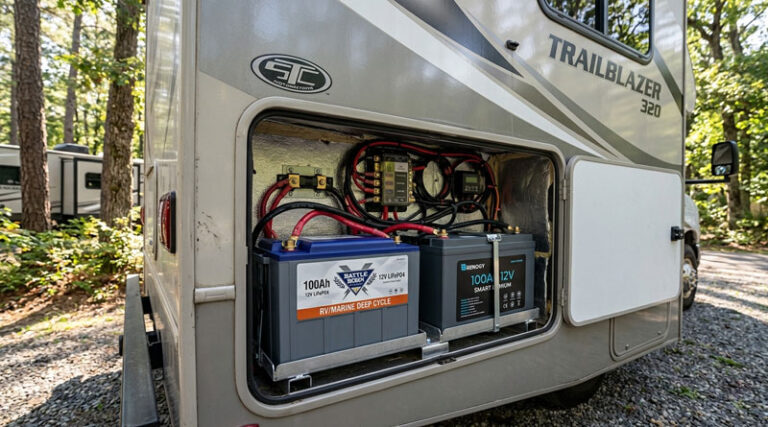
The primary reason to buy a native 12-volt TV is energy conservation. In a typical home, appliances use Alternating Current (AC). In an RV, your batteries store Direct Current (DC). If you use a standard home TV, you must run an inverter to change that DC into AC. This process is inherently “leaky”—you lose 10% to 20% of your battery energy simply through the heat generated by the inverter. By purchasing a 12V TV, you plug directly into the battery source, maximizing your “run time” between charges. This is the difference between watching three movies or five movies while dry camping.
When shopping, look for Wide Voltage Protection. A healthy RV battery doesn’t actually sit at 12.0 volts; it fluctuates between 10.5V (discharged) and 14.4V (while charging from the alternator or solar). Cheap 12V electronics can fry if the voltage spikes. High-quality RV TVs, like those from SYLVOX or FREE SIGNAL, are designed to handle a range (often 9V to 32V) without flickering or failing.
The Geometry of Your Rig: Size and Viewing Angles
In a house, you can always move your couch back. In an RV, your walls are fixed. Measure twice, buy once. Don’t just measure the screen size; measure the total exterior dimensions including the bezel and any protruding ports on the back. A “32-inch” TV might be 30 inches wide, which could block a cabinet door or a window.
Furthermore, you must consider Viewing Angles. In a living room, you usually sit directly in front of the TV. In an RV, you might be watching from a dinette, a swivel captain’s chair, or a bed tucked into a corner. Standard cheap LEDs often “wash out” or turn dark when viewed from the side. Look for IPS (In-Plane Switching) panels or specifications that list 178°/178° viewing angles. This ensures the person sitting at the kitchen counter sees the same vibrant colors as the person on the sofa.
Resolution vs. Screen Size: The “Sweet Spot”
There is a common debate about 720p vs. 1080p. On a massive 65-inch home TV, 1080p (or 4K) is mandatory. On a 22-inch or 24-inch RV TV, the difference is harder to see—unless you are sitting very close.
- 720p (HD): Perfectly adequate for screens under 24 inches. It consumes less power and is often cheaper.
- 1080p (Full HD): Highly recommended for 32-inch screens or if you use the TV as a computer monitor for work.
The Smart TV Dilemma: To OS or Not to OS?
Should you buy a “Smart” TV with built-in Google TV or webOS?
The Pros of Smart TVs: They reduce clutter. You don’t need an extra Fire Stick or Roku hanging out of the side, which saves space and one extra power cord. They often include “Screen Mirroring,” allowing you to cast downloaded movies from your phone to the TV when you have no internet.
The Cons of Smart TVs: Software becomes obsolete. A TV might last 10 years, but its “Smart” software might stop supporting Netflix in 3 years. Additionally, Smart TVs use slightly more “phantom power” (electricity used while the TV is off) because they are always listening for a remote signal or a Wi-Fi update. Many veteran RVers prefer a “Dumb” TV paired with a removable streaming stick that can be upgraded every few years for $30.
Physical Resilience: The “Road-Ready” Build
Vibration is the silent killer of electronics. Inside a standard TV, heavy components like transformers are often held in place by basic solder. Over thousands of miles of highway vibrations, these components can literally vibrate themselves off the circuit board. RV-specific TVs use reinforced chassis and often apply “potting compound” (a type of glue or resin) to secure internal parts. If you plan on driving the Alcan Highway or washboard dirt roads in the Southwest, spending the extra money for a brand like Continuus or SYLVOX, which markets “vibration resistance,” is a wise insurance policy.
Peripheral Connectivity: Planning for the Future
Look at the back of the TV before you click “buy.”
- HDMI ARC: If you plan to add a soundbar, an HDMI port with “ARC” (Audio Return Channel) is essential. It allows your TV remote to control the soundbar’s volume.
- USB Power: Ensure the USB ports provide enough amperage (at least 1.0A or 2.1A) to power a streaming stick.
- Bluetooth: This is a “game changer” for RVs. It allows you to watch TV with Bluetooth headphones at night so you don’t wake up your partner or the neighbors in the next campsite over.
The Marine-Grade Factor
If you live in a coastal area or have a “wet bath” near your TV mount, consider Marine-Grade units. These TVs feature conformal coating on the internal boards—a thin chemical film that prevents humidity and salt air from corroding the copper traces. It is more expensive, but in a damp environment, a standard TV may only last two seasons, while a marine unit will last a decade.
Final Procurement Checklist
Before finalizing your purchase, ask yourself these three questions:
1. **How am I mounting it?** Ensure the VESA pattern (the four holes on the back) matches your wall mount. Most use 100mm x 100mm.
2. **How am I powering it?** Do I have a 12V “cigarette” style outlet nearby, or will I be hard-wiring it into a fuse block?
3. **How will I get signal?** If you are going off-grid, ensure the TV has a built-in NTSC/ATSC Tuner for over-the-air channels and consider a model with a built-in DVD player.
Investing in a 12-volt TV is an investment in your travel comfort. By prioritizing power safety, vibration resistance, and viewing flexibility over the cheapest price tag, you ensure that when the sun sets over the horizon, you have a reliable window into your favorite stories.
Maintenance for Longevity
Once you have purchased your TV, remember that extreme temperatures are the enemy of LCD screens. If you store your RV in sub-zero winter temperatures or 120-degree desert heat, try to remove the TV and store it indoors. If you can’t remove it, use a padded, reflective cover to shield the screen from direct UV sunlight, which can “bake” the liquid crystals over time. With the right choice and a little care, your 12V TV will be a faithful travel companion for years to come.