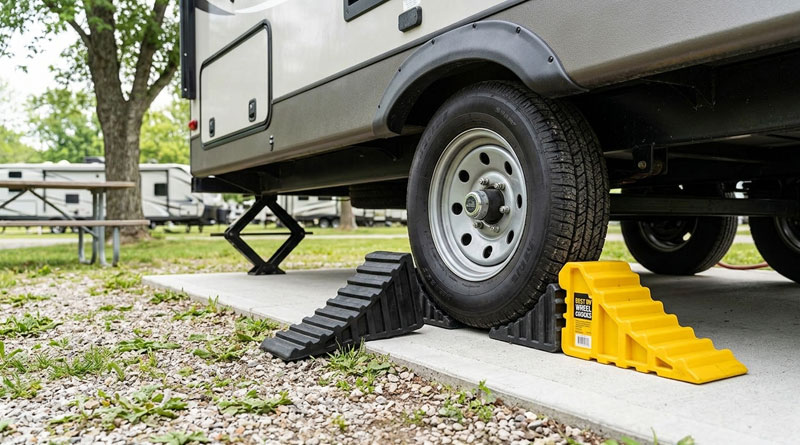
Parking your home-on-wheels isn’t just about finding a scenic view; it’s about ensuring that view doesn’t start moving without you. Even a minor incline can turn a parked RV into a multi-ton hazard. Wheel chocks are the unsung heroes of the campground, acting as the primary line of defense against gravity. Whether you are unhitching on a slope or performing a quick tire check, these wedges provide the essential friction needed to keep your adventures safely stationary.
1. ROBLOCK Wheel Chocks

- Material: Durable rubber blocks
- Size: 6.3″ × 4.3″ × 4″
- Visibility: Three yellow reflective strips per chock
- Pack Size: 2 pairs/4 chocks with rope
The ROBLOCK Wheel Chocks are the heavy-hitters for those who prioritize brute stability. Molded from industrial-grade rubber, these blocks offer a density that plastic simply cannot replicate. The “grabby” nature of the rubber ensures that once these are wedged, they stay put on surfaces ranging from slick garage floors to loose gravel. The inclusion of a connecting rope is a subtle but brilliant touch, allowing you to pull the pair out simultaneously without diving under the chassis.
Safety is clearly the focus here, specifically regarding low-light environments. Each chock features three distinct reflective strips, making them pop under a flashlight or headlamp—a lifesaver when arriving at a campsite after dark. While they carry more heft than their plastic cousins, that weight translates to confidence. These are versatile enough for everything from a small utility trailer to a mid-sized aircraft, proving that a simple, heavy-duty design is often the most reliable way to prevent a rollaway.
- Pros:
- High-density rubber provides superior surface friction
- Reflective strips offer excellent nighttime safety
- Connected rope prevents losing a single chock
- Weather-resistant for all-season use
- Cons:
- Noticeably heavier than plastic options
- Rubber scent can be strong when stored in tight spaces
- Textured surface tends to trap mud and debris
2. MaxxHaul 50011 Heavy-Duty Rubber Wheel Chocks

- Material: Heavy-duty, weather-resistant rubber
- Size: 6.5″ x 3.75″ x 4″
- Feature: Built-in 7/8″ inside diameter eyebolts
- Pack Size: 2 chocks
The MaxxHaul 50011 units are built for the long haul, literally. These chocks are designed to endure the punishing cycles of UV exposure and temperature swings without cracking. The specialized traction pad on the bottom acts like a set of teeth, biting into the ground to ensure the wedge doesn’t slide under pressure. This makes them a go-to choice for truck owners and RVers who frequently park on asphalt or concrete, where “slip” is a genuine concern.
The standout design choice here is the integrated 7/8″ eyebolt. This isn’t just for show; it allows you to customize your setup with your own high-tensile rope or even a chain for security. Despite their “Heavy-Duty” moniker, they are sized perfectly to fit in standard storage bays without hogging all the room. They represent a middle ground in the market—compact enough for a car, yet sturdy enough to hold a loaded trailer steady during a windy night or a hitching procedure.
- Pros:
- Rugged eyebolts facilitate easy removal and tethering
- Exceptional performance in extreme heat or cold
- Compact profile fits most storage compartments
- Aggressive bottom tread prevents sliding
- Cons:
- Lower visibility due to lack of reflective tape
- Can leave black marks on finished driveway surfaces
- Eyelet may corrode over years of salt exposure
3. Nilight Heavy Duty Plastic Wheel Chocks
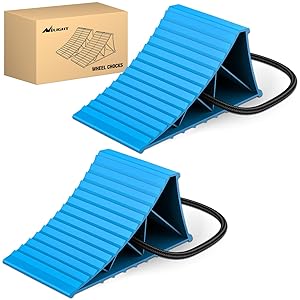
- Material: High-density polyethylene plastic
- Size: 8.7″ x 4.8″ x 4.2″
- Load Capacity: Up to 4400 lbs (combined)
- Tire Compatibility: Up to 24″ diameter
Nilight brings a more modern, lightweight approach to vehicle immobilization with their high-density polyethylene (HDPE) chocks. While some might be skeptical of plastic, these are engineered with internal ribbing to handle a combined load of over two tons. The primary draw here is the weight-to-strength ratio; they are incredibly easy to toss into a toolbox. The addition of a nylon pull strap is a ergonomic upgrade that saves your knuckles from scraping against the tire when it’s time to pack up.
These chocks are particularly effective for those with smaller campers or motorcycles. The textured surface is designed to interlock with tire treads, creating a mechanical bond that resists rolling. Because they are plastic, you don’t have to worry about that “rubber smell” or oil degradation over time. They are built for the casual weekend warrior who needs a reliable, no-fuss solution that won’t rust or rot. For tandem axle setups, they can be used in tandem to create a very stable platform for the vehicle.
- Pros:
- Incredibly lightweight and easy to handle
- Pull strap makes retrieval fast and clean
- Resistant to chemicals, oils, and rot
- Affordable entry point for new RV owners
- Cons:
- Less “grip” on wet ice or smooth, wet concrete
- Not suitable for massive, Class-A diesel pushers
- Can become brittle if left in direct sun for years
4. MAXXHAUL 70472 Solid Rubber Heavy Duty Wheel Chock

- Material: Premium solid rubber
- Size: 8″ x 4″ x 6″
- Durability: All-weather, oil and UV exposure resistant
- Feature: Built-in molded rubber handle
When you need a chock that feels like it could stop a tank, the MAXXHAUL 70472 is the answer. These are significantly larger and taller than the standard budget options, designed specifically to address the larger diameter tires found on heavy-duty trucks and large RVs. The solid rubber construction makes them virtually indestructible. They shrug off oil spills and UV rays, ensuring that the material won’t break down even if left under a parked trailer in the desert for six months straight.
The molded-in handle is the star of the show here. Unlike chocks that rely on flimsy ropes or eyelets, this handle is part of the chock’s actual structure, offering a secure grip even if you are wearing thick work gloves. This design is perfect for commercial settings or for RVers who find themselves on uneven, muddy terrain where a firm grip is required to wedge the chock into place. It’s a “buy once, cry once” product that prioritizes long-term durability over being the lightest option on the shelf.
- Pros:
- Solid, uncompromising build quality
- Integrated handle is ergonomic and sturdy
- Large footprint for maximum tire contact
- Highly resistant to chemicals and environment
- Cons:
- Requires significant storage space
- Heaviest in its class
- Deep black color makes them a tripping hazard at night
5. Camco Camper & RV Wheel Chock

- Material: Heavy-duty hard plastic with UV inhibitors
- Compatibility: Wheels up to 26” in diameter
- Feature: Attached rope for safe and easy removal
- Origin: Proudly Made in the USA
Camco is a household name in the RV world, and their standard wheel chock is a testament to why they dominate the space. These chocks are specifically tailored for the camping lifestyle, where weight savings are critical but tire sizes can be surprisingly large. Despite being made of hard plastic, they are rated for tires up to 26 inches, which covers the vast majority of travel trailers and fifth wheels on the road today. They are built with UV inhibitors to prevent the “yellowing and cracking” often seen in cheap plastic alternatives.
The yellow rope attachment isn’t just a convenience; it’s a safety feature that keeps your hands away from the tire and the ground, where spiders or sharp rocks might be lurking. Because they are made in the USA, there is a level of quality control in the molding process that ensures no weak spots in the plastic. These are the perfect “utility” chocks—cheap enough to have several pairs, light enough to never think twice about using them, and durable enough to last for years of weekend getaways.
- Pros:
- Optimized for larger RV tire diameters
- Rope handle keeps hands clean and safe
- Lightweight but remarkably strong
- Bright color aids in visibility
- Cons:
- Can slide on very smooth garage floors
- Hollow design can trap mud underneath
- Not ideal for extreme inclines with heavy loads
6. PR1ME Wheel Chocks

- Material: Rugged UV-resistant hard plastic
- Base: EVA Non-Slip Base
- Tire Compatibility: Holds tires up to 26″ diameter
- Visibility: Bright yellow color
The PR1ME Wheel Chocks tackle the biggest complaint about plastic chocks—slippage—by adding a specialized EVA non-slip base. This “hybrid” approach gives you the lightweight benefits of plastic with the ground-gripping power usually reserved for rubber. This makes them exceptionally good for parking on paved surfaces where standard plastic might skitter away. The bright yellow color is almost neon, ensuring that you’ll never accidentally leave them behind at a campsite or trip over them in the dark.
Design-wise, these chocks feature a wide-angle wedge that fits snugly against the curve of the tire, maximizing the contact patch. The rope-free design is a specific choice for those who hate tangles in their storage bins; instead, they feature smooth, rounded edges that make them easy to grab by hand. They are spill-resistant and a breeze to clean—just a quick spray with a hose and they look brand new. For the RVer who wants a “premium” feel without the weight of solid rubber, PR1ME is a top-tier contender.
- Pros:
- EVA base significantly improves grip on pavement
- High-visibility yellow is easy to see in low light
- Tangle-free, rope-less design
- Easy to wash and maintain
- Cons:
- Retrieval requires more bending without a rope
- EVA base may wear down over time on rough gravel
- Light weight can be a disadvantage in high winds if not under the tire
7. Vacallity RV Wheel Chocks

- Material: Sturdy rubber
- Weight (Pair): 5.6 lbs
- Visibility: 3 reflective yellow stripes per chock
- Rope Length: 47 inches nylon connecting rope
Vacallity offers a complete “pro” package with these heavy-duty rubber chocks. At nearly 6 pounds per pair, they have enough mass to feel substantial but aren’t so heavy that they become a chore to move. The 47-inch nylon rope is notably longer than many competitors, making it much easier to use with dual-axle trailers where you might need to reach between tires. This longer tether also means you can pull them out from a safe distance while standing upright, a small but appreciated ergonomic detail.
What sets these apart is the interlocking triangular design. When it’s time to hit the road, they fit together like a puzzle, taking up significantly less space than two separate bulky blocks. The three reflective stripes on each side offer 360-degree visibility, which is vital for commercial loading zones or busy campgrounds. They offer the chemical and oil resistance required for garage work, but their heart is in the great outdoors, providing a rock-solid anchor for your trailer on everything from grass to wet asphalt.
- Pros:
- Interlocking design saves valuable storage space
- Extra-long rope for versatile placement
- Solid rubber grip outperforms plastic on almost all surfaces
- Excellent nighttime visibility
- Cons:
- Can be cumbersome for very small trailers
- The rope can get snagged on uneven ground
- Higher price point than basic plastic models
How to Purchase the Perfect RV Wheel Chocks
Selecting the right wheel chocks is a nuanced decision that balances physics, material science, and personal convenience. While they may seem like simple wedges, the wrong choice can lead to equipment failure or, worse, a runaway vehicle. To make an informed purchase, you must look beyond the price tag and evaluate how a chock interacts with your specific vehicle and the environments you frequent.
1. Evaluate Your Vehicle’s “Stat Block”
The first step in purchasing is knowing your numbers. Gross Vehicle Weight Rating (GVWR) and tire diameter are the most critical factors. A chock designed for a small utility trailer will likely crush or slide under the weight of a 30-foot fifth wheel. Most manufacturers specify the maximum tire diameter their chock can handle. For instance, if you have 28-inch tires, a chock rated only for 24-inch wheels will not sit deep enough in the “crotch” of the tire to provide a mechanical lock. Always buy “up” in size if you are on the border.
2. Material Science: Rubber vs. Plastic
This is the most common crossroads for buyers. Rubber chocks are generally preferred for heavy loads and slippery surfaces like wet concrete or ice. Their high coefficient of friction means they “stick” to the ground. However, they are heavy and can smell. Plastic chocks are the kings of convenience. They are lightweight, don’t smell, and are often cheaper. However, they can slide on smooth surfaces unless they have a specialized base (like EVA or rubber inserts). If you park primarily on gravel or grass, plastic is often sufficient. If you park on steep driveways or paved lots, rubber is the safer bet.
3. Assessing the Grip and Tread Design
Look at the bottom of the chock. A smooth-bottomed plastic chock is a recipe for a slide. Look for aggressive ribbing, “teeth,” or a rubberized base. On the tire-facing side, look for a curved profile that matches the radius of a tire. This maximizes the surface area in contact with the rubber, distributing the force and preventing the tire from simply rolling over the top of the chock.
4. Ergonomics and “The Reach Factor”
Think about how you will actually use these. Are you comfortable bending down and reaching under the frame every time? If not, chocks with ropes or handles are non-negotiable. Ropes allow you to pull the chocks out from a standing position. Molded handles are better for “stomping” the chock into place on soft ground. Also, consider storage; some chocks stack or interlock, which is a massive plus when storage bays are already crowded with hoses and leveling blocks.
5. Visibility for Safety
A black rubber chock is nearly invisible at night. If you often arrive at campsites late, look for high-visibility colors (yellow, orange) or chocks with reflective tape. This prevents you from tripping over them and, more importantly, prevents you from accidentally driving over them because you forgot they were there. It also alerts other drivers in the area to the perimeter of your vehicle.
6. Specialized Needs: Tandem Axles
If you have a dual-axle trailer, you might consider X-chocks or stabilizers. These don’t just stop rolling; they stop the “rocking” motion that happens when you walk around inside the RV. While X-chocks are great for stability, they are usually sold as a supplement to—not a replacement for—standard ground chocks. When purchasing for a tandem axle, ensure the chocks are slim enough to fit in the gap between the two tires if that is your intended placement.
7. Weather and Chemical Resistance
If you live in a coastal area, salt air can degrade certain plastics and corrode metal eyelets. If you store your RV in the desert, UV rays will turn cheap plastic into a brittle mess within one season. Look for products that specifically mention UV inhibitors or all-weather rubber. These will stay pliable and strong for years rather than becoming a safety hazard after a few months of sun exposure.
8. Quantity: How Many is Enough?
Never buy just one chock. At a minimum, you need two—one for each side of the vehicle to prevent a “pivot” roll. Ideally, for an RV, you should have four (two pairs). This allows you to chock both sides of a single axle (front and back) or one tire on each side of the vehicle. When purchasing, check the “Pack Size” carefully; some are sold as single units, while others are 2-packs or 4-packs.
9. Brand Reputation and Origin
While a wedge is a wedge, brands like Camco, MaxxHaul, and Nilight have established track records in the automotive and RV industries. Buying from a known brand often ensures that the “load ratings” provided are tested and accurate. Check for “Made in USA” labels if you prefer higher quality control standards, as the molding process for plastic and rubber can vary significantly in consistency.
10. Finalizing the Transaction
Before hitting “buy,” check the return policy and the warranty. Rubber chocks are expensive to ship back due to their weight, so ensure the dimensions are correct for your tires beforehand. Read recent user reviews specifically for “slippage” and “cracking.” Once they arrive, do a “dry run” on flat ground to see how they fit your tire profile before you rely on them on a 10% grade in the mountains.
Conclusion
The best RV wheel chock is the one that fits your tire perfectly, stays put on the ground you park on, and is easy enough for you to use every single time without fail. Whether you go for the heavy-duty permanence of solid rubber or the lightweight agility of plastic, prioritizing this small piece of equipment will ensure your RV stays exactly where you left it, allowing you to focus on the journey rather than the parking brake.
Safety Note: Always engage your emergency brake before placing chocks, and never rely solely on chocks if the vehicle’s weight exceeds the product’s rated capacity.
“`