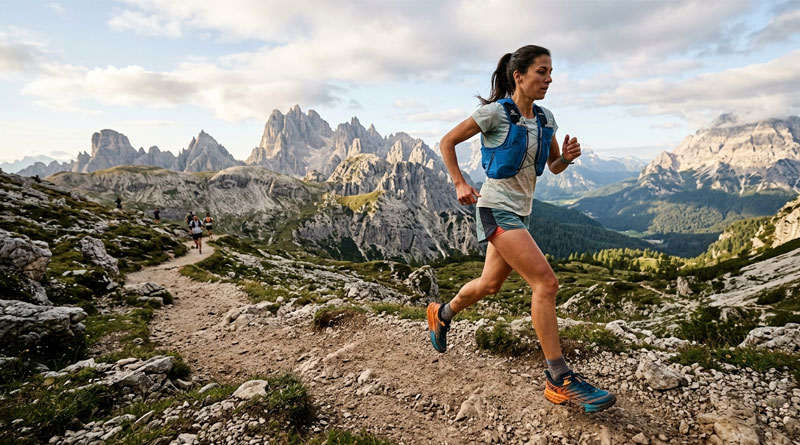
Running far on trails is tough on your body, especially your feet. You need shoes that cushion every stride, hold up for hours, and keep you comfortable mile after mile. The best trail running shoes for long distance combine plush padding, reliable grip, and a snug fit to fight fatigue and prevent blisters. In this guide, we’ve picked the top models that let you focus on the adventure ahead—not your aching feet.
1. Topo Athletic Terraventure 5

- Cushioning: Moderate Cushion
- Heel-to-Toe Drop: 3 mm
- Outsole: Vibram Megagrip
- Rock Plate: Yes
The Topo Athletic Terraventure 5 is built for runners who spend most of their time on rugged and technical trails. Its Vibram Megagrip outsole provides dependable traction on loose dirt, wet rocks, steep climbs, and uneven terrain. The aggressive grip gives you extra confidence when conditions become unpredictable. A forefoot rock plate helps protect your feet from sharp rocks and roots without making the shoe feel overly stiff. The recycled engineered mesh upper keeps airflow moving through the shoe while maintaining durability for long trail days. The roomy toe box also allows natural toe splay, which many trail runners appreciate on long-distance outings.
Underfoot, the ZipFoam EVA/TPU midsole delivers a balanced ride that feels responsive without becoming too soft. The 3 mm drop keeps the shoe stable and encourages a more natural running position on technical ground. Despite the protective build, the Terraventure 5 remains surprisingly agile and lightweight for a rugged-trail model. The shoe performs especially well for runners who want moderate cushioning instead of oversized midsoles. Its secure fit, reliable traction, and protective design make it a strong option for mountain trails, rocky paths, and challenging backcountry terrain. The vegan-friendly construction is another bonus for environmentally conscious runners.
- Pros: Excellent traction, roomy toe box, reliable rock protection
- Cons: Moderate cushioning may feel firm for some runners
View Men’s at REI View Women’s at REI
2. Altra Lone Peak 9

- Cushioning: Moderate Cushion
- Heel-to-Toe Drop: 0 mm
- Midsole: Altra EGO foam
- Rock Plate: Yes
The Altra Lone Peak 9 continues the legacy of one of the most recognizable trail-running shoes on the market. Designed for trail runners and hikers alike, this updated version delivers comfort, durability, and versatility for long miles outdoors. The zero-drop platform promotes a natural foot position, while the wide toe box allows your toes to spread comfortably during long runs and hikes. Its ripstop mesh upper feels durable enough for rough terrain yet breathable enough for warm-weather adventures. The updated MaxTrac outsole also improves grip and traction on dirt, gravel, and rocky surfaces.
The moderate cushioning strikes a nice balance between ground feel and comfort, making the Lone Peak 9 suitable for runners who want trail feedback without harsh impact. Altra’s EGO foam midsole feels responsive and stable, especially on rolling terrain and moderate climbs. The built-in rock plate helps protect your feet from sharp debris while maintaining flexibility throughout the stride. At the same time, the lightweight design keeps the shoe from feeling bulky during long-distance outings. Whether you are thru-hiking, ultrarunning, or exploring local trails, the Lone Peak 9 delivers dependable all-around performance. Its natural ride and comfortable fit continue to make it a favorite among trail enthusiasts who prefer zero-drop footwear.
- Pros: Natural foot positioning, roomy fit, versatile trail performance
- Cons: Zero-drop design may require adjustment for some runners
View Men’s at REI View Women’s at REI
3. Saucony Peregrine 16

- Cushioning: Moderate Cushion
- Heel-to-Toe Drop: 4 mm
- Outsole: Vibram Megagrip rubber
- Rock Plate: Yes
The Saucony Peregrine 16 is designed for runners who want speed, traction, and protection on demanding trails. Its updated PWRRUN foam adds more comfort underfoot while maintaining the responsive feel that the Peregrine line is known for. The Vibram Megagrip outsole performs extremely well on wet rocks, muddy sections, and steep descents. Deep lugs dig into loose terrain effectively, helping runners stay confident when the trail becomes technical. The synthetic and mesh upper also offers a secure fit that feels stable during fast direction changes and uneven footing.
Despite the increased cushioning, the Peregrine 16 still feels nimble and agile on the trail. The 4 mm drop keeps transitions smooth while preserving good ground control on climbs and descents. A built-in rock plate adds underfoot protection from sharp rocks without sacrificing flexibility. This combination makes the shoe well suited for trail races, technical singletrack, and rugged mountain terrain. The shoe’s overall design balances durability and lightweight performance very well. Runners looking for a trail shoe that can move quickly while still offering reliable protection will appreciate what the Peregrine 16 delivers. Its secure ride and excellent traction make it one of the better options for aggressive trail running in varied conditions.
- Pros: Outstanding grip, agile ride, strong foot protection
- Cons: Fit may feel narrow for wide-footed runners
View Men’s at REI View Women’s at REI
4. HOKA Speedgoat 7

- Cushioning: Moderate Cushion
- Heel-to-Toe Drop: 5 mm
- Midsole: Supercritical foam EVA
- Outsole: Vibram Megagrip
The HOKA Speedgoat 7 remains one of the most popular trail-running shoes for tackling rough and demanding terrain. This updated version introduces a new supercritical foam midsole that feels lighter and more responsive than previous models. The cushioning absorbs impact extremely well on long descents while still providing enough energy return for faster pacing. Vibram Megagrip outsoles continue to deliver dependable traction on rocky climbs, muddy sections, and loose gravel. The shoe feels planted and secure even when trails become steep or unpredictable.
The upper combines textile and synthetic materials for a comfortable fit that balances durability and breathability. Despite the generous stack height, the Speedgoat 7 feels stable and surprisingly agile during technical trail runs. The 5 mm drop creates a smooth transition from heel to toe, while the lightweight build keeps fatigue manageable during ultradistance efforts. Although it does not include a rock plate, the thick cushioning provides enough underfoot protection for most trail conditions. This shoe is especially appealing for runners who prioritize comfort during long mountain runs and all-day adventures. Its responsive cushioning and trusted traction make it an excellent choice for both experienced trail runners and newcomers looking for a dependable high-cushion option.
- Pros: Excellent cushioning, great traction, lightweight feel
- Cons: High stack may feel unstable for some runners
View Men’s at REI View Women’s at REI
5. Topo Athletic Pursuit 3

- Cushioning: Moderate Cushion
- Heel-to-Toe Drop: 0 mm
- Midsole: ZipFoam EVA/TPU
- Outsole: Vibram Megagrip
The Topo Athletic Pursuit 3 is designed for trail runners who prefer a zero-drop platform combined with soft and comfortable cushioning. The shoe delivers a smooth and natural ride that feels stable on varied terrain. Its Vibram Megagrip outsole provides dependable traction on rocky trails, dusty switchbacks, and wet surfaces. The outsole grips confidently during climbs and descents, helping runners maintain control on technical terrain. The recycled engineered mesh upper keeps airflow moving throughout the shoe while offering a flexible and secure fit for longer trail sessions.
Underfoot, the ZipFoam midsole provides plush comfort without feeling overly soft or unstable. The zero-drop geometry encourages a natural stride and promotes better ground connection for runners who enjoy minimalist positioning with added cushioning. Although the shoe does not include a rock plate, the thick underfoot foam still protects well against trail debris and sharp rocks. The roomy toe box gives extra comfort during long runs, especially when feet begin to swell after extended mileage. Overall, the Pursuit 3 is a strong option for runners seeking comfort, natural movement, and reliable traction in one lightweight package. It performs especially well during long-distance trail runs and daily off-road training sessions.
- Pros: Comfortable cushioning, roomy toe box, excellent traction
- Cons: No rock plate for extra underfoot protection
View Men’s at REI View Women’s at REI
6. Altra Superior 7

- Cushioning: Minimal Cushion
- Heel-to-Toe Drop: 0 mm
- Midsole: Compression-molded EVA
- Outsole: MaxTrac
The Altra Superior 7 is a lightweight trail-running shoe built for runners who want maximum ground feel and natural movement on the trails. With its zero-drop platform and low stack height, the shoe creates a direct connection between your feet and the terrain. The engineered knit upper feels lightweight and breathable while textured TPU overlays add durability in high-wear areas. Protective netting around the shoe also helps keep trail debris out during off-road adventures. The MaxTrac outsole provides reliable grip on dirt, gravel, and moderate trail conditions without adding unnecessary weight.
Because the Superior 7 uses minimal cushioning, it feels agile and responsive during fast trail runs and shorter off-road sessions. The lightweight design helps runners move quickly and naturally across rolling terrain. Unlike heavily cushioned trail shoes, this model allows you to feel the trail beneath your feet, which many experienced runners enjoy for improved control and precision. Although it lacks a rock plate, the shoe still handles smoother trails comfortably while maintaining flexibility throughout the stride. The roomy forefoot design adds comfort for runners who prefer extra space around the toes. Overall, the Altra Superior 7 is best suited for runners who value lightweight performance, natural foot positioning, and a closer-to-the-ground trail experience.
- Pros: Lightweight feel, natural stride, flexible ride
- Cons: Minimal cushioning may not suit long-distance runners
View Men’s at REI View Women’s at REI
7. Topo Athletic Ultraventure 4

- Cushioning: Maximum Cushion
- Heel-to-Toe Drop: 5 mm
- Outsole: Vibram XS Trek EVO
- Upper: Recycled mesh
The Topo Athletic Ultraventure 4 is designed for runners who prioritize comfort during long trail miles. Featuring maximum cushioning and a smooth ride, this shoe performs exceptionally well on light trails, gravel paths, and ultradistance outings. The ZipFoam EVA/TPU midsole absorbs impact effectively while still feeling responsive enough for steady pacing. The Vibram XS Trek EVO outsole delivers dependable grip across dry dirt, packed trails, and mixed terrain. Its traction feels predictable without becoming overly aggressive, making the shoe versatile for different types of off-road running.
The recycled mesh upper feels breathable and lightweight, helping keep feet cool during long efforts in warmer conditions. A roomy toe box adds extra comfort and reduces pressure during extended mileage. Even with its generous stack height, the Ultraventure 4 maintains a stable and balanced ride that works well for both trail running and hiking. The 5 mm drop creates smooth transitions while reducing strain for runners who prefer slightly more traditional geometry. Although it lacks a rock plate, the thick cushioning protects effectively against small rocks and uneven surfaces. Overall, this shoe stands out as a comfortable and versatile option for runners who spend hours exploring trails and want reliable cushioning from start to finish.
- Pros: Plush cushioning, breathable upper, smooth ride
- Cons: Less aggressive grip for muddy terrain
View Men’s at REI View Women’s at REI
8. Brooks Cascadia 19

- Cushioning: Maximum Cushion
- Heel-to-Toe Drop: 6 mm
- Midsole: DNA LOFT v3
- Rock Plate: Yes
The Brooks Cascadia 19 is built for trail runners who want comfort, stability, and protection on rugged terrain. This updated version combines maximum cushioning with a stable platform that handles uneven trails confidently. The DNA LOFT v3 midsole provides soft impact absorption while still maintaining enough responsiveness for steady pacing on climbs and descents. Brooks also includes a protective rock plate that shields feet from sharp rocks and roots during technical runs. The TrailTack Green outsole grips effectively on dirt, gravel, and wet surfaces, helping runners maintain control in changing conditions.
The 3D Fit Print air mesh upper offers a secure fit without feeling restrictive during long-distance runs. Despite its protective build, the Cascadia 19 still feels balanced and comfortable for daily trail training or ultradistance efforts. The 6 mm drop creates smooth transitions while reducing strain during extended mileage. One of the shoe’s strongest qualities is its adaptability across different terrain types, from forest trails to rocky mountain routes. The generous cushioning also helps reduce fatigue on long outings where comfort becomes increasingly important. Overall, the Brooks Cascadia 19 is a dependable all-around trail shoe that blends cushioning, traction, and stability very effectively for runners who want confidence on unpredictable terrain.
- Pros: Stable ride, strong protection, comfortable cushioning
- Cons: Slightly heavier than some trail racing shoes
View Men’s at REI View Women’s at REI
9. New Balance Fresh Foam X Hierro v9

- Cushioning: Maximum Cushion
- Heel-to-Toe Drop: 4 mm
- Midsole: Fresh Foam X
- Outsole: Vibram Megagrip
The New Balance Fresh Foam X Hierro v9 is built for runners who prioritize comfort and traction during long trail adventures. Featuring a thick Fresh Foam X midsole, the shoe delivers a soft and smooth ride that absorbs impact extremely well on uneven terrain. The cushioning feels plush without becoming unstable, making it ideal for long-distance trail runs, hiking, and recovery miles. Its Vibram Megagrip outsole performs confidently across dirt, loose gravel, rocky sections, and wet surfaces. The grip remains reliable even during steep descents and technical sections of trail.
The synthetic and mesh upper feels breathable while still offering enough structure to secure the foot during movement. Despite the shoe’s high stack height, the ride remains balanced and comfortable throughout long outings. The 4 mm drop supports smooth transitions while keeping the foot positioned naturally during climbs and descents. Although the Hierro v9 does not include a rock plate, the thick cushioning helps shield feet from trail impact effectively. Runners who enjoy soft underfoot comfort without sacrificing traction will appreciate what this shoe offers. Overall, the Fresh Foam X Hierro v9 stands out as a dependable high-cushion trail shoe that handles long miles comfortably while maintaining stability and grip across mixed terrain.
- Pros: Plush cushioning, reliable traction, comfortable fit
- Cons: High cushioning may feel bulky for fast runners
View Men’s at REI View Women’s at REI
10. La Sportiva Bushido III

- Cushioning: Moderate Cushion
- Heel-to-Toe Drop: 6 mm
- Outsole: FriXion XT 2.0 rubber
- Rock Plate: Yes
The La Sportiva Bushido III is designed for runners who regularly tackle steep, rocky, and technical terrain. Known for its precise fit and outstanding stability, this trail shoe performs exceptionally well on mountain trails and rugged descents. The updated outsole uses FriXion XT 2.0 rubber with aggressive 4 mm lugs that grip confidently on loose dirt, wet rocks, and uneven terrain. TPU side inserts and a durable upper structure help stabilize the foot during quick movements and technical sections. The secure fit creates a locked-in feel that inspires confidence on difficult trails.
Underfoot, the Bushido III combines moderate cushioning with excellent trail feedback for runners who want more control over technical ground. The integrated rock guard protects against sharp rocks and roots while still allowing flexibility during movement. Its lower stack height also improves stability and precision compared to highly cushioned trail shoes. Although the fit runs more performance-oriented and snug, many technical trail runners appreciate the extra security this provides. The shoe’s lightweight build and responsive ride make it suitable for trail races, mountain running, and fast-paced adventures on demanding terrain. Overall, the La Sportiva Bushido III is an excellent option for experienced runners who prioritize traction, control, and durability over plush cushioning.
- Pros: Excellent stability, aggressive traction, secure fit
- Cons: Narrow fit may not suit wider feet
View Men’s at REI View Women’s at REI
How to Choose Trail Running Shoes for Long Distance?
Trail running over long distances—ranging from half-marathons to ultramarathons—places unique demands on your body and your gear. Unlike road running, where the surface is predictable, trail running involves navigating roots, rocks, mud, and steep inclines. Your shoes are the only interface between you and this volatile terrain. Selecting the right pair isn’t just about comfort; it’s about injury prevention, efficiency, and confidence. This article explores the critical components of long-distance trail footwear and how to find the perfect fit for your specific needs.
Understanding the Anatomy of a Trail Shoe
To make an informed decision, you must first understand the technical elements that differentiate a trail shoe from a standard road shoe. Each component plays a role in how the shoe handles distance and terrain.
The Outsole and Lug Depth
The outsole is the rubber bottom of the shoe. For long distances, the “lug” pattern—the indentations and protrusions on the sole—is vital. If you are running on soft, muddy trails, you need deep, widely spaced lugs (5mm to 7mm) that “bite” into the ground and shed mud easily. For hard-packed dirt or rocky technical trails, shorter, more closely spaced lugs (3mm to 4mm) provide better surface area contact and grip. For ultra-distances, look for “sticky” rubber compounds like Vibram Megagrip, which provide superior traction on wet rock.
Midsole Cushioning and Energy Return
Cushioning is perhaps the most debated aspect of long-distance trail shoes. Over 30, 50, or 100 miles, your feet will swell, and your joints will take thousands of impacts.
- Maximalist: High stack heights (30mm+) provide a “cloud-like” feel, absorbing significant impact. These are popular for ultramarathons where leg fatigue is the primary concern.
- Moderate: A balance between feel and protection, offering enough ground feedback to navigate technical sections without leaving your feet battered.
- Minimalist: Rarely recommended for extreme long distances unless the runner is highly adapted, as they offer little protection against sharp rocks and repetitive stress.
Protection and Durability
Long-distance trails often feature “technical” sections filled with hazards. Your shoe acts as a shield for your feet.
Rock Plates and Toe Bumpers
A rock plate is a thin layer of hard plastic or carbon fiber embedded in the midsole. It protects the bottom of your foot from “stone bruises” caused by stepping on sharp points. For long distances, especially on limestone or granite trails, a rock plate is a lifesaver. Similarly, a reinforced toe bumper protects your toes from “trail-kick”—the inevitable moment you accidentally kick a root or rock when fatigue sets in at mile 40.
Upper Material and Drainage
The upper part of the shoe needs to be durable enough to withstand abrasion from brush and rocks, yet breathable enough to prevent overheating. For long distances, drainage is more important than waterproofing. Unless you are running in freezing snow, avoid Gore-Tex. Once water gets inside a waterproof shoe (through the ankle collar), it stays there. A mesh upper allows water to pump out as you run, preventing the “slosh” that leads to heavy feet and blisters.
Geometry and Fit: The Science of Comfort
A shoe that feels great in a store for five minutes can become a torture device after five hours. You must account for how your feet change over time.
The Importance of a Wide Toe Box
As you run long distances, your feet naturally splay and swell. If your shoes have a narrow, pointed toe box, your toes will be compressed, leading to black toenails and friction blisters. Many long-distance trail runners prefer brands that offer a wider, “foot-shaped” toe box. This allows the toes to spread naturally, providing better stability and comfort during the final stages of a race.
Heel-to-Toe Drop
The “drop” is the difference in height between the heel and the forefoot.
- High Drop (8mm-12mm): Puts more stress on the knees but relieves the Achilles tendon and calves. Good for runners with a history of lower-leg issues.
- Low Drop (0mm-4mm): Promotes a more “natural” midfoot strike but requires significant adaptation time to avoid straining the calves. Many ultra-runners prefer low-drop shoes for the increased stability they offer on uneven ground.
Matching the Shoe to the Terrain
Not all long-distance trails are created equal. You should choose your shoe based on the specific environment of your goal event.
Non-Technical and Fire Roads
If your long run is on groomed paths or fire roads, you can prioritize a “road-to-trail” hybrid. These shoes have shallower lugs and more flexible midsoles, making them comfortable for consistent, rhythmic running.
Technical and Alpine Terrain
For high-altitude mountain running, you need a shoe with a lower center of gravity to prevent ankle rolls. Precision fit is key here; you don’t want your foot sliding inside the shoe while traversing a steep side-slope. Look for “lockdown” features in the lacing system that keep your heel firmly in place.
The Buying Process: Tips for Success
Finding the right shoe is an iterative process. Here are three rules to follow during your search:
Shop in the Afternoon
Your feet are at their largest at the end of the day, which mimics the swelling that occurs during a long run. Try on shoes when your feet are already slightly expanded to ensure you don’t buy a size too small.
Bring Your Own Socks
Socks are half of the fit equation. If you plan to wear thick, cushioned wool socks for your long-distance efforts, don’t try on shoes with thin cotton liners. The thickness of the sock can change your shoe size by half a grade.
The Rule of Thumb
There should be about a thumb’s width of space between your longest toe and the end of the shoe. This extra room accounts for both swelling and the forward slide of the foot that happens during long, steep descents.
Maintenance and Replacement
Trail shoes generally last between 300 and 500 miles. However, long-distance runners should monitor the foam rather than just the tread. Once the midsole foam feels “dead” or loses its spring, it is no longer providing the protection your joints need. For those training for 50k or 100-mile distances, it is wise to rotate between two different pairs of shoes. This allows the foam in each pair to fully decompress between runs and subjects your feet to slightly different stresses, reducing the risk of repetitive strain injuries.
Final Thoughts
Choosing trail running shoes for long distance is a highly personal journey. There is no “best” shoe, only the best shoe for your foot shape, your gait, and your specific trail. By focusing on adequate cushioning, a protective outsole, and a generous toe box, you set yourself up for success. Remember that gear is a tool; while the right shoe won’t run the miles for you, the wrong shoe can certainly stop you from finishing them. Invest the time in testing, listen to your feet, and enjoy the miles ahead.