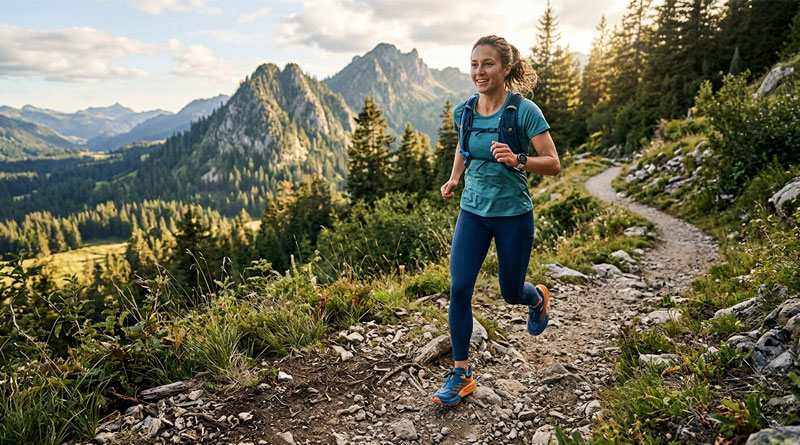
Looking for the best trail running shoes as a beginner? You’ve come to the right place. Unlike running on roads or tracks, trails can be muddy, rocky, or slippery. That means you need shoes with extra grip, support, and protection. But don’t worry—you don’t need anything fancy or expensive to start. This article breaks down the top beginner-friendly trail shoes that feel comfortable, keep you safe, and help you enjoy every step of your off-road adventure.
1. New Balance Fresh Foam 410 V8

- Outsole: AT Tread for versatile on/off-road traction
- Midsole: Soft BIO Foam for cushioned comfort
- Upper: Synthetic with durable overlays and mesh
- Closure: Lace-up for a secure, locked-in fit
The New Balance Fresh Foam 410 V8 is a dependable all-rounder for runners who split their time between roads and light trails. The BIO Foam midsole delivers a plush, comfortable ride that holds up well on longer efforts, while the AT Tread outsole transitions smoothly from packed dirt to pavement without losing grip.
Durable overlays and breathable mesh panels give the upper solid longevity, and the standard lace-up closure keeps your foot firmly in place over varied terrain. This is a great entry-level trail shoe for casual off-road runners seeking everyday versatility.
- Pros: Versatile on/off-road traction, plush BIO Foam cushioning, durable construction
- Cons: Limited technical trail capability, basic feature set
See the New Balance Fresh Foam 410 V8
2. Topo Athletic Terraventure 5

- Outsole: Vibram Megagrip for premium multi-surface traction
- Midsole: ZipFoam EVA/TPU with moderate cushioning
- Drop: 3mm heel-to-toe with 25mm heel stack height
- Rock Plate: Yes — forefoot protection on technical terrain
The Topo Athletic Terraventure 5 is built for runners who demand confidence on rugged trails. Vibram Megagrip delivers outstanding traction across wet, dry, and mixed surfaces, while the forefoot rock plate shields your feet from sharp rocks and roots without adding excessive stiffness or weight.
The recycled engineered mesh upper is breathable, eco-conscious, and comfortable through long efforts. At 1 lb. 4.6 oz. per pair, it strikes a smart balance between protection and agility. Whether you’re grinding out technical miles or racing singletrack, the Terraventure 5 is a capable, confidence-inspiring companion.
- Pros: Excellent Vibram grip, rock plate protection, vegan-friendly materials
- Cons: Low 3mm drop may not suit all runners, moderate cushion only
View Men’s at REI View Women’s at REI
3. Altra Lone Peak 9

- Drop: Zero drop with 25mm equal heel/forefoot stack
- Outsole: MaxTrac rubber for dependable grip on rugged trails
- Midsole: Altra EGO foam for lightweight, responsive cushioning
- Rock Plate: Yes — added underfoot protection on rough surfaces
The Altra Lone Peak 9 remains one of the most trusted names in trail running, and for good reason. Its zero-drop platform promotes natural foot posture and reduces strain on calves and Achilles during long efforts, while the wide toe box lets your foot splay naturally for better stability and comfort.
Updated MaxTrac outsole rubber and EGO foam midsole deliver a lively, cushioned ride that performs equally well on trail runs and hiking adventures. Weighing in at 1 lb. 6.4 oz., it’s a solid choice for distance runners seeking a foot-friendly, protective shoe for any trail distance.
- Pros: Zero-drop natural feel, wide toe box, versatile for running and hiking
- Cons: Zero drop requires adjustment period, heavier than minimalist options
View Men’s at REI View Women’s at REI
4. Brooks Caldera 8 Ultra
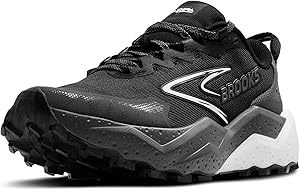
- Midsole: Nitrogen-infused DNA Loft v3 for ultra-plush cushioning
- Upper: Air mesh with breathable TPEE for superior ventilation
- Outsole: Widened base with flex grooves for stability on rough terrain
- Certification: Carbon Neutral certified product
The Brooks Caldera 8 Ultra is engineered for runners who want maximum cushioning and protection on long mountainous efforts. The nitrogen-infused DNA Loft v3 foam is generously stacked and impressively soft, absorbing punishment from rocks and roots like a tire rolling over rough road. Raised sidewalls add lateral security on unpredictable terrain.
The elevated mesh upper resists snagging and scratching on the trail while keeping airflow moving through demanding efforts. If you’re tackling ultra-distance routes and prioritize plush comfort and protective ride over lightweight performance, the Caldera 8 delivers exceptional support from start to finish.
- Pros: Exceptional cushioning, carbon neutral certified, durable snag-resistant upper
- Cons: Heavier build, not ideal for speed-focused runners
See the Brooks Caldera 8 Ultra
5. Altra Superior 7

- Drop: Zero drop with 21mm equal heel/forefoot stack
- Weight: 1 lb. 3 oz. — among the lightest in the lineup
- Outsole: MaxTrac rubber for light-trail grip
- Upper: Engineered knit with TPU overlays and protective netting
The Altra Superior 7 is a featherlight option built for runners who crave a fast, natural feel on light trails and well-groomed singletrack. At just 1 lb. 3 oz., it’s nimble and responsive, letting you move quickly without the bulk of a fully protective trail shoe. The zero-drop geometry encourages proper natural running form.
The engineered knit upper with TPU overlays wraps the foot comfortably while offering just enough structure for off-road confidence. While it lacks a rock plate, it excels on moderate trails where speed and ground feel matter most. A fantastic everyday trainer for the minimalist-minded trail runner.
- Pros: Ultra-lightweight, natural zero-drop feel, breathable knit upper
- Cons: No rock plate, minimal cushion limits use on very rocky terrain
View Men’s at REI View Women’s at REI
6. NORTIV 8 Trail Running Shoes

- Toe Box: Wide fit to accommodate natural foot splay and alignment
- Midsole: Lightweight EVA for shock absorption and bounce
- Outsole: Wear-resistant rubber with 4mm lugs for mud-shedding grip
- Upper: Jacquard mesh for breathability and moisture management
The NORTIV 8 Trail Running Shoes punch well above their price point, offering a spacious toe box, breathable upper, and grippy outsole that handles both trails and pavement with ease. The 4mm rubber lugs shed mud effectively and provide solid traction across varied surfaces, making them a practical choice for everyday off-road runners.
The arch-support insole and EVA midsole team up to cushion impact and reduce leg fatigue, which is particularly helpful for heavier runners or those logging high daily mileage. Inspired by mountain aesthetics, these shoes look sharp while delivering functional trail performance at an accessible price.
- Pros: Wide toe box, budget-friendly, versatile on/off-road grip
- Cons: Less technical than premium options, basic construction
See the NORTIV 8 Trail Running Shoes
7. Saucony Excursion TR15
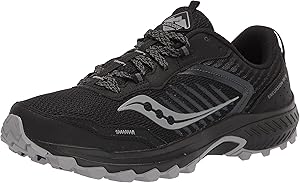
- Outsole: Carbon rubber lugs for rock-solid grip on mixed terrain
- Midsole: VERSARUN cushioning for moderate underfoot comfort
- Upper: Trail-specific mesh with supportive overlays
- Sustainability: Contains recycled materials for a lighter footprint
The Saucony Excursion TR15 is a reliable, no-nonsense trail shoe that handles everything from gravel paths to muddy singletrack without fuss. Carbon rubber lugs on the outsole bite into the ground with authority, giving you confident footing across wet, loose, and packed surfaces alike, while keeping the ride smooth on road sections too.
VERSARUN cushioning provides a comfortable, well-padded platform that won’t leave your feet aching after longer efforts. The trail-specific mesh upper locks your foot in place and deflects debris effectively without feeling stiff or bulky. Eco-conscious runners will also appreciate the inclusion of recycled materials throughout the construction.
- Pros: Strong carbon rubber grip, comfortable cushioning, eco-friendly materials
- Cons: Not designed for highly technical or aggressive trails
See the Saucony Excursion TR15
8. New Balance Dynasoft Tektrel V1
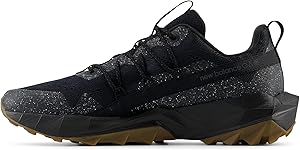
- Midsole: DynaSoft for ultra-responsive, plush cushioning
- Outsole: AT Tread for versatile on/off-road traction
- Upper: Lifestyle-inspired design with Regrind overlay for durability
- Closure: Corded eye row for a locked-down, secure fit
The New Balance Dynasoft Tektrel V1 blurs the line between trail performance and everyday style. The DynaSoft midsole is genuinely impressive — delivering a responsive, cushioned ride that feels lively underfoot whether you’re on the trail or running errands in the city. AT Tread outsole rubber handles mixed surfaces with confidence.
The Regrind upper overlay adds durability in high-wear areas, while the corded eye row system delivers a snug, locked-down fit that stays secure over variable terrain. If you want a trail shoe that looks as good off the path as it performs on it, the Tektrel V1 is a compelling choice that doesn’t compromise on function.
- Pros: Stylish design, responsive DynaSoft cushioning, versatile traction
- Cons: More lifestyle-oriented, limited aggressive trail capability
See the New Balance Dynasoft Tektrel V1
9. New Balance Fresh Foam 410 V9

- Outsole: AT Tread for reliable on and off-road traction
- Midsole: BIO Foam for soft, comfortable cushioning
- Upper: Synthetic with durable overlays and breathable mesh
- Closure: Lace-up for a secure, adjustable fit
The New Balance Fresh Foam 410 V9 builds on the strengths of its predecessor with a refined construction that suits everyday trail runners and road-to-trail crossover athletes. The BIO Foam midsole continues to impress with its soft, forgiving cushioning that holds up comfortably through extended wear and mixed-terrain miles.
AT Tread outsole rubber maintains grip across varied surfaces without becoming aggressive or uncomfortable on pavement, making the 410 V9 a genuinely versatile all-day shoe. Durable overlays reinforce key wear zones, and the lace-up closure keeps everything locked in. A smart upgrade for fans of the 410 line.
- Pros: Soft BIO Foam cushioning, versatile traction, durable construction
- Cons: Not suited for technical rugged trails, minimal performance upgrades over V8
See the New Balance Fresh Foam 410 V9
10. New Balance Dynasoft Nitrel V6

- Midsole: DynaSoft with EVA foam insert for plush, responsive comfort
- Outsole: AT Tread for versatile mixed-terrain traction
- Drop: 6mm heel-to-toe for a natural, balanced stride
- Upper: No-sew overlays for a smooth, irritation-free fit
The New Balance Dynasoft Nitrel V6 is a refined trail-to-road hybrid that combines DynaSoft responsiveness with an EVA foam insert for a layered, plush underfoot feel. The 6mm drop strikes a comfortable middle ground between traditional and minimalist running, making the transition easy for most runners coming from standard road shoes.
No-sew overlay construction eliminates irritation points and gives the upper a clean, streamlined appearance, while AT Tread rubber on the outsole handles light trails and pavement equally well. It’s an excellent commuter trail shoe for runners who want consistent cushioning and confidence across changing surfaces without carrying extra weight.
- Pros: Plush DynaSoft cushioning, smooth no-sew upper, versatile traction
- Cons: Better for light trails than technical terrain, moderate drop may not suit all
See the New Balance Dynasoft Nitrel V6
11. Salomon Speedcross Peak

- Outsole: All-terrain Contagrip rubber with aggressive lug design
- Fit System: Sensifit cradle with Quicklace one-pull tightening
- Protection: Reinforced heel cap and toe cap for trail impact resistance
- Terrain: Optimized for wet, dry, hard, and loose mixed surfaces
The Salomon Speedcross Peak is a trail runner built for all-terrain domination, and it delivers on that promise with aggressive Contagrip rubber that bites confidently into any surface. Whether you’re navigating slippery roots, loose gravel, or wet rock slabs, the outsole maintains grip with impressive consistency and durability across varied conditions.
Sensifit construction wraps the foot in a precisely snug embrace, while the Quicklace system makes on-the-fly adjustments effortless — a genuine advantage during races or long runs. The robust heel and toe caps shield your feet from trail hazards effectively. For runners who want premium protection and traction in a proven package, the Speedcross Peak excels.
- Pros: Aggressive grip, secure Sensifit system, excellent heel and toe protection
- Cons: Quicklace may not suit all preferences, aggressive lugs feel stiff on pavement
See the Salomon Speedcross Peak
12. Ziitop Trail Running Shoes
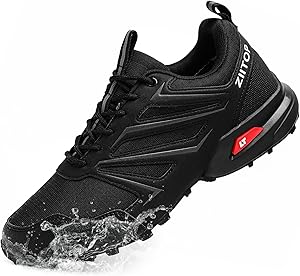
- Upper: Breathable mesh with waterproof protection and high-wear overlays
- Midsole: EVA cushioning for stable comfort on uneven ground
- Outsole: Non-slip rubber with multi-directional grip lugs
- Fit: Midsole-to-lacing Sensifit-style cradle for a secure wrap
The Ziitop Trail Running Shoes offer a compelling combination of waterproof protection and breathability in a package that’s easy on the wallet. The waterproof mesh upper keeps trail moisture out while allowing enough airflow to prevent overheating, and durable overlays in high-wear areas extend the lifespan of the shoe on abrasive terrain.
EVA cushioning in the midsole provides reliable shock absorption across uneven ground, keeping your steps stable and fatigue at bay through longer outings. The grippy rubber outsole handles rocky, muddy, and mixed trails confidently. For entry-level trail runners or occasional hikers seeking reliable all-weather protection without a premium price tag, Ziitop is a solid pick.
- Pros: Waterproof protection, EVA cushioning, versatile outsole grip
- Cons: Lesser-known brand, limited technical performance data available
See the Ziitop Trail Running Shoes
Trail Running Shoes for Beginners: Finding Your Path on the Dirt
Stepping off the pavement and onto the trail is a transformative experience for any runner. The air is fresher, the scenery is more engaging, and the impact on your joints is often more forgiving. However, the variable terrain—ranging from loose gravel and slippery mud to jagged rocks and tangled roots—demands a specialized piece of equipment: the trail running shoe. For beginners, the transition from road to trail can feel overwhelming given the technical jargon and the sheer variety of footwear available. This guide aims to demystify the process of selecting your first pair of trail running shoes, ensuring your entry into off-road running is safe, comfortable, and exhilarating.
Understanding the Difference: Road vs. Trail
Before diving into specific features, it is crucial to understand why your standard road shoes won’t suffice for the trails. Road shoes are designed for linear motion on flat, predictable surfaces. They focus on lightweight materials, breathability, and cushioning to absorb the repetitive impact of asphalt. Trail shoes, by contrast, are engineered for lateral stability, protection, and traction.
The outsole of a trail shoe is much more aggressive, featuring deep lugs to bite into soft ground. The midsoles are often slightly stiffer to prevent the foot from twisting on uneven surfaces, and the uppers are reinforced with durable materials to withstand abrasions from brush and rocks. Attempting to run technical trails in road shoes is a recipe for slips and potential ankle injuries.
Assessing Your Terrain
The first step in choosing a shoe is identifying where you will actually be running. Not all trails are created equal, and shoes are often specialized for specific environments.
Light Trails and Fire Roads
If your local trails consist mostly of well-maintained gravel paths, fire roads, or relatively flat dirt tracks, you may not need a “hardcore” trail shoe. In these scenarios, a hybrid shoe—often called a “road-to-trail” shoe—is ideal. These shoes have modest lugs (usually 2mm to 4mm) that provide enough grip for dirt but are shallow enough to feel comfortable if you have to run a mile or two on the pavement to get to the trailhead.
Technical and Rocky Terrain
For those venturing into mountainous regions with steep inclines, rock scrambles, and root-heavy paths, protection is paramount. You will want a shoe with a “rock plate”—a hard plastic or carbon fiber layer embedded in the midsole to protect your foot from sharp stones. These shoes also feature reinforced toe caps to protect against “trail toe” (stubbing your toe on a rock).
Muddy and Soft Ground
If you live in a rainy climate where trails are frequently boggy or covered in deep mud, traction is your primary concern. Look for shoes with deep, widely spaced lugs (5mm to 8mm). The wide spacing is critical because it allows the mud to shed off the shoe as you run, rather than getting stuck and turning your shoe into a heavy, slippery brick.
Key Technical Features to Consider
When you start browsing the aisles of a running store, you will encounter several technical specifications. Here is what a beginner needs to know.
Cushioning: Maximalist vs. Minimalist
Stack height refers to the amount of material between your foot and the ground. “Maximalist” shoes offer high stack heights with plush cushioning, which is great for long distances and reducing leg fatigue. However, high stack heights can sometimes feel unstable on technical terrain because your center of gravity is higher. “Minimalist” or “low-profile” shoes offer better ground feel, allowing you to react quickly to the terrain, but they require stronger foot muscles and a more gradual adaptation period.
The Drop (Heel-to-Toe Offset)
The “drop” is the difference in height between the heel and the forefoot. Traditional shoes usually have a drop of 8mm to 12mm. Many trail shoes feature a lower drop (0mm to 4mm) to encourage a more natural midfoot strike, which can be more stable on uneven ground. As a beginner, it is usually safest to stick close to the drop of your current road shoes to avoid straining your Achilles tendon or calves.
Outsole Compound
The rubber on the bottom matters just as much as the lugs. Softer rubber compounds are “stickier” and provide better grip on wet rocks and wood, but they wear down faster on hard surfaces. Harder rubber compounds are more durable but can be slick on wet, smooth surfaces. Look for reputable brands like Vibram or Megagrip if you anticipate wet conditions.
Fit and Comfort: The Golden Rule
No matter how many features a shoe has, if it doesn’t fit your foot shape, it will fail you. Trail running causes the feet to swell more than road running due to the increased heat and the constant micro-adjustments your feet make.
The Thumb Rule
Always ensure there is about a thumb’s width of space between your longest toe and the front of the shoe. This prevent your toes from slamming into the front of the shoe during steep descents, which is a common cause of black toenails.
Midfoot Lock-down
While you want space in the “toe box” for your toes to splay, you want a very secure fit through the midfoot and heel. On uneven terrain, your foot should not slide side-to-side inside the shoe. If it does, you risk blisters and rolled ankles. When trying on shoes, perform a few “lateral hops” to see if your foot stays centered over the midsole.
Common Pitfalls for Beginners
One of the most common mistakes beginners make is buying waterproof (GTX/Gore-Tex) shoes for every situation. While waterproof shoes keep moisture out, they also keep moisture in. If you step in a puddle or cross a stream and water goes over the ankle, a waterproof shoe will hold that water like a bucket. Unless you are running in snow or very cold, shallow slush, a highly breathable mesh shoe that drains quickly is usually the better choice.
Another mistake is ignoring socks. A high-quality trail shoe paired with a cheap cotton sock will still result in blisters. Invest in moisture-wicking synthetic or merino wool socks designed for running.
Conclusion
Choosing your first pair of trail running shoes is the first step toward a lifelong adventure in nature. Start by assessing your local trails, prioritize a secure fit with adequate toe room, and don’t get too bogged down in professional-level specs. Your goals as a beginner are protection, stability, and comfort. Once you have the right gear on your feet, the only thing left to do is find a trailhead and start exploring. The dirt is calling.