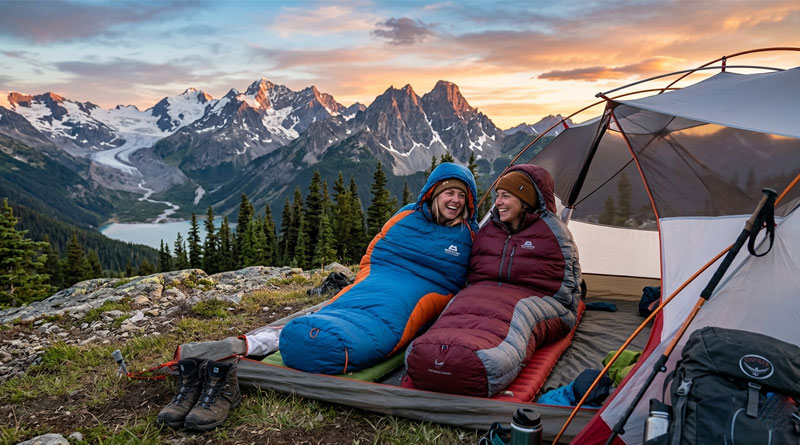
When you’re camping in cold weather, a good sleeping bag makes all the difference. Down sleeping bags are top choices because they’re light, easy to pack, and incredibly warm. But not all down bags are the same. In this article, we’ll walk you through the best down sleeping bags for any trip—whether you’re backpacking deep into the woods or car camping with friends. Stay cozy and sleep well, no matter how low the temperature drops.
1. Kelty Cosmic 20

- Best Use: Backpacking
- Temperature Rating: 20°F / -7°C
- Weight (Regular): 2 lbs. 7 oz.
- Fill: 550-fill-power down
The Kelty Cosmic 20 is a true 3-season superstar that balances affordability with genuine down performance. I’ve used this bag on countless shoulder-season trips, and its trapezoidal baffle construction does an excellent job preventing cold spots while maximizing the loft of the 550-fill-power down. The recycled polyester shell feels durable enough for ground use, and the mummy shape efficiently traps body heat without feeling overly restrictive. At just over two and a half pounds for the regular size, it packs a respectable warmth-to-weight ratio that budget-conscious backpackers will appreciate.
On a 25-degree night in the Sierra, I stayed comfortable wearing just base layers, though the ISO comfort rating of 31°F feels accurate for most sleepers. The zipper drafts are minimal thanks to a decent draft tube, and the hood cinches down nicely around your face. While the down isn’t treated for moisture resistance, the bag performs admirably in dry conditions. The stuff sack compresses reasonably well, though you’ll want a larger stuff sack for backpacking to save space. For entry-level down performance, this bag delivers exceptional value.
- Pros: Affordable down bag, reliable 3-season warmth, durable recycled shell.
- Cons: 550-fill is less compressible than premium down, no water-resistant treatment.
2. SYWSKW Down Sleeping Bag

- Fill Power: 680FP duck down
- Temperature Rating: 23°F (comfort)
- Weight: 2.38 – 2.99 lbs
- Shoulder Girth: 33.5 inches
The SYWSKW Down Sleeping Bag punches above its weight class with premium 680FP duck down and thoughtful design features typically found on more expensive bags. I was impressed by the advanced baffle box construction that prevents down migration, ensuring consistent warmth distribution throughout the night. The widened 33.5-inch shoulder design provides generous wiggle room without sacrificing thermal efficiency, making it a great option for side sleepers who feel constrained in traditional mummy bags. The included compression bag reduces pack size dramatically for backpacking.
On a chilly 30-degree evening, the bag kept me toasty with the 800g fill version, and the integrated detachable pillow is a surprisingly useful addition that eliminates the need for a separate camp pillow. The YKK zipper operated smoothly without snagging, and the internal security pocket kept my phone warm and accessible. Two different-colored bags can zip together to create a double bag for couples. My only complaint is needing to let it fluff for 30 minutes after unpacking, but that’s standard for quality down. Excellent value for 3-4 season use.
- Pros: High 680FP down, integrated pillow included, couples can zip two together, generous shoulder width
- Cons: Requires fluffing time after unpacking, limited size options, no water-resistant shell treatment
See the SYWSKW Down Sleeping Bag
3. REI Co-op HunkerDown 20

- Temperature Rating: 20°F / -6.6°C
- Weight (Medium): 3 lbs. 6.3 oz.
- Fill: 600-fill-power down (RDS certified)
- Shape: Rectangular with oversized hood
The REI Co-op HunkerDown 20 brings luxury to car camping with its classic rectangular shape and generous 69-inch shoulder girth that allows unrestricted movement. Unlike restrictive mummy bags, this 3-season bag lets you sprawl out, roll over, and even sit up comfortably. The 600-fill-power down is RDS certified and treated to resist moisture, while the oversized hood provides toasty warmth for your head without feeling claustrophobic. At just over three and a half pounds, it’s heavier than backpacking-specific bags but perfect for basecamp comfort.
The thoughtful details really shine here. The draft tube and draft collar with polyester fill prevent heat from escaping through the zipper, and the face muffler adds cozy softness around your chin. I appreciate that REI used recycled materials throughout—both the shell and lining are bluesign-approved recycled polyester. The bag comes in four size variations including wide options for larger frames. While it doesn’t compress as small as mummy bags, the 8-liter compressed volume is respectable. For campers prioritizing comfort over ultralight weight, this bag is a dream.
- Pros: Roomy rectangular shape, water-resistant down, multiple width options, sustainable recycled materials
- Cons: Heavy for backpacking, bulky compression size, expensive compared to synthetic alternatives
See the REI Co-op HunkerDown 20
4. Naturehike Ultralight Sleeping Bag

- Weight: 2 lbs (910g)
- Fill: 650-fill-power duck down (RDS)
- Temperature Rating: 40.4°F (comfort)
- Packed Size: 13.8″ x 7.1″
The Naturehike Ultralight Sleeping Bag features an innovative hybrid design that combines a mummy-style upper body for heat retention with a rectangular lower body for unrestricted foot movement. This thoughtful construction keeps your head and torso efficiently wrapped while allowing your feet to sprawl or even stick out for ventilation on warmer nights. At just 2 pounds, this bag is genuinely ultralight for backpacking, and the included compression sack reduces pack size dramatically. The 650-fill-power RDS-certified duck down provides excellent loft without ethical concerns.
During a 45-degree night in the Appalachians, I stayed perfectly comfortable, and the 400T 20D ripstop nylon shell handled dew and light moisture without wetting through. The YKK zipper operated flawlessly throughout the trip, and the dense stitching prevented any down leakage. Available in regular and large sizes, the bag accommodates different heights nicely. While the 40-degree comfort rating limits it to warmer 3-season use, that’s perfect for summer backpacking. For ultralight enthusiasts seeking a compact, ethical down bag without breaking the bank, Naturehike delivers impressive value.
- Pros: Ultralight 2lb weight, innovative hybrid design, RDS-certified down
- Cons: Only rated for 40°F, not for cold weather, narrow shoulder width for larger campers
See the Naturehike Ultralight Sleeping Bag
5. QEZER Down Sleeping Bag

- Fill: 1.7 lbs of 600FP duck down
- Temperature Rating: 28°F comfort / 18°F limit
- Weight: 3.24 lbs
- Dimensions: 30.71″ x 86.61″
The QEZER Down Sleeping Bag uses a semi-rectangular shape that combines the best of both worlds—a fitted head section for warmth and a spacious body that allows comfortable movement throughout the night. With 1.7 pounds of 600-fill-power duck down, this bag provides impressive warmth rated down to 28°F for comfort and 18°F as a lower limit. The double zipper design and chest insulation work together to eliminate cold air infiltration, making this a legitimate cold-weather contender for 3-season backpacking trips.
The 400T high-density nylon shell resists moisture and tearing, while the dense stitching prevents down leakage even after repeated compressions. At 86.6 inches long with a 30.7-inch width, taller campers will appreciate the generous dimensions. The foot zipper is a smart touch for ventilation when temperatures rise during the night. Two bags can zip together to create a double sleeping bag for couples. The pack size of 13.78″ x 7.48″ is reasonable for a 3.24-pound bag. For campers wanting affordable down performance without sacrificing space, this bag hits a sweet spot.
- Pros: Spacious semi-rectangular shape, good warmth for weight, couples can zip together
- Cons: Heavy for backpacking, lower 600FP down, no water-resistant treatment
See the QEZER Down Sleeping Bag
6. HLITMOUT Sleeping Bag

- Weight: 2.16 – 2.98 lbs (including pillow)
- Fill: 680FP white duck down
- Temperature Rating: 32°F to 45°F (comfort)
- Packed Size: 11.8″ x 6.29″
The HLITMOUT Sleeping Bag impresses with its ultralight design and premium 680FP white duck down that provides excellent insulation without bulk. The bag weighs just 2.16 pounds including the removable pillow, and the compression sack reduces it to an incredibly compact 11.8 x 6.29 inches—small enough to leave plenty of backpack space for other gear. The 0.88-pound down fill keeps you comfortable between 32°F and 45°F, while the 1.76-pound version extends down to 5°F for serious winter camping.
The thoughtful details make this bag stand out from budget competitors. The two-way zipper features an inner loop for easy operation, and zippered pockets on both sides allow two bags to be zipped together into a spacious double bag. An internal Velcro-closure pocket securely stores your phone and valuables. The compartmentalized baffle design prevents cold spots, and the chest collar adds extra warmth. The outer 400T 40D nylon shell is tear-resistant and water-repellent, while the soft Pongee lining feels silky against skin. Excellent customer service with 1-8 hour response times adds peace of mind.
- Pros: Very compact pack size, premium 680FP down, integrated removable pillow, couples can zip together
- Cons: Narrow shoulder width, limited size options, lower fill weight in warm weather version
7. BUERTS Backpacking Sleeping Bag
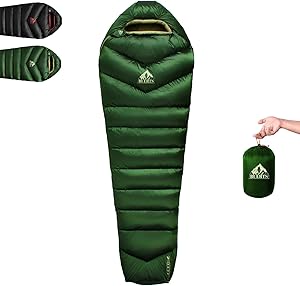
- Weight: 1.72 lbs
- Fill: 14.1 oz of RDS-certified 620FP down
- Temperature Rating: 60°F comfort / 44°F limit
- Packed Size: 11″ x 6.3″
The BUERTS Backpacking Sleeping Bag is one of the lightest options available at just 1.72 pounds, making it a dream for ultralight backpackers and thru-hikers. Despite its featherweight design, it packs 14.1 ounces of RDS-certified 620FP high-loft down that provides respectable warmth for summer and warm 3-season camping. The 400T 20D nylon shell is windproof, breathable, and water-repellent, standing up to rugged trail conditions while remaining soft against the skin. The compressed size of 11 x 6.3 inches is truly remarkable for a down bag at this price point.
The spacious 86.6 x 31.5-inch design provides plenty of room to roll over without feeling constrained, solving the cramped feeling many ultralight bags create. The ergonomic shape follows natural body contours while maximizing thermal efficiency. An inner pocket keeps your phone and valuables secure and warm, and high-quality zippers allow you to connect two BUERTS bags together for a double-wide option perfect for couples or family camping. With a comfort rating of 60°F and limit of 44°F, this bag excels for summer backpacking, warm-weather camping, and as a lightweight travel companion for hostels or cabins.
- Pros: Extremely lightweight at 1.72 lbs, very compact pack size
- Cons: Warm weather only (44°F limit), not suitable for cold camping, thinner shell fabric
See the BUERTS Backpacking Sleeping Bag
8. ATEPA Down Sleeping Bag
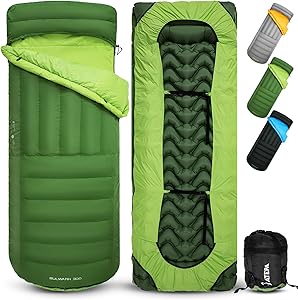
- Fill: 300g COLDMASTER Down
- Temperature Rating: 50°F comfort / 45°F limit
- Weight: 2.5 lbs
- 3-in-1 Design: Bag, blanket, or wearable
The ATEPA Down Sleeping Bag revolutionizes camping gear with its innovative 3-in-1 sleep system that functions as a traditional rectangular bag, a down camping blanket, or a wearable poncho-style layer. Filled with 300g of COLDMASTER Down and featuring unique vertical and horizontal baffle stitching, this bag prevents cold spots while maintaining consistent insulation. The weather-resistant 20D 400T recycled nylon shell blocks moisture and repels stains, making it durable enough for rugged use while being environmentally conscious. At 2.5 pounds with a football-sized 12″ x 7″ compressed pack size, it’s backpack-friendly.
The versatility here is genuinely game-changing. Unzip it completely for a spacious blanket on summer nights, or wear it around camp with your shoulders through the opening. The reinforced corners and straps allow you to attach it securely to an air pad, eliminating the dreaded roll-off that plagues standard bags. The bottom zipper lets you free your feet for ventilation when temperatures rise. The 3D baffle technology keeps down evenly distributed, and the windproof drawstrings and zipper draft tubes block chilling airflow. Perfect for users up to 5’11”, this bag offers exceptional flexibility for varying conditions.
- Pros: Innovative 3-in-1 design (bag, blanket, wearable), eco-friendly recycled materials
- Cons: Warmer weather rating only, shorter length for taller users, unusual design takes getting used to
See the ATEPA Down Sleeping Bag
How to Choose a Down Sleeping Bag: The Ultimate Buyer’s Guide
Selecting the perfect down sleeping bag can be the difference between a blissful night under the stars and a miserable, shivering experience in the backcountry. With countless options on the market, from ultralight backpacking bags to spacious car-camping models, understanding the key specifications and trade-offs is essential. This comprehensive guide breaks down everything you need to know about choosing a down sleeping bag that matches your adventures, budget, and sleep style.
Why Choose Down Over Synthetic Insulation?
Before diving into specifications, it’s worth understanding why down insulation commands a premium price. Down—the soft layer of feathers beneath a waterfowl’s outer feathers—offers an unmatched warmth-to-weight ratio. A quality down bag provides superior loft, compresses dramatically smaller than synthetic alternatives, and lasts for decades with proper care. However, down loses its insulating properties when wet and costs significantly more than synthetic fills. For dry-condition backpacking, mountaineering, or any adventure where weight and packability matter, down is the clear winner. For consistently wet environments or tight budgets, synthetic may still make sense.
Understanding Temperature Ratings
Temperature ratings are perhaps the most misunderstood specification in sleeping bags. The EN (European Norm) or ISO (International Organization for Standardization) testing provides standardized ratings that allow fair comparison between brands.
Comfort vs. Limit vs. Extreme Ratings
The comfort rating indicates the temperature at which a typical “cold sleeper” (usually a woman) can sleep comfortably in a relaxed position. The limit rating applies to “warm sleepers” (usually men) sleeping in a curled position. The extreme rating represents survival only—you will experience hypothermia symptoms and should never intentionally camp at this temperature. When choosing a bag, always select one with a comfort rating at least 10 degrees lower than your expected nighttime low. A 20°F rated bag keeps you comfortable at 30°F, not 20°F.
Fill Power: The Quality Metric
Fill power measures the loft or fluffiness of down, ranging from around 550 to 900+. Higher fill power means each ounce of down occupies more space, trapping more warm air while weighing less. A 850-fill-power bag provides dramatically better warmth-to-weight than a 550-fill bag. However, higher fill power costs significantly more. For backpacking and mountaineering, target 700-fill or higher. For car camping where weight matters less, 550-650 fill provides good value. Remember that fill power affects compressibility too—high-fill-power down packs much smaller.
Fill Weight vs. Total Weight
Many shoppers confuse total bag weight with fill weight. Fill weight refers specifically to how many ounces of down are inside the bag, while total weight includes the shell, zipper, and other components. A bag with 20 ounces of 850-fill down might weigh 2.5 pounds total, while a bag with 30 ounces of 550-fill down could weigh 4 pounds. When comparing warmth, focus on fill weight combined with fill power. Two bags with the same fill weight but different fill powers will have vastly different warmth levels.
Down Treatments: Water Resistance Matters
Traditional down loses almost all insulating ability when wet and takes forever to dry. Modern hydrophobic treatments like Nikwax, DriDown, or DownTek coat each individual down plume with a water-repellent polymer. Treated down resists moisture absorption, dries faster, and maintains loft in humid conditions. While not a substitute for proper shelter, treated down provides valuable peace of mind for three-season backpacking. For alpine or winter camping, consider water-resistant down essential. Check product descriptions for terms like “water-resistant,” “hydrophobic,” or specific treatment names.
Responsible Down Standard (RDS) and Ethics
Ethical concerns around live-plucking and force-feeding have led to the Responsible Down Standard (RDS). RDS certification ensures down comes from humanely treated birds, with supply chain traceability from farm to finished product. Many major brands including REI, Patagonia, and The North Face use RDS-certified down. When comparing bags, look for RDS certification or similar standards like Global Traceable Down Standard (TDS). Ethical down typically costs slightly more but ensures your gear doesn’t contribute to animal suffering.
Sleeping Bag Shapes: Mummy, Rectangular, and Hybrid
The shape of your bag dramatically affects warmth, weight, and comfort.
Mummy Bags
Mummy bags narrow at the feet and include a fitted hood, minimizing interior space to reduce the volume of air your body must heat. This design provides the best warmth-to-weight ratio and packs smallest. The trade-off is restricted movement—side sleepers and sprawlers often feel confined. Mummy bags work best for backpacking, mountaineering, and cold-weather camping where thermal efficiency matters most.
Rectangular Bags
Rectangular bags offer generous interior space, allowing you to roll over, sprawl out, or even sit up inside. They weigh more and pack larger than mummy bags but provide unmatched comfort for car camping. Many rectangular bags unzip completely to function as a blanket. Choose rectangular for family camping, road trips, or any adventure where weight and pack size don’t matter.
Semi-Rectangular or Hybrid Bags
Hybrid designs combine a mummy-style upper body for head warmth with a rectangular lower section for foot movement. These bags offer a middle ground—more comfortable than mummy bags but more thermally efficient than full rectangles. Many modern backpacking bags use this shape. Consider hybrids if you want backpacking performance without feeling claustrophobic.
Shell and Lining Fabrics
The outer shell protects the down and provides durability. Look for 20-denier to 50-denier nylon or polyester. Lower denier numbers mean lighter, more packable fabrics but less durability. 20D works well for ultralight backpacking, while 40D or 50D provides better abrasion resistance for ground sleeping without a pad. Recycled fabrics like those used in the REI HunkerDown 20 offer environmental benefits without performance sacrifices. The lining should feel soft against skin—look for taffeta or pongee weaves that feel smooth and breathable.
Important Features to Consider
Beyond the basic specifications, several features significantly impact real-world performance. Draft tubes—long fabric tubes filled with down or synthetic insulation running behind the zipper—prevent cold air from leaking through the zipper track. Look for bags with generous draft tubes. Hoods should fit snugly around your head with an effective drawcord system. Many quality bags include separate draft collars around the neck to seal in warmth. Zipper quality matters enormously; YKK zippers set the standard for reliable operation without snagging. Internal pockets keep your phone and water filter from freezing overnight. For couples, check whether two bags can zip together—typically requiring opposite zipper orientations.
Size and Fit Considerations
Proper fit dramatically affects warmth. A bag that’s too large forces your body to heat excess empty space, reducing thermal efficiency. A bag that’s too short leaves your head exposed or your feet pressed against the cold footbox. Most brands offer regular (fits up to 6 feet) and long (fits up to 6 feet 6 inches) sizes, with some offering short sizes. Check the “fits up to” measurement carefully. Also consider girth—shoulder and hip measurements determine whether the bag accommodates your body type. Wide versions exist for larger-framed individuals or those who prefer extra space.
Weight vs. Durability Trade-offs
Ultralight bags use thin 10D or 15D fabrics and minimal zipper hardware to save grams. These bags work well for thru-hikers and fastpackers but require careful handling. Standard backpacking bags use 20D to 30D fabrics, offering a balanced compromise between weight and durability. Car camping bags use 40D or heavier fabrics that withstand years of family use. Be honest about your intended use—don’t buy an ultralight bag for Scout camping with kids, and don’t haul a 4-pound car camping bag up a mountain.
Compressed Size and Storage
Down sleeping bags come with two sacks: a small compression sack for backpacking and a large storage sack for home. Never store your down bag compressed—this permanently damages the loft. At home, keep the bag in its large storage sack or hung in a closet. For backpacking, compression sacks reduce pack size dramatically. Compare compressed volumes in liters. A 20°F backpacking bag typically compresses to 8-12 liters. Winter bags compress less, while summer bags can compress to 5-6 liters. Stuff sack dimensions help you determine whether the bag fits your backpack.
Budget Considerations: Getting the Best Value
Down sleeping bags range from under $100 to over $800. Entry-level bags around $150-$200 use 550-600 fill power down with heavier shells and basic features. Mid-range bags from $200-$350 use 600-700 fill down with better fabrics and thoughtful details like draft tubes and quality zippers. Premium bags over $350 use 800+ fill down, hydrophobic treatments, RDS certification, and ultralight materials. The sweet spot for most backpackers lies in the $200-$350 range, offering meaningful quality improvements without the diminishing returns of premium products. Watch for sales at REI and other retailers where last year’s models often see significant discounts.
Seasonal Considerations: 3-Season vs. 4-Season Bags
Three-season bags rated from 15°F to 30°F cover spring, summer, and fall camping for most environments. Four-season or winter bags rated below 0°F include additional features like heavier shells, oversized draft tubes, and warmer hoods. For most campers, a quality 20°F three-season bag combined with a liner provides sufficient versatility. True winter camping requires specialized gear—don’t try to push a 20°F bag into sub-zero conditions. Consider your local climate and typical camping elevations when choosing temperature ratings.
Final Thoughts: Matching Bag to Adventure
The best down sleeping bag aligns with your specific needs rather than abstract specifications. Backpackers should prioritize low weight, high fill power, and small compressed volume. Car campers can focus on comfort, durability, and budget. Mountaineers need technical features like hydrophobic down and draft collars. By understanding fill power, temperature ratings, shapes, and features, you can confidently choose a bag that provides years of comfortable nights under the stars. Invest in quality—a good down bag, properly cared for, lasts 15-20 years or more.