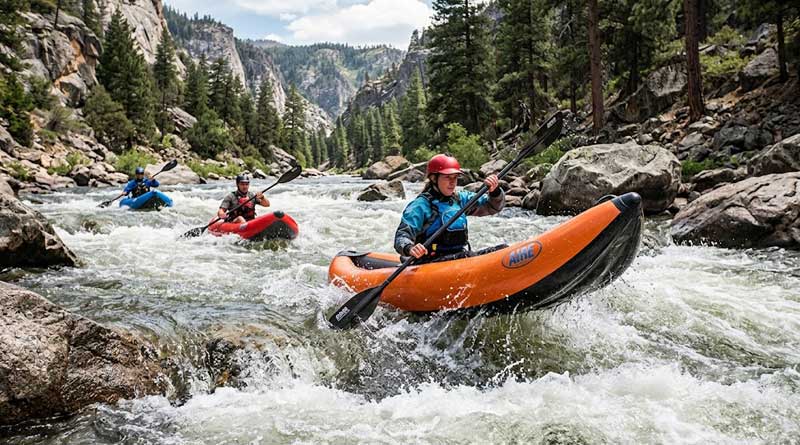
Whitewater rapids demand a kayak that can handle turbulence, impact, and quick maneuvering without losing structural integrity. Inflatable kayaks have come a long way, offering rigid performance once inflated while remaining portable and easy to store. Choosing the right one means balancing durability, stability, and capacity against your skill level and the type of water you paddle. Below, we review five popular inflatable kayaks and break down exactly what to look for before you buy.
1. INTEX 68309EP Excursion Pro K2

- Construction: 3-ply laminate with SuperStrong PVC
- Capacity: 2 person, 400 lb weight limit
- Dimensions: 12.7 ft x 3.1 ft x 1.6 ft
- Accessories: Two paddles, fishing rod holders, GoPro mount, pump, repair patch
The Excursion Pro K2 is built for anglers and adventurers who need a tandem kayak that can survive rough contact with rocks and debris. The three-ply laminate shell holds high pressure well, giving the hull a rigid feel that rivals hard-shell kayaks in choppy or moving water. The two removable skegs let you fine-tune tracking depending on water depth, which is a real advantage when moving between shallow rapids and deeper pools.
Storage is generous, with stainless steel D-rings for securing dry bags, and the included accessory kit adds genuine value for fishing trips. It is heavier than single-person models, so solo transport takes more effort, but the trade-off is a noticeably tougher, more stable ride for two paddlers.
Pros:
- Rugged 3-ply construction resists abrasion and impact
- Removable skegs improve maneuverability in varied depths
- Comes with a full adventure accessory kit
Cons:
- Bulkier and heavier for solo carrying
- Longer setup time due to size
2. INTEX Challenger Inflatable

- Construction: SuperStrong molecular formulation PVC
- Capacity: 1 person, 220 lb weight limit
- Dimensions: 9 ft x 2.6 ft x 1.1 ft
- Design: Low-profile cockpit with removable skeg
The Challenger K1 is aimed at beginners who want an affordable entry point into paddling rather than an aggressive whitewater rig. Its low-profile design keeps the center of gravity manageable, which helps first-timers stay balanced on mild rivers and lakes. The adjustable cockpit seat gives decent legroom, and the removable skeg helps the kayak hold a straighter line instead of drifting sideways in light current.
Where it falls short for serious whitewater use is durability under sustained impact; the single-layer PVC is fine for calm water but is not designed for repeated collisions with rocks. It folds down small and inflates quickly, making it a convenient grab-and-go option for casual outings rather than technical rapids.
Pros:
- Lightweight and easy to transport
- Comfortable, adjustable cockpit seating
- Budget-friendly for beginners
Cons:
- Not built for aggressive whitewater impact
- Limited weight capacity
3. INTEX 68303EP Excursion Pro K1

- Construction: 3-ply laminate with SuperStrong PVC
- Capacity: 1 person, 220 lb weight limit
- Dimensions: 10 ft x 3 ft x 1.6 ft
- Accessories: Paddle, fishing rod holder, GoPro mount, pump, repair patch
This solo version of the Excursion Pro brings the same tough 3-ply laminate hull to a single-paddler package, making it a strong option for experienced kayakers who want durability without the bulk of a tandem boat. The high-pressure inflation gives the hull noticeable rigidity, which translates into better tracking and control when navigating faster-moving water or unpredictable currents.
The removable skegs allow quick adjustments depending on water depth, a feature that matters when transitioning between shallow rocky sections and deeper channels. Storage space in the bow and stern is useful for securing gear on longer trips. It is a capable all-rounder, though its 220 lb capacity limits it to lighter paddlers or minimal gear loads.
Pros:
- Durable 3-ply hull suited to rougher water
- Good tracking control with dual skegs
- Solo-friendly size and weight
Cons:
- Restrictive weight capacity for gear-heavy trips
- Single-person use only
4. Intex 68307EP Explorer K2

- Construction: Rugged vinyl with I-beam floor
- Capacity: 2 person, 400 lb weight limit
- Dimensions: 10.3 ft x 3 ft x 1.8 ft
- Accessories: Two paddles, inflatable seats, grab handles, pump, repair patch
The Explorer K2 is designed with casual paddlers in mind, offering a sporty, high-visibility design that works well on lakes and mild rivers. The inflatable I-beam floor and high-buoyancy side chambers give it decent stability for two people, and the low-profile deck makes paddling less strenuous over longer sessions. The removable skeg helps maintain direction without much correction effort.
While it performs reliably in calm to mildly moving water, the vinyl construction is not rated for serious whitewater impact, so it is best suited to recreational trips rather than technical rapids. Setup is fast thanks to the Boston valves, and the included grab handles make hauling it in and out of the water straightforward for two people.
Pros:
- Stable I-beam floor design
- Quick inflate and deflate valves
- Bright, highly visible color scheme
Cons:
- Not ideal for aggressive whitewater
- Vinyl less durable than laminate models
5. WETURE Inflatable Kayak

- Capacity: 2 person, 507 lb weight limit
- Safety: Luminous fluorescent strips for day and night visibility
- Seating: Two removable, adjustable seats with backrests
- Accessories: Two aluminum paddles, tail fins, hand pump, carry bag, repair kit
The WETURE kayak stands out for its high weight capacity and safety-focused design, with fluorescent strips that improve visibility whether you are paddling at dusk or in daylight glare off the water. The removable fins provide solid directional control and stability, making it approachable for beginners while still offering enough capability for lakes, rivers, and light rapids.
The adjustable seats with backrests add comfort on longer outings, and the waterproof rear storage pockets are a practical touch for keeping small items dry. It packs down efficiently for transport, though as with most recreational-focused inflatables, it is better matched to touring and fishing use than technical whitewater runs.
Pros:
- High 507 lb weight capacity
- Visibility strips add a safety margin
- Comfortable adjustable seating with storage
Cons:
- Better suited to touring than aggressive rapids
- Aluminum paddles add some weight
How to Choose Whitewater Inflatable Kayak
Picking the right inflatable kayak for whitewater use is not just about grabbing the toughest-looking model on the shelf. Whitewater conditions place unique demands on a boat, from impact resistance to how quickly it responds to your paddle strokes. Understanding the factors that actually matter will help you avoid overspending on features you do not need, or worse, underbuying a kayak that cannot handle the conditions you plan to paddle in.
Understanding Whitewater Classifications
Whitewater is graded on an international scale from Class I to Class VI, and the class of water you intend to paddle should directly influence your kayak choice. Class I and II waters involve small waves and minimal obstacles, which most recreational inflatable kayaks can handle. Class III and above involve larger waves, tighter maneuvering, and unpredictable currents that demand a kayak built with reinforced materials and better rigidity.
Buying a kayak rated for calm water and taking it into Class III or IV rapids is a common mistake that leads to punctures, loss of control, or structural failure. Always match the kayak’s intended use, as stated by the manufacturer, to the water class you realistically plan to paddle.
Material and Construction Quality
The material of an inflatable kayak determines how well it survives contact with rocks, branches, and other underwater obstacles common in whitewater environments.
Single-Layer vs Multi-Layer Construction
Single-layer PVC kayaks are lighter and cheaper but more prone to punctures and abrasion damage. Multi-layer or laminate constructions, such as 3-ply builds, use reinforced layers that distribute impact stress more evenly across the hull, significantly improving durability in rougher conditions.
PVC Quality and Reinforcement
Not all PVC is equal. Enhanced molecular formulations, often marketed under names like SuperStrong or similar branding, allow for higher air pressure without stretching or weakening the material. Higher pressure translates into a stiffer, more responsive hull that behaves closer to a hard-shell kayak.
Stability and Maneuverability Features
Stability keeps you upright, while maneuverability lets you react quickly to obstacles and changing currents. Both matter in whitewater, but they can work against each other if a kayak is not designed thoughtfully.
- Removable skegs allow you to adjust tracking depending on water depth and current strength
- Wider hulls generally offer more lateral stability but can reduce quick turning ability
- Inflatable I-beam floors add rigidity that improves both stability and control
- Low-profile designs reduce wind resistance and help maintain balance in gusty conditions
Weight Capacity and Sizing
Weight capacity affects not just how many people can ride, but also how the kayak handles gear, water absorption from splashing, and overall buoyancy during rapids. Overloading a kayak reduces freeboard, the distance between the water and the top of the hull, which increases the risk of swamping in choppy water.
| Kayak Type | Typical Capacity | Best Suited For |
|---|---|---|
| Solo whitewater kayak | 200-250 lbs | Single paddler, technical routes |
| Tandem whitewater kayak | 350-450 lbs | Two paddlers, moderate rapids |
| High-capacity touring kayak | 450-550 lbs | Extra gear, calmer whitewater sections |
Essential Accessories and Safety Features
A well-equipped inflatable kayak typically includes more than just the boat itself, and these extras can significantly affect your overall experience and safety on the water.
Paddles and Pumps
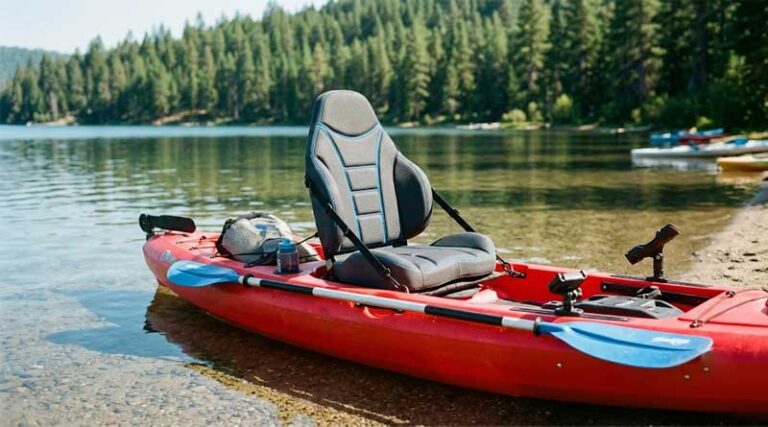
Look for durable paddles, ideally lightweight aluminum or fiberglass, and a high-output pump that lets you inflate quickly before launching. Spring-loaded valves speed up both inflation and rapid deflation when packing up.
Visibility and Storage
Bright colors or reflective and fluorescent strips improve visibility to other paddlers and rescue teams, which is especially valuable in fast-moving or low-light conditions. Storage features like D-rings and waterproof pockets help secure gear so it does not shift or fall out during turbulent sections.
Skill Level Considerations
Your experience level should weigh heavily into your final decision. Beginners are generally better served by wider, more stable kayaks with forgiving handling, even if that means sacrificing some speed or agility. Experienced paddlers who want to tackle technical rapids should prioritize rigidity, tracking control, and puncture resistance over comfort features.
- Beginners: prioritize stability, ease of setup, and forgiving handling
- Intermediate paddlers: look for a balance of durability and maneuverability
- Advanced paddlers: prioritize reinforced construction, tracking precision, and higher pressure ratings
Budget and Long-Term Value
While it can be tempting to choose the least expensive option, whitewater use puts significant stress on materials, and a cheaper kayak may need replacing after only a season or two of regular use. Investing in a reinforced, multi-layer construction often pays off through fewer repairs and a longer usable lifespan, particularly if you plan to paddle Class III water or above regularly.
Ultimately, the best whitewater inflatable kayak for you depends on the type of water you paddle, how many people will typically be on board, and how much durability you need versus how much you are willing to carry or pack down. Matching these factors carefully will help you choose a kayak that performs reliably trip after trip.