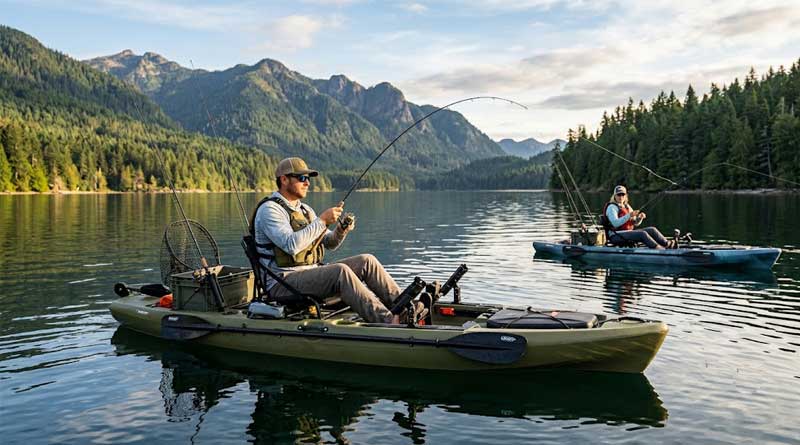
Choosing the right sit-on-top fishing kayak can make or break your day on the water. These self-draining, easy-to-board kayaks offer stability, storage, and comfort for anglers of every skill level, from calm lake mornings to full-day river trips. In this guide, we review five standout sit-on-top fishing kayaks, covering their capacity, features, and rigging options, then walk you through exactly what to look for so you can pick the model that best matches your fishing style, budget, and water conditions.
1. Starcity Inflatable Sit-on-Top Tandem Kayak

- Weight Capacity: 600 lbs, seats 2 people
- Dimensions: 12’2″ x 36″ x 13″, 16-inch interior width
- Construction: Fabric-covered PVC with self-bailing drain ports
- Included Accessories: 2 floating 4-piece paddles, 2 inflatable seats
The Starcity tandem kayak stands out as the most versatile inflatable option in this lineup, built to handle two paddlers and a full load of fishing gear without feeling cramped. Its fabric-covered shell resists scratches from rocky shorelines and dock edges far better than standard PVC inflatables, making it a solid pick for anglers who launch from rough terrain regularly.
Two elastic deck ropes give you a place to strap down tackle boxes, dry bags, or a small cooler, while the self-bailing hull keeps splashed water from pooling underfoot. It packs down small for storage or travel, though it does take longer to set up than a hard-shell kayak.
Pros:
- High 600 lb weight capacity for tandem use
- Durable, scratch-resistant fabric-covered construction
- Self-bailing hull keeps the deck dry
- Packs down for easy transport and storage
Cons:
- Requires inflation setup before each trip
- Less rigid tracking than hard-shell kayaks
2. Pelican Catch Classic Angler

- Weight Capacity: 350 lbs
- Length/Weight: 10 ft long, 58 lb hull weight
- Hull Design: Tunnel hull for stability and easy boarding
- Seating: ERGOCAST Classic dual-position adjustable seat
The Pelican Catch Classic Angler is built around stability, and the tunnel hull design makes it noticeably easier to climb in and out of compared to flatter hulls, a real advantage for solo anglers launching from a dock. There’s ample open deck space for standing casts, and the flush-mount rod holders keep lines organized while you move around.
Storage is handled through a front quick-lock hatch and a rear tank well with bungee cords, giving you dedicated spots for both dry gear and loose tackle. At 58 lb, it’s light enough for one person to carry, and the added hull flotation meets ABYC safety standards, giving peace of mind on bigger water.
Pros:
- Excellent stability from the tunnel hull
- Lightweight at just 58 lb
- Two rod holders plus rigging tracks included
- Adjustable dual-position seating for comfort
Cons:
- 350 lb capacity is modest for larger paddlers
- No tandem seating option
3. Pelican Sentinel 100X

- Weight Capacity: 275 lbs
- Length/Weight: 9’6″ long, only 44 lb
- Hull Design: Multi-chine flat bottom for casting stability
- Material: Patented Ram-X construction
The Sentinel 100X is the lightest and most compact kayak in this roundup, making it a great match for anglers who fish solo and want something easy to load onto a roof rack without help. The multi-chine flat bottom hull keeps the ride steady when you’re casting or reeling in a fish from a seated position.
Its ExoPak removable storage compartment fits neatly into the tank well, giving you a dedicated, secure spot for tackle without cluttering the deck. Built-in flotation exceeds ABYC standards for added safety. The tradeoff for its compact size is a lower weight capacity, so it suits lighter paddlers and shorter trips best.
Pros:
- Very lightweight at 44 lb for easy transport
- Compact 9’6″ length is easy to store
- Removable ExoPak storage compartment
- Durable Ram-X hull construction
Cons:
- Lowest weight capacity in this lineup at 275 lb
- Limited rigging features compared to larger models
4. Pelican Catch Mode 110

- Weight Capacity: 375 lbs
- Length/Weight: 10’8″ long, 63 lb hull weight
- Hull Design: Tunnel hull with wide, flat standing platform
- Seating: ERGOBOOST elevated seat with under-seat storage
The Catch Mode 110 is designed for anglers who like to stand and sight-cast, thanks to its wide, flat deck and maximum-stability tunnel hull. The ERGOBOOST seat raises your vantage point for better visibility across the water while adding under-seat storage for smaller items you want within easy reach.
Three flush-mount rod holders and two 4-inch rigging tracks let you customize your setup for different fishing styles, and the anti-slip deck carpet adds confidence when moving around to land a fish. Front and rear tank wells cover most storage needs. At 63 lb it’s a bit heavier to carry solo, but the added capacity and features justify the tradeoff.
Pros:
- Wide, stable platform for standing casts
- Elevated ERGOBOOST seat improves visibility
- Three rod holders and two rigging tracks
- Anti-slip deck carpet for added safety
Cons:
- Heavier than other single-person models at 63 lb
- Larger footprint needs more storage space
5. Perception Kayaks Outlaw 11.5

- Weight Capacity: 425 lbs
- Length: 11’6″, made in the USA
- Seating: Fold-away Frame seat for long-session comfort
- Rigging: 4 integrated rod holders plus tackle trays
The Perception Outlaw 11.5 is built for anglers who spend full days on the water, offering the highest weight capacity in this lineup at 425 lbs along with generous front and rear storage for coolers, crates, and dry bags. The fold-away Frame seat is a standout comfort feature, supporting long fishing sessions without the back fatigue common in basic molded seats.
Four integrated rod holders let you run multiple lines at once, and the built-in tackle trays keep small gear organized and accessible without digging through a bag. Its 11’6″ length improves tracking and glide on open water compared to shorter kayaks, though that added length makes it slightly bulkier to transport and store.
Pros:
- Highest weight capacity at 425 lbs
- Comfortable fold-away Frame seat
- Four rod holders plus integrated tackle trays
- Strong tracking from the 11’6″ length
Cons:
- Longer length is harder to store and transport
- Heavier overall than compact models like the Sentinel
How to Choose Sit-On-Top Fishing Kayak
Picking the right sit-on-top fishing kayak comes down to matching the boat’s specifications to how, where, and with whom you plan to fish. The five models reviewed above range from a compact 44 lb solo kayak to a 600 lb-capacity tandem inflatable, so there’s no single “best” choice, only the best choice for your specific needs. Below, we break down the key factors to weigh before you buy.
Weight Capacity and Who’s Coming Along
Weight capacity is one of the first specs to check, and it needs to account for more than just your own body weight. Factor in the weight of your paddle, tackle, cooler, rods, safety gear, and any passenger or pet you plan to bring along. As a rule of thumb, don’t plan to load a kayak past about 70 percent of its stated maximum capacity, since manufacturers test these numbers under ideal conditions and performance drops as you approach the limit.
If you regularly fish with a partner or a child, a tandem kayak like the Starcity, rated for 600 lbs and two paddlers, gives you flexibility that a solo kayak simply can’t match. If you mostly fish alone and want a kayak that’s easy to load by yourself, a lighter, lower-capacity model such as the Pelican Sentinel 100X may serve you better.
Quick Capacity Guide
| Paddler Type | Recommended Capacity | Example Model |
|---|---|---|
| Solo, light gear | 250-300 lbs | Pelican Sentinel 100X |
| Solo, full fishing setup | 350-400 lbs | Pelican Catch Classic / Catch Mode 110 |
| Two paddlers or heavy gear | 425 lbs and up | Perception Outlaw 11.5, Starcity Tandem |
Hull Design and Stability
The hull shape determines how stable a kayak feels, especially when you’re standing to cast or reeling in a larger fish. Most dedicated fishing kayaks, including the Pelican Catch Classic and Catch Mode 110, use a tunnel hull design, which creates two contact points with the water for a wider, more stable base. This makes it easier to shift your weight, stand up, and fight fish without feeling like you’ll tip over.
Flat-bottom and multi-chine hulls, like the one on the Pelican Sentinel 100X, also offer solid primary stability and tend to be lighter and faster to paddle, though they may feel slightly less steady when standing compared to a tunnel hull. If you plan to fish mostly from a seated position, either design will work well; if standing to cast is a priority, lean toward a wider tunnel-hull model.
Length, Weight, and Portability
Kayak length affects both performance and convenience. Shorter kayaks, such as the 9’6″ Sentinel 100X, are more maneuverable and easier to transport, making them ideal for small cars, tight storage spaces, or solo loading. Longer kayaks, like the 11’6″ Perception Outlaw, track straighter and glide more efficiently across open water, which matters if you’re covering long distances on a lake or bay.
Hull weight is just as important as length if you’ll be loading the kayak by yourself. A kayak in the 40-60 lb range is manageable for most people to carry solo, while anything heavier may require a second person, a kayak cart, or roof-rack assistance. Inflatable kayaks like the Starcity trade some rigidity for extremely compact, lightweight storage and transport when deflated.
Storage and Fishing-Specific Features
Since these are fishing kayaks, storage and rigging options matter just as much as the hull itself. Look for a combination of the following features based on how you fish:
- Flush-mount rod holders for hands-free trolling or resting a spare rod
- Bungee-corded tank wells for coolers, crates, or dry bags
- Removable storage compartments, like the Sentinel’s ExoPak, for organized tackle access
- Rigging tracks for mounting accessories such as fish finders or additional rod holders
- Front hatches for gear you want to keep dry and out of the way
Anglers who fish with multiple rods or use electronics will benefit from models with several rigging tracks and rod holders, such as the Catch Mode 110’s three rod holders and dual tracks, while casual anglers may find a simpler setup, like the Sentinel’s ExoPak, perfectly sufficient.
Seating Comfort for Long Days
Comfort becomes a bigger factor the longer you plan to stay on the water. Basic molded seats work fine for short trips, but full-day outings are much more comfortable with an adjustable or elevated seat. The Pelican Catch Classic’s dual-position ERGOCAST seat and the Catch Mode 110’s elevated ERGOBOOST seat both let you adjust your seating height and support level, while the Perception Outlaw’s fold-away Frame seat is designed specifically for extended comfort during long fishing sessions.
If you expect to spend more than a couple of hours paddling at a time, prioritize a kayak with an upgraded or adjustable seat over one with only a basic molded seat pad.
Hard-Shell vs Inflatable Kayaks
Most of the kayaks in this guide are hard-shell polyethylene models, which offer better rigidity, tracking, and durability against rocks and debris, but require roof-rack transport and dedicated storage space. The Starcity Inflatable Tandem Kayak represents the other approach: it deflates for compact storage and transport in a car trunk or closet, and its fabric-covered construction adds durability that basic inflatables lack.
Choose a hard-shell kayak if you have the storage space and vehicle setup to transport it, and you want maximum durability and performance. Choose an inflatable if storage space, apartment living, or ease of transport is your top priority.
Final Buying Checklist
- Confirm the weight capacity comfortably covers you, your gear, and any passengers
- Choose a hull design that matches whether you’ll fish seated or standing
- Match the length and hull weight to your vehicle and storage situation
- Check for enough rod holders, tank wells, and rigging tracks for your fishing style
- Prioritize seat comfort if you plan on long or frequent trips
- Decide between hard-shell durability and inflatable portability based on your storage space
Weighing these factors against the five kayaks reviewed above will help you narrow down the model that best fits your budget, fishing style, and the water you paddle most often.