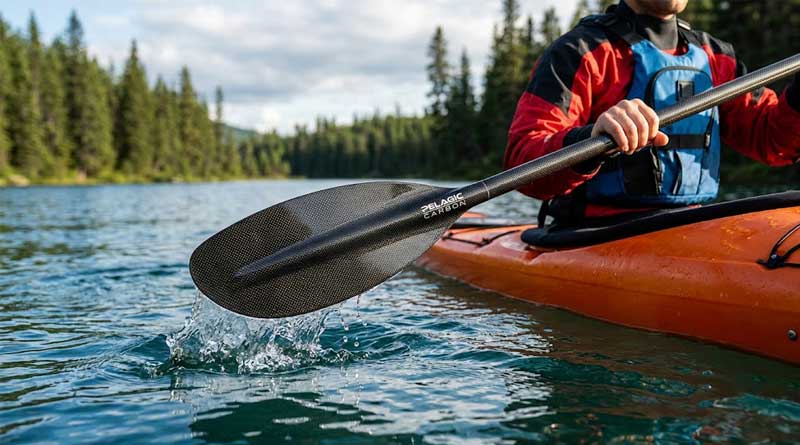
If you want to paddle faster and feel less tired, carbon fiber is the way to go. These paddles are incredibly light, which means your arms and shoulders won’t ache after a long day on the water. They also feel stiff and responsive, giving you more power with every stroke. Yes, they cost more than other paddles, but many paddlers say the upgrade is worth every penny. In this guide, we will show you the best carbon fiber kayak paddles for different budgets and paddling styles.
1. WONITAGO Kayak Paddle

- Material: Carbon fiber shaft, fiberglass + PP blades
- Length: 86″-94″ (220-240cm), adjustable 20cm
- Weight: Only 2 lbs (0.9 kg)
- Design: 3-piece travel-friendly, ±60° Quick Pin Button Lock
The WONITAGO Kayak Paddle is a perfect blend of premium materials and thoughtful engineering. The carbon fiber shaft makes it incredibly light, reducing fatigue during long paddling sessions, while the fiberglass-reinforced PP blades offer excellent durability and resistance to corrosion in both salt and fresh water. The streamlined blade design adds stability and reduces flutter, so you can focus on enjoying your time on the water.
Whether you are a beginner or an experienced kayaker, the adjustable length (from 86 to 94 inches) ensures a customized fit for any kayak. The 3-piece construction is a standout feature, making it highly portable and easy to store. The quick pin button lock allows for fast assembly and on-the-fly angle adjustments. Overall, it’s a reliable, high-performance paddle that won’t let you down on any adventure.
- Pros: Extremely lightweight, great portability, easy angle adjustment, corrosion-resistant blades.
- Cons: Locking mechanism may feel stiff initially, limited color options.
2. Best Marine and Outdoors Kayak Paddle

- Weight: 32 oz (2 lbs) – lightweight carbon fiber
- Blade Size: 18″ x 6.75″ fiberglass reinforced
- Shaft Diameter: 1.125″ ergonomic design
- Design: 2-piece adjustable, with feathering angles
This paddle from Best Marine and Outdoors delivers exceptional lightweight performance, reducing shoulder and arm strain even on full-day trips. The carbon fiber shaft and fiberglass-reinforced blades provide the ideal strength-to-flex ratio, while the double-sided blade design ensures smooth, flutter-free strokes. The 1.125-inch shaft diameter offers a comfortable grip, making it easy to maintain control in various water conditions.
Designed for versatility, this 2-piece paddle breaks down quickly for transport and storage. The adjustable feathering angles allow you to customize the paddle to your paddling style, whether you are left- or right-handed. It performs well for recreational kayaking, touring, and fishing. With its durable construction and user-friendly features, this paddle is an excellent choice for paddlers of all skill levels seeking comfort and efficiency.
- Pros: Excellent comfort and grip, very lightweight, versatile for all paddling styles, easy to adjust and store.
- Cons: Slightly heavier than premium all-carbon models, blade color may fade over time.
See the Best Marine and Outdoors Kayak Paddle
3. OCEANBROAD Carbon Fiber

- Shaft: Carbon fiber composite
- Blades: UV-stable glass fiber-reinforced PP
- Length: 90.5″ (230cm), weight: 33 oz
- Feather Angles: 0° or 60° (L/R) adjustable
OCEANBROAD has engineered a paddle that excels in durability and performance. The carbon fiber composite shaft and UV-stable glass-reinforced blades are built to withstand saltwater corrosion and harsh conditions, making it reliable for lakes, rivers, and oceans. At 90.5 inches and just 33 ounces, it strikes a perfect balance between precision and maneuverability, suitable for both beginners and seasoned pros.
The adjustable feathered angles (0° or 60°) are a game-changer, allowing you to combat headwinds effectively while reducing fatigue. The wide blade design maximizes water catch, translating your energy into responsive acceleration. The package includes a bungee leash, non-slip grips, and drip rings, adding to its adventure-ready appeal. Its 2-piece split design ensures easy storage in compact car trunks. A well-rounded paddle for any kayaking enthusiast.
- Pros: Extremely durable, excellent headwind performance, includes useful accessories, lightweight.
- Cons: Fixed length may not suit all paddlers, blade shape may feel different for some.
See the OCEANBROAD Carbon Fiber
4. OCEANBROAD Adjustable

- Shaft: Carbon fiber oar shaft
- Blades: Fiberglass-reinforced with UV-resistant PP
- Weight: 35 oz, adjustable length: 220-240cm (5 sizes)
- Features: 3-piece compact, 0°/60° feather angles, safety leash
The OCEANBROAD Adjustable paddle is engineered for extended adventures without the arm fatigue. The carbon fiber shaft and fiberglass-reinforced blades keep the weight at just 35 ounces, while the UV-resistant PP ensures long-lasting durability even in rough waters. The standout feature is the 5-size adjustable length (220-240cm), allowing you to tailor your stroke perfectly, and the 3-piece breakdown makes it exceptionally portable.
Switching between 0° and 60° feather angles mid-paddle helps you slice through headwinds, improving speed and reducing effort. The included safety leash, 3-position angle lock, and drip rings are thoughtful additions that enhance the overall experience. This paddle is a great value, offering high-end features and accessories at an affordable price. It’s perfect for paddlers who need versatility and performance in one package.
- Pros: Highly adjustable length, lightweight yet durable, comes with a leash, great value for money.
- Cons: Slightly heavier than the non-adjustable model, the locking mechanism may need occasional tightening.
5. Awstrokine 4 Piece Carbon SUP Paddle

- Modes: SUP (67-83″) & Kayak (87″) 2-in-1
- Shaft: High-strength carbon fiber
- Blades: Reinforced PP, beaver-tail with 10° angle
- Portability: 4-piece collapsible to 34″ x 7.7″
The Awstrokine 4 Piece Carbon SUP Paddle is the ultimate 2-in-1 solution for water adventurers. It effortlessly converts from a stand-up paddleboard paddle (67-83 inches) to a kayak paddle (87 inches) using quick-connect buttons and a secure twist-lock system. The high-strength carbon fiber shaft and reinforced PP blades deliver maximum power transfer, while the beaver-tail blade with a 10° angle ensures smooth, efficient strokes every time.
Its 4-piece detachable design collapses to a compact 34 x 7.7 inches, making it incredibly travel-friendly—fits easily in a backpack, carry-on, or car trunk. Weighing just 2.7 lbs, it is a lightweight companion for any expedition. The complete kit includes blades, connecting shaft, and T-grip handle, allowing you to hit the water in minutes. Built-in buoyancy ensures it floats if dropped. This paddle is a must-have for those who enjoy both SUP and kayaking.
- Pros: True 2-in-1 versatility, ultra-portable, excellent power transfer, built-in buoyancy.
- Cons: Mode switching takes practice, may feel less rigid than dedicated single-mode paddles.
See the Awstrokine 4 Piece Carbon SUP Paddle
A Guide to Choosing Carbon Fiber Kayak Paddles
For any kayaker, the paddle is the primary tool of propulsion, control, and connection to the water. While a kayak carries you, the paddle moves you. Among the materials available on the market today, carbon fiber stands out as the gold standard for performance, weight reduction, and efficiency. However, investing in a carbon fiber paddle requires navigating a sea of specifications, blade shapes, shaft configurations, and construction techniques. Choosing the right one can mean the difference between a fluid, effortless day on the water and an exhausting, injury-prone excursion.
Why Choose Carbon Fiber?
Before diving into the specifics of selecting a carbon fiber paddle, it is essential to understand why this material commands a premium price. The primary advantage is weight. Carbon fiber paddles are exceptionally lightweight, often weighing under 25 ounces. Over a long day of paddling, where you might execute thousands of strokes, a few ounces of saved weight drastically reduces fatigue in your shoulders, wrists, and upper back.
Additionally, carbon fiber provides excellent stiffness. A stiff paddle translates almost all your physical energy into forward momentum, preventing the “flex” that causes energy loss in plastic or fiberglass paddles. Finally, carbon fiber offers a warm, comfortable feel in the hand compared to aluminum shafts, which can become freezing cold or scalding hot depending on the weather.
1. Structural Variations: Full Carbon vs. Hybrid
When shopping for a “carbon paddle,” you will quickly realize that manufacturers use the term to describe several different configurations. It is crucial to read the product details carefully.
- Full Carbon: Both the shaft and the blades are made of carbon fiber. These offer the ultimate weight savings and the highest stiffness, making them ideal for long-distance touring, racing, and high-performance sea kayaking.
- Carbon Shaft with Composite Blades: This hybrid configuration pairs a carbon fiber shaft with fiberglass or nylon-reinforced blades. It offers a more affordable price point while still retaining the lightweight, ergonomic advantages of a carbon shaft.
The table below highlights how carbon fiber compares to other common paddle materials across key performance indicators:
| Material Type | Average Weight | Stiffness / Efficiency | Durability (Impact) | Price Range |
|---|---|---|---|---|
| Aluminum / Plastic | Heavy (35+ oz) | Low (High Flex) | High | Budget-Friendly |
| Fiberglass | Moderate (28-32 oz) | Medium | High | Mid-Range |
| Carbon Fiber Hybrid | Light (26-29 oz) | Medium-High | Very High | Premium-Mid |
| Full Carbon Fiber | Ultralight (<24 oz) | Excellent (Zero Flex) | Moderate-High | Investment/Premium |
2. Matching Paddle Length to Your Build and Boat
An improperly sized paddle can ruin the ergonomics of your stroke, leading to joint strain and poor boat control. The correct length of your carbon fiber paddle depends on two primary factors: your height and the width (beam) of your kayak.
Wider kayaks (common in recreational and fishing categories) require longer paddles so the blades can comfortably clear the boat’s edges without forcing you to lean. Narrower kayaks (such as touring or sea kayaks) allow for shorter paddles. Generally, paddle lengths range from 210 cm to 240 cm.
Sizing Guidelines Matrix
Use these baseline measurements to narrow down your selection:
- Kayak Width under 23 inches: If your height is under 5’8″, look for 210-215 cm. If you are over 6’0″, look for 220 cm.
- Kayak Width 24 to 28 inches: If your height is under 5’8″, look for 220-225 cm. If you are over 6’0″, look for 230 cm.
- Kayak Width over 29 inches: If your height is under 5’8″, look for 230-235 cm. If you are over 6’0″, look for 240+ cm.
3. Blade Style: High-Angle vs. Low-Angle
Blade shape determines how the paddle interacts with the water and dictates the paddling style you must adopt. Carbon fiber blades are molded into highly specific geometries tailored to these styles.
Low-Angle Paddling
This is the most common style for recreational paddlers, long-distance tourers, and ocean cruisers. The stroke is relaxed, horizontal, and sweeps along the side of the kayak. Low-angle carbon blades are long, narrow, and asymmetrical. This shape minimizes wind resistance and delivers smooth, stable power over hours of continuous tracking without putting excess strain on your shoulders.
High-Angle Paddling
This style is favored by whitewater kayakers, racers, and fitness paddlers who want maximum speed and acceleration. The stroke is vertical, keeping the blade very close to the hull of the boat. High-angle carbon blades are short, wide, and aggressive. They grab a large volume of water instantly, allowing for explosive power and fast maneuvers, but they require more physical exertion and core engagement.
4. Shaft Design: Straight vs. Bent and Feathering Options
The carbon fiber shaft handles the torque of your movement. Choosing its shape and connectivity options shapes your long-term comfort.
Straight Shaft vs. Ergonomic Bent Shaft
A straight carbon shaft is the traditional, lightweight choice. It allows you to shift your hands easily along the shaft for varied bracing strokes. An ergonomic bent shaft features a subtle kink or bend where your hands grip the paddle. This design aligns your wrists at a natural angle, drastically reducing the risk of tendinitis and carpal tunnel syndrome during high-mileage trips. Bent shafts add a small amount of weight and cost but are highly recommended if you suffer from joint fatigue.
Ferrule Systems and Feathering
Most premium carbon paddles come as two-piece designs joined by a center ferrule (joint). Look for an adjustable ferrule system rather than a fixed button lock. An adjustable ferrule allows you to change the “feather angle” (the angle relative to each other at which the blades are set) anywhere from 0 to 90 degrees. Feathering your blades helps cut through head-winds efficiently, reducing air drag on the blade that is out of the water.
5. Maintenance and Protection
While carbon fiber is incredibly strong under structural tension, it can be susceptible to localized impact damage, such as dropping the paddle on sharp asphalt or wedging the blade into rocky crevices under high pressure. To preserve your investment, observe the following habits:
- Avoid using your carbon blade to push off from rocky shorelines or sandy riverbeds.
- Rinse the ferrule system with fresh water after every saltwater use to prevent salt crystallization from seizing the joint.
- Store the paddle in a padded paddle bag when transporting it in your vehicle to protect the edges from chips and scratches.
Conclusion
Choosing a carbon fiber kayak paddle is an investment in your comfort, endurance, and enjoyment on the water. By carefully analyzing your kayak’s dimensions, matching the blade geometry to your preferred paddling angle, and selecting a shaft style that respects your wrist anatomy, you can unlock a seamless paddling experience. The weight savings and rigid performance of high-quality carbon fiber will ultimately pay dividends across every mile you explore.