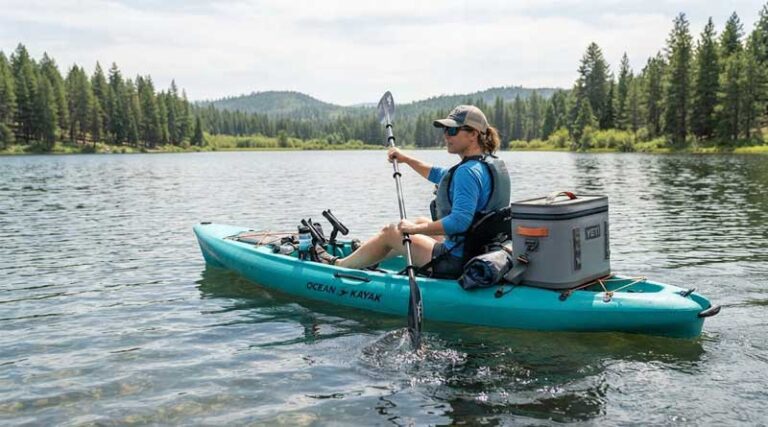
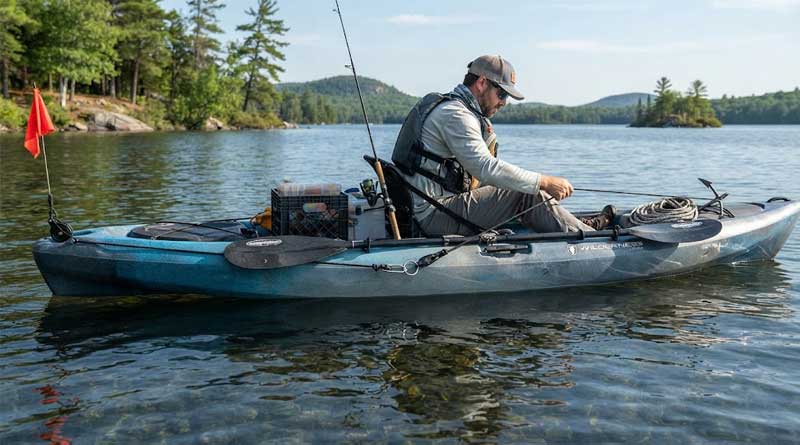
Kayaking in moving water or windy conditions presents a unique challenge when you want to stay in one spot. A standard anchor drops straight down, but without the ability to adjust your tie-off point, the current can easily turn your vessel sideways or swamp you. This is where a quality kayak anchor trolley comes in. By creating an adjustable pulley system along the side of your hull, you can shift your anchor point from bow to stern, ensuring a safe, stable, and highly productive fishing experience.
1. YUSOVE Kayak Anchor Trolley Kit

- Material: 316 Marine Grade Stainless Steel components
- Rope Length: 30 Feet (9 meters) paracord with 5mm diameter
- Dampening: Dual 5mm elastic rings to absorb kayak movement
- Hardware Included: Rivets with washers, bolts, screws, and zigzag cleat
The YUSOVE kit is an outstanding option for kayakers who prioritize durability and safety in harsh marine environments. The inclusion of marine-grade stainless steel hardware prevents premature rust, while the heavy-duty paracord stays strong under tension. The elastic shock-absorbing rings are highly effective at keeping the line taut against your hull.
This setup allows you to adjust your positioning easily to counter wind and waves without pulling up the anchor. The comprehensive hardware kit accommodates various kayak models, though setting it up requires some drilling. Once in place, the system is reliable, smooth, and easily controlled.
Pros
- Heavy-duty rustproof materials
- Elastic dampeners reduce shock
- Comprehensive hardware set
Cons
- Requires drilling for full installation
- Rope length might be short for extra-long kayaks
2. YakAttack LeverLoc Anchor Trolley Kit

- Locking Mechanism: LeverLoc design to lock line in place
- Rope Length: 35 feet of highly reflective paracord
- Pulleys: YakAttack Stealth Pulleys for ultra-smooth operation
- Origin: Made in the USA with high-quality materials
The YakAttack LeverLoc is widely considered a premium standard for kayak anglers. The standout feature is its innovative locking lever, which securely clamps down on the trolley line to keep your anchor positioned precisely where you want it. The ultra-smooth pulleys make adjustments quiet and effortless.
With a generous thirty-five feet of reflective rope, this trolley increases your visibility in low-light conditions. The hardware is custom-designed for this specific task, offering a neat and professional fit. It is easy to install and holds up remarkably well over seasons of heavy use.
Pros
- Highly reflective safety rope
- Unique lever lock prevents line slipping
- Premium quiet pulleys
Cons
- Higher price point than basic kits
- Locking mechanism requires dedicated space on the hull
3. EDSRDPLT 2005 Kayak Anchor Trolley Kit

- Rope Dimensions: 0.39-inch thickness and 32.81 feet length
- Piece Count: Complete 35-piece comprehensive installation set
- Cleat Type: Nylon zigzag cleat for quick line locking
- Hardware: Stainless steel pulleys and multi-size M5 mounting screws
This kit stands out for its exceptionally thick rope and comprehensive thirty-five-piece hardware collection. The heavy-duty rope provides an excellent grip and handles heavy loads without fraying. It features a reliable nylon zigzag cleat that simplifies tying off and securing your anchor line.
The stainless steel pulleys ensure smooth operation when transitioning the anchor ring between the bow and the stern. Because it includes multiple screw sizes, it fits a wide variety of watercraft. It provides structural stability and works well for larger kayaks or small canoes.
Pros
- Thicker rope for better hand grip
- Versatile hardware selection
- Strong rust-resistant pulleys
Cons
- Thicker rope can feel bulky
- Hardware package can be overwhelming for beginners
4. ISURE MARINE Kayak Canoe Anchor Trolley Kit

- Rope Length: 30 feet long 5mm paracord with reflective tracer
- Pulley Design: Flush-mounted pulleys for a low-profile look
- Dual Function: Removable trolley line doubles as a dock rope
- Hardware: Stainless steel snap hooks, pad eyes, and well nuts
The ISURE MARINE kit offers a smart, low-profile aesthetic by using flush-mounted pulleys instead of dangling components. This prevents the trolley line from catching on structures, weeds, or fishing gear. The reflective tracer woven into the rope is a great safety addition for evening trips.
A unique advantage of this system is that the trolley line can be removed from the ring. This allows you to use it as a temporary dock line when securing your boat. The included well nuts make installation straightforward on thin-walled plastic hulls.
Pros
- Sleek flush-mounted design
- Dual-purpose removable dock line
- Reflective rope for low-light safety
Cons
- Well nuts require precise drilling
- Plastic pulleys are less durable than stainless steel
5. Dreizack Kayak Anchor Kit

- Anchor Weight: 3.5-pound folding carbon steel grappling anchor
- Rope Setup: 40 feet of 7mm marine-grade rope
- Accessories: PVC buoy, carabiner, and padded nylon storage bag
- Protection: Precision protective powder coating to prevent corrosion
Although this is primarily a complete folding anchor system rather than a dedicated side-hull trolley, it is a crucial component of any anchoring setup. The folding four-fluke design grabs hold of rocky, sandy, or muddy bottoms reliably. It folds down into a compact size for easy storage.
The kit comes with forty feet of rope, a bright buoy to mark your anchor point, and a heavy-duty padded storage bag. The bag prevents the heavy metal anchor from scratching the interior of your kayak. It is a highly portable and effective anchoring solution for small watercraft.
Pros
- Complete all-in-one anchor set
- Heavy-duty folding design
- Padded bag prevents hull damage
Cons
- Does not include a side-hull trolley system
- Heavier to pull up than smaller anchors
How to Choose Kayak Anchor Trolley
Selecting the right anchor trolley is essential for safely managing your kayak on the water. When you drop anchor in a body of water with wind or current, your kayak will naturally want to align itself. Without a trolley, your anchor line is fixed in one spot, which can cause the boat to sit broadside to waves, risking capsizing. An anchor trolley acts as an adjustable extension of your anchor, allowing you to move the attachment point dynamically from the front to the back of your vessel. Understanding the elements that make up these systems will help you purchase the ideal setup for your needs.
Understanding the Key Components
A standard kayak anchor trolley operates on a continuous loop of rope running through pulleys at both ends of the vessel. Before purchasing, it is important to understand the role of each component within the system.
Pulleys and Mounting Hardware
The pulleys dictate how smoothly the trolley line shifts along the side of the kayak. Premium kits feature specialized, quiet pulleys that minimize friction and keep noise to a minimum, which is critical for anglers trying not to spook fish. The mounting hardware determines how securely the pulleys attach to your hull. Stainless steel screws and well nuts are common mounting options, and choosing high-grade rustproof materials ensures long-term safety under high tension.
The Trolley Line and Rope Quality
The rope must endure constant exposure to water, UV rays, and physical friction. Standard ropes range from thin five-millimeter paracords to thicker ten-millimeter lines. Thicker ropes offer a more comfortable grip when pulling, while thinner lines minimize wind resistance and weight. Look for ropes that feature reflective tracers, as they significantly improve visibility during dawn, dusk, or night excursions.
Locking Mechanisms and Cleats
Once you slide the anchor ring to your preferred spot, you must lock the line in place. Basic setups use a zigzag cleat mounted near the cockpit, where you wrap the rope to lock it down. Advanced setups utilize lever-locking systems that clamp the rope directly with a single motion, preventing any accidental slippage when strong currents pull against the kayak.
Critical Considerations When Buying
Every kayak hull is designed differently, and the conditions you paddle in will heavily dictate which anchoring accessories are required for your setup.
Kayak Length and Line Capacity
Always check the length of the rope included in your chosen kit. Your trolley system needs to run nearly the entire length of your kayak to work efficiently. A twelve-foot kayak requires at least twenty-four feet of line for a complete loop, plus extra length for knots and tying off. If you own a tandem or a long touring kayak, seek out kits offering thirty-five feet of rope or more to ensure you do not run short during installation.
Saltwater vs. Freshwater Environments
If you plan to paddle in coastal areas or brackish estuaries, corrosion resistance is your primary concern. Saltwater degrades materials rapidly. Hardware made from marine-grade 316 stainless steel or heavy-duty nylon will withstand salty conditions without seizing or rusting. For inland freshwater lakes, standard stainless steel or treated carbon steel is usually sufficient.
Installation Style and Hull Access
Some kits require accessing the interior of your kayak hull to tighten backing nuts. If your kayak lacks hatch access near the bow or stern, you will need a kit that utilizes expanding well nuts or pop rivets. Well nuts expand inside the pre-drilled hole as you tighten the bolt, creating a watertight seal and securing the hardware entirely from the outside of the hull.
Comparing Anchor Trolley System Features
To help visualize the structural differences, review the table below outlining how common anchor trolley designs stack up against each other based on their functional features.
| Trolley Feature Type | Best For | Durability Level | Installation Complexity |
|---|---|---|---|
| Standard Stainless Pulleys | All-around freshwater fishing | Medium-High | Moderate |
| Sleek Flush-Mount Pulleys | Weedy environments, low profile | High | High |
| Lever-Locking Systems | Strong currents, windy lakes | High | Moderate |
| Removable Line Systems | Multi-use docking and anchoring | Medium | Low-Moderate |
Safety Protocols and Best Practices
While an anchor trolley is an incredibly helpful tool, using it incorrectly can lead to dangerous situations on the water. Following basic safety protocols ensures a worry-free experience.
Quick-Release Anchoring
Always integrate a quick-release system into your anchoring setup. In an emergency, such as a sudden storm, a passing motorized vessel creating a massive wake, or a large submerged log snagging your anchor, you must be able to disconnect from the anchor line immediately. Utilizing a floatable buoy on your anchor line allows you to toss the line overboard safely and return to retrieve it once the danger has passed.
Choosing the Correct Anchor Weight
Ensure your anchor weight matches your kayak size and the bottom conditions of the water body. A folding grappling anchor works exceptionally well for rocky or weedy bottoms, while claw anchors are ideal for mud or sand. Avoid using anchors that are too heavy for your kayak, as hauling up excessive weight can destabilize your seating position and increase the risk of tipping over.
Positioning Relative to Current
When deploying your anchor, always utilize the trolley to position the line at either the extreme bow or the extreme stern. Never leave the anchor ring positioned in the middle of your kayak while anchored in a strong current. Holding a kayak broadside to a fast current creates immense hydrostatic pressure against the side of the hull, which can flip the kayak within seconds.