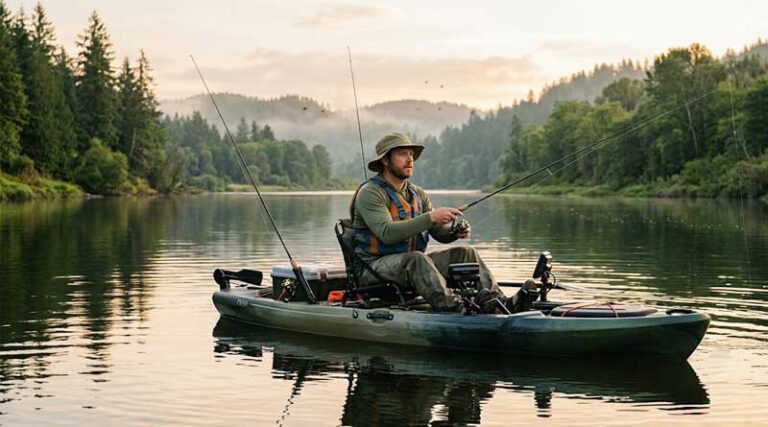
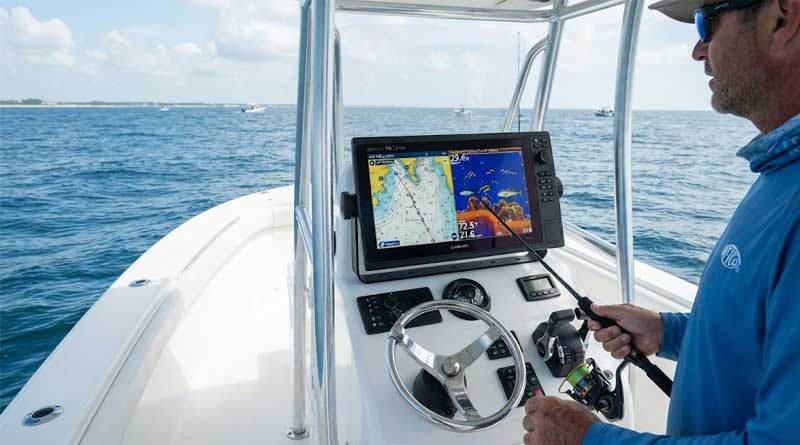
For modern anglers, selecting the right equipment can make the difference between a frustrating day on the water and a highly successful fishing adventure. Chartplotter fish finders have revolutionized the sport, combining high-resolution sonar technology with advanced GPS mapping to help you locate fish, track structures, and navigate safely. Whether you are navigating vast coastal waters or charting a secluded mountain lake, having a reliable marine navigation and fish-finding system on your watercraft ensures you can pinpoint underwater structures and return to your favorite spots with absolute precision.
1. Garmin Echomap UHD2 73cv

- Display Size: 7-inch bright, keyed display.
- Transducer Included: GT20-TM transducer for clear sonar.
- Preloaded Mapping: Built-in Garmin Navionics+ U.S. inland maps.
- Sonar Technology: High-definition CHIRP and ClearVü scanning.
The Garmin Echomap UHD2 73cv is a premium mid-sized unit designed for anglers who appreciate physical, tactile button controls over touchscreens. Its bright 7-inch keyed display is remarkably easy to read under direct sunlight, ensuring you never lose track of depth readings or map details when the sun is directly overhead. The included GT20-TM transducer delivers exceptional scanning sonar performance, revealing detailed underwater structures and separating target fish from background clutter with remarkable clarity.
This unit is preloaded with highly detailed U.S. inland maps, covering thousands of lakes with detailed depth contours. The physical button interface is incredibly reliable, making it an excellent option for kayak anglers who frequently handle wet gear or fish in cold climates where touchscreen usability degrades. Navigating the menus is intuitive, and the quick-access keys let you toggle between split-screen views effortlessly, allowing you to monitor both your mapping and active sonar feeds simultaneously without skipping a beat.
Pros:
- Highly reliable physical keypad works perfectly in wet conditions
- Outstanding sonar clarity via the GT20-TM transducer
- Preloaded with extensive Garmin Navionics+ inland maps
Cons:
- Does not feature touchscreen functionality
- Screen size might feel slightly cramped for multi-panel split views
2. Garmin ECHOMAP UHD2 93sv with GT56 Transducer

- Display Type: 9-inch sunlight-readable touchscreen.
- Transducer Bundle: High-end GT56UHD-TM transducer.
- Scanning Sonar: Ultra High-Definition SideVü and ClearVü.
- Wireless Connectivity: Built-in Wi-Fi and Force trolling motor integration.
The Garmin ECHOMAP UHD2 93sv represents the pinnacle of intermediate marine electronics, featuring a massive, ultra-bright 9-inch touchscreen interface. This unit is built to provide an expansive view of what lies beneath and around your vessel, boasting improved viewing angles and enhanced display clarity. Included in this premium bundle is the legendary GT56-TM transducer, which unlocks Garmin’s ultra high-definition SideVü and ClearVü scanning sonars, giving you near-photographic imagery of the bottom structure and fish on either side of your boat.
Beyond its stellar sonar capabilities, the 93sv offers advanced networking features that set it apart from smaller units. The built-in Wi-Fi module lets you wirelessly share sonar feeds, custom waypoints, and pre-planned routes with compatible ECHOMAP UHD2 devices on your boat. It also integrates seamlessly with Garmin Force trolling motors, allowing you to automate navigation, hold position, and control speed right from your fish finder screen. This level of system integration drastically improves your on-water efficiency.
Pros:
- Large, high-resolution 9-inch hybrid touchscreen
- Includes the premium GT56 transducer for incredible SideVü imagery
- Seamless wireless networking and trolling motor control
Cons:
- Higher power consumption compared to smaller models
- Larger footprint requires more mounting space on small kayaks
3. Humminbird Helix 5 Chirp

- Sonar Capability: Dual Spectrum CHIRP with Low-Q transducer.
- GPS & Mapping: Humminbird Basemap with premium map compatibility.
- Real-Time Mapping: AutoChart Live with 8 hours built-in recording.
- Control Interface: Reliable, weather-resistant physical keypad.
The Humminbird Helix 5 Chirp is a compact powerhouse that delivers professional-grade fish-finding features in a space-saving package. Equipped with Dual Spectrum CHIRP sonar, this device allows anglers to choose between Wide Mode for searching broad areas and Narrow Mode for isolating fine details and individual fish arches. The low-Q transducer provides excellent target separation, making it incredibly simple to distinguish baitfish from target species even when they are tightly hugging the bottom structure.
Navigation is another strong suit of the Helix 5, thanks to the integrated Humminbird Basemap covering over 10,000 lakes. Anglers can also utilize AutoChart Live to create custom, real-time maps of depth, bottom hardness, and vegetation as they drive. This unique mapping tool saves up to eight hours of data directly to the unit, giving you a distinct advantage on uncharted waters. The durable, tactile button interface ensures that rough waves, rain, or fish slime will never interfere with your ability to change settings.
Pros:
- Dual Spectrum CHIRP offers superb target separation
- AutoChart Live allows real-time custom mapping
- Highly durable and responsive physical keypad
Cons:
- The 5-inch display can feel small when using split-screen views
- User interface has a steeper learning curve than competitors
4. Lowrance Eagle Fish Finders

- Screen Tech: High-visibility IPS screen viewable with polarized glasses.
- Transducer System: SplitShot HD with FishReveal technology.
- Mapping Engine: Pre-loaded C-MAP inland charts with Genesis Live.
- Connection Design: Reliable twist-lock connector system.
Lowrance Eagle fish finders are engineered specifically to provide maximum simplicity, reliability, and utility for modern anglers. Featuring a high-visibility IPS screen, this unit ensures you can view crisp, clear images even in direct sunlight, from extreme viewing angles, and while wearing polarized sunglasses. The newly engineered SplitShot HD transducer brings a major performance leap, offering improved clarity and range, while the innovative FishReveal technology overlays CHIRP fish arches directly onto DownScan imaging for instant target identification.
Designed as a plug-and-play solution, the Eagle features autotuning sonar that automatically adjusts settings as water conditions change, letting you focus entirely on fishing. It comes pre-loaded with detailed C-MAP US inland charts, and with Genesis Live, you can map uncharted waters in real-time with half-foot contours. The secure, robust twist-lock connector system makes it remarkably simple to install and remove the unit, which is highly beneficial for kayak anglers who transport their gear frequently.
Pros:
- Outstanding IPS screen is visible from any angle with polarized sunglasses
- FishReveal makes identifying fish within structure incredibly simple
- Autotuning sonar removes the hassle of manual adjustments
Cons:
- Sun cover is sold separately rather than being included in the box
- Lacks advanced networking features found in higher-tier units
5. Garmin Echomap UHD2 54cv

- Display Size: Compact 5-inch bright, keyed display.
- Transducer Model: Included GT20-TM scanning transducer.
- Preloaded Maps: Navionics+ U.S. coastal and Great Lakes mapping.
- Sonar Specs: Traditional CHIRP and ClearVü scanning capabilities.
The Garmin Echomap UHD2 54cv is a highly focused, compact navigation and fish-finding instrument tailored specifically for coastal and Great Lakes anglers. Featuring a bright 5-inch display with intuitive physical keys, this unit fits perfectly on small consoles, kayaks, or budget-friendly fishing rigs where mounting space is at a premium. It is bundled with the dependable GT20-TM transducer, providing the crisp target separation of traditional CHIRP sonar alongside the high-resolution structure scans of ClearVü.
Unlike its inland-focused siblings, the 54cv comes preloaded with Navionics+ coastal and Great Lakes maps, making it the ideal choice for saltwater bays, tidal rivers, and expansive coastal shorelines. The physical key interface is incredibly tactile, ensuring fast and reliable operations when navigating through rough waters or managing the screen with wet fingers. If you want top-tier Garmin sonar and coastal mapping technology without paying for an oversized screen, this highly efficient unit is an outstanding choice.
Pros:
- Perfect compact size for kayaks and small watercraft consoles
- Preloaded with premium coastal and Great Lakes mapping data
- Very low power draw prolongs marine battery life
Cons:
- Small 5-inch screen can make reading fine detail from a distance difficult
- Lacks advanced SideVü scanning sonar capabilities
How to Choose Chartplotter Fish Finder
Selecting the ideal chartplotter fish finder requires understanding how different technical specifications align with your personal fishing style, your watercraft, and the environments you frequent. With so many options on the market, breaking down the key components will ensure you make an informed decision that enhances your time on the water.
Understanding Sonar Technologies
At the heart of any fish finder is its sonar capability. Modern units use several types of sonar to paint a picture of what is happening beneath your vessel. Understanding these differences will help you choose the right model.
Traditional CHIRP Sonar
CHIRP (Compressed High-Intensity Radiated Pulse) is the standard for detecting fish. Instead of sending a single frequency, CHIRP sweeps a continuous range of frequencies. This results in much clearer fish arches, better target separation, and less screen clutter, allowing you to easily distinguish baitfish from larger predators.
Down-Imaging (ClearVü and DownScan)
Down-imaging sonar uses a razor-thin, high-frequency beam to produce photographic-like images of the bottom structure directly beneath your boat. This technology is excellent for identifying submerged trees, brush piles, rock formations, and bridge pilings.
Side-Imaging (SideVü and SideScan)
Side-imaging extends the high-frequency scanning beam out to the sides of your boat, often up to several hundred feet. This is a game-changer for scanning large areas of shallow water quickly. It allows you to locate productive structures and fish without driving directly over them and scaring them away.
Evaluating Display Size and Resolution
The screen of your chartplotter is your window to the underwater world. How you plan to mount and view your unit dictates the size and resolution you should look for.
| Screen Size | Best Suited For | Pros | Cons |
|---|---|---|---|
| 5-Inch | Kayaks, small boats, limited consoles | Low power draw, compact footprint, affordable | Small split-screen view, harder to see details |
| 7-Inch | All-around kayaks, mid-sized fishing boats | Great balance of size and cost, readable split-screens | Requires solid mounting solutions |
| 9-Inch + | Bass boats, coastal center consoles | Massive display, ideal for 3-way split screens | High power consumption, heavy, expensive |
Mapping, GPS, and Navigation Features
A chartplotter is more than just a sonar; it is a vital navigation tool. Ensure the unit you choose has the right mapping software for your geographic location.
Inland vs. Coastal Maps
Always verify the preloaded maps on the unit. Some models, like the Garmin Echomap 73cv, are preloaded with inland lake maps. Others, like the Garmin 54cv, feature coastal and Great Lakes charts. Purchasing a unit with the incorrect map package can result in having to buy expensive add-on map cards later.
Real-Time Custom Mapping
Features like Humminbird’s AutoChart Live and Lowrance’s Genesis Live allow you to create custom maps of your local waterways in real time. If you fish small, unmapped farm ponds or remote lakes, this feature is indispensable because it lets you map depth contours, bottom hardness, and vegetation as you drive.
User Interface: Touchscreen vs. Keypad
Choosing between a touchscreen, a keyed interface, or a hybrid unit comes down to personal preference and the conditions you fish in.
Keypad-Only Interfaces
Keypad units are incredibly reliable. They function flawlessly in heavy rain, freezing temperatures, and when your hands are covered in water or fish slime. They are highly favored by kayak anglers who are exposed to the elements.
Touchscreen and Hybrid Interfaces
Touchscreens allow you to pinch-to-zoom, swipe across maps, and quickly drop waypoints with a tap. Hybrid units, which offer both touchscreens and physical buttons, provide the ultimate flexibility, letting you use the touch screen in calm weather and physical buttons when conditions get rough.
Power and Mounting Constraints on Kayaks
If you are rigging a kayak, power management and mounting space are critical considerations. Larger screens and powerful transducers draw significantly more power, which will drain your battery much faster.
- Battery Selection: A 5-inch unit can easily run all day on a compact 10Ah Lithium Iron Phosphate (LiFePO4) battery. A 9-inch unit with side-imaging may require a 15Ah to 20Ah battery to guarantee a full day of operation.
- Mounting Location: Ensure your kayak has a flat surface or a gear track capable of supporting the weight of your chosen display. Larger displays require heavy-duty mounts to prevent them from slipping in rough water.
- Transducer Deployment: Check if your kayak has a dedicated scupper hole transducer recess. Some transducers, like the large Garmin GT56, may require custom mounting arms if they do not fit inside standard kayak scupper recesses.
Making the Final Decision
To make the best purchase, define your primary fishing environment. If you fish deep inland reservoirs for bass, prioritizing a unit with Side-Imaging like the Garmin 93sv is highly beneficial. If you fish shallow coastal flats or bays, a compact 5-inch unit with coastal charts like the Garmin 54cv is the perfect fit. Balance your screen size preference against your boat’s mounting limitations and power capacity to find the ultimate tool for your angling adventures.