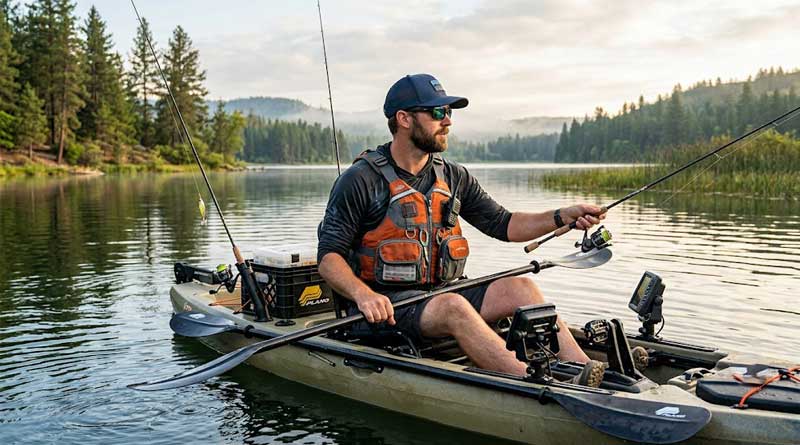
Fishing from a kayak means comfort and safety must work together, and the right life jacket makes that possible. A great kayak fishing PFD offers high buoyancy, low-profile design for casting, and pockets for gear like pliers or lures. Whether you prefer an inflatable belt pack or a foam vest with mesh ventilation, this guide reviews eight top-rated kayak life jackets for fishing, followed by a detailed buying guide to help you choose the safest and most comfortable option for your next paddling trip.
1. LOKFLAV Manual Inflatable Belt PFD

Buoyancy: 130N (29.3 lbs) of flotation force
Weight Capacity: 80–300 lbs users
Material: 420D Oxford shell with 300D nylon bladder
Fit: Adjustable waist 30–52 inches
The LOKFLAV belt pack is designed for anglers who want minimal bulk while casting. At just 0.4kg, it stays out of the way until needed, and the manual inflation system provides fast buoyancy the moment it’s triggered. The 24-hour flotation window gives real peace of mind on longer fishing trips.
Its wide weight range makes it suitable for most adult anglers, and the compact profile means it won’t interfere with paddling or rod handling. The trade-off is that it requires manual activation, so it isn’t ideal for anglers who may be knocked unconscious.
Pros:
- Lightweight and low-profile
- Long 24-hour flotation time
- Wide weight compatibility
Cons:
- Requires manual inflation
- Rearming kit sold separately
2. Onyx General Boating Life Jacket

Type: Foam vest-style PFD
Straps: Adjustable belts and chest strap
Design: Open-sided styling for breathability
Visibility: Bright colors for on-water safety
This Onyx vest is a solid entry-level option for kayak anglers who want a traditional foam life jacket rather than an inflatable. The large armholes allow a full range of motion for casting and paddling, while the adjustable chest strap keeps the vest secure and prevents riding up during activity.
The bright color options improve visibility on the water, which is a helpful safety feature. However, foam vests like this one tend to be bulkier than inflatable belt packs, so anglers who value freedom of movement above all else may prefer a slimmer alternative.
Pros:
- Simple, reliable foam flotation
- Large armholes for comfort
- Budget-friendly option
Cons:
- Bulkier than inflatable designs
- Fewer storage features
3. Onyx M-16 Inflatable Belt Pack

Approval: U.S. Coast Guard approved
Buoyancy: 17 lbs (up to 26.5 lbs with oral backup)
Weight: Under 1 pound total
Fit: Universal, up to 52-inch waist
The Onyx M-16 is built for anglers who prioritize an unhindered casting motion. Its ultra-sleek belt pack design weighs less than a pound and stows compactly when not in use, making it barely noticeable while fishing from a kayak or paddleboard.
The snag-resistant inflation handle and backup oral inflation add extra confidence in an emergency. Since it relies on manual activation via CO2 cartridge, users should keep a rearming kit on hand. Overall, it strikes a strong balance between safety and comfort for active anglers.
Pros:
- USCG approved
- Extremely lightweight
- Backup oral inflation
Cons:
- Manual inflation only
- Not ideal for unconscious scenarios
4. Onyx MoveVent Dynamic Paddle Vest

Approval: USCG and Transport Canada approved
Ventilation: Front and back mesh panels
Fit: Adjustable side belts and shoulder straps
Extras: Zippered pocket and built-in whistle
Designed specifically with kayak seating in mind, the MoveVent’s mesh back panel accommodates most kayak and canoe seats comfortably. The neoprene fabric and sculpted foam mold to the body, keeping the vest stable during long paddling and fishing sessions.
Reflective SOLAS-grade accents boost visibility in low light, an important safety feature for early morning or evening anglers. The expandable pocket is handy for small tackle or a phone. This vest suits anglers who want dual foam-based safety and all-day breathability rather than an inflatable option.
Pros:
- Excellent ventilation
- Kayak-seat friendly back design
- Reflective visibility accents
Cons:
- Bulkier than belt packs
- Higher price point
5. Onyx Universal Paddle Vest

Design: Flex-cut, tapered foam construction
Straps: Six adjustable straps with neoprene pads
Ventilation: Open sides and mesh back
Approval: USCG and Transport Canada approved
The Universal Paddle Vest uses a perforated flex-cut foam design to reduce bulk while still delivering reliable flotation. Six adjustable straps and neoprene shoulder pads help the vest fit securely across different body types without riding up.
The high foam back is shaped to support kayak seating, and the mesh panels keep anglers cool during warm-weather trips. A front zipper pocket adds convenient storage for small essentials. This is a well-rounded foam vest for paddlers who want comfort without sacrificing safety certification.
Pros:
- Low-profile, contoured fit
- Good breathability
- Secure six-point adjustment
Cons:
- Foam bulk compared to inflatables
- Limited color options
6. JKSPORTS Fly Fishing Vest

Shell: Ripstop polyester with EPE foam
Storage: Nine total pockets and loops
Ventilation: Mesh lower back panel
Warranty: Two-year guarantee
Built with anglers in mind, the JKSPORTS vest doubles as a tackle-storage system with four chest pockets, four zipped front pockets, and a back pocket for extra gear. The removable EPE foam lets you switch between a full flotation vest and a thin breathable layer.
Accessory loops on the chest allow custom gear attachments like retractors or pliers, making it a favorite for fly and lure fishing alike. It isn’t Coast Guard rated for offshore use, so it suits calm inland waters and casual kayak fishing rather than rough conditions.
Pros:
- Extensive pocket storage
- Removable foam for flexibility
- Two-year warranty
Cons:
- Not USCG certified
- Best for calm waters only
7. BLUESTORM Cirro 16 Manual Inflatable Belt Pack

Approval: USCG Type V, Type III performance
Buoyancy: 16.5 lbs (up to 29 lbs oral backup)
Fit: Universal 30–52 inch chest
Extras: D-rings for gear attachment
The Cirro 16 offers a minimalist belt pack design that stays completely out of the way until it’s needed. A quick pull of the jerk cord inflates the pillow-style bladder in seconds, and the included CO2 cylinder ships ready to install.
D-rings make it easy to clip on pliers or a net, and the low profile keeps you cool in summer heat. Built for paddleboarders, kayakers, and anglers alike, it’s a comfortable everyday option, though like most belt packs it depends on manual activation.
Pros:
- Fast, reliable inflation
- Comfortable minimalist design
- Handy D-ring attachments
Cons:
- Manual activation required
- Less buoyancy than foam vests
8. Stearns Life Vest

Approval: US Coast Guard approved
Material: Nylon shell with PE foam
Design: Open-sided with 3 buckles
Capacity: Adults 90 lbs and over
The Stearns Life Vest is a straightforward, budget-friendly foam PFD suited to general boating and casual kayak fishing. The open-sided design and three adjustable buckles allow decent airflow and a customizable fit for a wide range of adult body types.
It’s a dependable choice for anglers who want a no-frills, certified life jacket without extra features like pockets or mesh ventilation panels. While it lacks the specialized comfort of paddle-specific vests, its simplicity and reliability make it a solid backup or entry-level option.
Pros:
- Affordable and reliable
- USCG approved
- Adjustable buckle fit
Cons:
- No storage pockets
- Less breathable than mesh designs
How to Choose Kayak Life Jacket for Fishing
Choosing the right life jacket for kayak fishing goes beyond picking the first PFD you find. Anglers need a balance of safety, comfort, and functionality since kayak fishing involves long hours seated, repetitive casting motions, and the need for quick access to gear. Below is a detailed breakdown of the factors that matter most when selecting a kayak fishing PFD.
Understand the Different Types of PFDs
Life jackets generally fall into two broad categories: foam vests and inflatable belt packs. Each has distinct advantages depending on how and where you fish.
Foam Vests
Foam vests use built-in buoyant foam panels to keep you afloat automatically, without any activation required. This makes them a dependable choice for beginners, rough water, or situations where you might be unable to activate a device manually. They tend to be bulkier but offer constant, worry-free flotation.
Inflatable Belt Packs
Inflatable belt packs stay compact until triggered, either manually by pulling a cord or, in some cases, automatically upon submersion. They’re popular with kayak anglers because they don’t restrict casting or paddling motion. The trade-off is that they require conscious activation and occasional maintenance, such as replacing CO2 cartridges.
| Type | Comfort | Activation | Best For |
|---|---|---|---|
| Foam Vest | Bulkier, less flexible | Automatic | Rough water, beginners |
| Inflatable Belt Pack | Low-profile, flexible | Manual (usually) | Calm water, experienced anglers |
Check Coast Guard Approval
Always confirm that a life jacket carries U.S. Coast Guard approval, indicated as a Type I, II, III, or V device. This certification ensures the product meets minimum buoyancy and construction standards. Many kayak-specific vests are Type III, which is designed for conscious users in calm, inland waters, while inflatable belt packs are often Type V with Type III performance when inflated.
Buoyancy Rating
Buoyancy is measured in pounds or Newtons and determines how much flotation support the jacket provides. Heavier individuals or those fishing in rougher waters should look for higher buoyancy ratings, generally above 15 pounds for adults. Inflatable devices often list buoyancy both for the primary and secondary (oral) inflation, giving extra assurance in an emergency.
Comfort and Range of Motion
Kayak fishing involves constant arm movement while casting, reeling, and paddling, so a PFD that restricts shoulder or arm mobility can quickly become frustrating. Look for these comfort-related features:
- Large armholes or open-sided designs for casting freedom
- Mesh back panels that accommodate kayak seat backs
- Adjustable straps and belts to prevent riding up
- Lightweight materials that don’t add bulk
Storage and Gear Access
Many kayak anglers prefer vests or belt packs with built-in storage for small tools like pliers, tippet, or lures. Multiple pockets, D-rings, and lash tabs can keep essential gear within easy reach without needing to dig through a tackle box mid-cast. If storage isn’t a priority, a simpler design may offer better ventilation and a lower price.
Climate and Ventilation
Fishing in warm climates calls for a PFD with good airflow. Mesh panels, open sides, and breathable fabrics reduce overheating during long days on the water. In cooler climates, a slightly bulkier foam vest may be more comfortable since ventilation is less of a concern.
Sizing and Fit
An improperly sized PFD can shift out of place or fail to provide adequate buoyancy. When choosing a size, consider the following:
- Check the manufacturer’s weight range, not just chest or waist size
- Try adjusting all straps to ensure a snug, non-riding-up fit
- For belt packs, confirm the waist range matches your measurements
- Consider a vest with a wider size range if you fish with different layers seasonally
Additional Safety Features
Some vests include reflective SOLAS-grade tape for visibility in low light, built-in whistles for signaling, or bright colors that stand out on the water. These extra features can be valuable for early morning or evening fishing trips, or when fishing in areas with heavier boat traffic.
Maintenance Considerations
Inflatable PFDs require occasional maintenance, including inspecting the CO2 cartridge and keeping a rearming kit on hand after each inflation. Foam vests require little maintenance beyond regular inspection for wear, tears, or waterlogging. Anglers should factor in this ongoing cost and effort when choosing between the two types.
Matching the PFD to Your Fishing Style
Finally, consider how and where you typically fish. Calm freshwater lakes and rivers may only require a lightweight belt pack, while anglers fishing near open coastal waters or in variable conditions may prefer the constant protection of a foam vest. Matching the PFD to your typical environment ensures you get the right balance of safety and comfort for your needs.
By weighing buoyancy, certification, comfort, storage, and climate suitability together, you can select a kayak fishing life jacket that keeps you safe without getting in the way of a good day on the water.