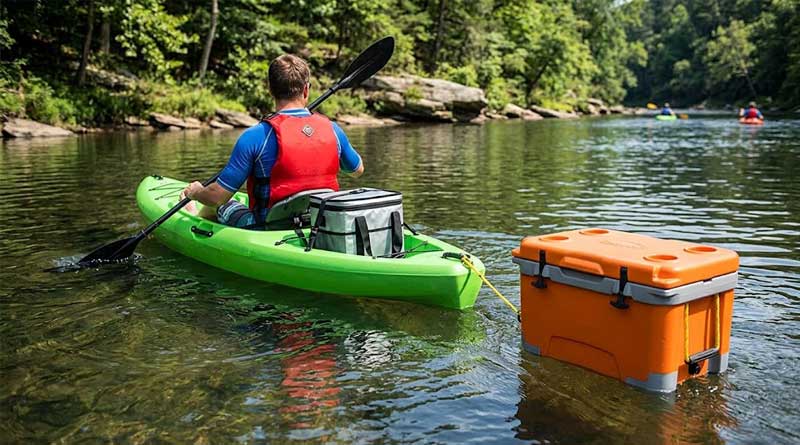
When heading out on the water for a long day of kayaking, keeping your drinks cold and gear safe without sacrificing valuable deck space is a common challenge. Floating coolers offer an ingenious solution by towing behind your kayak or mounting seamlessly to your setup. These buoyant ice chests let you carry ample food, drinks, and bait while keeping your kayak lightweight and maneuverable. Whether you are navigating calm lake waters, tackling river currents, or enjoying a day at the sandbar, finding the right floating cooler ensures you stay hydrated and refreshed throughout your journey.
1. CUDDY Floating Cooler and Dry Storage Vessel

- Capacity: 40 Quarts
- Material: High-Density Polyethylene (HDPE)
- Insulation: Dual-walled construction
- Access: Dual lids with T-latch handles
The CUDDY is a rugged, amphibious vessel built to handle tough aquatic environments. Its hard-shell design glides smoothly behind your kayak with minimal drag, making towing completely effortless. Double-walled insulation keeps your ice frozen and beverages cold all day long.
Featuring two large lids and four integrated cup holders, it works as a social hub on the water. Beyond keeping drinks chilled, it serves as a reliable dry storage unit to protect sensitive gear from splashes, waves, and unpredictable weather.
Pros:
- Highly durable hardshell build
- Hydrodynamic profile reduces drag
- Functions as dry storage
Cons:
- Heavier than inflatable alternatives
- Requires more storage space off water
2. EKEPE Inflatable Kayak Floating Cooler

- Capacity: 40+ Quarts (40+ cans)
- Material: Heavy-duty PVC
- Dimensions: 26 x 17 x 12 inches
- Features: Insulated sponge interlayer, waterproof zipper
The EKEPE inflatable cooler combines impressive storage capacity with exceptional portability. Designed specifically for water adventures, it deflates quickly to fit into compact storage bags, making transport to remote launching spots completely stress-free.
Equipped with insulated sponge layers on top and bottom, it maintains cold temperatures during long kayaking trips. The thick PVC shell and waterproof zipper guard against punctures, while four cup holders keep drinks readily available.
Pros:
- Lightweight and easy to store
- Puncture-resistant thick bottom
- Generous 40-quart capacity
Cons:
- Air pump is not included
- Requires time to inflate before use
3. DIVEBLAST Floating Cooler

- Capacity: 24 Cans plus ice
- Insulation: High-density thermal foam
- Ice Retention: Up to 24 hours
- Design: Extra wide stable base
The DIVEBLAST cooler float is built specifically for stability and performance on open water. Featuring high-density thermal foam, it holds ice for up to 24 hours, ensuring your refreshments stay freezing cold throughout day-long excursions.
Its wide base prevents tipping, even when fully loaded with ice and beverages or floating through minor river swells. It is a compact, reliable choice for paddlers needing straightforward cooling performance without unnecessary bulk.
Pros:
- Excellent 24-hour ice retention
- Stable base prevents tipping
- Compact size for easier handling
Cons:
- Smaller capacity compared to 40-quart models
- Fewer external tie-down options
4. Yakhacker Seat Back Kayak Cooler

- Mounting: Lawn-chair style seat back
- Insulation: High-density insulation
- Cooling Duration: Up to 16 hours
- Attachment: Bungee ball mounting system
The Yakhacker cooler offers a unique alternative to tow-behind models by attaching directly to lawn-chair style kayak seats. This slim profile design saves deck space while keeping drinks within immediate arm’s reach while seated.
High-density insulation paired with a leak-proof liner keeps contents cold for up to 16 hours. Multiple water-resistant pockets and a shoulder strap make it easy to carry on land for picnics or beach outings.
Pros:
- Direct access without reaching into water
- Saves water surface deck space
- Includes padded shoulder strap for land transport
Cons:
- Only fits lawn-chair style kayak seats
- Limited capacity compared to floating vessels
5. Rangland Adventure-30 Kayak River Cooler

- Capacity: 40+ Drinks with ice
- Material: Reinforced triple-layer PVC
- Safety: Dual air chamber system
- Included: Thickened tow rope and handles
The Rangland Adventure-30 is engineered specifically for rugged river trips and fishing expeditions. Its reinforced triple-layer base resists punctures and abrasions from rocks, branches, and shallow water obstacles while being towed behind your craft.
A dual air chamber design provides redundant buoyancy, keeping your cooler afloat even if one chamber suffers damage. The quick-access hatch allows effortless beverage retrieval, while sturdy grab handles make loading and unloading simple.
Pros:
- Triple-layer base for enhanced durability
- Dual air chambers for safety
- Includes sturdy tow rope and handles
Cons:
- Air pump must be bought separately
- Towing creates mild resistance in fast currents
How to Choose the Best Floating Cooler for Your Kayak
Selecting the right floating cooler for your kayak requires balancing capacity, durability, insulation performance, and mounting options. Kayaking puts unique demands on gear, as equipment must withstand water exposure, sun radiation, and physical abrasions from rocks or debris. Understanding your trip style, kayak layout, and storage requirements will help you choose a cooler that seamlessly complements your paddling experience.
Types of Kayak Coolers
Before purchasing, it is important to understand the primary structural categories of coolers designed for kayaking. Each type offers distinct benefits depending on how you plan to navigate the water.
Hardshell Towable Coolers
Hardshell floating coolers are rigid vessels constructed from high-density polyethylene or molded plastics. They feature hydrodynamic hulls designed to tracking smoothly behind your kayak like a mini-barge. These coolers excel in durability, resisting sharp rocks and scraping against riverbanks. They also double as secure dry storage for electronics and dry goods when you aren’t carrying ice.
Inflatable Tow-Behind Coolers
Inflatable floating coolers utilize heavy-duty PVC or vinyl fabrics combined with internal air chambers. Their primary advantage is packability; when deflated, they roll into compact shapes that fit easily inside dry bags or storage hatches. Modern inflatable models feature multi-layer bottoms and reinforced seams to prevent punctures during river trips.
Seat-Back and On-Deck Coolers
Instead of floating in the water behind you, seat-back coolers secure directly to your kayak seat or cargo deck using straps or bungees. They eliminate water drag completely and keep your food and drinks within arm’s reach without forcing you to turn around or pull in a tow line.
Key Features to Consider
To narrow down your choices, evaluate the following technical and functional factors based on your typical paddling adventures.
| Feature | Hardshell Floating | Inflatable Floating | Seat-Back Mounted |
|---|---|---|---|
| Durability | Maximum | Moderate to High | High |
| Portability | Bulky | Highly Compact | Highly Compact |
| Water Drag | Low to Moderate | Moderate | None |
| Capacity Range | 30 – 50 Quarts | 20 – 45 Quarts | 10 – 25 Quarts |
Capacity and Storage Size
Cooler volume is typically measured in quarts or total can count. Consider the length of your trips and whether you paddle solo or in groups:
- Under 20 Quarts: Ideal for short, solo day trips holding 10 to 15 cans plus ice. Fits easily on small kayaks or seat backs.
- 20 to 35 Quarts: Suitable for full-day excursions for two people, holding up to 24 cans with a proper ice ratio.
- 40+ Quarts: Best for group outings, sandbar gatherings, or multi-day camping trips where large quantities of food and drinks are required.
Insulation Quality and Ice Retention
Water temperatures, direct sunlight, and ambient heat quickly drain cooler efficiency. Look for high-density closed-cell foam insulation or multi-layered thermal linings. Rigid plastic models with injected foam generally offer superior ice retention for multi-day trips, while inflatable models with thermal foam inserts typically retain ice effectively for 12 to 24 hours.
Towing Dynamics and Stability
A floating cooler should slide smoothly across the water without flipping or pulling your kayak off course. Look for models featuring:
- Hydrodynamic Hull Shape: V-shaped or sled-like bottoms reduce water resistance when paddling against currents.
- Wide Center of Gravity: A wider stance prevents the cooler from tipping over in choppy water or sharp turns.
- Secure Towing Attachment Points: Reinforced D-rings or molded handles ensure your tow rope will not snap under tension.
Durability and Material Strength
Paddling environments present plenty of hazards, including sharp rocks, submerged logs, and coarse sand. If choosing an inflatable model, ensure it utilizes thick, puncture-resistant PVC (at least 0.4mm to 0.6mm thickness) with reinforced triple-layer bottoms. Hardshell units should feature UV-resistant plastic to prevent degradation and cracking from sun exposure.
Essential Accessories and Safety Features
A great kayak cooler should include features that enhance convenience and safety while on open water.
- Multi-Chamber Air Systems: On inflatable models, having dual air chambers ensures that if one chamber is punctured, the cooler remains floating on the secondary chamber.
- Waterproof Zippers and Latches: Quality seals prevent river water from leaking into your cooler and keep ice water from splashing out into your gear.
- Built-in Cup Holders: Molded cup holders on the lid provide a convenient resting spot for your active beverage while resting or fishing.
- Bright Visibility Colors: Choosing high-visibility colors like blue, yellow, or orange ensures motorized boats and fellow paddlers can spot your towed cooler easily from a distance.
Matching Your Cooler to Your Kayaking Style
Your specific activity on the water dictates which cooler design will serve you best:
River Floating and Tubing
For river trips where shallow rocks and quick currents are common, choose a heavy-duty inflatable or tough hardshell tow-behind cooler with a reinforced base. High-capacity models with multiple cup holders make it easy to share drinks with friends floating alongside you.
Kayak Fishing
Anglers benefit from low-profile, seat-back coolers or compact deck-mounted options. These keep deck space open for fishing rods and tackle boxes while eliminating drag that could interfere with positioning your kayak over fishing spots.
Touring and Distance Paddling
If covering long miles, low-drag hardshell towable coolers or sleek seat-back coolers are ideal. Minimizing drag ensures you conserve energy over long distances while still enjoying cold hydration at every stop.