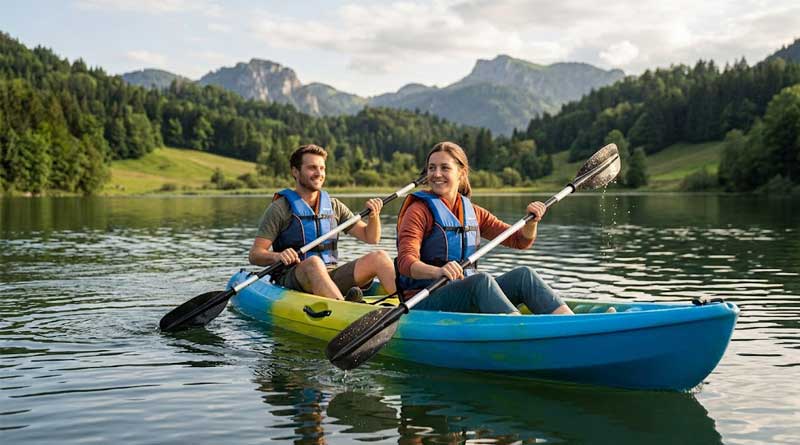
Getting out on the water with a partner is one of the most rewarding ways to experience nature, and a tandem kayak makes it incredibly accessible. For beginners, sharing the paddling duties reduces fatigue, increases stability, and ensures a safer environment while learning the ropes. Navigating the market can be overwhelming due to the sheer variety of hull designs, materials, and features available. This guide reviews five excellent beginner-friendly options to help you choose the ideal two-person kayak for your upcoming aquatic adventures.
1. WETURE Inflatable

- Weight Capacity: Up to 507 lbs, providing spacious and safe room for family and friends.
- Safety Features: Luminous fluorescent strips offer high visibility during the day and glow at night.
- Seating Configuration: 2 removable and adjustable seats equipped with waterproof rear storage pockets.
- Complete Kit: Includes 2 aluminum paddles, 2 tail fins, hand pump, carry bag, and repair kit.
The WETURE Inflatable kayak stands out as an exceptional choice for novice paddlers who prioritize safety and convenience above all else. Its unique design features glowing fluorescent strips that offer remarkable visibility during daylight and a distinct glow at night, providing immense peace of mind for families or late-day explorers. The heavy-duty build delivers dependable performance across various water environments, making it a reliable companion for weekend recreational trips or casual fishing outings.
This tandem model is tailored for user-friendly operation, inflating and deflating rapidly to ensure a stress-free setup at the shoreline. The spacious cockpit comfortably holds two adults and features adjustable backrests to prevent fatigue during extended paddling sessions. Removable tracking fins dramatically improve straight-line control, helping beginners steer effortlessly. With its comprehensive accessory kit and generous storage space, it supplies everything a new duo needs to get moving immediately.
Pros:
- Excellent night-time visibility features.
- High weight capacity for extra gear.
- Complete, comprehensive accessory kit included.
Cons:
- Fins must be manually detached for storage.
- Material requires thorough drying before packing.
2. Intex Explorer K2

- Material Construction: Rugged vinyl with an inflatable I-beam floor and high-buoyancy side chambers.
- Dimensions: Fully inflated measurements are 10.3 feet x 3 feet x 1.8 feet.
- Weight Capacity: 400-pound maximum capacity designed for two persons.
- Tracking System: A removable skeg provides exceptional directional movement and stability.
The Intex Explorer K2 is arguably one of the most widely recognized entry-level tandem kayaks available, loved for its bright yellow sporty graphics that maximize visibility on the water. Engineered specifically for mild rivers and calm lakes, this sleek watercraft focuses on making your initial paddling experiences fun and completely unintimidating. The low-profile deck combined with high-buoyancy side chambers provides an incredibly secure, stable base that prevents tipping and builds confidence for newcomers.
Assembly is remarkably straightforward thanks to the efficient Boston valves, which allow the hull to be fully prepared or deflated in mere minutes. The package includes two breakdown aluminum paddles and a high-output pump, ensuring you can transport everything compactly inside a standard vehicle trunk. While it has a slightly shorter frame compared to premium expedition models, its lightweight agility makes maneuvering simple for paddlers of any age or strength level.
Pros:
- Highly affordable and budget-friendly.
- Bright coloration ensures great visibility.
- Lightweight and incredibly simple to transport.
Cons:
- Restricted legroom for very tall individuals.
- Not suitable for rough or choppy open waters.
3. INTEX Excursion Pro K2

- Hull Material: 3-ply laminate construction combined with SuperStrong molecular formulation PVC.
- Sizing Metrics: Inflated boat size is 12.7 feet x 3.1 feet x 1.6 feet.
- Maneuverability: Two removable skegs included for optimal maneuverability in deep or shallow water.
- Integrated Mounts: Features two detachable fishing rod holders and adjustable GoPro/phone mount.
For beginners who want a premium, heavy-duty experience or plan to combine paddling with angling, the INTEX Excursion Pro K2 is a phenomenal step up. This model utilizes a highly rigid, three-ply laminate construction that allows for much higher air pressure inflation, mimicking the stiffness and tracking performance of a traditional hard-shell kayak. The added structural integrity ensures superior resistance against abrasions, impacts, and degrading sunlight exposure during long days on the water.
Comfort and utility are maximized through dedicated bow and stern storage areas equipped with stainless steel D-rings for strapping down dry bags. The inclusion of specialized deep and shallow water skegs gives beginners the unique ability to explore various environments without worrying about scraping the bottom. It accommodates up to 400 pounds easily and can even be configured for solo paddling, offering unparalleled versatility for developing outdoor enthusiasts.
Pros:
- High-pressure rigid floor feels incredibly stable.
- Excellent multi-functional mounts for cameras or rods.
- Superb durability against punctures and scratches.
Cons:
- Heavier and bulkier than standard recreational inflatables.
- Takes slightly longer to inflate completely.
4. INTEX Challenger Inflatable

- Design Profile: Streamlined low-profile design perfect for easy paddling in lakes and mild rivers.
- Cockpit Layout: Spacious cockpit with removable and adjustable seats providing plenty of room.
- Dimensions: Inflated size measures 11.6 feet x 2.6 feet x 1.3 feet.
- Hull Strength: SuperStrong enhanced molecular formulation PVC provides superior impact and abrasion resistance.
The INTEX Challenger Inflatable tandem kayak is engineered specifically to maximize efficiency and ease of stroke for those just dipping their toes into water sports. Its sleek, low-profile exterior cuts through calm lake surfaces with minimal resistance, ensuring that beginners do not waste energy fighting against water drag. The cockpit is intentionally designed to feel open and unrestrictive, providing plenty of room for leg movement and secure placement of personal gear.
Durability is reinforced via its proprietary SuperStrong molecular PVC formulation, which guards effectively against minor beaching scrapes and bumps. A removable skeg connects seamlessly to the underside, which aids significantly in keeping the boat tracking on a straight course even when wind conditions shift slightly. When the day finishes, the entire structure folds compactly into its dedicated carry bag, making storage in apartments or small closets entirely effortless.
Pros:
- Streamlined profile makes paddling feel effortless.
- Generous legroom inside the open cockpit area.
- Very quick setup and breakdown process.
Cons:
- Lower weight limit restricts heavy gear hauling.
- Included paddles are somewhat basic in quality.
5. Perception Rambler

- Hull Type: Rigid, versatile, stable, and fun hardshell tandem kayak made in the USA.
- Sizing Specifications: Boat length measures 13 feet 6 inches with a width of 34 inches.
- Weight Metrics: Overall boat weight is 78 lbs with a maximum capacity of 550 lbs.
- Seating System: Removable padded seats with adjustable support plus an additional molded-in center seat.
The Perception Rambler represents the traditional, indestructible hardshell category, proudly manufactured in the USA for ultimate longevity. As a sit-on-top model, it eliminates any feelings of confinement, allowing beginners to easily step on and off the craft from docks or shallow beaches. Its extra-wide 34-inch beam provides unparalleled secondary stability, making it nearly impossible to flip accidentally, which is perfect for ocean bays, light surf, and slow rivers.
What sets the Rambler apart is its unique third molded-in center seat, which lets a small child or a family pet join the ride safely. The rigid polyethylene hull means there is zero setup time at the water edge—you simply unstrap it from your roof rack and launch immediately. Multiple built-in footrest options comfortably accommodate paddlers of varying heights, ensuring correct posture and maximized paddling leverage for everyone onboard.
Pros:
- Virtually indestructible hardshell polyethylene construction.
- Bonus center seating area for kids or pets.
- Zero inflation required, meaning immediate launch capability.
Cons:
- Heavy weight requires two people or a cart to transport.
- Requires a dedicated roof rack or large storage space.
How to Choose 2-Person Kayak for Beginners
Selecting your very first tandem kayak requires balancing a few fundamental parameters to ensure your time on the water is safe, comfortable, and thoroughly enjoyable. Unlike single kayaks, two-person watercraft demand a closer look at weight distribution, tracking capabilities, and structural design, since you will be coordinating your movements with a partner. By breaking down the crucial components that separate an average kayak from a stellar beginner platform, you can confidently invest in a model that perfectly matches your lifestyle, storage limitations, and geographic location.
Understanding Hardshell vs Inflatable Tandem Kayaks
The first major decision you will face is choosing between a traditional rigid hardshell kayak and a modern portable inflatable model. Each material option comes with a specific set of operational trade-offs regarding storage, transport, durability, and on-water feel.
Inflatable Kayaks: Convenience and Portability
Inflatable kayaks have skyrocketed in popularity among novices due to their incredible convenience. Models like the Intex Explorer K2 or the WETURE Inflatable pack down into a manageable carry bag that fits easily into a car trunk, closet, or backseat. This eliminates the immediate need to purchase expensive aftermarket roof rack systems or own a large garage. Modern inflatables are constructed using heavy-duty vinyl or multi-ply PVC laminates, making them surprisingly resilient against bumps, scrapes, and underwater obstacles. Furthermore, their wide, air-filled side chambers provide immense natural buoyancy, creating a highly stable platform that gives beginners a reassuring sense of security on calm waters.
Hardshell Kayaks: Performance and Longevity
Hardshell kayaks, such as the rigid Perception Rambler, are typically manufactured from rotationally molded polyethylene plastic. The principal advantage of a rigid boat is instant readiness; there is no pumping required at the shoreline, meaning you can get onto the water faster. Hardshells track straighter and cut through waves more efficiently than most inflatables because their hulls can be molded into precise hydrodynamic shapes. They are virtually indestructible, allowing you to drag them over gravel beaches or rocky launches without any fear of punctures. However, you must account for their heavy weight, physical length, and the logistical challenge of transporting a 13-foot rigid object on top of your vehicle.
Key Features to Analyze Before Buying
To help you compare different models systematically, it is helpful to look at the primary physical dimensions and structural ratings. Below is a comprehensive overview of how the top beginner-friendly 2-person models compare across critical categories.
| Kayak Model | Type | Length | Weight Capacity | Key Advantage |
|---|---|---|---|---|
| WETURE Inflatable | Inflatable | Standard Tandem | 507 lbs | High-Visibility Night Glow |
| Intex Explorer K2 | Inflatable | 10.3 Feet | 400 lbs | Affordability & Lightweight |
| INTEX Excursion Pro K2 | Inflatable | 12.7 Feet | 400 lbs | High-Pressure Rigidity & Fishing Mounts |
| INTEX Challenger | Inflatable | 11.6 Feet | 400 lbs | Low-Profile Sleek Efficiency |
| Perception Rambler | Hardshell Sit-on-Top | 13.5 Feet | 550 lbs | Indestructible Hull & Extra Kid Seat |
Weight Capacity and Interior Space Optimization
When paddling tandem, you are combining the weights of two separate individuals plus any equipment, snacks, water bottles, and safety gear you bring along. It is critical to choose a kayak with a weight capacity that safely exceeds your combined load. Operating too close to a kayak’s maximum threshold causes the vessel to sit lower in the water, which compromises tracking efficiency, slows down your speed, and drastically increases the likelihood of water washing over the gunwales into your seating area.
Beyond raw weight limits, look at the physical length and cockpit configuration. Shorter boats under 11 feet long are lighter and easier to turn, but they can leave taller individuals feeling cramped, leading to knees bumping against the front seat. Longer models, such as those spanning 12 to 13.5 feet, provide generous legroom, better straight-line tracking, and dedicated storage compartments in the bow and stern for securing dry bags via D-rings.
Hull Stability and Hull Shapes for Beginners
For someone new to the sport, hull stability is paramount to preventing anxiety on the water. Stability is categorized into primary stability (how steady the boat feels when resting on flat water) and secondary stability (the boat’s ability to resist capsizing when moving through choppy waves or leaning on an edge).
Sit-on-Top vs Sit-In Designs
- Sit-on-Top Hull Design: Highly recommended for true beginners. These kayaks feature an open deck layout, making entry and exit incredibly straightforward. If you happen to capsize, you simply fall off the boat and can easily climb back on from the water. They feature scupper holes to drain water automatically, making them ideal for warm weather, ocean bays, and light surf zones.
- Sit-In Hull Design: This style places the paddlers inside a sheltered cockpit. It offers excellent protection from wind, cold splashes, and lower-body sun exposure, making it perfect for cooler seasonal climates. However, they require learning specific recovery techniques if a roll occurs, as the hull will fill with water and must be pumped out manually.
The Vital Role of Tracking Systems and Skegs
Without a proper tracking mechanism, a tandem kayak will tend to wag its nose left and right with every single paddle stroke, which wastes energy and frustrates beginners. To counteract this, manufacturers install a skeg, which is a small, removable fin located under the rear hull of the boat. High-quality beginner packages include tracking skegs that slide into place securely before launching. Some premium models, like the Excursion Pro K2, even provide multiple skeg sizes: a deeper skeg for open, windy lakes to keep you perfectly straight, and a shorter skeg designed specifically to maximize maneuverability when traversing shallow, rocky creeks or rivers.
Seating Comfort and Ergonomics
Paddling for a few consecutive hours can quickly become uncomfortable if your kayak lacks proper lumbar support. Look for models featuring adjustable, removable seats that attach firmly to the kayak hull via heavy-duty straps or hook-and-loop fasteners. High backrests are essential because they allow you to maintain an upright, biomechanically efficient paddling posture, reducing stress on your lower back and shoulders. Furthermore, ensure the model provides multiple footrest positions or molded-in footwells, as pressing your feet against a solid surface gives you significantly more core leverage and power with each stroke.
Essential Safety Accessories and Best Practices
Buying the perfect kayak is only the first step; configuring your craft with core safety components ensures every journey remains safe. For beginners, understanding what accessories to look for inside a bundle can save money and ensure compliance with local watercraft regulations.
Personal Flotation Devices (PFDs)
No matter how stable your chosen two-person kayak is, both paddlers must always wear a properly fitted Coast Guard-approved life jacket. Modern paddling PFDs are cut high around the arms and waist, ensuring they do not restrict your movement or rub uncomfortably against the kayak’s backrest while taking strokes.
High-Output Pumps and Repair Patches
If you select an inflatable kayak, ensure your gear package contains a reliable dual-action manual pump or a heavy-duty foot pump. Having high-velocity valves, like Boston or spring-loaded valves, ensures air flows in quickly without leaking out during pump detachment. Always carry a small patch repair kit in a waterproof pocket for unexpected punctures from sharp branches or unexpected shoreline debris.
Tips for Harmonious Tandem Paddling
Tandem kayaking is affectionately referred to by enthusiasts as the ultimate relationship test. Because your movements are closely linked, proper communication prevents your paddles from clacking together and ensures the boat travels efficiently.
The heavier paddler or the person with more steering experience should generally sit in the rear seat. The rear kayaker acts as the captain, using their paddle as a rudder to control the overall direction and tracking of the boat. The person in the front seat sets the pace and stroke cadence. The rear paddler must then match their rhythm perfectly to the front paddler’s movements, keeping both strokes completely synchronized for smooth, enjoyable cruising.