
Getting out on the water shouldn’t feel like a young person’s game or a grueling chore. For older adults looking to embrace kayaking, the right gear makes all the difference, transforming a potential physical strain into a peaceful, rewarding adventure. Safety, ease of transport, and rock-solid stability are the foundational keys to a great experience. By prioritizing comfortable seating and lightweight designs, you can confidently explore calm lakes and gentle rivers while protecting your joints and enjoying nature at your own pace.
1. Goplus Inflatable Kayak

- Material Construction: Heavy-duty reinforced PVC
- Weight Capacity: 352 lbs (160 kg)
- Seating Setup: 2-person tandem layout
- Air Chambers: 3 independent safety zones
The Goplus Inflatable Kayak is an excellent entry point for older adults who want to share their water adventures without dealing with heavy lifting. Weighing far less than a traditional hard-shell boat, it can be inflated quickly on the shore using the numbered valve system. The inclusion of two inflatable backrests and a dedicated footrest helps reduce lower back fatigue, which is a major plus for longer paddling sessions.
On the water, its streamlined hull design focuses heavily on directional stability, keeping you from veering off course with every stroke. The added conveniences like oar holders and all-around grab lines make it incredibly easy to handle during boarding or docking. It offers a reassuringly steady ride on protected lakes and mild rivers, giving beginners the confidence they need to relax and enjoy the scenery.
Pros:
- Lightweight and easy to transport in a trunk.
- Numbered valves simplify the inflation process.
- Built-in grab lines enhance safety and handling.
Cons:
- Lower weight capacity limit for a two-person kayak.
- Manual pumping can be tiring for some users.
2. WETURE Inflatable Kayak

- Weight Capacity: 507 lbs maximum load
- Safety Features: Luminous fluorescent night strips
- Tracking System: Dual removable tail fins
- Storage Options: Waterproof rear pockets
Safety and visibility take center stage with the WETURE Inflatable Kayak, making it a stellar option for seniors who prioritize peace of mind. The hull is equipped with unique glowing fluorescent strips that ensure you remain visible to other watercraft even as dusk approaches. With a generous weight capacity, this tandem boat easily accommodates two adults alongside extra gear or a pet without sinking low in the water.
Comfort is highly customizable thanks to the two removable, adjustable seats that provide firm lumbar support for sensitive backs. The dual removable fins underneath provide exceptional straight-line tracking, meaning you spend less energy correcting your path and more time enjoying smooth paddling. It also features convenient waterproof pockets to keep electronics, snacks, and medication perfectly dry and within arm’s reach.
Pros:
- High visibility strips greatly improve water safety.
- Impressive weight capacity offers excellent stability.
- Removable tracking fins make steering effortless.
Cons:
- Disassembling dual fins adds a small setup step.
- Packed bag can be bulky for one person to carry.
3. INTEX Challenger
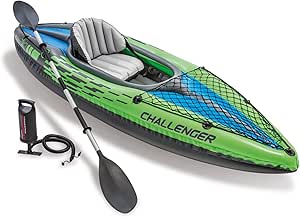
- Capacity Rating: 1-person solo design
- Inflated Dimensions: 9 ft x 2.6 ft x 1.1 ft
- Max Weight: 220 pounds capacity
- Hull Style: Low-profile streamlined deck
If you prefer solo exploration and independent operation, the INTEX Challenger K1 is built to get you on the water with minimal fuss. Its compact, single-paddler design is highly maneuverable and features a low-profile deck that cuts through mild breezes without catching the wind. The cockpit is intentionally spacious, giving you plenty of legroom to stretch out and prevent cramping during your journey.
The super-strong molecular formulation PVC resists abrasions and accidental punctures from hidden river debris, providing vital reassurance. Because it uses a removable skeg on the underside, maintaining a straight course requires very little physical effort or advanced technique. It deflates rapidly into a compact carry bag, making it simple to store in an apartment closet or transport in a small car.
Pros:
- Highly maneuverable and perfect for solo paddlers.
- Spacious cockpit prevents legs from feeling trapped.
- Extremely affordable and beginner-friendly design.
Cons:
- Strict weight limit restricts carrying heavy cargo.
- Low-profile deck can take on splashes in choppy water.
4. Intex 68307EP Explorer K2

- Color Scheme: High-visibility bright yellow
- Floor Type: Inflatable I-beam rigid floor
- Total Capacity: 400 lbs maximum limit
- Hull Features: High-buoyancy side chambers
The Intex Explorer K2 is a legendary recreational kayak that earned its popularity through a perfect blend of stability and approachability. The bright yellow color scheme ensures maximum visibility on busy lakes, making it a very secure choice for older beginners. Structurally, it utilizes an inflatable I-beam floor paired with wide, high-buoyancy side chambers to create a remarkably stable platform that resists tipping.
Getting in and out of this kayak is easier than standard models due to the low-profile walls and steady baseline. The two included seats feature supportive backrests that can be adjusted along the floor floor to optimize legroom. It comes as a complete kit with breakdown aluminum paddles and a high-output pump, ensuring you have everything needed for a weekend outing.
Pros:
- Exceptional stability prevents tipping during boarding.
- Vibrant color ensures you are easily spotted by boaters.
- Boston valves make inflation and deflation incredibly fast.
Cons:
- Paddles are functional but slightly basic.
- Tracking can suffer in stronger head winds.
5. Pelican Sentinel 100X

- Hull Type: Multi-chine flat bottom hull
- Product Weight: 44 lbs total weight
- Material Tech: Patented Ram-X impact resistant
- Storage Feature: Removable ExoPak compartment
For older beginners who prefer a traditional hardshell boat without the crushing weight, the Pelican Sentinel 100X stands out. Weighing a mere 44 pounds, this sit-on-top model is one of the easiest rigid kayaks to load onto a vehicle or carry down to the shore. It utilizes a sophisticated multi-chine flat bottom hull, which delivers unmatched secondary stability for steady confidence.
The sit-on-top format is highly recommended for anyone with stiff joints, as it completely eliminates the confined feeling of a traditional enclosed cockpit. It also features built-in additional flotation inside the hull structure to meet strict safety standards. The removable ExoPak storage box fits neatly into the rear tank well, allowing you to pack your gear securely at home and drop it right into place.
Pros:
- Sit-on-top style makes entry and exit painless.
- Incredibly lightweight for a rigid hard-shell kayak.
- Exceptional hull stability suitable for casual fishing.
Cons:
- Hard-shell body requires a roof rack or large vehicle.
- Open deck exposes your legs to the sun and water spray.
—
How to Choose the Best Kayak for Older Beginners
Choosing a kayak later in life requires a shift in perspective. Instead of focusing purely on top speed or technical maneuvering, the most critical factors become stability, joint comfort, physical safety, and how easy the boat is to manage when you are out of the water. The perfect vessel should reduce physical strain while maximizing your confidence on every excursion.
Understanding Kayak Types: Inflatable vs. Hard-Shell
The first major decision you will face is deciding between a modern inflatable kayak and a traditional hard-shell plastic model. Both categories have unique benefits that cater directly to the needs of older paddlers, depending on your living situation and physical strength.
Inflatable Kayaks
Inflatable models have evolved far beyond simple pool toys. Constructed from heavy-duty, reinforced PVC or vinyl, these boats offer unparalleled portability. They are the ideal choice if you want to avoid lifting a heavy weight onto a car roof rack. A deflated kayak fits neatly inside a trunk or back seat and can be stored easily in a ground-floor closet. On the water, their wide, air-filled side walls make them incredibly buoyant and virtually impossible to flip over during recreational use.
Hard-Shell Kayaks
Hard-shell options, like those made from rigid polyethylene or patented composite materials, are prized for their convenience on the shoreline. There is no inflation time required; you simply unstrap the boat and slide it into the water. Rigid hulls cut through the water more efficiently, requiring less paddling energy to maintain momentum. They are incredibly durable and require very little maintenance beyond a quick rinse with clean water.
Design Configurations: Sit-On-Top vs. Sit-In
How you sit in the kayak dictates your comfort level and how easy it is to get moving. This design aspect is particularly vital for individuals dealing with knee stiffness, back pain, or limited flexibility.
Sit-On-Top Kayaks
For most older beginners, the sit-on-top configuration is the gold standard. These kayaks feature an open deck design where you sit above the water level. Because there is no enclosed cockpit, you do not have to bend deeply or twist your body awkwardly to get inside. If you ever need to exit the boat quickly, you can simply slide off into the water without any risk of becoming trapped.
Sit-In Kayaks
Sit-in kayaks feature a traditional enclosed cockpit where your lower body rests inside the hull. The primary advantage here is protection from the elements. If you plan to paddle in cooler weather or moving water, a sit-in model keeps your legs dry and shielded from chilly winds. They also offer a lower center of gravity, which creates a highly stable feeling once you are properly seated.
Key Factors to Evaluate Before Buying
To ensure you invest in a boat that keeps you smiling season after season, compare options using this target criteria matrix:
| Feature Priority | Ideal Specification | Primary Benefit for Seniors |
|---|---|---|
| Hull Width | 30 to 36 inches | Maximum stability, eliminates the tippy feeling |
| Total Weight | Under 45 pounds | Easy loading, unloading, and shore launching |
| Seat Design | Adjustable with high backrest | Prevents lumbar fatigue and lower back pain |
| Tracking Aid | Removable skeg or deep fin | Keeps boat straight, saves paddling energy |
Ergonomics, Comfort, and Physical Health
A successful day on the water depends heavily on how your body feels after an hour of continuous paddling. Prioritizing physical ergonomics prevents injury and keeps you eager for the next trip.
Lumbar and Back Support
Look for kayaks that feature multi-point adjustable seating systems. A rigid or firmly inflated backrest supports the natural curve of your spine, preventing slouching. When your core is supported, your arms and shoulders can rotate smoothly, distributing the work of paddling across larger muscle groups rather than straining your wrists.
Legroom and Footrests
Cramped legs lead to poor blood circulation and sudden muscle spasms. Ensure the cockpit or deck area offers adjustable foot braces or tiered footrests. Being able to press your feet gently against a solid point allows you to stabilize your lower body, giving you better leverage with every paddle stroke.
Safety Features for Complete Peace of Mind
Safety should never be compromised when exploring a new hobby on open water. Look for specific built-in elements that protect you in unexpected situations.
- High-Visibility Colors: Opt for bright yellow, orange, or fluorescent accents so powerboats and shore spotters can see you easily.
- Multiple Air Chambers: High-quality inflatables utilize independent chambers. If one sustains damage, the remaining sections stay inflated to bring you safely back to shore.
- Perimeter Grab Lines: Heavy-duty nylon ropes running along the edges of the hull provide a secure handhold if you need to hold the boat while wading.
Transport and Practical Storage Solutions
Before clicking buy, walk through the logistics of a typical paddling day. Ask yourself: Can I physically carry this boat from my vehicle to the shoreline alone? If a hard-shell kayak is too heavy to lift overhead comfortably, investing in a lightweight folding kayak dolly cart can save your joints from unwanted strain. Alternatively, selecting a premium inflatable model allows you to roll the entire setup down to the water edge using a compact backpack bag.