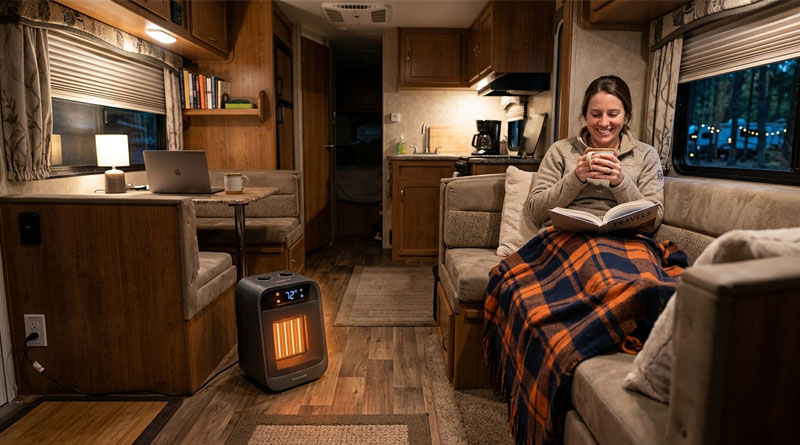
Winter camping in an RV sounds romantic until 2 AM when your breath fogs up and your propane tank runs dry. A good electric heater isn’t just a comfort upgrade — it’s the difference between a miserable night and waking up refreshed. But plug in the wrong one and you’ll be resetting circuit breakers at midnight. Here’s a no-fluff breakdown of seven electric heaters actually worth running in your rig, followed by a practical guide to picking the right one without frying your electrical system.
1. Dreo Smart Wall Heater
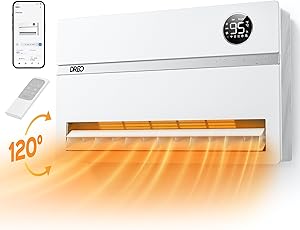
- Wattage: 1500W
- Oscillation: 120° Vertical
- Temperature Control: 41–95°F with 1°F accuracy
- Heating Coverage: Up to 200 sq. ft. (primary), 750 sq. ft. (supplementary)
If you’ve ever woken up with one side of your RV toasty and the other side freezing, the Dreo Smart Wall Heater’s 120° vertical oscillation addresses exactly that problem. It sweeps heat from floor to ceiling rather than blasting one spot, which makes a surprising difference in a space where your bed, kitchen, and couch are all within fifteen feet of each other. App control via Dreo, Alexa, or Google Home means you can crank the heat from your sleeping bag before you commit to getting up — a small luxury that feels enormous on a cold morning.
The PTC ceramic element holds your target temperature to within a single degree, which is genuinely impressive and cuts down on the on-off cycling that wastes electricity. Its LED panel dims automatically at night, and the fan noise stays low enough that light sleepers won’t notice it. Installation takes maybe twenty minutes with the included hardware and drilling guide, and the washable filter means you’re not constantly buying replacements. The 1500W draw is the one real caveat — confirm your RV’s shore power circuit can handle it before committing.
- Pros:
- 120° vertical oscillation delivers even, whole-room heat distribution
- Full smart home integration via app, Alexa, and Google Home
- 1°F precision keeps temperature stable without constant cycling
- Cons:
- Wall-mount only — not an option if your RV walls can’t accommodate it
- 1500W is a heavy draw on 30-amp service
2. Brightown Plug-in Heater with Remote

- Wattage: 800W
- Plug Design: 180° Rotating
- Heating Coverage: Up to 100 sq ft
- Noise Level: Under 40 dB
Most RV heaters take up floor space you don’t have, which is why the Brightown’s rotating plug design is genuinely clever. It flips 180° to plug directly into any standard outlet — facing up, down, or sideways — and just stays there, no cords involved. In a small camper or travel trailer bathroom where every square inch matters, that kind of footprint-free heating is hard to argue with. At 800W, it also draws less than 7 amps, making it one of the friendliest heaters you can run alongside other appliances without sweating the breaker panel.
It heats a 100-square-foot area effectively, which covers most RV sleeping quarters or bathrooms without issue. Below 40 dB, it’s quiet enough to forget it’s running — a big deal when the walls between your bed and the bathroom are paper-thin. Overheat protection and flame-retardant housing make it safe for overnight use, and the remote-controlled 12-hour timer means you can set it and not think about it. Just don’t expect it to warm a full-sized Class A motorhome on its own — it’s a zone heater by design, not a main source.
- Pros:
- Cord-free 180° rotating plug saves floor and counter space
- 800W is gentle on RV electrical systems
- Whisper-quiet at under 40 dB — won’t interrupt sleep
- Cons:
- 100 sq ft coverage won’t cut it for larger rigs
- Underpowered in genuinely cold temperatures
3. Caframo True North Heater
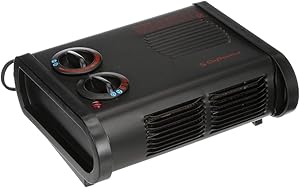
- Heat Output: Three settings (600W, 900W, 1500W) up to 5,125 BTU/hr
- Power Requirements: 120V AC, 13.2A maximum
- Dimensions: 11.25″ x 8″ x 5″ steel housing
- Freeze Protection: Auto-activates at 38°F (3°C)
The Caframo True North doesn’t try to be smart. It doesn’t have an app, doesn’t talk to Alexa, and won’t send you a notification when the temperature drops. What it does do is heat reliably with three power settings, survive the vibrations of long highway hauls inside a steel housing, and sit flat on a surface without tipping. For RV owners who’ve had cheaper heaters fall apart after a season, the build quality here is immediately noticeable. Its low profile also means it’s far less likely to topple in transit if you forget to stow it.
The anti-freeze function is what separates this heater from the rest of the list. Set it, leave your RV for a week in January, and it will automatically kick on whenever the interior temperature dips to 38°F — protecting your water lines, pipes, and temperature-sensitive gear without any intervention from you. That’s a meaningful feature for full-timers or people who store their rigs in cold climates over winter. It runs quietly throughout, and three heat settings give you enough range to dial back the draw when needed. No frills, no fuss — just dependable performance.
- Pros:
- Solid steel build withstands the bumps of travel
- Anti-freeze mode protects RV plumbing automatically at 38°F
- Low-profile design is stable and easy to store
- Cons:
- No remote, app, or smart features
- Thermostat is analog — less precise than digital models
4. Dr Infrared Heater Portable Space Heater
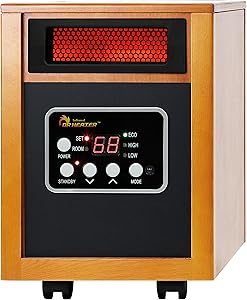
- Wattage: 1500W
- Heating System: Dual (Infrared Quartz + PTC)
- Noise Level: 39 dB
- Portability: Caster Wheels
Most portable heaters force you to choose between power and quiet — the Dr Infrared Heater refuses to pick a side. Its dual system pairs infrared quartz tubes with PTC ceramic elements, producing around 5,200 BTU of output while keeping fan noise at just 39 dB. That’s a combination that makes it appropriate for larger Class A or Class C motorhomes where a single-element heater would struggle to make a dent. The infrared component is particularly effective because it heats surfaces and people directly, meaning you feel the warmth faster than with air-only systems.
The caster wheels are a practical touch that sounds minor until you actually need to roll the heater from the bedroom to the living area without lifting anything. An IR remote handles temperature adjustments between 50–85°F, and the 12-hour auto shut-off timer works as a useful safety net overnight. Tip-over and overheat protection are both present and genuinely needed given that a 1500W wood-box-shaped heater on wheels in a moving RV is an object that deserves respect. Plan your electrical usage accordingly — this one will max out a 30-amp circuit quickly if you’re also running other appliances.
- Pros:
- Dual infrared + PTC system heats quickly and thoroughly
- 39 dB operation — quieter than most heaters at this power level
- Caster wheels make repositioning genuinely easy
- Cons:
- 1500W strains smaller or older RV electrical systems
- Larger footprint than plug-in or wall-mounted alternatives
5. Dreo Smart Wall Heater (IP24)

- Wattage: 1500W
- Airflow: 11.5 ft/s
- Waterproof Rating: IP24
- Noise Level: 28 dB
At 28 dB, this is the quietest heater on the list — quieter than most people’s refrigerators. That alone makes it worth considering for light sleepers or couples where one person runs hot and the other runs cold at night. The IP24 waterproof rating adds a dimension most heaters ignore entirely: it can handle light moisture splashes without issue, which matters in RV bathrooms or near galley kitchens where steam and humidity are facts of life. The 11.5 ft/s airflow pushes heat effectively across a room rather than just warming the immediate vicinity.
The ECO mode is where this heater earns its keep for RV electrical management — it reads the room temperature and adjusts output accordingly, instead of running at full draw constantly. Over a long cold night, that makes a measurable difference in how much shore power you consume. Remote, Dreo app, and Alexa control give you the full suite of smart options, and the 30° manual oscillation lets you target a specific zone. Wall mounting keeps the floor clear, though you’ll need to verify your RV wall thickness and structure can support it before drilling.
- Pros:
- 28 dB operation is nearly silent — ideal for sleeping
- IP24 waterproof rating handles bathroom and kitchen moisture
- ECO mode actively reduces power consumption overnight
- Cons:
- Wall-mounted only — limits flexibility in reconfigured or rental RVs
- 1500W draw requires careful circuit planning
6. GiveBest Smart Wall Heater

- Wattage: 1500W
- Heating System: PTC ceramic
- Noise Level: 34 dB
- WiFi Compatibility: 2.4 GHz only
GiveBest markets this directly toward RV users, and you can tell — the feature set reflects real consideration of how RV living actually works. Heat, ECO, and Fan-only modes cover the full range from peak winter chill to shoulder-season stuffiness, and the ECO mode is particularly useful for keeping power consumption reasonable when you’re parked on 30-amp service. At 34 dB, it’s quiet enough for overnight use without being disruptive. Wall mounting is a genuine floor-space win in any RV, and the installation template makes placement straightforward even if you’re not handy with a drill.
The V-0 rated flame-retardant housing is among the best fire-resistance ratings available for consumer heaters — a meaningful spec when your walls, furniture, and bed are all within arm’s reach of the unit. Alexa voice control and app management work smoothly, though the 2.4 GHz-only WiFi requirement is worth noting if your mobile hotspot or campground WiFi runs on 5 GHz exclusively. Remote control works independently of WiFi, so connectivity issues won’t leave you stuck. Overall, it’s a well-rounded, safety-conscious choice for RVers who want smart control without paying a premium.
- Pros:
- V-0 flame-retardant rating is top-tier for fire safety
- Three operating modes cover heating, efficiency, and ventilation
- 34 dB quiet operation — comfortable for overnight running
- Cons:
- 2.4 GHz WiFi only — may not connect on all campground networks
- 1500W demands careful attention to available amperage
7. Dreo Portable Space Heater (2024)

- Wattage: 1500W
- Heating System: Hyperamics PTC ceramic
- Noise Level: 34 dB
- Safety Features: Tilt-detection sensor, V0 flame retardant
Dreo’s 2024 upgrade to this portable heater added something other manufacturers gloss over: a tilt-detection sensor that’s meaningfully more responsive than a standard tip-over switch. In an RV where a dog, a sudden stop, or a narrow hallway could send a heater sideways, that distinction matters. The updated heat funnel design paired with Hyperamics PTC technology pushes warm air noticeably farther than earlier models, so it’s not just heating the area immediately in front of it — it’s actually reaching across a room. It goes from cold to warm in seconds, which is exactly what you want when you’ve just come in from outside.
The brushless DC motor and winglet fan keep operation at 34 dB, and the temperature range of 41–95°F in 1°F increments gives more precision than most RVers will ever need — but precision translates to efficiency, which matters on limited shore power. ETL certification covers the full safety package. A carry handle makes moving it between zones effortless, five operating modes cover everything from turbo heat to ECO, and the child lock is a useful addition for families traveling with curious kids. If you want portable and safe without sacrificing performance, this is the strongest all-around pick on the list.
- Pros:
- Advanced tilt-detection sensor responds faster than standard tip-over switches
- Hyperamics PTC heats quickly with noticeably better range
- Carry handle and five modes make it genuinely versatile around an RV
- Cons:
- 1500W can trip breakers on older 30-amp RV setups
- Occupies floor space unlike wall-mounted alternatives
How to Choose the Right Electric Heater for Your RV
Buying an electric heater for an RV is a completely different decision from buying one for a house. The square footage might be smaller, but the constraints are tighter: limited amperage, thinner walls, real consequences for fire safety in a confined space, and the constant reality that you’ll be plugging into whatever power the campground happens to offer. Get it right and you’ll be warm all winter. Get it wrong and you’ll be tripping breakers at midnight or, worse, creating a safety hazard in a space where the exit is twelve feet away. Here’s what actually matters when making this decision.
Start with Your RV’s Electrical System — Not the Heater
Before you look at a single product spec, you need to understand what your RV’s electrical system can actually handle. Most RV parks offer either 30-amp or 50-amp shore power hookups. A 30-amp service gives you a maximum of 3,600 watts at 120 volts — for everything running simultaneously, not just your heater. A 50-amp service with dual legs gives you significantly more headroom, up to 12,000 watts theoretically, though your RV’s internal wiring limits that further.
A 1500W heater draws 12.5 amps. That sounds manageable until you add up what else is running: the RV’s existing furnace fan, a coffee maker (around 10 amps), an air conditioning unit (13+ amps), phone chargers, lighting, and a refrigerator. On 30-amp service, running a 1500W heater alongside your microwave and furnace fan is a reliable way to trip your main breaker. The math isn’t complicated, but most buyers skip it entirely. Lower wattage options like the 800W Brightown draw only 6.7 amps — far more compatible with a full 30-amp setup running multiple appliances simultaneously. If your RV is on 50-amp service, 1500W heaters become much less of a concern.
Match the Heater to Your RV’s Actual Size
Manufacturers list coverage areas in square feet, and those numbers are optimistic under ideal conditions. A heater rated for 200 square feet in a well-insulated house will struggle in a 200-square-foot RV with thin fiberglass walls and single-pane windows. A practical rule of thumb: underestimate the coverage and buy for slightly more than you think you need.
For van conversions and small pop-up campers under 100 square feet, an 800W plug-in heater is often more than sufficient and much kinder on your electrical system. For mid-size travel trailers and fifth wheels in the 150–300 square foot range, a 1000–1500W heater with good airflow distribution — or a dual-element model like the Dr Infrared — makes more sense. For larger Class A or Class C motorhomes, zone heating with two smaller heaters in different areas is often more effective than a single powerful unit trying to push heat through a long, compartmentalized space.
Understand How Different Heater Technologies Behave in an RV
PTC ceramic heaters heat up fast, respond quickly to thermostat adjustments, and are compact enough for almost any space. They work by passing air over a ceramic element and blowing it into the room. Most of the heaters on this list use PTC technology, and for good reason — it’s efficient, responsive, and well-suited to the variable conditions of RV camping.
Infrared heaters work differently. Instead of heating air, they emit radiant energy that heats objects and people directly — similar to how sunlight warms you even on a cold day. In a drafty RV, this can actually be more comfortable because opening a door doesn’t instantly erase all the warmth. The Dr Infrared Heater on this list combines both systems, getting the best of both worlds: fast radiant warmth plus circulated air heat. The tradeoff is a larger physical footprint.
Oil-filled radiators, which aren’t on this list but come up in RV forums frequently, provide gentle, consistent heat without any fan noise. They’re excellent for maintaining a steady overnight temperature. The problem for RVers is weight and bulk — an oil-filled radiator is heavy, slow to warm up, and takes up significant floor space. They also retain heat for a long time after being turned off, which means they can’t be quickly stowed before driving. In most RV situations, PTC or infrared options are more practical.
Safety Features Are Non-Negotiable in a Mobile Living Space
An RV is not a house. If something goes wrong with a heater in a house, you have multiple rooms, multiple exits, and significantly more time to respond. In a 25-foot travel trailer, a heater that catches fire or overheats becomes a life-safety issue within seconds. Every heater you consider for RV use should have at minimum: tip-over protection that automatically cuts power when the unit is knocked over, overheat protection that shuts the heater down if internal temperatures exceed safe limits, and housing made from flame-retardant materials — ideally V-0 or 5VA rated, which are the highest civilian consumer ratings available.
Cool-touch exteriors matter if you travel with pets or children. Dogs and cats in particular will investigate a warm heater, and a unit that gets hot enough to burn on the outside is a vet bill waiting to happen. ETL or UL certification means an independent safety laboratory has actually tested the unit rather than just the manufacturer self-certifying. Don’t treat those certifications as a formality — they represent real testing under real failure conditions.
Portable vs. Wall-Mounted: A Decision About Your Setup
Wall-mounted heaters permanently reclaim floor space, which is genuinely precious in any RV. They also eliminate the risk of the heater being knocked over during travel if you forget to stow it. The tradeoff is installation effort and commitment — you’re drilling into your RV wall, which requires confirming the wall structure can support the unit and that you’re not drilling into wiring or plumbing behind the panel. RV walls are typically thinner than residential drywall, often with foam insulation and thin wood paneling, so anchor selection matters. Most wall-mounted heaters include installation templates that simplify the process, but it’s still a permanent modification.
Portable heaters offer flexibility that wall-mounted units can’t match. You can move a portable heater to wherever you’re spending time — the bedroom at night, the main living area during the day, even outside under an awning on a cool evening if the cord reaches. For RVers who frequently reconfigure their space or rent their rigs, portable heaters are the obvious choice. The main disadvantages are floor space consumption and the responsibility to properly stow the unit before driving. A heater sliding around in a moving RV is a hazard — make sure any portable unit you buy has a secure storage spot with tie-down potential.
Smart Features: Worth It or Overkill?
App control, Alexa integration, and WiFi scheduling sound like marketing buzzwords until you’re lying in bed on a cold morning and realize you can pre-warm your RV before your feet hit the floor. For regular campers who stay at full-hookup parks with reliable WiFi, smart features add genuine convenience. Scheduling a heater to run from 5:00 AM to 6:30 AM every morning so the RV is warm before your alarm goes off is a small quality-of-life improvement that adds up quickly over a winter season.
That said, campground WiFi is notoriously unreliable, and if your smart heater’s app can’t connect to the cloud because the campground network is overloaded, you may find yourself relying on the physical remote anyway. Prioritize heaters that work fully via remote control independent of WiFi — smart features should be a bonus, not a requirement for basic operation. Also note the WiFi band requirement: several heaters on this list require 2.4 GHz connections. Many newer mobile hotspots and some campground networks broadcast only 5 GHz, which would prevent app pairing entirely. Check your hotspot settings before purchasing.
Noise Matters More Than You Think
In a small RV at night, the ambient sound environment is very different from a house. There’s no background noise from other rooms, traffic is often minimal at campgrounds, and your sleeping space is typically within fifteen feet of wherever the heater is running. A heater that measures 50 dB is genuinely disruptive. Under 40 dB is acceptable for most people; under 30 dB is nearly imperceptible. The Dreo IP24 wall heater on this list operates at 28 dB — quieter than a library. If noise sensitivity is a concern, pay close attention to those decibel ratings rather than taking manufacturer descriptions like “whisper-quiet” at face value.
Energy Efficiency Over a Full Season
The difference between a heater with a good ECO mode and one without can represent dozens of dollars over a winter camping season. ECO modes use temperature sensors to modulate output — running at full power until the target temperature is reached, then cycling at reduced output to maintain it. Without ECO mode, a heater cycles between full power and fully off, which is less efficient and creates more temperature fluctuations. Over eight hours of overnight operation, that efficiency gap compounds significantly.
Zone heating is the other major efficiency lever. Instead of running a powerful heater to warm your entire RV to 68°F all night, consider running a small heater in just the bedroom — the only space you actually occupy while sleeping. You’ll use less power, trip fewer breakers, and stay just as comfortable. The Brightown 800W plug-in is ideal for this approach: low draw, quiet, and sized perfectly for a sleeping area rather than an entire rig.
One Final Check Before You Buy
Look up your RV’s electrical panel layout, identify which circuit your bedroom or living area outlet runs on, and note the circuit breaker amperage. Do the math: your heater’s amp draw plus any other devices on that same circuit should not exceed 80% of the breaker rating as a sustained load. If you’re uncertain, start with a lower-wattage heater — you can always add capacity later, but you can’t un-trip a breaker that trips repeatedly and damages your RV’s electrical system over time. A good electric heater, matched properly to your specific rig and usage habits, will make cold-weather camping not just tolerable but legitimately enjoyable.