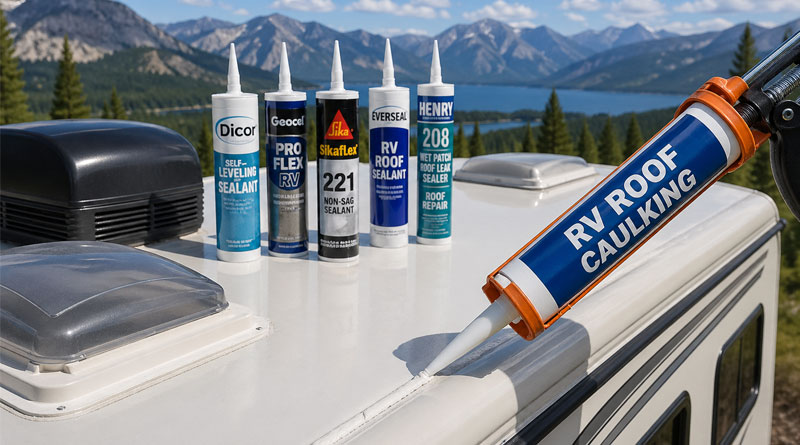
Keeping your RV roof sealed is essential to prevent leaks and costly damage. Over time, cracks and gaps can form due to weather, sun exposure, and travel. That’s where good RV roof caulking comes in. The right product can protect your roof, extend its life, and give you peace of mind on the road. In this guide, we’ll look at the best RV roof caulking options that are easy to use, durable, and designed to handle tough outdoor conditions.
1. Kohree Self-Leveling RV Roof Sealant 4 Pack

- Leveling Speed: Self-levels within 30 seconds
- Temperature Range: -40° F to 200° F
- Compatibility: EPDM, TPO, PVC, Aluminum, Wood
- Safety: Low odor and harmless formula
Kohree’s self-leveling lap sealant is a standout choice for horizontal RV roof surfaces, offering an impressive 30-second leveling effect. This rapid transition from a linear bead to a flat surface ensures that gaps and seams are fully covered and sealed against moisture. It is particularly effective for maintenance around vents and antennas where a smooth, uniform finish is required to prevent water pooling and debris accumulation.
The all-weather performance of this sealant is noteworthy, remaining elastic and breathable across extreme temperature fluctuations. Its wide compatibility with materials like EPDM, TPO, and various metals makes it a versatile addition to any camper’s repair kit. The low-odor, non-toxic formula also makes it safe for both indoor and outdoor use, providing a long-lasting seal that reduces the frequency of maintenance.
- Pros:
- Rapid 30-second self-leveling action
- Excellent extreme temperature resistance
- Safe, low-odor formula for all users
- Cons:
- Must be used immediately after opening
- Only suitable for horizontal surfaces
2. Dicor 501LSW-1 EPDM Self-Leveling Lap Sealant

- Tube Size: 10.3 Fluid Ounces
- Color: UV-stabilized White
- Application: Horizontal RV roofing surfaces
- Bonding: Aluminum, Vinyl, Fiberglass, Concrete
Dicor is a household name in the RV industry, and the 501LSW-1 lap sealant proves why with its consistent, high-quality performance. This product is specifically engineered to be sun-ray stabilized, preventing the yellowing or discoloration that often plagues inferior sealants over time. It provides a clean, professional white finish that matches most modern RV roofs while offering a powerful, watertight bond to common membranes.
The ease of use is a major highlight, as the self-leveling formula flows smoothly into seams without the need for manual smoothing. It is highly compatible with EPDM, TPO, and PVC, ensuring a secure grip on everything from aluminum to wood. For RV owners looking for a reliable, industry-standard solution to protect their roof vents and edges, this Dicor sealant remains a top-tier choice for long-term maintenance.
- Pros:
- Industry-standard UV stabilization
- Professional white finish resists staining
- Versatile bonding with many materials
- Cons:
- Packaging design may vary
- Requires careful surface preparation
3. WELLUCK Self Leveling RV Roof Sealant Lap 4PC

- Working Time: 10 minutes (cures in 24 hours)
- Hybrid Tech: Bonds in weather 0 – 104°F
- Elasticity: Withstands heavy road vibrations
- Compliance: Low odor and low VOC
WELLUCK’s RV roof sealant utilizes hybrid technology to create a secondary seal that is both rugged and highly elastic. It is specifically designed to withstand the intense vibrations and temperature swings associated with highway travel. With a generous 10-minute working time and a 24-hour full cure cycle, it allows users to precisely apply the sealant to roof edges and air vents without feeling rushed, yet provides a powerful initial grab.
This sealant is notably user-friendly due to its low-VOC, odorless formulation, making the application process much more pleasant than traditional chemical-heavy options. It adheres firmly to EPDM, TPO, and even glass or mortar without the need for separate primers on most surfaces. Whether you are performing routine maintenance or emergency repairs, WELLUCK offers a secure, waterproof adhesive that keeps your camper interior dry in any weather condition.
- Pros:
- High elasticity absorbs road vibrations
- Primer-free adhesion on most surfaces
- Odorless and eco-friendly formulation
- Cons:
- Limited to 104°F during application
- Requires 24 hours for full cure
4. BEBOBLY Self Leveling Lap Sealant 4 Pack

- Elongation: Over 300% to prevent cracking
- Leveling: Flattens within 30 seconds
- UV Stability: Resists sun degradation
- Application Temp: Stable from 41° F to 82° F
BEBOBLY provides a highly flexible solution for RV roof repair with a sealant that boasts over 300% elongation. This remarkable flexibility is key to preventing cracking caused by thermal expansion, ensuring the seal remains intact as the RV moves between different climates. Like other top-tier horizontal sealants, it levels itself into a flat, smooth surface within seconds of application, making it accessible for both novice and experienced RV owners.
The durability of this sealant is enhanced by its UV-stable properties, which protect the bond from breaking down under constant sun exposure. It is compatible with a wide array of materials, including TPO, PVC, and wood, allowing it to serve as an all-purpose repair tool for the entire roof. With its non-shrinking and odorless formula, BEBOBLY ensures a long-lasting, watertight barrier that eliminates the need for frequent resealing.
- Pros:
- Superior 300% elongation prevents cracks
- Quick 30-second self-leveling property
- UV resistant for long-term sun exposure
- Cons:
- Best applied in mild temperatures
- May be too runny for slight inclines
5. Kohree Non-Leveling RV Roof Sealant 2 Pack

- Type: Non-sag, non-leveling formula
- Surface Use: Vertical and overhead surfaces
- Protection: UV resistant and non-staining
- Materials: EPDM, TPO, Steel, Fiberglass
While most lap sealants flow to fill gaps, the Kohree Non-Leveling sealant is specifically formulated to stay exactly where you put it. This “non-sag” consistency makes it indispensable for vertical repairs, such as around side windows, doors, or vertical trim, where a self-leveling product would simply run down the side of the RV. It maintains its shape during application, allowing for precise, clean beads on overhead or angled surfaces.
Despite its thicker consistency, it remains highly elastic and breathable, resisting cracks even as temperatures shift. It offers the same broad material compatibility and UV resistance as its self-leveling counterparts, ensuring that your vertical seals won’t discolor or fail after exposure to the elements. For comprehensive RV maintenance, this non-leveling caulk is the essential partner to horizontal sealants, completing the waterproof envelope of your vehicle.
- Pros:
- Ideal for vertical and overhead repairs
- Maintains shape without dripping or sagging
- Quick-drying for efficient maintenance
- Cons:
- Does not flow to fill deep gaps
- Harder to smooth than leveling versions
6. PAULINN Self Leveling Lap Sealant White 4 Pack

- Cure Time: Sets in 30 mins (Full cure 24 hrs)
- Application Temp: 40-104℉ (Dry or Wet)
- Safe Use: Non-toxic and indoor safe
- Standard Fit: Compatible with glass glue guns
The PAULINN Self Leveling Lap Sealant is designed for the RV owner who wants to get back on the road quickly. With a rapid 30-minute set time, it can be applied in both dry and wet conditions, offering flexibility for weekend repairs regardless of the weather. It is particularly well-suited for flat surfaces like kitchen sinks and bathroom fixtures inside the RV, thanks to its non-toxic, odorless formula that is safe for families and pets.
Reliability is central to PAULINN’s design, as the cured sealant is engineered to resist shrinking, yellowing, and cracking under the stress of road travel. While it is compatible with most materials, users should note that EPDM rubber roofs require a primer for the best adhesion. Its ease of application with a standard caulking gun makes it an accessible choice for completing comprehensive roof and interior repairs in a single weekend.
- Pros:
- Extremely fast 30-minute set time
- Can be applied to damp surfaces
- Non-toxic and safe for indoor repairs
- Cons:
- Requires primer for EPDM rubber
- May flow too quickly if not careful
7. Ziollo RV Roof Lap Sealant – Self-Leveling EPDM

- Coverage: 25 linear feet per 10oz tube
- Chemicals: Solvent-free and non-hazardous
- Mechanism: Flows into seams and around vents
- Performance: Engineered for extreme UV exposure
Ziollo RV Roof Lap Sealant is built for the long haul, designed to outlast typical sealants that require annual reapplication. Each tube provides significant coverage—roughly 25 linear feet—making it an economical choice for sealing large roof seams and multiple vents. The solvent-free, non-hazardous formula is a major advantage, ensuring that you won’t be driven out of your campsite by harsh chemical fumes during the application process.
This sealant is engineered to maintain its grip and flexibility through scorching desert heat and frosty mountain mornings alike. It flows smoothly into tight seams and around complex fixtures, providing a professional finish even for those who are new to using a caulk gun. By resisting UV degradation and road-induced vibrations, Ziollo ensures that “find that drip” is a game you won’t have to play during your next midnight rainstorm.
- Pros:
- Excellent coverage per tube
- Environmentally friendly solvent-free formula
- Highly flexible across extreme temperatures
- Cons:
- Slower cure time than some competitors
- Slightly higher price per tube
How to Choose RV Roof Caulkings
Maintaining an RV roof is one of the most critical aspects of camper ownership, yet it is often overlooked until a leak appears. The best RV roof caulkings are your first line of defense against the elements, preventing water from seeping into the structure and causing expensive mold or rot. Because RVs are mobile, their roofing materials are subjected to constant vibration, thermal expansion, and intense UV rays. Choosing the right sealant requires understanding the different types of caulk available and matching them to your specific roofing material and application needs.
Self-Leveling vs. Non-Sag Sealants
The most important distinction in RV caulking is between self-leveling and non-sag (non-leveling) formulas. Each serves a specific purpose, and using the wrong one can lead to a messy application or a failed seal.
Self-Leveling Lap Sealants
Self-leveling sealants are designed with a low viscosity, meaning they flow slightly after being applied. This allows the caulk to spread out and create a flat, uniform surface that completely encapsulates the seam or gap. These are ideal for horizontal surfaces, such as roof vents, antennas, and the seams where the roof meets the front and rear caps. They are not suitable for vertical surfaces, as they will simply run down the side of the RV before they can cure.
Non-Sag (Non-Leveling) Sealants
Non-sag sealants have a much thicker consistency. They are engineered to stay exactly where they are applied without dripping or running. This makes them the go-to choice for vertical or steeply angled surfaces, such as window frames, door trim, and side moldings. While they don’t provide the same smooth, flowing finish as self-leveling options, they are essential for maintaining the waterproof integrity of the RV’s sidewalls and overhead joints.
Matching Sealant to Roofing Materials
Not all sealants are compatible with every roof type. Using a petroleum-based product on a rubber roof, for instance, can cause the material to swell and degrade. You must know what your roof is made of before purchasing.
EPDM and TPO Rubber Roofs
Most modern RVs use EPDM (Ethylene Propylene Diene Monomer) or TPO (Thermoplastic Olefin). These materials require specific lap sealants that are chemically compatible with rubber. Many top-rated sealants, such as those from Dicor or Kohree, are specifically formulated for these membranes. Always check the label for EPDM compatibility, as some may require a primer for a long-lasting bond.
Fiberglass and Metal Roofs
Fiberglass and aluminum roofs are more versatile but still benefit from specialized sealants. For these surfaces, look for products with high adhesion to non-porous materials. While many lap sealants work across all types, silicone-based options should be used with caution; once silicone is applied, it is very difficult for anything else to stick to that surface in the future, making repairs more complicated.
Key Features to Look For
When comparing different brands and formulas, prioritize these characteristics to ensure you are getting a professional-grade result.
UV Resistance and Color Stability
RV roofs are constantly exposed to the sun. Cheap sealants will often turn yellow, become brittle, and crack within a single season. High-quality RV roof caulkings are “UV stabilized,” meaning they contain additives that prevent sun damage. This keeps the sealant flexible and white for years, maintaining the aesthetic and functional integrity of your roof.
Elongation and Flexibility
An RV is essentially a small building that experiences a mild earthquake every time it goes down the highway. The sealant must be able to stretch and compress as the RV chassis flexes. Look for “elongation” percentages—some premium sealants offer over 300% elongation. This ensures the bond doesn’t snap or pull away from the surface during travel or during the natural expansion and contraction caused by seasonal temperature changes.
Application Tips for a Professional Seal
Even the best sealant will fail if the surface isn’t prepared correctly. Follow these steps for a watertight finish:
- Clean Thoroughly: Use a specialized RV roof cleaner or denatured alcohol to remove all dirt, oil, and loose old sealant. The new caulk must bond to the roof material, not to a layer of grime.
- Dry Completely: Unless the sealant specifically states it can be used on wet surfaces, ensure the area is bone dry. Moisture trapped under the caulk can prevent adhesion and lead to mold.
- Use the Right Gun: Most RV sealants fit into a standard 10oz caulking gun. Apply consistent pressure for a smooth bead.
- Respect Cure Times: Avoid walking on the roof or driving the RV until the sealant has reached its “set” time, and keep it away from heavy rain until it is fully cured.
Safety and Shelf Life
Pay attention to the production date on the tube. Most RV sealants have a shelf life of one to two years. Once a tube is opened, it begins to cure. While you can sometimes save a partial tube by sealing the tip with a nail or electrical tape, it is generally best to buy only what you need and use it up immediately. Additionally, choose low-VOC or solvent-free formulas if you plan on doing repairs while people or pets are staying inside the vehicle.
Conclusion
Investing in the best RV roof caulkings is a small price to pay compared to the cost of repairing structural water damage. By keeping both self-leveling and non-sag sealants in your maintenance kit, you are prepared for any leak that may arise. Prioritize UV stability, high elongation, and material compatibility to ensure your camper remains a dry and comfortable sanctuary for many miles to come. Regular inspections and proactive resealing are the keys to a long-lasting RV roof.