When camping in spring, summer, or fall, you need a sleeping bag that keeps you comfy without being too hot or too cold. The best 3-season bags are made for exactly this—mild nights, cool breezes, and the occasional chilly morning. In this article, we’ll break down the top picks that balance warmth, weight, and price, so you can sleep well on any adventure.
1. Kelty Cosmic 20 Down

- Temperature Rating: 20°F / -7°C (ISO comfort 31°F)
- Weight (Regular): 2 lbs. 7 oz.
- Fill: 550-fill-power down (1 lb. 0.4 oz.)
- Shape & Fit: Mummy, fits up to 72 inches, 62″ shoulder girth
The Kelty Cosmic 20 Down is a true 3-season superstar that balances affordability and performance for backpackers who prefer natural insulation. With 550-fill-power down and a thermally efficient trapezoidal baffle construction, this bag traps heat effectively without excessive weight. The recycled polyester shell and lining add eco-conscious durability, while the mummy shape and right-side zipper cater to traditionalists. Whether you’re facing a chilly mountain night or a damp coastal spring, the Cosmic delivers reliable warmth down to its 20°F rating.
On the trail, the Cosmic packs reasonably well into its included stuff sack, though it’s not the most compact down option. The fit feels natural—snug enough for efficiency but with a roomy footbox for wiggling toes. Taller hikers will appreciate the long version fitting up to 78 inches. While the 550 fill power isn’t premium, it offers great value. Expect consistent comfort in the low 30s, with the lower limit hitting 21°F for brief exposures.
- Pros: Excellent warmth-to-cost ratio, durable recycled fabrics, multiple size options, reliable 3-season performance.
- Cons: Moderate packability compared to higher-fill down bags, right zipper only may not suit all users.
2. REI Co-op Trailmade 25

- Temperature Rating: 25°F / -4°C (ISO comfort 31°F)
- Weight (Medium): 2 lbs. 15.14 oz.
- Fill: 100% recycled polyester synthetic (1 lb. 14.7 oz.)
- Shell: 30D recycled ripstop polyester with PFAS-free DWR
The REI Co-op Trailmade 25 hits the sweet spot for beginner and intermediate backpackers seeking a synthetic bag that doesn’t break the bank. Its trifecta of warmth, packability, and light weight makes it a go-to for car camping trips and short overnights. The mummy shape and left-side zipper offer a familiar layout, while the PFAS-free DWR finish adds weather resistance without the environmental guilt. With multiple wide sizes available, this bag accommodates broader shoulders and side sleepers comfortably.
Performance-wise, the Trailmade keeps you cozy down to 25°F, though comfort really starts around 31°F. The recycled synthetic fill handles damp conditions better than down, making it ideal for humid climates or unexpected drizzles. Compression is decent—the medium version stuffs to 8 liters—though it won’t win packability awards. For the price, you get a bluesign-approved shell, ethical construction, and reliable REI backing. Perfect for weekend warriors who prioritize sustainability and ease.
- Pros: Affordable and eco-friendly, wide sizes available, PFAS-free DWR, handles moisture well.
- Cons: Bulky for long treks, synthetic fill loses loft over time more than down.
See the REI Co-op Trailmade 25
3. Kelty Cosmic 20 Synthetic

- Temperature Rating: 20°F, Regular fits up to 6 ft.
- Total Weight (Regular): 2 lbs. 13 oz.
- Fill Weight: 30.5 oz. Cirroloft synthetic insulation
- Stuff Sack Size: 16″ x 9″ (non-compressed)
Kelty’s Cosmic 20 Synthetic delivers reliable warmth for campers who face cold and damp conditions where down would falter. The Cirroloft synthetic insulation maintains consistent loft without cold spots, while the natural fit footbox gives your toes room to move. Available in multiple lengths for sleepers from 5’8″ to 6’6″, this mummy bag includes a handy external stash pocket for essentials like a phone or headlamp. The tapestry blue/smoke colorway looks sharp at any campsite.
On the trail, the integrated compression stuff sack helps shrink this synthetic bag to a respectable size, though it remains bulkier than down alternatives. The 20°F rating handles true 3-season use, from alpine summers to shoulder-season chills. Kelty’s reputation for durability shines through with reinforced stitching and robust zippers. While it’s heavier than premium options, the Cosmic Synthetic offers peace of mind in wet weather. Great for scouts, raft trips, or any adventure where moisture is guaranteed.
- Pros: Excellent wet-weather performance, durable construction, external stash pocket, roomy footbox.
- Cons: Heavier and bulkier than down, synthetic insulation compresses less over time.
See the Kelty Cosmic 20 Synthetic
4. Naturehike Sleeping Bag
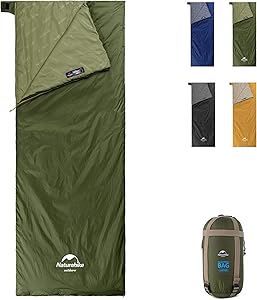
- Weight: 1.68 lbs (0.76 kg)
- Compressed Volume: 5″ x 12″ (approx. 1.5 liters)
- Dimensions: 80.7″ L x 33.5″ W
- Fill: 80g/m² imitation silk cotton
The Naturehike Ultralight Sleeping Bag is a minimalist’s dream, tipping the scales at just 1.68 pounds and compressing to a tiny 5×12-inch cylinder. This makes it one of the most packable budget bags for summer backpacking, bike touring, or travel. The spacious semi-rectangular cut—80.7 inches long and 33.5 inches wide—accommodates average-sized adults comfortably, allowing easy turning and leg movement. The imitation silk cotton fill provides adequate warmth for mild conditions without the cost of down.
While Naturehike markets this as a 3-season bag, it’s best suited for summer nights above 50°F. The lightweight fabric and simple construction prioritize portability over extreme warmth. Double-reinforced seams and durable zippers add surprising longevity for the price. It includes a compression sack with straps to maximize space savings. For ultralight travelers, festival campers, or kids’ first sleepaway bag, this Naturehike model delivers unbeatable value. Just pair it with a good sleeping pad for better thermal performance.
- Pros: Extremely lightweight and compact, affordable, roomy cut, great for warm-weather adventures.
- Cons: Not warm below 50°F, limited durability for heavy use, thin fabric.
See the Naturehike Sleeping Bag
5. QEZER Backpacking Sleeping Bag
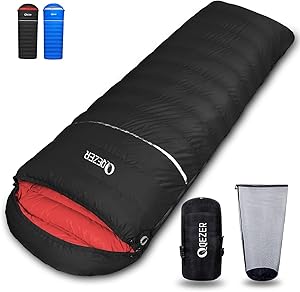
- Fill: 1.1 lbs 600 FP premium duck down
- Temperature Range: Comfort 41-54°F, limit 28°F
- Weight: 2.54 lbs, pack size 13.78″ x 6.3″
- Shape: Semi-rectangular, fits up to 86.6″ long
QEZER’s backpacking sleeping bag combines the best of both worlds: lightweight down insulation with a spacious semi-rectangular cut. Filled with 1.1 pounds of 600-fill-power duck down, this bag offers a comfort range of 41-54°F with a lower limit of 28°F. The 400T high-density nylon shell resists moisture and tears, while dense stitching prevents down leakage. A double zipper design adds a draft barrier, and chest insulation locks in core heat effectively.
At 2.54 pounds and packing down to just over 13 inches, the QEZER competes well with pricier down bags. The ability to zip two bags together into a double sleeping bag makes it ideal for couples. The foot zipper allows ventilation on warmer nights, and the generous 86.6-inch length fits taller adventurers. While the 600 fill power isn’t premium, it offers solid warmth for the weight. Perfect for spring and fall camping trips where packability matters but budget does too.
- Pros: Lightweight down insulation, couples can zip together, spacious for tall users, good value.
- Cons: Moderate fill power, not for extreme cold, shell fabric feels thin.
See the QEZER Backpacking Sleeping Bag
6. Naturehike Down Sleeping Bag

- Fill: 650 FP RDS-certified duck down
- Weight: 2 lbs (910g) with compression sack
- Temperature (Comfort): 40.4°F (4.7°C)
- Shell: 400T 20D ripstop nylon with YKK zipper
Naturehike’s down sleeping bag blends innovative design with responsible sourcing. The unique hybrid shape features a mummy-style upper body for heat retention and a rectangular lower body allowing foot movement or ventilation. Available in regular (82.7″ x 29.5″) and large (86.6″ x 33.5″), this bag fits a wide range of sleepers. The 650-fill-power RDS-certified duck down ensures no odor or impurities, and each bag includes a traceability label for sustainability peace of mind.
Weighing just 2 pounds and packing to 13.8″ x 7.1″, this is a serious contender for ultralight backpackers. The 20D ripstop nylon shell feels durable yet soft, and the YKK zipper operates smoothly. At a 40°F comfort rating, it’s designed for mild 3-season use—spring through early fall. The included compression sack further reduces pack size, making it ideal for multi-day treks. If you want ethical down, innovative cut, and low weight without breaking the bank, this Naturehike model delivers.
- Pros: Ethical RDS down, innovative hybrid shape, ultralight and compact, YKK zipper quality.
- Cons: Not for freezing temps, regular size narrow for broad shoulders.
See the Naturehike Down Sleeping Bag
7. NewDoar Ultralight Sleeping Bag

- Weight: 1.5 lbs, pack size 11.8″ x 6.5″
- Temperature Range: 50-70°F (10-21°C)
- Shell: 380T ripstop nylon with waterproof finish
- Sizes: Medium fits 5’7″ and under, Large fits 6’3″ and under
The NewDoar Ultralight Sleeping Bag is designed for warm-weather minimalists who count every ounce. At just 1.5 pounds and compressing to a tiny 11.8×6.5 inches, this bag virtually disappears in your pack. The 380T ripstop nylon shell resists tears and light moisture, while the breathable cotton lining prevents overheating on summer nights. A clever 2-way zipper allows two bags to zip together into a double, or you can fully unzip it to use as a blanket.
With a temperature range of 50-70°F, the NewDoar shines for summer camping, festivals, or indoor sleepovers. The bottom zipper opens separately for foot ventilation, and the anti-clip design prevents snags. A heavy-duty compression sack shrinks the bag to one-third its size, though you’ll need to store it loosely at home to maintain loft. Machine washable and easy to care for, this is a fantastic budget-friendly option for hot sleepers or kids’ summer camp.
- Pros: Extremely lightweight and compact, spliceable into double bag, machine washable, budget price.
- Cons: Warm-weather only, thin fabric, not for cold or damp conditions.
See the NewDoar Ultralight Sleeping Bag
8. SYWSKW Sleeping Bag

- Fill: 680FP duck down, 1.1 lb or 800g options
- Comfort Rating: 46°F (1.1 lb) / 23°F (800g)
- Packed Size: 7.08″ x 11.80″ (ultra compact)
- Features: Detachable pillow, YKK zipper, internal pocket
The SYWSKW sleeping bag brings premium features at a mid-range price, including an integrated 80g detachable pillow and advanced baffle box construction to prevent down shifting. With 680FP duck down and two fill options—1.1 lb for 3-season comfort at 46°F or 800g for winter-rated warmth to 23°F—this bag adapts to your adventure. The widened 33.5-inch shoulder design (78.8″ length) offers surprising roominess for a mummy-style bag. Reflective drawcords add safety during dawn or dusk expeditions.
Packing down to an astonishingly small 7×11.8 inches, the SYWSKW competes with bags costing twice as much. The YKK zipper runs smoothly, and the internal security pocket keeps valuables close. Two different colors can zip together into a double bag for couples. While the 680 fill power isn’t top-tier, the thoughtful construction maximizes warmth. Allow 30 minutes to fluff after unpacking. This is an excellent choice for backpackers who want winter capability without massive pack size.
- Pros: Incredible packability, included pillow, multiple warmth options, baffle box construction.
- Cons: Requires fluffing time, moderate fill power, narrow for broad shoulders.
9. Exped Terra 30

- Temperature Rating: 30°F / 0°C (ISO comfort 39°F)
- Weight (Medium): 1 lb. 9.5 oz.
- Fill: 650+ FP grey duck down (10.5 oz. in Medium)
- Shell & Lining: 100% recycled 20D ripstop polyester, DWR-free
The Exped Terra 30 is a masterclass in lightweight, eco-conscious design for warm 3-season backpacking. Weighing as little as 1 lb 8.5 oz in size small, this mummy bag uses 650+ fill-power RDS-certified grey duck down to achieve an impressive warmth-to-weight ratio. The shell and lining are both made from 100% recycled 20-denier ripstop polyester, and the durable water repellent treatment is intentionally DWR-free to reduce chemical use. OEKO-TEX 100 certification ensures no harmful substances.
On the trail, the Terra 30 packs down to just 4 liters in its stuff sack—smaller than a loaf of bread. The mummy cut is efficient but not restrictive, with wide sizes available for broader sleepers. At its 30°F rating, this bag is ideal for summer alpine trips or mild shoulder seasons; the 39°F comfort rating means most users will want a liner or layers below freezing. For ultralight enthusiasts who prioritize sustainability without sacrificing performance, the Exped Terra 30 is a standout choice.
- Pros: Extremely lightweight and packable, eco-friendly recycled materials, RDS down, wide sizes available.
- Cons: Expensive, not for freezing temps without layering, limited color options.
10. Teton Trailhead 20

- Temperature Rating: 20°F
- Fill: Innovative microfiber insulation
- Shell: Microfiber with soft liner
- Included: Stuff sack for stuffing (not rolling)
Teton Sports designed the Trailhead 20 for campers who value comfort and ease over ultralight extremes. The innovative microfiber insulation provides impressive loft and compressibility for a synthetic bag, while the soft liner ensures a cozy night’s sleep. The roomy footbox and zipper draft tube prevent heat loss, and hang loops allow proper long-term storage. Teton’s “stuff, don’t roll” approach with the included sack makes packing up quick and frustration-free.
At a 20°F rating, this bag handles true 3-season conditions, though it’s heavier than premium options. The microfiber shell feels soft yet durable, and the bag fluffs up nicely after unpacking. An insulated sleeping pad is recommended to achieve the full warmth rating. Teton’s customer support is known for being responsive, and the brand promises to stand behind their product. For scout groups, car campers, or budget-conscious families, the Trailhead 20 offers reliable warmth without complicated care instructions.
- Pros: Comfortable soft liner, easy stuff-sack design, roomy footbox, budget-friendly.
- Cons: Heavy for backpacking, synthetic loft degrades over time, bulky when packed.
How to Choose a 3-Season Sleeping Bag?
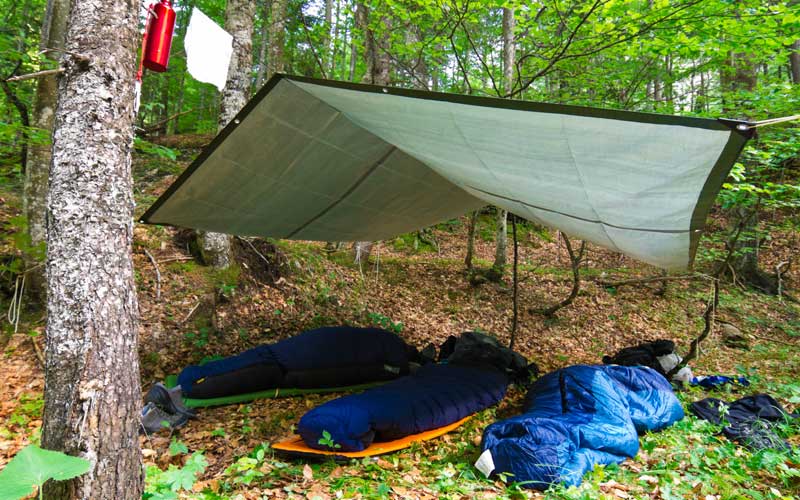
You need a proper sleeping bag to enjoy a blissful night’s slumber in the woods. That starts with selecting the right sleeping bag.
When deciding on a sleeping bag for backpacking, consider these key factors:
Temperature Rating
The temperature rating for your sleeping bag is a major consideration for staying warm and having a restful night’s sleep. Keep in mind that you are the source of heat in your sleeping bag. Along with temperature rating, you need to make sure your bag fits well.
Most sleeping bags will have a temperature rating. Some will just have a flat 20°F or 30°F rating. Some sleeping bags will have a European norm (EN) rating and that gives you an upper limit of comfort and a lower limit rating or a risk rating. You should stay away from that lower limit because you’re going to be cold at that point.
The next thing to consider is metabolism. Some people sleep colder and some warmer than others. If you pick a 20°F bag and you’re a cold sleeper, you might want to go down 10 or 15 degrees just to get that comfort rating up a little bit more. Just, as well, if you’re a warm sleeper, you can get away with the lower limit that a sleeping bag is rated.
Type of Insulation
There’re many different types of fill but I have it narrowed down to three main types:
- Synthetic
- Down
- Treated Down
Synthetic
Synthetic fill is made to mimic the structure of down. It is a man-made material that uses thicker strands that provide a framework for very thin strands to trap in your heat. There’re many different types of synthetic fill on the market and with rapidly growing technologies, there are new names out there all the time.
One of the biggest benefits to synthetics is that they have a water-resistant property that continues to provide insulation even when damp or wet. When it does get wet, it dries quickly because the moisture just gets trapped in between the fibers rather than getting absorbed into the fibers itself.
Another pro is synthetics are man-made, so they should be completely hypoallergenic. They are relatively easy to care for as they are usually machine washable in a front-loading washer.
There’re some downsides to synthetic bags. They tend to be bulkier, heavier, and not as compact as their down counterparts. They’re heavier because there’s not as much as of warmth to weight ratio that you do get with a down bag.
Down
Down keeps you warm by trapping in an abundance of body heat in its tiny clusters. There’s no other material that is as thermally efficient for its weight than down. Compared to synthetic, down is more thermal efficient ounce per ounce.
Down comes in a variety of fill power, anywhere from 500 to 900. For example, if you have a 20°F bag that is filled with 550 fill down and if you have a 20°F bag that has 900 fill down in it, both of them are going to be equally as warm but the 900 fill bag is going to be lighter.
Down loses its insulating properties when it gets wet or damp and it is slow to dry. It requires maintenance when it does get wet. Down may contain all contain allergens. It’s not completely hypoallergenic. While the down may not cause an allergic reaction by itself, lower quality down does. If you’re prone to allergies, it might be wise to invest in a better quality down bag.
Treated Down
Treated down is essentially a microscopic hydrophobic finish that is applied to each plume of down. This is a permanent treatment so it is not going to wear off and it is not going to wash off. It makes the down plumes function more like a synthetic material because it sheds water. This allows you to take down into damp or wet conditions.
If you’re on a long trip where the bag might absorb water day after day, the bag is going to stay drier longer and it is going to dry out faster than traditional down and it is ultimately going to keep you warmer. Treated down is a great option for anyone that wants something very packable, lightweight but also wants to shed that water.
Shapes and Sizes
The shape and size of your sleeping bag is a big consideration for getting that comfortable and restful night’s sleep. There are three main types:
- Mummy
- Semi-rectangular
- Rectangular
Mummy
A lot of backpackers and lightweight enthusiasts are going to be familiar with this type of bag. They usually have a hood and it tapers in at the top. It broads around your shoulder and that tapers into the feet. The idea behind the mummy bag is that it is taking out all the extra fabric, all of the extra fill that would be in a rectangular bag and it hugging your body so that it is more thermally efficient.
Semi-rectangular
Somewhere in between the rectangular style and the mummy-style is a semi-rectangular bag. Usually, it does taper in a little bit at the feet for more thermal efficiency and it does not have a hoot so the top of the bag is completely FBlat. You can use this style as more of a blanket style if you’re traveling, staying in hostels, that sort of thing.
Rectangular
It’s a roll-up, tie-down type of bag and most of us are familiar with this style. This is great for family camping, car camping, someone who wants a lot of room to spread out and be just comfortable in a sleeping bag.
The downside to these is they tend to be heavier because there’s lots of material. They tend to be not as compressible and not as packable.
Sleeping Bag-Pad Combination
With a traditional sleeping bag, you’re sleeping right on top of your sleeping pad and your weight compresses the insulation in the bottom of your bag and so with a sleeping bag-pad combination, you’re able to either slide a sleeping pad right into a sleeve or connect it some other way. This provides a very secure foundation so you can roll or twist during the night without ever rolling off of your pad.
Quick Care Tips
These are some of the quick care tips for your bag after you have chosen the right one. Caring for your sleeping bag is going to make it last a lot longer, so be sure to follow the specific instructions attached to your bag exactly.
Washing them and drying than in a way that isn’t instructed may compromise the life and the integrity of your bag. Each bag will have specific washing instructions. If you want to cut that off, save it or just keep it on your pack. It doesn’t have a lot of extra weight.
As much as possible, store your bag in an uncompressed state. A lot of bags come with an included storage sack. You just stuff your bag in there and store it in a dry area.