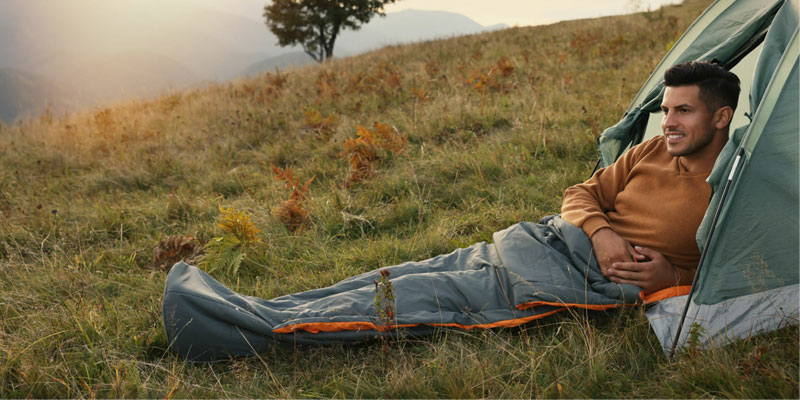
Choosing the right sleeping bag can make a big difference in how well you sleep during your outdoor adventures. In this article, we’ll explore some of the best sleeping bags designed specifically sized for adults. From cozy insulation to lightweight and compact designs, we’ll cover a range of options to help you find the perfect bag that suits your needs and ensures a restful night under the open sky. Say goodbye to chilly nights and hello to a comfortable and rejuvenating sleep experience with our top picks.
1. REI Co-op Trailmade 25

- Insulation: 100% recycled synthetic polyester
- Temperature Rating: 25°F (-4°C)
- Weight: 2 lbs. 15.14 oz. (Medium)
- Shape: Mummy
The REI Co-op Trailmade 25 is a versatile workhorse designed for those who split their time between backcountry trails and casual car camping. Its synthetic insulation is crafted from 100% recycled polyester, making it a sustainable choice that retains heat even if it gets damp. The mummy shape is tailored to minimize dead air space, while the bluesign-approved ripstop shell features a PFAS-free DWR finish for added moisture resistance.
In the field, this bag stands out for its balance of affordability and performance. While synthetic bags are traditionally bulkier than down, the Trailmade remains surprisingly packable for its temperature rating. It offers a tested comfort level of 31°F, making it a reliable three-season companion. With various size options including wide versions, it caters to a broad range of body types without sacrificing the thermal efficiency required for cold nights.
Pros: Excellent value for price, eco-friendly recycled materials, and performs well in damp conditions.
Cons: Heavier and bulkier than down alternatives.
See the REI Co-op Trailmade 25
2. Kelty Cosmic 20

- Insulation: 550-fill-power down
- Temperature Rating: 20°F (-7°C)
- Weight: 2 lbs. 7 oz. (Regular)
- Shell: 50-denier recycled polyester taffeta
The Kelty Cosmic 20 is widely regarded as a staple for entry-level backpackers looking for the benefits of down without the premium price tag. Utilizing 550-fill-power down and a unique trapezoidal baffle construction, this bag is engineered to maximize thermal efficiency and prevent cold spots. The inclusion of a 50-denier shell provides a rugged exterior that can handle the rigors of the trail better than many ultralight fabrics.
Comfort is a primary focus for the Cosmic 20, featuring a spacious mummy cut that allows for some movement while still trapping heat effectively. With a tested lower limit of 21°F, it serves as a true three-season superstar. The zip-side draft tube and easy-to-use hardware make it a user-friendly option for long nights in the wilderness. It strikes a fine balance between weight, warmth, and long-term durability for consistent hikers.
Pros: Affordable down insulation, durable shell fabric, and great thermal efficiency.
Cons: 550-fill down is less compressible than higher-grade down.
3. SYWSKW Down Sleeping Bag

- Insulation: 680FP duck down
- Weight: 2.38 lbs to 2.99 lbs
- Shoulder Width: 33.5 inches (Widened design)
- Features: Integrated 80g detachable pillow
The SYWSKW Down Sleeping Bag is a feature-rich option designed for those who prioritize extra room and integrated sleep systems. It features premium 680-fill-power duck down and an advanced baffle box construction to ensure the insulation stays put. What sets this bag apart is its widened shoulder design, providing over 33 inches of space, which is significantly roomier than standard mummy bags, catering to side sleepers or larger frames.
This bag functions as a complete sleep system by including an integrated, detachable pillow and an internal security pocket for valuables. The versatility is further enhanced by the ability to zip two bags together, making it an excellent choice for couples. Whether you choose the 1.1 lb or 2.65 lb fill version, the YKK zippers and reflective drawcords ensure that the hardware is as reliable as the insulation during late-night adjustments.
Pros: Extra-wide shoulder room, includes integrated pillow, and uses high-quality YKK zippers.
Cons: Requires time to loft after being compressed.
See the SYWSKW Down Sleeping Bag
4. REI Co-op HunkerDown 20

- Insulation: 600-fill-power water-resistant down
- Shape: Rectangular
- Weight: 3 lbs. 6.3 oz. (Medium)
- Sustainability: RDS certified and bluesign approved
The REI Co-op HunkerDown 20 brings a touch of home luxury to the campsite by eschewing the restrictive mummy shape for a classic rectangular cut. This design is perfect for campers who find traditional bags too confining, offering ample room to sprawl out. It is packed with 600-fill-power water-resistant down, ensuring that condensation or damp air doesn’t compromise your warmth during three-season adventures.
Beyond the spacious interior, the HunkerDown features an oversized hood and specialized draft collars to seal in heat. The use of recycled materials and RDS-certified down highlights REI’s commitment to sustainability. While it is heavier than specialized backpacking bags, its comfort-first approach makes it the ultimate choice for car camping or short treks where sleep quality is the highest priority for the user.
Pros: Extremely spacious rectangular shape, water-resistant down, and comfortable hood.
Cons: Too heavy and bulky for long-distance backpacking.
See the REI Co-op HunkerDown 20
5. Kelty Cosmic 20 Synthetic

- Insulation: Cirroloft synthetic
- Weight: 2 lbs. 13 oz. (Regular)
- Shell: 380T nylon taffeta
- Special Feature: Exterior stash pocket
The Kelty Cosmic 20 Synthetic is the resilient sibling of the down Cosmic, designed specifically for damp environments where synthetic fill reigns supreme. It utilizes Cirroloft insulation, which is engineered to maintain its loft and provide even coverage without the cold spots often found in lower-quality bags. This makes it a reliable choice for backpackers who frequently face rainy or humid conditions on the trail.
Despite being synthetic, Kelty has prioritized packability with an integrated compression stuff sack, allowing it to meet minimalist standards. The bag features a natural fit footbox, providing extra wiggle room for toes, and a convenient exterior stash pocket for small essentials like a headlamp or phone. It is a durable, “put it through the ringer” type of gear that offers consistent performance across a variety of outdoor settings.
Pros: Excellent performance in wet weather, durable nylon shell, and convenient stash pocket.
Cons: Heavier than the down version of the same bag.
See the Kelty Cosmic 20 Synthetic
6. Naturehike Ultralight Sleeping Bag

- Insulation: 650-fill-power RDS duck down
- Weight: 2 lbs (910g)
- Shape: Hybrid (Mummy top, Rectangular bottom)
- Material: 400T 20D ripstop nylon
Naturehike offers a clever solution for those torn between shapes with this hybrid ultralight bag. The upper body follows a mummy design to snugly fit the head and trap heat, while the lower body remains rectangular to allow for unrestricted leg movement. Filled with 650-fill-power RDS-certified duck down, it provides a comfort rating of approximately 40°F, making it an ideal choice for summer and shoulder-season trekking.
Portability is where this bag truly shines, weighing in at just 2 lbs. The 400T 20D ripstop nylon shell is both comfortable and water-resistant, protecting the down from external moisture. It includes high-quality YKK zippers and comes with both a storage bag and a compression sack. This is a top-tier choice for weight-conscious hikers who want the thermal efficiency of a hood without feeling trapped at the feet.
Pros: Unique hybrid shape for comfort, very lightweight, and high-quality YKK hardware.
Cons: Lower warmth rating compared to heavier 20-degree bags.
See the Naturehike Ultralight Sleeping Bag
7. QEZER Down Sleeping Bag

- Insulation: 600 FP duck down (1.7 lbs fill)
- Temperature Limit: 18°F
- Weight: 3.24 lbs
- Shell: 400T high-density nylon
The QEZER Down Sleeping Bag is built for those who need serious warmth in a semi-rectangular format. Packed with 1.7 lbs of 600-fill-power duck down, it boasts a lower limit of 18°F, making it suitable for colder late-season trips. The bag features a double zipper design to prevent cold air intrusion and includes additional chest insulation to ensure the core remains warm throughout the night.
Unlike restrictive mummy bags, the semi-rectangular shape offers a more spacious feel while still providing a hood to protect the head. The foot zipper is a thoughtful addition, allowing for ventilation if the night turns warmer than expected. Constructed with 400T high-density nylon, the bag is tear-resistant and designed to prevent down leakage, offering a durable and versatile sleep solution that can also be paired with a second bag.
Pros: High fill weight for warmth, foot ventilation zipper, and spacious semi-rectangular cut.
Cons: Slightly heavier than other down bags in its class.
See the QEZER Down Sleeping Bag
8. HLITMOUT Sleeping Bag

- Insulation: 680FP white duck down
- Weight: 2.16 lbs to 2.98 lbs
- Shell: 400T 40D ripstop nylon
- Compressed Size: 11.8 x 6.29 inches
The HLITMOUT Sleeping Bag targets the ultralight backpacking market with a focus on premium materials and compact design. Using 680-fill-power traceable white duck down, this bag offers an impressive warmth-to-weight ratio. The compartmentalized baffle design is specifically engineered to prevent the down from shifting, which eliminates cold spots and ensures a consistent temperature throughout the night even during restless sleep.
Detail-oriented campers will appreciate the two-way zippers, internal Velcro pocket for valuables, and the integrated, removable pillow. The outer shell is a rugged 40D nylon, while the lining is a soft-touch Pongee fabric that provides a silky feel against the skin. With its ability to compress down to the size of a small loaf of bread, it is a fantastic option for those looking to maximize space in their pack.
Pros: Great warmth-to-weight ratio, silky inner lining, and includes a removable pillow.
Cons: The lightweight fabric requires careful handling around sharp gear.
9. BUERTS Backpacking Sleeping Bag
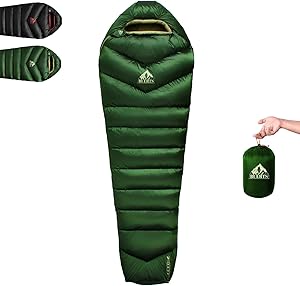
- Insulation: 620FP RDS-certified down
- Weight: 1.72 lbs
- Dimensions: 86.6 x 31.5 inches
- Material: 400T 20D water-repellent nylon
The BUERTS Backpacking Sleeping Bag is a minimalist’s dream, weighing in at a mere 1.72 lbs. It utilizes 14.1 oz of RDS-certified 620-fill-power down to provide a comfort rating of 60°F, making it a specialized tool for summer hiking or hut-to-hut adventures. Its primary strength lies in its incredible portability, compressing down to 11×6.3 inches to fit into even the smallest daypacks.
Despite its light weight, the bag does not skimp on dimensions, offering a generous 86.6-inch length that accommodates taller hikers comfortably. The 400T 20D nylon shell is windproof and water-repellent, offering protection against the elements. It also features an inner pocket and the ability to zip together with another bag, making it a versatile choice for family camping trips or warm-weather expeditions where every ounce matters.
Pros: Extremely lightweight and portable, ethically sourced down, and generous length.
Cons: Strictly a warm-weather bag; not suitable for freezing temperatures.
See the BUERTS Backpacking Sleeping Bag
10. ATEPA Down Sleeping Bag
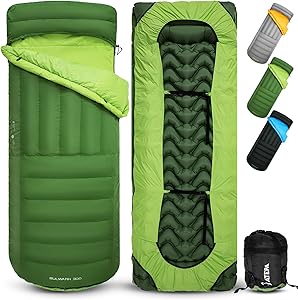
- Insulation: 300g COLDMASTER Down
- Weight: 2.5 lbs
- Design: 3-in-1 wearable sleeping system
- Shell: 20D 400T recycled nylon
The ATEPA Down Sleeping Bag is a highly innovative 3-in-1 sleep system that goes far beyond the traditional bag. It can be used as a standard rectangular sleeping bag, unzipped into a large down camping blanket, or even worn over the shoulders like a poncho. This versatility makes it an excellent choice for campers who want one piece of gear to handle sleeping, lounging around the fire, and staying warm at the summit.
Technologically advanced, it features 3D baffle technology to lock heat in independent insulation lofts. The bag can also be tied directly to an air pad using reinforced corners and straps, ensuring you don’t slide off your mat during the night. Made from eco-friendly recycled nylon, it offers a comfort rating of 50°F, serving as a reliable and multi-functional companion for hikers who value adaptability and sustainable design.
Pros: Highly versatile wearable design, secures to sleeping pads, and eco-friendly materials.
Cons: Complex strap system may be overkill for simple camping.
See the ATEPA Down Sleeping Bag
How to Choose the Right Sleeping Bag?
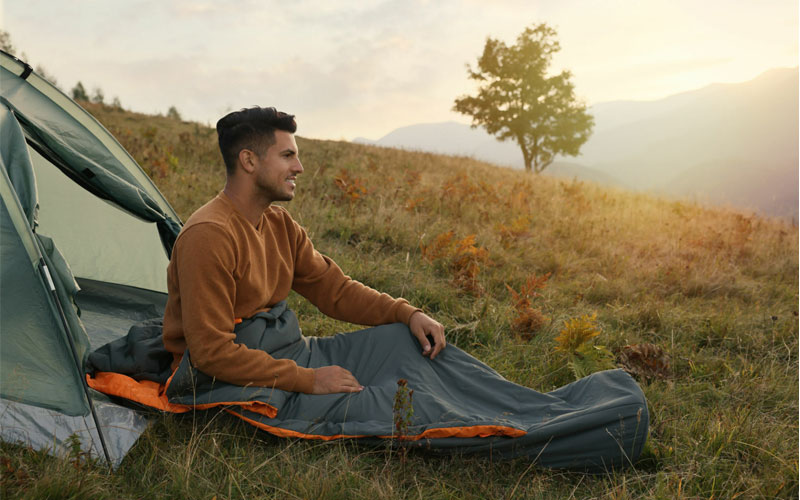
A good night’s sleep is crucial for an enjoyable and successful outdoor experience, choosing a sleeping bag is a decision not to be taken lightly. In this comprehensive guide, we will delve into the key factors to consider when choosing a sleeping bag to ensure it meets your specific needs and preferences.
Temperature Ratings
The first and foremost consideration when selecting a sleeping bag is its temperature rating. Different sleeping bags are designed to provide optimal comfort within specific temperature ranges. The industry standard uses three temperature ratings: comfort, transition, and extreme.
- Comfort Rating: This is the lowest temperature at which an average person can sleep comfortably in the bag. If you’re expecting chilly nights, choose a bag with a comfort rating that matches or exceeds the expected low temperatures.
- Transition Rating: Also known as the lower limit, this is the temperature at which the sleeping bag is suitable for a more experienced or warm-sleeping individual. It’s crucial to consider this rating for a more accurate assessment of the bag’s performance.
- Extreme Rating: This is the survival temperature for the average adult woman. While it’s not recommended to rely on this rating for comfort, it can serve as an emergency guideline.
Understanding these ratings helps ensure that you select a sleeping bag appropriate for the climate and conditions you’ll be facing.
Insulation Type
Sleeping bags come with two primary insulation types: down and synthetic.
- Down Insulation: Known for its exceptional warmth-to-weight ratio, down insulation provides excellent thermal efficiency. However, it tends to lose its insulating properties when wet, making it less suitable for wet or humid conditions. Additionally, down sleeping bags are typically more expensive than their synthetic counterparts.
- Synthetic Insulation: Synthetic materials, such as polyester, are more water-resistant than down, retaining insulation even when wet. They are also generally more affordable and dry faster. However, synthetic bags are often heavier and bulkier compared to down bags with similar temperature ratings.
Consider the environmental conditions you’ll be facing and your budget when deciding between down and synthetic insulation.
Bag Shape and Size
Sleeping bags come in various shapes, each catering to different preferences and needs. The three primary shapes are mummy, rectangular, and semi-rectangular.
- Mummy: Tapered at the feet and hood, mummy-shaped bags are designed to minimize air circulation, providing optimal warmth. They are ideal for cold weather and backpacking due to their lightweight and compact design.
- Rectangular: Offering more room for movement, rectangular bags are suitable for those who prefer a less constrictive feel. They are great for car camping and warmer conditions but may not provide as much warmth as mummy-shaped bags.
- Semi-Rectangular: Combining features of both mummy and rectangular bags, semi-rectangular bags strike a balance between warmth and roominess. They are versatile and suitable for a variety of conditions.
Additionally, consider the size of the sleeping bag. It should provide enough room for you to move comfortably while minimizing unused space that can lead to heat loss. Many sleeping bags come in regular and long sizes, accommodating different body lengths.
Weight and Packability
For backpackers and outdoor enthusiasts on the move, the weight and packability of a sleeping bag are critical factors. Ultralight backpackers often prioritize lightweight gear to reduce the overall load. Down insulation bags are generally lighter and more compressible than synthetic ones, making them a preferred choice for those focused on minimizing pack weight.
Check the compressed size of the sleeping bag to ensure it fits well into your backpack, leaving room for other essential gear. Additionally, consider the compression method, whether it uses a stuff sack or a compression sack, as this can impact the ease of packing.
Sleeping Bag Features
Pay attention to additional features that can enhance your sleeping bag experience:
- Hood: A hood helps trap heat around your head, providing extra warmth in colder conditions. Ensure that the hood is adjustable to customize ventilation.
- Draft Collar: Placed around the neck, a draft collar prevents warm air from escaping and cold air from entering the sleeping bag.
- Zippers: Look for quality zippers with reliable functionality. Some sleeping bags feature two-way zippers, allowing for ventilation at the foot or side.
- Draft Tubes: These tubes run along the zipper to prevent cold air from seeping through, enhancing insulation.
- Pockets: Internal or external pockets can be convenient for storing small items like a flashlight, phone, or eyeglasses.
- Sleeping Pad Compatibility: Some sleeping bags are designed to integrate with sleeping pads, preventing you from rolling off during the night and enhancing insulation.
Conclusion
Choosing the right sleeping bag is a crucial step in ensuring a comfortable and enjoyable outdoor adventure. Consider your destination, expected weather conditions, personal preferences, and budget when making your decision. By paying attention to temperature ratings, insulation type, bag shape and size, weight and packability, and additional features, you can select a sleeping bag that meets your specific needs and contributes to a restful night’s sleep under the stars.