Looking for a good sleeping bag without breaking the bank? You don’t need to spend a fortune to stay warm and comfortable on your next camping trip. In this article, we’ve rounded up the best budget sleeping bags that offer solid quality, decent insulation, and reliable features—all at a price that leaves room for more trail snacks. Get ready to sleep well and save money.
1. Kelty Cosmic 20 Down

- Insulation: 550-fill-power down
- Temperature Rating: 20°F (-7°C)
- Weight: 2 lbs. 7 oz. (Regular)
- Shell: 50-denier recycled polyester
The Kelty Cosmic 20 is a quintessential three-season sleeping bag that balances cost and performance for backpackers. Its trapezoidal baffle construction is specifically designed to keep the down in place and prevent cold spots throughout the night. It feels roomy for a mummy bag while still offering the efficiency needed for colder mountain evenings.
This bag stands out due to its eco-friendly materials, featuring recycled fabrics and PFC-free water repellency. While 550-fill down isn’t the lightest available, it provides a reliable loft that keeps you warm down to its rated limits. It is a solid choice for hikers who want the benefits of down without the premium price tag.
Pros: Excellent value for down insulation, durable shell fabric, and environmentally friendly materials.
Cons: Slightly heavier and bulkier than high-end down bags.
2. REI Co-op Trailmade 25

- Insulation: 100% recycled synthetic polyester
- Temperature Rating: 25°F (-4°C)
- Weight: 2 lbs. 15.14 oz. (Medium)
- Shell: 30-denier recycled ripstop polyester
The REI Trailmade 25 is a versatile workhorse designed for both car camping and backpacking. Using synthetic insulation, it remains effective even if it gets damp, making it a safer bet for humid environments. The mummy shape is optimized to save weight while still providing enough room for a comfortable night of sleep.
REI focused on sustainability with this model, utilizing bluesign-approved materials and recycled fill. The inclusion of a DWR finish without PFAS ensures you stay dry and the bag stays clean. It is particularly well-suited for beginners who need a reliable, all-around bag that can handle various outdoor scenarios without breaking the bank.
Pros: Affordable, performs well in damp conditions, and offers multiple size/width options.
Cons: Heavier and less compressible than down alternatives.
See the REI Co-op Trailmade 25
3. Kelty Cosmic 20 Synthetic

- Insulation: Cirroloft synthetic
- Temperature Rating: 20°F
- Weight: 2 lbs. 13 oz. (Regular)
- Shell: 380T nylon taffeta
The synthetic version of the famous Cosmic line offers the same classic mummy shape with the added resilience of Cirroloft insulation. This proprietary fill is designed to maintain loft and provide even coverage, eliminating the cold spots often found in cheaper synthetic bags. It is an excellent choice for rugged trail use.
This bag includes thoughtful features like a natural fit footbox and an integrated compression sack to help manage its volume. The exterior stash pocket is a convenient addition for keeping small essentials like a phone or headlamp within reach. It is built to endure the rigors of frequent camping trips while keeping you warm.
Pros: Durable construction, spacious footbox, and stays warm when wet.
Cons: Bulkier than the down version and takes up significant pack space.
See the Kelty Cosmic 20 Synthetic
4. Naturehike Sleeping Bag
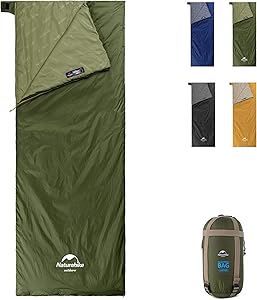
- Weight: 1.68 lbs (0.76 kg)
- Dimensions: 80.7″ x 33.5″
- Insulation: Imitation silk cotton
- Packed Size: 5 x 12 inches
This Naturehike model is designed for the minimalist traveler who prioritizes weight and space above all else. At well under two pounds, it is incredibly easy to carry for long-distance trekking or summer travel. Its rectangular shape provides more wiggle room than traditional mummy bags, making it feel less restrictive.
The bag uses imitation silk cotton which provides a soft, plush feel against the skin. While it is not intended for freezing temperatures, it serves as an ideal solution for summer adventures, indoor use, or as a liner. The double-reinforced seams and tested zippers provide surprising durability for such a lightweight piece of gear.
Pros: Extremely lightweight, compact pack size, and budget-friendly.
Cons: Limited warmth for cold weather and best used only in summer.
See the Naturehike Sleeping Bag
5. QEZER Backpacking Sleeping Bag
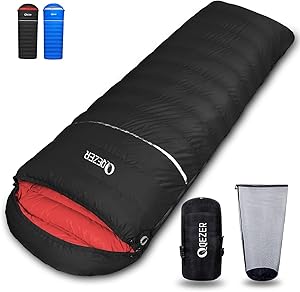
- Insulation: 600 FP duck down
- Weight: 2.54 lbs
- Shell Material: 400T high-density nylon
- Comfort Range: 41°F – 54°F
- Shape: Semi-rectangular
The QEZER sleeping bag offers a unique semi-rectangular hybrid design that appeals to those who find mummy bags too narrow. It utilizes 600-fill-power duck down to provide a comfortable warmth-to-weight ratio. The inclusion of a foot zipper allows for easy ventilation if you start to overheat during the night.
Constructed with high-density 400T nylon, the shell is both moisture-proof and tear-resistant, which is essential for longevity in the backcountry. This bag can also be zipped together with a second unit to form a double bag for couples. It serves as a great bridge between ultralight gear and comfort-focused camping equipment.
Pros: Roomy semi-rectangular shape, quality down fill, and versatile ventilation options.
Cons: Temperature rating is strictly for three-season use; not for winter.
See the QEZER Backpacking Sleeping Bag
6. Naturehike Down Sleeping Bag

- Insulation: 650 FP RDS duck down
- Weight: 2 lbs (910g)
- Shell: 400T 20D ripstop nylon
- Comfort Temp: 40.4°F (4.7°C)
Naturehike’s RDS-certified down bag combines a mummy-style upper for heat retention with a rectangular lower section for foot freedom. This “warmer design” allows for a snug fit around the head and shoulders while letting you move your legs naturally. It is constructed with premium YKK zippers for smooth, snag-free operation.
The 650-fill-power down is processed to be odorless and clean, ensuring a healthy sleep environment. Because it compresses down to a very small size, it is a fantastic option for backpackers looking to save space without sacrificing the warmth that only natural down can provide. The water-resistant ripstop nylon adds a layer of protection against tent condensation.
Pros: RDS certified down, very lightweight, and high-quality YKK zippers.
Cons: Narrower fit at the top might feel tight for larger users.
See the Naturehike Down Sleeping Bag
7. NewDoar Ultralight Sleeping Bag

- Weight: 1.5 lbs
- Material: 380T ripstop nylon
- Temperature Rating: 50°F – 70°F
- Lining: Breathable cotton
The NewDoar Ultralight is a specialized bag for summer camping and warm weather adventures. Weighing a mere 1.5 pounds, it is one of the lightest options available for hikers on a budget. It features a soft cotton lining that feels much more like traditional bedding than the slippery nylon found in many performance bags.
Functionality is a key focus here, with a two-way zipper system that allows the bag to be fully opened into a blanket or zipped to another bag for a double setup. The bottom zipper can also be opened independently to ventilate feet on warmer nights. It is an ideal companion for hostels, summer camps, or bike touring.
Pros: Incredibly light, comfortable cotton lining, and machine washable.
Cons: Not suitable for temperatures below 50°F; very thin insulation.
See the NewDoar Ultralight Sleeping Bag
8. SYWSKW Sleeping Bag

- Insulation: 680 FP duck down
- Shoulder Width: 33.5 inches
- Zippers: YKK
- Added Feature: Detachable 80g pillow
The SYWSKW sleeping bag is a high-performance option for those braving colder conditions. Using 680-fill-power duck down and a baffle box construction, it prevents insulation from shifting and creates a consistent thermal barrier. The extra-wide 33.5-inch shoulder design is a rare find in technical bags, offering superior comfort for side sleepers.
A unique selling point is the integrated, detachable pillow which provides a more complete sleep system. The bag also features reflective drawcords for safety and an internal security pocket for valuables. Whether you choose the 3-season or 4-season version, this bag is engineered to provide dependable warmth for serious outdoor enthusiasts.
Pros: High fill power, includes a pillow, and features a very wide cut.
Cons: Requires time to regain loft after being compressed.
9. Exped Terra 30

- Insulation: 650+ fill RDS duck down
- Weight: 1 lb. 9.5 oz. (Medium)
- Compressed Volume: 4 liters
- Shell/Lining: 20D recycled ripstop polyester
The Exped Terra 30 is a premium choice for backpackers who want a high-end feel and excellent packability. With a weight of just over 1.5 pounds, it disappears in your pack while offering enough warmth for cool three-season nights. The 20-denier ripstop shell is OEKO-TEX certified, ensuring it meets high environmental and safety standards.
The design focuses on technical efficiency, with a mummy shape that minimizes dead air space to keep you warmer. The materials are impressively soft to the touch, and the down is RDS-certified for ethical sourcing. This bag is perfect for the hiker who wants a professional-grade sleep system that prioritizes sustainability and lightweight performance.
Pros: Extremely packable, high-quality ethical down, and very lightweight.
Cons: Narrower mummy cut may feel restrictive to some users.
10. TETON Sports Sleeping Bag

- Insulation: Innovative microfiber
- Shell: Microfiber
- Special Feature: Zipper draft tube
- Design: Roomy footbox
TETON Sports is well-known for creating durable, comfortable gear, and this sleeping bag is no exception. It features a soft liner and a roomy footbox that allows for a more natural sleeping position. The innovative microfiber insulation is designed to offer high loft and compressibility, mimicking the feel of down while remaining synthetic.
The bag includes a draft tube along the zipper to prevent heat from escaping and hang loops for easy long-term storage. TETON encourages users to “stuff” rather than roll the bag into its included sack, which helps maintain the integrity of the insulation over time. It is a reliable choice for families and casual backpackers alike.
Pros: Very comfortable lining, excellent customer support, and durable zippers.
Cons: Bulkier than high-end down bags and slightly heavier for long treks.
See the TETON Sports Sleeping Bag
How to Choose Budget Sleeping Bag for Your Adventures
For many outdoor enthusiasts, the sleeping bag is the most significant investment in their gear closet. While professional-grade ultralight bags can cost upwards of $500, you don’t need to empty your savings account to get a good night’s sleep under the stars. Choosing a budget sleeping bag is an exercise in balancing weight, warmth, and packability. With the right knowledge, you can find a bag that keeps you cozy without weighing down your pack or your wallet.
Understanding Temperature Ratings
The most critical factor in choosing any sleeping bag is the temperature rating. However, when shopping for budget options, you must be more discerning about how these numbers are calculated. Most reputable brands use the ISO or EN testing standards, which provide a “Comfort” rating and a “Lower Limit” rating. The comfort rating is the temperature at which a cold sleeper (typically a woman) will feel warm, while the lower limit is the temperature at which a warm sleeper (typically a man) can sleep without shivering.
The “Buffer” Rule
Budget bags often use less sophisticated insulation that may lose loft over time. A good rule of thumb when buying an affordable bag is to choose one rated 10 to 15 degrees colder than the lowest temperature you expect to encounter. If you plan on camping in 40°F weather, look for a bag rated for 25°F or 30°F. This buffer ensures that even if the bag’s performance is slightly lower than advertised, you will remain safe and comfortable.
Insulation Types: Down vs. Synthetic
The “engine” of your sleeping bag is the insulation. In the budget category, you will primarily choose between synthetic fill and lower-grade down. Each has distinct advantages depending on your specific needs.
Synthetic Insulation: The Budget King
Most budget-friendly bags use synthetic insulation, typically a polyester blend. Synthetic bags are usually much cheaper than down. Their primary advantage is that they continue to insulate even when wet, making them ideal for humid climates or rainy conditions. The downside is that synthetic insulation is heavier and bulkier, meaning it will take up more space in your backpack. It also breaks down faster than down, losing its warmth after a few years of heavy compression.
Budget Down: Lightweight Warmth
You can find budget down bags, usually using 550 to 650 fill-power down. Down offers a superior warmth-to-weight ratio and is highly compressible. While more expensive than synthetic, a budget down bag will last longer if cared for properly. However, standard down loses its insulating properties if it gets wet, so you must be diligent about keeping it dry in the backcountry.
Weight and Packability
In the world of outdoor gear, you usually pay more to carry less. Budget bags are notoriously heavier than their premium counterparts. If you are car camping, weight doesn’t matter much. However, for backpacking, every ounce counts. A typical budget backpacking bag will weigh between 2.5 and 4 pounds. While this is heavier than an ultralight bag, you can offset the weight by choosing other lightweight gear or simply embracing a slightly heavier pack for the sake of your budget.
Managing Volume
Volume is often a bigger issue than weight. A cheap synthetic bag might take up half the space in a 50-liter backpack. To solve this, invest in a high-quality compression sack. This can shrink your bag down to a manageable size, allowing you to fit your tent, food, and water more easily. Just remember never to store your bag in a compression sack long-term, as this crushes the fibers and ruins the loft.
Choosing the Right Shape
Sleeping bags generally come in three shapes: mummy, rectangular, and semi-rectangular. The shape affects both your warmth and your comfort level.
Mummy Bags for Thermal Efficiency
Mummy bags are tapered at the feet and include a hood that can be cinched around your face. This design is the most thermally efficient because there is less “dead air” for your body to heat up. Most backpacking bags are mummy-shaped because they use less fabric and insulation, making them lighter and more packable. If you are a cold sleeper, a mummy bag is your best bet.
Rectangular Bags for Comfort
Rectangular bags offer plenty of room to stretch out and move your legs. However, they are heavy and poor at retaining heat because of the large open space at the top. These are excellent for summer car camping but are generally not recommended for backpacking or cold-weather use.
Semi-Rectangular: The Middle Ground
A semi-rectangular bag (sometimes called a modified mummy) offers a bit more hip and shoulder room than a strict mummy bag but still retains a tapered footbox and a hood. This is a great choice for side sleepers or people who feel claustrophobic in traditional mummy bags.
Key Features to Look For
Even on a budget, you shouldn’t skip out on certain features that make a massive difference in your sleeping experience. Check for these “extras” before hitting the checkout button.
Draft Tubes and Collars
A draft tube is an insulated flap of fabric that runs along the inside of the zipper. Without it, cold air will seep through the zipper teeth all night. Similarly, a draft collar is an insulated ring around the neck that prevents warm air from escaping when you move. These features are essential for bags rated 35°F or lower.
Anti-Snag Zippers
There is nothing more frustrating than your zipper getting stuck in the bag’s lining in the middle of the night. Look for bags that feature a stiff guard along the zipper track. High-quality zippers, such as those made by YKK, are a sign of a well-constructed bag that won’t fail you in the field.
Fabric Durability
Budget bags often use “denier” to describe the thickness of the fabric. A 20D or 30D (denier) fabric is common for backpacking. While thinner fabrics save weight, they are more prone to tears. If you are hard on your gear, look for a bag with a ripstop nylon or polyester shell, which incorporates a cross-hatch pattern to prevent small holes from turning into large rips.
How to Test a Bag in the Store
If you have the opportunity to shop in person, don’t be afraid to get inside the bag. Lay it out on the floor and climb in. Check if you can comfortably move your shoulders and if the footbox is long enough for your height. If the bag is too long, you’ll have cold feet; if it’s too short, your head and feet will compress the insulation against the ends, creating cold spots. Ensure the hood cinches easily and that the zippers operate smoothly from both the inside and the outside.
Final Tips for a Warm Night
Choosing the bag is only half the battle. To get the most out of a budget sleeping bag, you must use it correctly. Always pair your bag with an insulated sleeping pad; the ground will strip heat from your body much faster than the air will. Wear clean, dry base layers to bed, as moisture from sweat will make you feel chilled. Finally, give your bag a good shake when you set up camp to restore the loft of the insulation after it has been packed away all day.
By focusing on temperature ratings, insulation type, and essential features like draft tubes, you can find a budget sleeping bag that performs brilliantly. You don’t need the most expensive gear to have a world-class experience; you just need gear that is smart, reliable, and right for the conditions you’ll face.