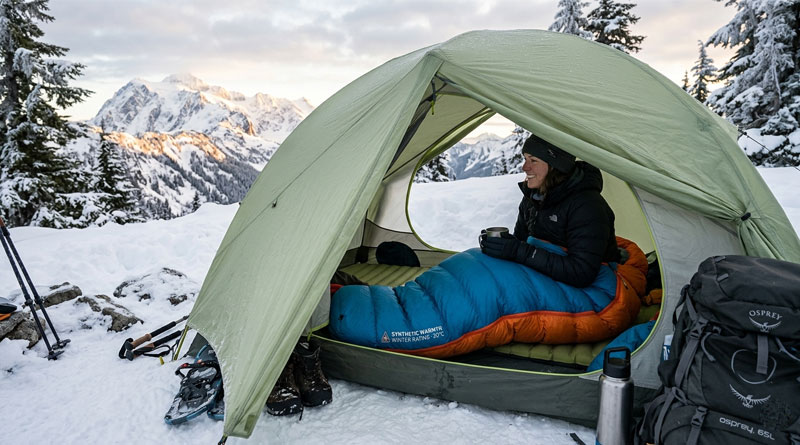
When the temperature drops, a good sleeping bag is key to staying warm and cozy. You don’t always need expensive goose down, though. Synthetic winter sleeping bags are a smart choice—they keep you warm even if they get wet, dry fast, and cost less. This article rounds up the best options for cold weather, helping you pick a reliable bag for your next snowy adventure.
1. REI Co-op Trailmade 25

- Temperature Rating: 25°F (-4°C)
- Weight: 2 lbs. 15.14 oz. (Medium)
- Insulation Type: Synthetic recycled polyester
- Shape: Mummy
The REI Co-op Trailmade 25 is a versatile workhorse designed for those who split their time between backcountry trails and car camping sites. It strikes an impressive balance between warmth and weight, utilizing recycled polyester fill that maintains loft even in damp conditions. The 30-denier ripstop shell is treated with a PFAS-free DWR finish, offering environmental peace of mind alongside snag-resistant durability for frequent outdoor use.
Designed with a traditional mummy cut, this bag maximizes heat retention by minimizing dead air space around the body. It is particularly well-suited for three-season adventures where temperatures might dip toward freezing. The inclusion of various width and length options ensures a tailored fit for different body types, making it a highly accessible choice for hikers who prioritize a blend of sustainability and reliable thermal performance on the trail.
Pros: Sustainable recycled materials, multiple size options, great price-to-weight ratio.
Cons: Synthetic fill is bulkier than down when compressed.
See the REI Co-op Trailmade 25
2. Kelty Cosmic 20 Synthetic

- Insulation: Cirroloft synthetic fill
- Shell Fabric: 380T nylon taffeta
- Weight: 2 lbs. 13 oz. (Regular)
- Fit: Up to 6 feet (Regular)
The Kelty Cosmic 20 Synthetic brings the legendary reputation of the Cosmic line into a more affordable and moisture-resistant package. Using Cirroloft insulation, this bag provides consistent coverage without the risk of cold spots, making it a dependable companion for unpredictable mountain weather. The nylon taffeta shell feels soft against the skin while remaining tough enough to handle the rigors of frequent tent life and packing cycles.
One standout feature is the spacious natural-fit footbox, which allows for more movement compared to restrictive traditional mummy bags. It also includes a convenient exterior stash pocket for keeping small essentials like a phone or headlamp within reach during the night. For backpackers looking for a minimalist aesthetic without the high cost of down, this bag offers professional-grade craftsmanship and reliable warmth for three-season excursions.
Pros: Roomy footbox, reliable warmth in damp weather, convenient stash pocket.
Cons: Can be a bit heavy for ultra-long distance backpacking.
See the Kelty Cosmic 20 Synthetic
3. Teton Sports Sleeping Bag

- Survival Rating: +20°F
- Insulation: Microfiber
- Liner: Double-brushed soft fabric
- Shape: Mummy with vaulted footbox
This Teton Sports mummy bag is engineered for hikers who value comfort as much as technical specs. It features a specialized hood design that cinches tightly to trap heat around the face, paired with a zipper draft tube to prevent cold air from leaking in. The interior stands out for its double-brushed liner, which offers a soft, bed-like feel that is much more inviting than the plastic-like texture of many technical bags.
The innovative microfiber insulation is designed for high compressibility, allowing the bag to fit into its included heavy-duty compression sack with ease. While it is rated for survival at 20 degrees, the manufacturer recommends it for slightly warmer nights to ensure a cozy experience. The vaulted footbox is a thoughtful addition, providing enough room for feet to rest naturally without compressing the insulation and creating cold spots.
Pros: Extremely soft liner, excellent compression sack, effective draft protection.
Cons: Comfort rating is significantly higher than the survival rating.
See the Teton Sports Sleeping Bag
4. REI Co-op Siesta Hooded

- Temp Rating: 20°F (-6.6°C)
- Shape: Rectangular
- Weight: 5 lbs. 7.3 oz. (Medium)
- Volume: 25 liters (Stuff sack)
The REI Co-op Siesta Hooded is the ultimate choice for car campers who prioritize roominess over weight savings. Its rectangular shape provides a massive amount of interior space, making it perfect for side sleepers or those who feel claustrophobic in mummy bags. Despite the open shape, the inclusion of a hood helps retain significant heat, allowing the bag to perform well in temperatures down to 20 degrees during cool-weather camping.
Constructed with bluesign-approved recycled materials, the Siesta is both environmentally conscious and durable. The synthetic insulation is thick and plush, though this does result in a larger packed size that is best suited for vehicle-based travel. With its high-quality zippers and soft lining, it feels more like a portable bed than a technical survival tool, offering a luxurious night’s sleep for anyone not carrying their gear on their back.
Pros: Very spacious, includes a hood, durable recycled fabrics.
Cons: Very heavy and bulky; not suitable for backpacking.
See the REI Co-op Siesta Hooded
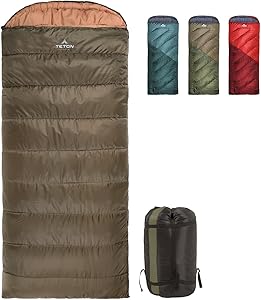
5. Teton Sports Celsius
- Lining: Poly-flannel
- Construction: Double-layer with draft tubes
- Shell: Taffeta
- Shape: Rectangular with half-circle hood
The Teton Sports Celsius is designed for those who want to forget they are sleeping on the ground. The standout feature is the poly-flannel lining, which feels remarkably similar to home bedding and eliminates the cold, slippery feel typical of nylon bags. A half-circle mummy-style hood is integrated into the rectangular design, offering a unique hybrid that provides the warmth of a hood with the legroom of a traditional quilt.
Thermal efficiency is handled by a double-layer construction and specialized fiber fill that works to eliminate cold spots. It also comes with a heavy-duty compression sack that avoids the need for rolling, as you can simply stuff the bag in and tighten the straps. While it is too bulky for long hikes, it is an exceptional choice for family camping trips or hunting expeditions where comfort and heat retention are the primary goals.
Pros: Cozy flannel lining, easy-to-use compression sack, very roomy.
Cons: Large footprint takes up significant space in a tent.
6. The North Face Wawona Bed 20

- Temp Rating: 20°F (-7°C)
- Shell: 50D recycled ripstop polyester
- Weight: 4 lbs. 14.3 oz. (Regular)
- Zipper: Right-hand side
The North Face Wawona Bed 20 is a premium rectangular bag designed for maximum comfort during front, back, or side sleeping. It utilizes a 50-denier recycled ripstop shell that is treated with a non-PFC DWR finish, providing excellent resistance against tent condensation. The interior lining is a smooth polyester taffeta that allows for easy movement throughout the night without snagging on clothing or pajamas.
This bag is specifically built for car camping environments where sleep quality is the priority. The insulation consists of 100% polyester fiber batting that provides a consistent 20-degree rating for cold nights. Its wide dimensions offer a generous 64-inch shoulder and hip girth, ensuring that even larger campers have plenty of room to stretch out. It is a robust, stylish, and high-performing option for those who want a reliable bed for the weekend.
Pros: High-quality ripstop shell, generous width for all sleep positions, eco-friendly.
Cons: Right-hand zipper only; high compressed volume.
See the The North Face Wawona Bed 20
7. Marmot Trestles Elite Eco 20

- Tested Lower Limit: 12°F (ISO)
- Fill: HL-ElixR ECO synthetic
- Shell: 100% recycled polyester ripstop
- Weight: 3 lbs. 8.4 oz. (Regular)
The Marmot Trestles Elite Eco 20 is a high-performance backpacking bag that prioritizes sustainability without sacrificing technical specs. It uses HL-ElixR ECO insulation, a unique blend of three fibers that provides maximum loft and warmth while remaining highly packable. The 100% recycled fabrics are designed to maintain their thermal properties even if the bag becomes damp, making it an excellent choice for rainy or humid climates.
This mummy bag is anatomically shaped to wrap the body efficiently, and it features dual zippers for easy access and ventilation. The ISO-tested lower limit of 12 degrees makes it one of the warmer synthetic options in its weight class, providing a safe margin for true three-season use. It is a top-tier choice for eco-conscious hikers who need a durable, plush, and packable bag for multi-day treks in varying weather conditions.
Pros: Excellent ISO-rated warmth, very packable for synthetic, dual zippers.
Cons: The mummy fit may feel restrictive to some users.
See the Marmot Trestles Elite Eco 20
8. REI Co-op Campwell 30

- Temp Rating: 30°F (-1°C)
- Insulation: 98% recycled polyester
- Shape: Relaxed rectangular
- Compressed Volume: 16.6 liters (Medium)
The REI Co-op Campwell 30 is marketed as an approachable and easy-to-use bag for casual campers. It features a relaxed rectangular fit that offers more room than a mummy bag but is slightly more streamlined than heavy-duty oversized beds. This makes it a great “all-arounder” for summer camping or backyard sleepovers where temperatures stay above freezing. The materials are bluesign-approved, ensuring a lower environmental impact during production.
With a 30-degree rating, this bag is best utilized during the warmer months of the year. The synthetic fill is durable and simple to care for, standing up well to repeated washings. While it weighs nearly 5 pounds, it compresses more effectively than many other rectangular models, fitting into a 16.6-liter space. It is a solid, budget-friendly entry point for anyone looking to start their outdoor adventures with a reliable piece of gear.
Pros: Easy to clean and maintain, eco-friendly materials, good price.
Cons: Not warm enough for late fall or early spring camping.
9. oaskys Sleeping Bag

- Fabric: 210T Anti-tearing polyester
- Temp Range: 10°C to 20°C
- Lining: 190T polyester pongee
- Design: 3-Season with bottom zipper
The oaskys Sleeping Bag is designed for casual three-season use, specifically targeting warmer weather between 10 and 20 degrees Celsius. It features a waterproof and breathable outer cover made of 210T polyester, which is essential for preventing dampness during humid nights. The interior is lined with soft polyester pongee, providing a comfortable skin-to-fabric feel that helps ensure a relaxing night’s sleep after a long day of travel.
One unique design element is the separated zipper at the bottom, which allows users to poke their feet out for ventilation if they get too warm. The half-circle hood includes an adjustable drawstring to trap heat on cooler nights. This bag is highly portable and comes with a compression sack, making it a convenient choice for trekking, hiking, or general exploration where a lightweight and easy-to-carry sleep system is required.
Pros: Foot ventilation zipper, waterproof exterior, very lightweight.
Cons: Not suitable for temperatures near freezing; thinner insulation.
10. MalloMe Sleeping Bag

- Temp Rating: 50°F to 77°F
- Weight: Approx. 3 lbs.
- Shell: Waterproof hex-tech design
- Insulation: 3D inner synthetic fiber
The MalloMe Sleeping Bag is a versatile year-round option best suited for spring, summer, and fall. It is built with a unique waterproof hex-tech shell and S-shape stitching, which keeps the 3D synthetic fiber fill securely in place to prevent clumps and cold spots. This bag is specifically designed to be easy to maintain, featuring a waterproof outer shell that can be wiped clean or machine washed after a muddy camping trip.
Designed for both adults and children, it features snag-free double-sided zippers and a velcro securing strap to prevent the zipper from sliding down during the night. The ultralight construction makes it a viable candidate for casual backpacking, and the included compression sack helps it fit into small spaces. Its vibrant colors and user-friendly features make it a popular choice for families and recreational campers looking for a durable, all-weather solution.
Pros: Machine washable, snag-free zippers, great for all ages.
Cons: Narrow temperature range; not for winter use.
How to Choose Synthetic Winter Sleeping Bags: A Comprehensive Guide
When the temperature drops and the landscape transforms into a frozen wilderness, your sleeping bag becomes the most critical piece of gear in your pack. While down insulation often steals the spotlight for its warmth-to-weight ratio, modern synthetic winter sleeping bags have become a formidable choice for cold-weather adventurers. They offer unique advantages in moisture management, durability, and cost-effectiveness that can make the difference between a miserable night and a restorative sleep in sub-freezing conditions.
Choosing the right synthetic winter bag requires a deeper understanding of temperature ratings, fill types, and construction methods. This guide will walk you through everything you need to know to stay warm when the mercury hits its lowest points.
Understanding Insulation: Why Choose Synthetic for Winter?
The primary debate in the outdoor world is Down vs. Synthetic. In winter, this choice is particularly significant. Synthetic insulation is made of polyester fibers designed to mimic the loft of down. While it is generally heavier and bulkier than down, it has one superpower: it maintains its insulating properties even when wet.
Moisture Management in Cold Climates
Winter camping involves constant battles with moisture. From tent condensation dripping off the walls to the frost created by your own breath, keeping a sleeping bag bone-dry is nearly impossible. Synthetic fibers do not absorb water, meaning they stay lofty and continue to trap heat even in high-humidity environments or when exposed to snow melt. For multi-day trips where drying gear is difficult, synthetic is often the safer bet.
Hypoallergenic and Cost-Effective Benefits
For those with allergies to animal products or feathers, synthetic is the only viable option. Furthermore, synthetic bags are significantly more affordable than high-fill-power down bags. This allows budget-conscious adventurers to invest in a high-quality 0°F or -20°F bag without the four-figure price tag often associated with premium winter down gear.
Deciphering Temperature Ratings
When shopping for a winter bag, the temperature rating is the first thing you will see. However, not all ratings are created equal. Most reputable brands use the ISO (International Organization for Standardization) or EN (European Norm) testing protocols.
Comfort vs. Limit Ratings
In winter, you should always look at the “Comfort” rating if you are a cold sleeper (typically women) and the “Lower Limit” rating if you are a warm sleeper (typically men). A “survival” rating simply means the bag will prevent frostbite, not that you will actually sleep. For winter, it is a general rule of thumb to choose a bag rated 10 degrees colder than the lowest temperature you expect to encounter.
The Role of the Sleeping Pad
No synthetic bag can keep you warm if you are losing heat to the frozen ground. In winter, your sleeping pad’s R-value is just as important as the bag itself. For winter conditions, you should look for a pad (or a combination of pads) with an R-value of 5.0 or higher. Without this, the insulation underneath you will be compressed, and the ground will leach the heat directly from your body.
Key Construction Features for Heat Retention
A winter bag is more than just a thick sack of polyester. Specialized construction features are necessary to prevent heat from escaping through the openings and seams.
Draft Collars and Face Mufflers
When you move in your sleep, you can create a “bellows effect,” pumping warm air out of the bag and pulling cold air in. A draft collar—an insulated tube of fabric around the neck—acts as a gasket to seal that heat inside. Similarly, a face muffler or a cinched hood ensures that only your nose and mouth are exposed to the cold air.
Draft Tubes and Zipper Quality
Zippers are notorious for being “cold spots.” High-quality winter bags feature a thick, insulated draft tube that runs the entire length of the zipper. Additionally, look for anti-snag zippers; there is nothing more frustrating (or dangerous) than a zipper getting stuck when you are trying to seal yourself in against a -10°F night.
Shingle and Offset Construction
Unlike summer bags that might use simple stitch-through construction, winter synthetic bags use shingle or offset quilt construction. This involves layering the insulation like shingles on a roof or offsetting the seams so there is never a direct path for cold air to penetrate the bag. This creates a uniform “wall” of warmth around your body.
Shape, Size, and Fit
The shape of your bag significantly impacts how much energy your body spends keeping you warm. In winter, the fit becomes a technical necessity rather than just a preference.
Mummy vs. Rectangular
For winter, a mummy shape is almost always superior. By tapering at the legs and fitting closely to the body, a mummy bag minimizes the “dead air” space that your body has to heat up. However, make sure the bag isn’t so tight that your shoulders or knees compress the insulation against the outer shell, as this creates cold spots.
Length and Storage Space
Some winter campers prefer a slightly longer bag to store gear at the foot. Keeping your boot liners, water filters, and electronics inside the bag prevents them from freezing overnight. However, too much extra space at the bottom can lead to cold feet, so balance is key.
Weight and Packability: The Synthetic Trade-off
It is important to be realistic: a synthetic bag rated for -20°F will be large and heavy. It will likely take up a significant portion of your backpack’s volume. To manage this, invest in a high-quality compression stuff sack. While you should never store your bag compressed long-term (as it can damage the fibers’ ability to loft), using a compression sack for the duration of your hike is essential for managing the bulk of synthetic winter gear.
Maintenance and Longevity
To ensure your synthetic winter bag lasts for years, proper care is vital. Synthetic fibers eventually lose their “springiness” over time through a process called “fiber fatigue.”
Proper Storage
Never store your sleeping bag in its small compression sack. Most bags come with a large mesh or cotton storage bag. Keeping the bag uncompressed allows the polyester fibers to remain resilient and fluffy, ensuring it provides the same level of warmth season after season.
Washing Your Bag
Body oils and dirt can eventually weigh down synthetic fibers. When the bag begins to look flat or smells, wash it in a front-loading machine (never an agitator-style machine) using a technical cleaner specifically designed for synthetic insulation. Dry it on low heat with a few clean tennis balls to help break up any clumps and restore the loft.
Final Thoughts
Choosing a synthetic winter sleeping bag is a decision based on safety and reliability. While they may require a bit more muscle to carry than their down counterparts, the peace of mind they provide in damp, freezing conditions is invaluable. By focusing on an accurate temperature rating, ensuring a proper fit, and looking for critical features like draft collars and offset construction, you can confidently face the beauty of the winter wilderness knowing you have a warm, dry sanctuary waiting for you at the end of the trail.