Shopping for an RV generator means balancing power, noise, portability, and price — all at once. Whether you’re running a single rooftop AC or powering an entire luxury rig, the right generator keeps your adventures comfortable and your devices charged. We tested and reviewed the top-rated portable and built-in models available today to help you find the best RV generator for your budget and travel style. Here are our top picks.
1. maXpeedingrods 4000W Portable Inverter Generator
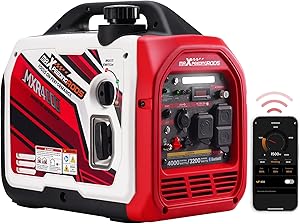
- Power: 4000 Peak / 3200 Running Watts
- Weight: 48.5 lbs (ultra-lightweight)
- Technology: Bluetooth App Data Monitor
- Outlets: NEMA L5-30R RV Ready
The maXpeedingrods MXR4000 is a tech-forward inverter generator built for modern campers who want smartphone-level control at the campsite. Its integrated Bluetooth app lets you monitor fuel levels, power output, and runtime in real time, taking the guesswork out of fuel management. ECO mode further optimizes efficiency during long overnight runs, while the built-in CO alarm adds an essential layer of safety. The clean inverter output makes it safe for laptops, phones, and other sensitive electronics right out of the box.
At just 48.5 pounds, this generator is remarkably portable for a 4000-watt unit, making solo setup quick and effortless. It ships with an RV adapter included, so you can plug into your rig immediately upon arrival without hunting for accessories. The Bluetooth connectivity is a genuine convenience upgrade over traditional generator controls, though occasional app connectivity hiccups are worth noting. Overall, it delivers a compelling mix of smart features, clean power, and lightweight construction that’s hard to beat in this power class.
- Pros:
- Bluetooth app monitoring adds real convenience
- Exceptionally lightweight for a 4000W generator
- Clean inverter power safe for sensitive electronics
- Cons:
- App connectivity can be intermittently unreliable
- Small fuel tank requires more frequent refilling
2. Westinghouse 4650 Peak Watt Portable Generator

- Engine: 212cc 4-Stroke OHV with Cast Iron Sleeve
- Runtime: Up to 14 hours on a 4-gallon tank
- Start: Reliable Recoil Start
- Safety: Automatic Low Oil and CO Shutdown
The Westinghouse 4650 is a powerhouse built for campers who need maximum runtime without constant refueling. Its 4-gallon tank delivers up to 14 hours of continuous operation, making it well-suited for overnight AC use or multi-day boondocking trips. The 212cc cast iron sleeve engine is designed for long-term durability, and the generator arrives pre-loaded with oil plus a tool kit — making it truly ready to run out of the box. The dedicated TT-30R 30-amp RV outlet means no adapters are needed for a direct connection to your rig.
As a traditional open-frame generator, it runs louder than inverter models, which may be a drawback in noise-sensitive campgrounds. However, for budget-conscious buyers who prioritize power and endurance over whisper-quiet operation, the Westinghouse 4650 offers one of the best power-to-price ratios in its category. Automatic CO and low-oil shutoffs provide essential protection, and the rugged construction suggests it can handle the wear of frequent travel with minimal maintenance. This is a no-nonsense workhorse that delivers exactly what it promises.
- Pros:
- Outstanding 14-hour runtime on a single tank
- Direct RV-ready 30A outlet — no adapter needed
- Durable cast iron engine built for heavy use
- Cons:
- Significantly louder than inverter-style generators
- Not ideal for powering very sensitive electronics
3. A-iPower 4600W Quiet Inverter Generator
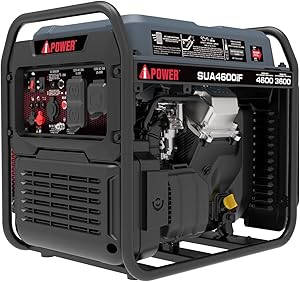
- Clean Power: Less than 3% Total Harmonic Distortion (THD)
- Weight: 56 lbs for easy transport
- Fuel Tank: 2.6-gallon capacity
- Efficiency: Up to 16 hours at 25% load
The A-iPower 4600W is an open-frame inverter generator that bridges the gap between raw power and clean, electronics-safe output. Producing 4600 starting watts while maintaining less than 3% THD, it meets the gold standard for protecting sensitive devices like laptops, 4K TVs, and medical equipment. Its Low Idle technology automatically adjusts engine speed based on actual power demand, stretching runtime to an impressive 16 hours at quarter load — one of the longest in its class. At 56 pounds, it remains manageable for most users to load and unload solo.
The A-iPower includes a TT-30R RV adapter, making it hassle-free to connect directly to your coach without extra purchases. The open-frame design keeps the price competitive compared to fully enclosed inverter models, though it does sacrifice some noise insulation in the process. Manual recoil start is the only starting method, which could be a minor inconvenience for some users. Despite these trade-offs, the combination of clean power, remarkable fuel efficiency, and competitive pricing makes it one of the smartest buys in the 4kW inverter category.
- Pros:
- Exceptional 16-hour runtime at partial load
- Ultra-clean power output protects sensitive devices
- Great weight-to-wattage ratio for portability
- Cons:
- Open-frame design provides less noise dampening
- Manual recoil start only — no electric option
4. PowerSmart 3600-Watt Quiet Inverter Generator

- Noise Level: 59 dBA at 25% load
- Weight: 50 lbs with integrated carry handle
- Outputs: 30A RV outlet, USB, and DC ports
- Feature: Parallel-ready for doubled power output
The PowerSmart 3600-Watt generator is purpose-built for campers who prize quiet operation above all else. Running at just 59 decibels — roughly equivalent to a normal conversation — it is ideally suited for campgrounds with strict quiet-hour policies or anyone who simply wants to enjoy nature without the roar of a generator in the background. The fully enclosed housing design effectively dampens engine vibrations and sound, and clean inverter power ensures your laptops, TVs, and phones are fully protected during operation.
Behind its quiet exterior, the PowerSmart delivers 3200 running watts of reliable power, which is sufficient for most small to mid-sized RV setups. The well-equipped control panel includes dedicated USB ports for direct device charging, and the parallel capability means you can link a second unit in the future if your power needs grow. The integrated carry handle keeps it easy to transport at 50 pounds. Its main limitation is a shorter 4.5-hour runtime at 50% load, so heavier users may need to refuel more often than with competing models.
- Pros:
- 59 dBA operation is among the quietest available
- Parallel-ready for future power expansion
- Includes USB and DC ports for versatile charging
- Cons:
- Shorter 4.5-hour runtime at 50% load
- Oil fill port placement is a bit awkward
5. DuroStar DS13000MX Dual Fuel Generator

- Peak Power: 13,000 Watts on Gasoline
- Fuel: Dual Fuel — Gasoline and Propane
- Start: Push-button Remote Electric Start
- Outlet: 50-Amp Heavy-Duty RV Outlet
The DuroStar DS13000MX is the definitive choice for owners of large Class A motorhomes, fifth wheels, or anyone who demands whole-home-level power in a portable unit. With 13,000 peak watts on gasoline, it can simultaneously power multiple AC units, a microwave, refrigerator, and entertainment systems without breaking a sweat. The dual-fuel system adds genuine flexibility — run on gasoline when maximum output is needed, or switch to propane for cleaner combustion and easier long-term fuel storage. The all-metal frame signals heavy-duty construction meant for serious, repeated use.
The 50-amp outlet makes it directly compatible with large 50-amp RVs and transfer switch systems for home backup use. Push-button remote electric start eliminates the effort of manual starting, a feature that becomes especially appreciated on cold mornings or for users with limited mobility. As expected for a generator of this scale, it is heavy and fuel-hungry at high loads — this is not a generator you’ll carry lightly or run economically at full capacity. But for those who need this level of power, the DuroStar delivers exceptional value and reliability.
- Pros:
- Massive 13,000W output for large RVs and home backup
- Dual-fuel flexibility between gas and propane
- Remote electric start adds real convenience
- Cons:
- Very heavy and difficult to reposition alone
- High fuel consumption at elevated loads
6. Aceup Energy 4000W Quiet Inverter Generator
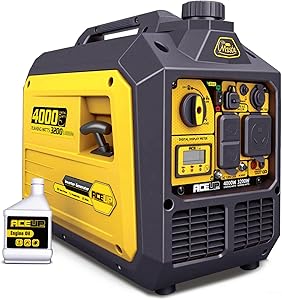
- Engine: 149cc 4-Stroke OHV
- Power Cleanliness: THD below 1.5%
- Control Panel: 5-in-1 Integrated Control Knob
- Monitoring: Digital Intelligent Gauge (voltage, frequency, runtime)
Aceup Energy has engineered one of the cleanest power outputs in the portable generator market, with a THD rating below 1.5% — making it exceptionally safe for ultra-sensitive equipment including medical devices, professional audio gear, and high-end computers. The digital intelligent gauge provides live readouts of voltage, frequency, and estimated runtime, giving you complete awareness of your power status at a glance. Operating at 60 decibels in ECO mode, it is quiet enough for campground use without drawing complaints from neighbors.
The intuitive 5-in-1 control knob integrates the choke, fuel switch, and start function into a single interface, simplifying startup for new generator owners. Aceup backs this unit with a 2-year warranty and lifetime technical support, which speaks to their confidence in long-term reliability. The primary trade-offs are a limited 5-hour runtime at half load and a recoil-only start that requires physical effort. If protecting your most sensitive electronics is a top priority, however, no other generator in this price range delivers cleaner power than the Aceup Energy 4000W.
- Pros:
- Sub-1.5% THD — industry-leading power cleanliness
- Simplified 5-in-1 knob makes startup intuitive
- Digital gauge provides comprehensive real-time data
- Cons:
- Only 5-hour runtime at half load
- Recoil start requires noticeable physical effort
7. WEN 3600-Watt Dual Fuel RV-Ready Inverter Generator

- Fuel Type: Dual Fuel — Gasoline and Propane
- Safety: WEN Watchdog CO Auto-Shutdown
- Outputs: TT-30R RV outlet, 12V DC, USB ports
- Maintenance: Automatic Fuel Shut-off for Carburetor Protection
The WEN DF360iX (DF360iX) is a well-rounded dual-fuel inverter that combines quiet, clean power with the flexibility of two fuel options. On gasoline it delivers 3600 surge watts, dropping slightly to 3500 on propane — a minor difference that most users will never notice in practice. The noise level is comparable to a normal conversation, making it one of the more campground-friendly options in the dual-fuel category. Clean inverter output ensures that your electronics receive stable, safe power regardless of which fuel you’re running.
WEN’s Watchdog CO sensor is a standout safety feature that continuously monitors carbon monoxide levels and shuts the generator down automatically if dangerous concentrations are detected. The automatic fuel shut-off drains the carburetor before storage, preventing the gumming and clogs that plague generators left sitting between camping seasons. While the propane output is marginally lower than gasoline and the plastic casing is thinner than premium models, the DF360iX’s combination of dual-fuel versatility, smart safety features, and low-maintenance design make it a top-value pick for RV owners who want dependable power without complexity.
- Pros:
- Dual-fuel flexibility at a very competitive price
- Watchdog CO sensor provides automatic safety shutdown
- Fuel shut-off protects carburetor during storage
- Cons:
- Propane output slightly lower than gasoline mode
- Plastic housing feels less substantial than rivals
How to Choose and Buy the Right RV Generator
Purchasing an RV generator is one of the most important investments you will make for your camping lifestyle. Unlike most gear purchases, getting it wrong can mean either being stranded without power or hauling a heavy, expensive machine that far exceeds your needs. The good news is that with a clear framework for decision-making, you can find the right generator quickly and confidently. Here is everything you need to know before clicking “buy.”
Step 1: Calculate Your Actual Power Needs
The single most important step before buying any generator is knowing how many watts you actually need. Start by listing every appliance or device you intend to run simultaneously during a camping trip. Common RV power consumers include the rooftop air conditioner (1500–2000 watts), a microwave (900–1200 watts), a coffee maker (800–1000 watts), a refrigerator (150–400 watts), a television (100–200 watts), and phone or laptop chargers (20–100 watts each).
Add up the running wattage of everything you plan to operate at the same time. Then identify which of those appliances have electric motors — motors require a surge of extra power at startup, sometimes two to three times their running wattage. Your air conditioner, for example, might run on 1500 watts but need 3000 watts to start. Choose a generator whose peak (starting) wattage exceeds your highest surge demand, and whose running wattage comfortably covers your total simultaneous load. Adding a 10–20% buffer above your calculated total is always a smart practice.
Step 2: Decide Between Portable and Built-In
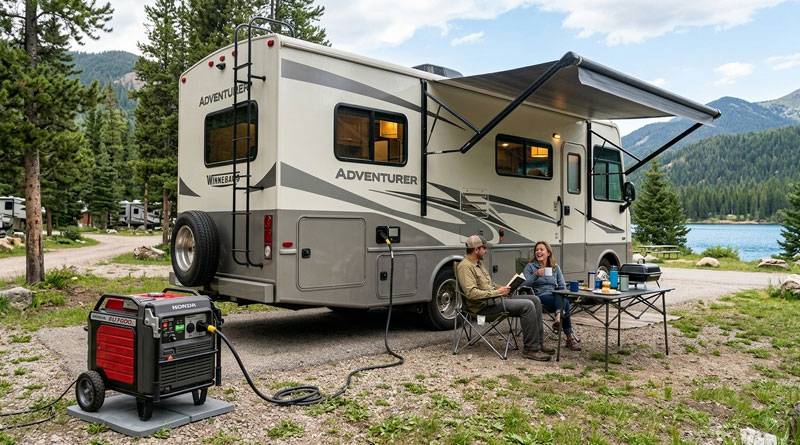
Portable generators are the most popular choice for RV owners because they are versatile, affordable, and can be used for purposes beyond the RV — tailgating, job sites, and home backup, for instance. They range from compact 2000-watt units to powerful 13,000-watt machines. The trade-off is that they must be set up outside the RV before use, stored securely to prevent theft, and refueled manually.
Built-in generators, also called onboard or coach generators, are permanently installed inside motorhomes and start at the push of a button, drawing fuel directly from the RV’s fuel tank. They are more convenient and produce less noise intrusion inside the cabin, but they cost significantly more, require professional installation, and are only practical in larger Class A or Class C motorhomes. If you own a travel trailer, fifth wheel, or smaller RV, a high-quality portable generator is almost certainly your best option.
Step 3: Choose the Right Fuel Type for Your Situation
Your choice of fuel type will affect everything from day-to-day convenience to long-term storage and maintenance. Gasoline generators are the most common and easiest to fuel on the road, as gas stations are everywhere. However, gasoline degrades over time, making it less ideal if you store your generator for extended periods between trips. Always use a fuel stabilizer if storing a gasoline generator for more than 30 days.
Propane generators are cleaner burning, store indefinitely without degrading, and are practical if your RV already carries propane tanks for cooking and heating. The downside is slightly lower power output compared to gasoline. Dual-fuel generators offer the best of both worlds and are an excellent choice if you want flexibility depending on what fuel is available at your destination. Diesel generators, while efficient and long-lasting, are typically found in large motorhomes and are less relevant for the average RV camper shopping for a portable unit.
Step 4: Understand Inverter vs. Conventional Generators
If you plan to charge laptops, run a CPAP machine, operate a smart TV, or power any modern electronics, an inverter generator is strongly recommended. Inverter generators produce electricity in a cleaner, more stable form with very low Total Harmonic Distortion (THD) — typically below 3%. This matters because sensitive electronics are vulnerable to power fluctuations, and a generator with dirty power can damage or shorten the life of your devices over time.
Conventional generators produce power adequate for tools, lights, and appliances with simple motors but are not recommended for powering electronics directly. They also tend to run louder and at a fixed engine speed regardless of load, making them less fuel-efficient. Inverter generators adjust engine speed to match demand, which reduces noise, extends runtime, and saves fuel. The premium in price is generally worth it for most RV users who camp with modern devices.
Step 5: Pay Close Attention to Noise Ratings
Noise is one of the most frequently overlooked specs until you arrive at a campground and realize your generator is disturbing everyone within 100 feet. Generator noise is rated in decibels (dB). To put the numbers in context: 50 dB is roughly the level of a quiet library, 60 dB is a normal conversation, 70 dB is the inside of a car on the highway, and 80 dB is a vacuum cleaner. Many campgrounds enforce quiet hours (typically 10 PM to 8 AM) and some have explicit maximum decibel limits.
Inverter generators typically operate between 50 and 65 decibels at a distance of 23 feet — most are acceptable for campground use. Open-frame conventional generators often run at 70–80 dB, which will disturb neighbors and may violate campground rules. If you plan to camp frequently at state parks, national forests, or organized campgrounds, prioritize a generator rated at 60 dB or below. Fully enclosed inverter designs offer the best noise isolation.
Step 6: Consider Weight, Size, and Storage
Before purchasing, measure the storage compartment or cargo area where you plan to keep the generator. Portable generators range from about 40 pounds for compact 2000-watt units to well over 200 pounds for large conventional models. Solo travelers should aim for units under 60 pounds for manageable lifting. Look for integrated carry handles, and if you are considering a larger unit, prioritize models with never-flat wheels and a collapsible handle for easier transport across a campsite.
Also confirm that your RV can safely store the generator. Generators must always be operated outdoors and never inside or in an enclosed storage bay due to carbon monoxide risk. Ensure the external compartment has adequate ventilation and that the generator’s footprint fits your available space before finalizing your decision.
Step 7: Verify Outlet Compatibility with Your RV
Not all generators are ready to plug directly into an RV without additional hardware. Most RVs use a 30-amp TT-30R outlet (for smaller rigs) or a 50-amp CS6364 outlet (for large motorhomes). Before purchasing, check your RV’s shore power inlet and confirm the generator includes a matching outlet. Many modern RV-ready generators include the correct outlet, but some require a separately purchased adapter. Buying an incompatible unit and needing a workaround is a frustrating and easily avoidable mistake.
Step 8: Look for Essential Safety Features
A good RV generator should include several built-in safety features. Low-oil automatic shutdown protects the engine from running dry, which can cause permanent damage. Overload protection shuts the generator off if the electrical load exceeds safe limits, preventing both damage to the generator and potential fire hazards. Carbon monoxide (CO) detection and automatic shutdown is increasingly common and highly recommended — CO is odorless, invisible, and potentially lethal.
All seven generators reviewed in this guide include at least some of these protective features. Prioritize models that include CO shutdown as a non-negotiable safety baseline, particularly if you camp with children or pets, or if you have any tendency to operate the generator in close proximity to your RV.
Step 9: Factor in Warranty and Long-Term Support
A generator is not a disposable purchase. Look for manufacturers that offer at least a one-year warranty, with two years or more preferred. Check whether the company has responsive customer support and accessible replacement parts. Brands with a strong service network — either through their own channels or through authorized repair centers — are significantly easier to own over time. Read recent buyer reviews specifically mentioning warranty claims and customer service experiences, as this is where brand reputation is either confirmed or exposed.
Where to Buy
All seven generators in this guide are available on Amazon, which offers reliable shipping, easy returns, and verified buyer reviews that provide real-world insight beyond manufacturer claims. Buying on Amazon also simplifies the warranty claim process for many brands. If you prefer to see a generator in person before purchasing, large home improvement retailers such as Home Depot and Lowe’s carry selected models. Specialty RV dealers may also stock or order specific units and can provide expert advice tailored to your rig. Whichever channel you choose, always confirm the return policy before purchasing in case the generator does not meet your expectations upon arrival.