Ditching the propane tank doesn’t mean sacrificing a steaming shower after a day of hiking. As RVers pivot toward cleaner, quieter, and more efficient power solutions, electric water heaters have emerged as the ultimate upgrade for life on wheels. Whether you’re chasing the horizon in a vintage rig or outfitting a modern van, the right heater balances space, power draw, and recovery speed. This guide strips away the fluff to reveal the top electric units designed for nomadic living.
1. Westinghouse 8 Gallon Electric Mini Tank Water Heater

- Capacity: 8 gallons (approx. 30L)
- Power: 120V, 1440W 310S stainless steel heating element
- Tank Material: Triple-layer glass-lined steel
- Dimensions: 17.32″ H x 17.32″ W x 15.35″ D
The Westinghouse 8-Gallon unit is a heavyweight in the world of “mini” tanks, offering enough volume to bridge the gap between a simple sink heater and a primary system. It’s built like a vault, utilizing a triple-layer glass-lined steel tank that shrugs off high-pressure stress. For RVers who tired of “navy showers,” this extra capacity provides a luxury buffer for longer rinses or a full sink of dishes without the immediate temperature dip typical of smaller 2-gallon units.
Efficiency is handled by a 1440W element that prioritizes quick recovery, while the thick insulation ensures the heat stays in the water rather than warming up your cabinet. The adjustable thermostat (55°F to 145°F) allows for precise control depending on the season. While it’s technically a point-of-use model, its 8-gallon reservoir makes it a viable primary heater for solo travelers or couples who are mindful of their water usage and have the cabinet clearance to accommodate its slightly larger footprint.
- Pros:
- Higher volume than most compact rivals
- Robust triple-layer tank longevity
- Wide temperature adjustment range
- Cons:
- Bulky for very tight van builds
- Requires 120V hookup for operation
2. KINGRVER RV Hybrid Water Heater, 6 Gallon Tank

- Capacity: 6 gallons
- Fuel Type: Electric (120V) & Gas (Propane)
- Tank Material: Porcelain-lined steel
- Heating Modes: Gas, Electric, or Hybrid
If you suffer from “off-grid anxiety,” the KINGRVER Hybrid is your safety net. This unit is a master of versatility, allowing you to toggle between campsite shore power and propane. The real magic happens in Hybrid mode, where both the 120V element and the gas burner work in tandem. This dual-source approach slashes recovery time, making it the best choice for families who need back-to-back showers without the traditional thirty-minute wait between occupants.
The build quality centers on a porcelain-lined steel tank designed to fight off the corrosive minerals often found in well water at rural campgrounds. We particularly like the one-touch presets; instead of fiddling with a dial, you can jump straight to 140°F for heavy cleaning or drop it down for a lukewarm summer rinse. It provides the stability of a storage tank with the speed of a high-output burner, effectively solving the “cold water sandwich” effect found in some cheaper tankless models.
- Pros:
- Dual-fuel flexibility for any camping style
- Rapid recovery in hybrid mode
- Stable temperature storage
- Cons:
- Complex installation (gas and electric)
- Exterior door might be a separate cost
3. Ranein 2.5-Gallon Electric Mini-Tank Water Heater Gen II 2025

- Heating Element: 1440W molybdenum-gold heating rod
- Temperature Range: 86°F to 167°F
- Tank Construction: Triple-layer enamel-coated steel
- Electrical: 120V AC with 43″ power cord
The Ranein Gen II is a precision-engineered marvel for the space-starved RVer. By utilizing a specialized molybdenum-gold heating rod, it hits a staggering 99% thermal efficiency. This means nearly every watt of power pulled from your battery bank or shore line is converted into heat, minimizing waste. Its footprint is impressively small—just a 13-inch cube—making it the gold standard for under-sink installations in camper vans where every square inch of storage is a precious commodity.
Despite its small size, it doesn’t cut corners on durability. The enamel-coated decarburized steel tank is designed to handle the vibrations of washboard roads without springing a leak. It’s rated for 150 PSI and carries an IPX4 waterproof rating, offering peace of mind if installed in a damp “wet bath” area. While the 2.5-gallon capacity is too lean for a long shower, it’s the perfect high-efficiency “instant” source for handwashing and dishes, recovering its temperature almost as fast as you can use it.
- Pros:
- Unrivaled 99% energy efficiency
- Ultra-compact for van conversions
- Very high maximum temperature (167°F)
- Cons:
- Not sufficient for full showers
- Requires specific ventilation clearances
4. GE Appliances 6 Gallon Electric Mini Tank Water Heater

- Capacity: 6 gallons
- Power: 120V plug-in
- Heating Element: Stainless steel
- Connections: Standard 1/2-inch NPT
GE brings residential-grade reliability to the mobile world with this 6-gallon workhorse. This unit shines as a “booster” heater. If your primary RV heater is located at the back of the rig and your kitchen is at the front, you often waste gallons of water waiting for the hot stream to travel through the pipes. Plumbed inline, this GE unit provides instant hot water at the tap while it waits for the main tank’s supply to arrive, saving both water and time.
The simplicity of the design is its greatest strength. It uses a standard 120V plug, meaning no complex hardwiring is required for many setups—just plug it into a dedicated outlet. The stainless steel element is resilient against scale buildup, and the intuitive dial control is refreshingly low-tech and reliable. Whether used as a standalone for a small camper or a performance enhancer for a large 5th wheel, this unit is a “set it and forget it” solution that just works.
- Pros:
- Excellent as an inline hot water booster
- Simple plug-and-play setup
- Trusted brand with widespread support
- Cons:
- Basic features compared to “smart” models
- Electric-only (no propane backup)
5. Suburban Advantage SW6DEL RV Tank Water Heater
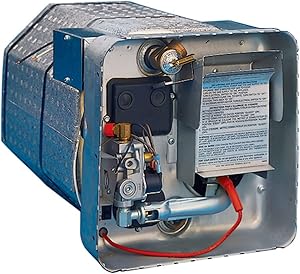
- Capacity: 6 gallons
- Heating: Gas (12k BTU) & Electric (1440W)
- Recovery: 10.1 gal/hr (gas), 6.1 gal/hr (electric)
- Tank Material: Porcelain-lined steel
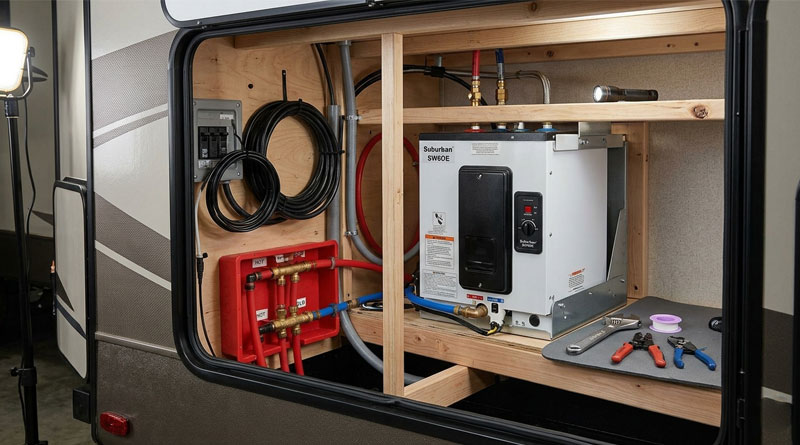
The Suburban SW6DEL is the industry standard for a reason. It is a rugged, dual-fuel beast that prioritizes longevity through traditional engineering. Its porcelain-lined steel tank is paired with a heavy-duty sacrificial anode rod. This rod is the “bodyguard” of the system—it attracts corrosive elements in the water so they eat the rod instead of your tank. This makes the Suburban one of the most durable options for travelers who frequently visit areas with “hard” or mineral-heavy water.
Operationally, the SW6DEL offers the best of both worlds with Direct Spark Ignition (DSI) for the gas side and a high-quality Incoloy electric element. The flue tube design is patented to maximize heat transfer from the gas flame, resulting in a recovery rate of over 10 gallons per hour on gas alone. It’s a direct-fit replacement for many older RV units, making it the go-to choice for renovators looking to swap out a broken factory heater for something with significantly more backbone and dual-fuel flexibility.
- Pros:
- Anode rod significantly extends tank life
- High-speed gas recovery
- Replaceable parts are easy to find at any RV shop
- Cons:
- Requires routine anode rod maintenance
- Heavier than all-electric aluminum units
6. Ariston 12 Gallon Electric Mini Tank Water Heater

- Capacity: 12 gallons
- Power: 120V plug-in
- Heating Element: Screw-in type
- Design: Large-capacity point-of-use
When “mini” just isn’t enough, Ariston steps in with a 12-gallon behemoth that still fits within the point-of-use category. This is the largest tank on our list, specifically designed for those who live in their RV full-time or have a larger rig with a residential-style shower head. The 12-gallon reservoir acts as a massive thermal battery, providing a consistent, high-volume flow of hot water that smaller units simply cannot match. It’s perfect for those who want a residential experience in a mobile environment.
Ariston is a global leader in heating, and that expertise shows in the screw-in heating element which allows for direct, efficient heat transfer and easy replacement if scale eventually builds up. Despite the volume, the footprint remains surprisingly manageable for installation in garages or larger under-bed storage areas. It’s a high-quality, sustainable choice for those who prioritize comfort and want to ensure they never run out of hot water mid-shampoo, even without a propane boost.
- Pros:
- Massive 12-gallon storage for long showers
- High-end Italian engineering
- Versatile for large RVs or tiny homes
- Cons:
- Takes longer to heat from cold than smaller units
- Significant weight when full (approx. 100+ lbs)
7. BOSCH Tronic 3000 T 4-Gallon Electric Mini-Tank Water Heater

- Capacity: 4 gallons
- Power: 120V, 12A plug-in
- Thermal Efficiency: 98%
- Dimensions: 13.75″ W x 13.75″ H x 13.5″ D
The Bosch Tronic 3000 T is the precision instrument of the water heater world. At 4 gallons, it occupies the “sweet spot” for many medium-sized campers—enough for a quick, efficient shower but small enough to mount on a wall or tuck into a shelf. Bosch’s glass-lined tank is legendary for its resistance to scale, and the 98% efficiency rating ensures that your electricity bill (or battery drain) stays as low as possible while delivering nearly instant results.
What makes the Tronic 3000 T stand out is its mounting flexibility. It can be floor-mounted, shelf-mounted, or wall-mounted, and it’s light enough that it won’t strain your RV’s interior walls. The inclusion of a 36-inch cord makes it a true “plug-and-play” appliance. For the weekend warrior who wants a reliable, high-quality heater from a brand they trust in their home kitchen, this unit offers the perfect blend of performance, size, and German-engineered durability.
- Pros:
- Versatile mounting (wall/floor/shelf)
- Premium glass lining for hard water resistance
- Fast recovery for its size
- Cons:
- Requires annual anode inspection
- 4 gallons may be tight for multiple users
How to Choose Electric Water Heaters For RV
Selecting the right electric water heater for your RV is more than a simple purchase—it’s a technical decision that dictates your comfort levels during every trip. To navigate the market effectively, you must understand the intersection of plumbing, electrical capacity, and your specific travel habits. This section breaks down the essential criteria for choosing a unit that won’t just fit in your rig, but will power your lifestyle without tripping breakers or running dry.
1. Assessing Your Hot Water Demand
Before looking at brands, audit your water usage. Are you a solo traveler who takes “navy showers” (water on to rinse, off to lather, on to rinse)? Or do you travel with a family that expects residential-style luxury?
- 2–4 Gallons: Best for “point-of-use” like a kitchen sink or extremely conservative solo showering in a van.
- 6–8 Gallons: The standard “Goldilocks” zone. Enough for a decent shower and dishes for 1–2 people.
- 10–12 Gallons: Essential for families or those who want the ability to take longer, continuous showers.
Remember that tank-style heaters provide a fixed amount of hot water. Once that’s gone, you have to wait for the “recovery period”—the time it takes the element to heat the new cold water entering the tank.
2. Understanding Electrical Load and Amperage
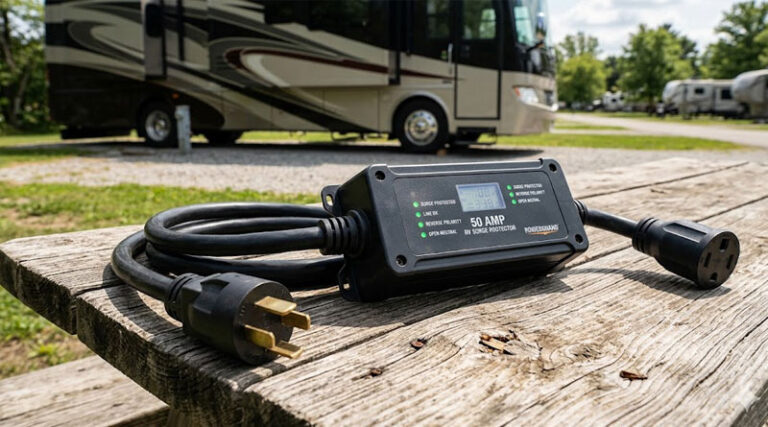
In an RV, power is a finite resource. Most electric water heaters run on 120V AC. A typical 1440W element draws approximately 12 Amps. If you are on a 30-Amp shore power connection, running your water heater, your air conditioner, and a microwave simultaneously will likely trip your main breaker.
- Shore Power Users: If you always stay at parks with hookups, electric is “free” heat.
- Solar/Battery Users: Running a 1440W heater off an inverter requires a massive lithium battery bank and robust solar array. Most off-grid users only run their electric heater when the engine is running or via a generator.
Check your rig’s electrical panel before buying. Ensure you have a dedicated circuit or enough overhead to handle the 12–15 Amp draw these units require.
3. Tank Construction: Glass-Lined vs. Porcelain vs. Stainless
RVs bounce, vibrate, and encounter water from different sources with varying mineral content. The interior of the tank matters:
- Glass-Lined/Enamel: Common in high-efficiency units like Bosch and Westinghouse. It’s smooth, resists scale, and is generally lighter.
- Porcelain-Lined Steel: The classic choice for durability. It’s heavy and robust but requires an anode rod to prevent the steel from rusting.
- Stainless Steel Elements: Look for “Incoloy” or high-grade stainless elements that resist “dry firing” (burning out if the tank is accidentally turned on while empty).
4. Dimensions and Plumbing Constraints
Measure twice, buy once. In an RV, you aren’t just limited by the width and height, but also by the depth and the clearance required for plumbing lines.
- NPT Connections: Most RV plumbing uses 1/2-inch NPT (National Pipe Thread). Ensure the unit you choose matches your existing pex or flexible hose lines.
- Ventilation: While electric heaters don’t produce exhaust like gas models, they still generate ambient heat. Check the manufacturer’s manual for “air gap” requirements—usually 2 to 5 inches of space around the unit to prevent overheating cabinets.
5. The Hybrid Advantage
If you can’t decide between the reliability of electric and the speed of gas, look for a Hybrid unit (like the Suburban or KINGRVER). These units allow you to use propane when you’re boondocking (off-grid) and electricity when you’re plugged in. For the ultimate performance, you can run both at the same time. This “Turbo” mode provides the fastest recovery rate possible, which is a lifesaver on cold mornings when multiple people need to get ready.
6. Safety and Certifications
Never bypass safety for price. Ensure your chosen heater has:
- T&P Valve: A Temperature and Pressure relief valve is non-negotiable. It prevents the tank from exploding if the thermostat fails and the water continues to boil.
- UL or CSA Listing: This ensures the electrical components have been tested for safety.
- Dry-Fire Protection: This feature automatically shuts off the heating element if it detects there is no water in the tank, preventing a fire hazard.
Conclusion: The Long-Term Value
An electric water heater is an investment in your mobile quality of life. While a 2.5-gallon unit might be cheaper, the frustration of running out of hot water mid-shower may outweigh the savings. Conversely, a 12-gallon unit offers luxury but adds significant weight and power draw. By balancing your rig’s electrical capacity with your personal water usage and the physical space available, you can choose a unit that provides years of reliable, steaming-hot service on the open road.
Pro-Tip: Always drain your tank during the winter if you live in a freezing climate. Water expands when it freezes, and a forgotten 6-gallon tank of water can easily crack a steel shell, leading to an expensive replacement in the spring!
Enjoy your journey with the comfort of home. Happy Camping!