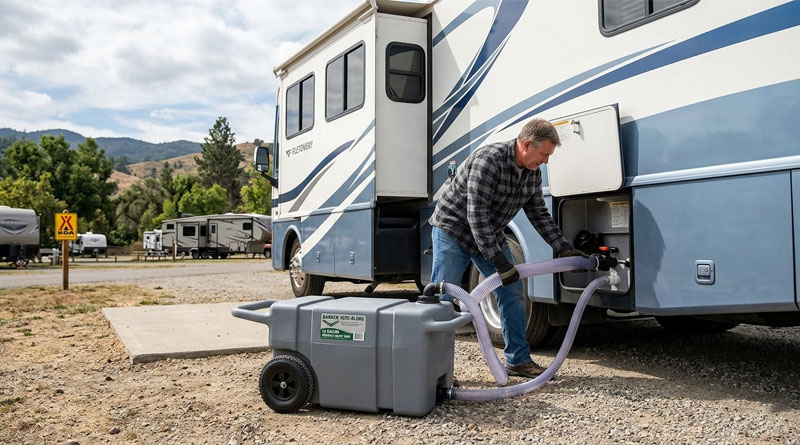
Imagine finding the ultimate campsite—secluded, scenic, and serene—only to realize your grey tank is hitting its limit. Instead of dismantling your entire setup to find a dump station, a portable waste tank, or “blue boy,” serves as your mobile relief valve. These rugged totes allow you to shuttle waste to disposal sites with ease. This guide breaks down the industry’s top-rated models to help you find a reliable companion for your off-grid adventures and extended stays.
1. Thetford SmartTote2 RV Portable Waste Tote Tank

- Capacity: 35 Gallons
- Wheels: 4 durable rubber wheels
- Storage: PermaStore compartment for components
- Features: Auto Stop level gauge, extendable hitch attachment
The Thetford SmartTote2 is essentially the Cadillac of waste management. Designed for those who don’t want to mess around with loose parts, its standout feature is the PermaStore compartment. This built-in locker keeps your heavy-duty hose, bayonet fittings, and elbows exactly where you need them, preventing the dreaded “where did I put the cap?” moment at a crowded dump station. It is a heavy-duty beast designed to handle the volume of larger rigs without breaking a sweat.
Mobility is where the SmartTote2 truly shines. With four rugged rubber wheels, it tracks smoothly behind your vehicle or moves easily by hand. The extendable handle hooks directly onto your trailer hitch, while the Auto Stop level gauge acts as a critical fail-safe to prevent messy overflows. While it is a significant investment, the combination of high-density polypropylene and ingenious venting makes it one of the most reliable and user-friendly large-capacity totes available for serious long-term travelers.
- Pros:
- Integrated component storage
- Excellent maneuverability with 4 wheels
- Auto Stop level gauge prevents overfilling
- Cons:
- Higher price point
- 35-gallon capacity can be heavy when full
2. Thetford SmartTote Portable RV Waste Tote Tank

- Capacity: 12 Gallons
- Wheels: 2 wheels
- Assembly: Comes fully assembled
- Components: Includes caps for hose opening and vent
For the weekend warrior or the pop-up camper enthusiast, the 12-gallon Thetford SmartTote is a masterclass in efficiency. It addresses the reality that you don’t always need a massive 300-pound tank to manage a quick trip. This model is exceptionally lightweight and compact, making it easy to tuck into a small storage bay or even the back of a truck. Its sleek profile ensures that waste management doesn’t eat up your precious cargo space.
The “ready-to-go” nature of this tank is its biggest selling point—it arrives fully assembled, saving you from any pre-trip mechanical frustration. While you’ll need to provide your own hose, the secure caps for the vent and hose openings ensure that transport remains odor-free and spill-proof. It’s a straightforward, no-nonsense tool that prioritizes portability over volume, making it the perfect choice for those who prefer to travel light and dump their grey water frequently.
- Pros:
- Lightweight and compact design
- Comes fully assembled
- Easy to maneuver and store
- Cons:
- Hose not included
- Limited to 12-gallon capacity
3. YITAHOME Portable Water Holding Tank

- Capacity: 10.6 Gallons (40L)
- Wheels: 2 large rolling wheels
- Material: Durable and wear-resistant PP material
- Handle: Sturdy metal handle
The YITAHOME tank breaks the traditional “blue boy” mold with a sleek, grey design and a focus on multi-functional utility. At 10.6 gallons, it is highly manageable and leans into versatility, serving as either a fresh water transport or a sewage tote. The inclusion of a sturdy metal handle and oversized wheels allows it to roll over grass, gravel, and dirt without the “tippy” feeling often associated with smaller upright tanks.
What sets YITAHOME apart is the attention to ergonomics. It features multiple outlets that make the cleaning process significantly less tedious, allowing for a thorough flush that keeps odors at bay. The wear-resistant polypropylene construction feels premium and rugged enough for frequent outdoor use. Because it requires zero installation, it is a fantastic “emergency” tank to keep on hand for quick transfers, though its smaller capacity means it’s better suited for grey water or smaller groups.
- Pros:
- Versatile for fresh or waste water
- Easy mobility with large wheels and metal handle
- Durable and wear-resistant construction
- Cons:
- Smaller capacity for larger RVs
- Two-wheel design might be less stable on uneven terrain
4. Camco Rhino RV Portable Waste Tank
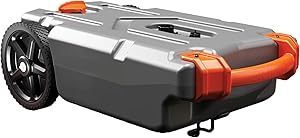
- Capacity: 21 Gallons
- Wheels: Large heavy-duty no-flat wheels
- Material: UV-stabilized blow-molded HDPE
- Accessories: 3′ sewer hose, clear elbow, steel tow adapter
The Camco Rhino is the “all-in-one” kit that takes the guesswork out of waste disposal. Known for their “Rhino Tough” reputation, this 21-gallon tank is built from UV-stabilized HDPE that won’t turn brittle under the sun. It hits the “sweet spot” for many RVers—large enough to empty most black tanks in one go, but not so massive that it requires a forklift to move. It is a complete ecosystem in a box.
What truly justifies the Rhino’s popularity is the accessory bundle. It includes everything from a high-quality sewer hose to a steel tow adapter, allowing you to hitch it to a truck or golf cart immediately. The oversized, no-flat wheels are a lifesaver on rough campground gravel. Additionally, the low-drain hole design ensures you aren’t left with a “soupy” mess at the bottom of the tank, making the final rinse-out much faster and more hygienic than competitors.
- Pros:
- Complete accessory kit included
- No-flat wheels for all terrain
- Durable, UV-stabilized HDPE construction
- Cons:
- 21-gallon capacity might be insufficient for longer trips
- Can be heavy to lift when full
5. Barker 4-Wheeler Tote Tank

- Capacity: 42 Gallons
- Wheels: Double wheel, front-swivel design
- Maneuverability: Engineered for easy pulling and turning
- Construction: Heavy-duty, extra-large mounting plate for wheels
When you are boondocking for weeks or traveling with a large family, the Barker 4-Wheeler is the heavy hitter you need. With a massive 42-gallon capacity, it often exceeds the volume of the RV’s internal tanks, meaning you can fully empty your rig in a single trip. Barker didn’t just make it big; they made it manageable through a front-swivel double-wheel system that allows the tank to pivot like a trailer rather than being dragged.
The build quality here is industrial. The wheels are mounted on extra-large plates to prevent the stress fractures common in high-capacity tanks. It rolls quietly and stays level, which is a massive benefit when you are dealing with nearly 350 pounds of liquid. While its physical footprint is large, for those who value fewer trips to the dump station, the Barker offers a level of stability and volume that few other brands can match.
- Pros:
- Very high 42-gallon capacity
- Excellent maneuverability with front-swivel wheels
- Quiet and smooth rolling design
- Cons:
- Extremely heavy when full
- Large physical footprint for storage
6. RecPro RV Portable Waste Tank
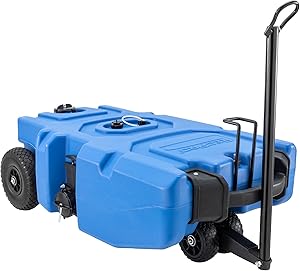
- Capacity: 36 Gallons
- Tires: Airless, no-flat, diamond-pattern tread
- Material: Heavy-Duty Polypropylene Construction
- Features: Capacity indicator, large ports, gloves included
The RecPro 36-gallon tank is a high-visibility, high-durability solution for the modern RVer. Its bright blue hue isn’t just for looks; it’s easy to spot and identify in a busy campground. RecPro has focused heavily on the “off-road” aspect of waste disposal by equipping this tank with airless, diamond-tread tires. These wheels provide superior traction on wet grass or muddy paths, ensuring the tank doesn’t slide or bog down when it’s at its heaviest.
User experience is front and center here, with large ports that drastically reduce the time it takes to empty the tank and a capacity indicator that takes the guesswork out of filling. They even throw in a pair of gloves, acknowledging the less-than-glamorous nature of the task. The polypropylene construction is thick and rigid, offering peace of mind that it can handle the pressure of 36 gallons without flexing or leaking during a bumpy tow to the station.
- Pros:
- High 36-gallon capacity
- Airless, no-flat tires for all terrains
- Heavy-duty and durable polypropylene construction
- Cons:
- Can be heavy to maneuver when full
- Limited to two wheels for large capacity
7. Barker Tote-Along Tank

- Capacity: 22 Gallons
- Weight (empty): 16 pounds
- Material: Blow-molded polyethylene construction
- Accessories: Tow bracket and 5-foot sewer hose included
The Barker Tote-Along is the quintessential “middle ground” option. At 22 gallons, it offers enough room to be genuinely useful for multi-day trips without the massive weight and storage headaches of the 40+ gallon units. It is remarkably light when empty (just 16 pounds), making it easy to haul out of storage or hang on a ladder rack. It’s built with the same blow-molded polyethylene durability Barker is known for.
This unit is all about straightforward reliability. The zinc-plated steel brackets provide a level of structural reinforcement that cheap plastic knock-offs lack. It comes with a 5-foot sewer hose and a tow bracket, giving you the flexibility to move it by hand for short distances or hitch it up for a trip across the park. For the average RVer who wants a dependable tool that “just works” without unnecessary bells and whistles, the Tote-Along remains a perennial favorite.
- Pros:
- Mid-range 22-gallon capacity
- Lightweight when empty for easier handling
- Durable blow-molded polyethylene construction
- Cons:
- May still be heavy when full
- Two-wheel design might be less stable than four
How to Purchase the Right Portable RV Waste Tank
Buying a portable waste tank is one of the most practical investments you can make for your RV, but it’s also one of the most logistical. Unlike buying a new grill or a set of camping chairs, a “blue boy” has to integrate perfectly with your RV’s plumbing, your vehicle’s towing capacity, and your physical ability to move weight. This section breaks down the deep-dive considerations you need to make before hitting the “buy” button.
1. Sizing: The Golden Rule of Capacity
The most common mistake RVers make is buying a tank that is too small. If your RV has a 30-gallon black tank and you buy a 15-gallon portable tank, you are looking at two trips to the dump station for every single time you empty your rig. Ideally, your portable tank should be slightly larger than your largest holding tank. If you have a 35-gallon grey tank, a 42-gallon portable tank is perfect. Why? Because it leaves “slosh room.” You never want to fill a portable tank to the absolute brim, as transporting it becomes a high-risk activity for spills.
Conversely, don’t overbuy if you can’t move it. A 42-gallon tank full of water weighs approximately 350 pounds. If you don’t have a vehicle with a hitch or the strength to manage that weight, a smaller 10- or 15-gallon tank that requires two easy trips might be better than one impossible trip with a giant tank.
2. Maneuverability: 2-Wheel vs. 4-Wheel
How do you plan to get the waste from your rig to the dump station? Your answer determines which wheel configuration you need.
- Two-Wheel Tanks: These work like a dolly. You lift the handle and pull. These are great for smaller capacities (under 25 gallons) and are much easier to store. However, you are supporting a portion of the weight yourself.
- Four-Wheel Tanks: These are the gold standard for large capacities. They stay level on their own, meaning all the weight is on the wheels. Look for “front-swivel” wheels, which allow the tank to turn on a dime. These almost always include a tow bar to hook onto a ball hitch.
3. Material Matters: Polyethylene vs. Polypropylene
Most tanks are made from one of these two plastics. High-Density Polyethylene (HDPE) is the industry standard—it’s incredibly tough and handles impacts well. Polypropylene (PP) is also excellent and often slightly lighter. The most important factor, however, is UV Stabilization. Since these tanks often sit outside in the sun, you want a material that won’t become brittle and crack after a season of sun exposure. Check the product specs for UV resistance to ensure longevity.
4. The “Hose Factor” and Accessories
Some tanks, like the Camco Rhino, come as a “complete kit.” Others come as just the tank. If you are a first-time buyer, look for a model that includes:
- A heavy-duty sewer hose (usually 3 to 5 feet).
- Bayonet fittings (to connect to your RV).
- A 90-degree elbow (to keep the hose from kinking at the dump station).
- A tow bracket.
Buying these separately can add $50–$100 to your total cost, so a “kit” version is often the better value.
5. Storage and Transportation
Where will the tank live when you aren’t using it? A 42-gallon Barker tank is roughly the size of a large suitcase. If you have a small Class C or a travel trailer with limited storage, you need to measure your exterior bays. Many RVers use ladder mounts to hang the tank on the back of the rig. If you plan to do this, ensure the tank you buy has a shape and weight that is compatible with standard ladder hooks.
6. Ease of Cleaning (The “Gross” Factor)
You want a tank with a large diameter drain port and, ideally, a rinse port. A rinse port allows you to hook up a garden hose to flush out the interior without having to stick a hose down the main drain. Also, look for a “low-drain” design. Some tanks have the drain hole an inch or two above the bottom, leaving a small amount of liquid trapped inside. A tank that drains from the absolute lowest point is much more hygienic.
7. Terrain Awareness
If you usually camp at paved RV resorts, any wheel will do. If you frequent state parks with gravel or boondock on uneven dirt, look for “no-flat” rubber tires with actual tread. Plastic wheels on gravel create a deafening noise and tend to vibrate the tank, which can lead to leaks over time. Rubber tires provide a cushion that protects the tank’s structure.
8. Price vs. Longevity
You can find “budget” tanks for under $150, but in the world of waste management, you truly get what you pay for. A failure in a waste tank is a “catastrophic” camping event. Spending the extra $100 for a reputable brand like Thetford, Barker, or Camco provides better seals, thicker plastic, and better customer support. These brands have been around for decades for a reason—they handle the pressure.
9. Checklist Before You Buy:
- Does the capacity match my RV’s black tank?
- Will it fit in my storage bay or on my ladder?
- Does it include the hose and tow bar, or do I need to buy them?
- Are the wheels suited for the terrain I camp on?
- Is there a warranty? (Most top brands offer 1–2 years).
Final Verdict
By focusing on these logistical details, you can turn a chore into a simple five-minute task. Whether you choose a massive 4-wheeler for long stays or a compact 2-wheeler for weekend trips, the right portable tank is the key to staying “unplugged” longer and enjoying the freedom that RVing is all about.