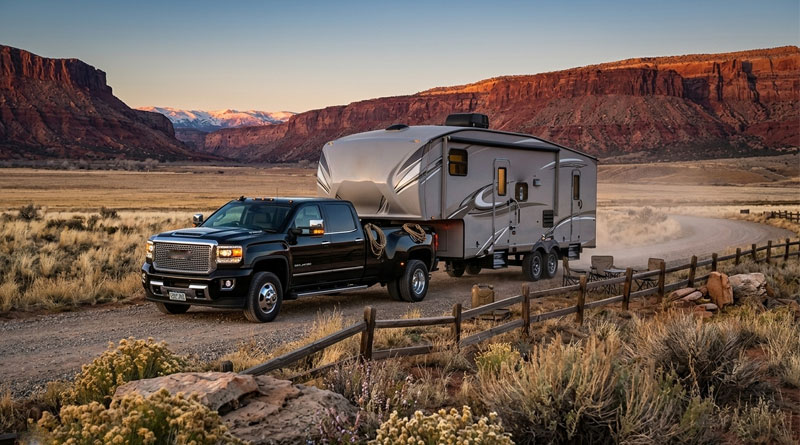
Choosing the right 5th wheel hitch is essential for ensuring a safe, stable, and smooth towing experience with your heavy-duty trailer. These hitches offer superior weight distribution and maneuverability compared to standard ball hitches. Our guide highlights top-rated options, focusing on load capacity, articulation, and ease of installation to help you find the perfect match for your truck.
1. CURT 16580 A25 5th Wheel Hitch Head
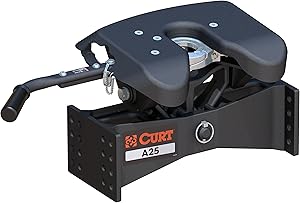
- Towing Capacity: 25,000 lbs GTW
- Vertical Load: 6,250 lbs limit
- Coupling: 3-position status indicator
- Articulation: Patented head with poly-torsion inserts
The CURT A25 stands out as a heavy-duty powerhouse designed for maximum towing security and comfort. Its patented head technology utilizes a cast yoke and poly-torsion inserts to suppress shock loads and annoying chucking, ensuring a significantly quieter ride on the highway. The extra-wide head design provides a generous target for the kingpin, making the coupling process faster and more intuitive, even for solo operators.
Safety is a major priority with the integrated three-position coupling indicator, which gives clear visual confirmation of whether the hitch is uncoupled, coupled, or ready to tow. The ergonomic handle is self-resetting, meaning it automatically returns to the ready-to-couple position after unhooking. This hitch head is built for those moving massive campers who require a high-capacity system that resists wear while providing a smooth, articulated connection.
- Pros:
- Massive 25K towing capacity
- Self-resetting handle for convenience
- Excellent shock and noise reduction
- Cons:
- Head only; requires separate legs
- Very heavy for manual removal
2. B&W Companion OEM Slider Hitch for Ram

- Slide Distance: 12 inches for turning clearance
- GTW Rating: 20,000 lbs
- System: Ram OEM Puck System compatible
- Jaw Design: 1-inch thick wrap-around jaws
The B&W Companion Slider is the gold standard for short-bed Ram truck owners who utilize the factory puck system. Its standout feature is the full 12 inches of travel, providing essential cab clearance during tight maneuvers or U-turns in cramped campgrounds. The fully articulating head allows for movement in every direction, which is critical for maintaining stability when hitching up or towing on the uneven terrain common in rustic environments.
B&W utilizes high-quality polyurethane bushings to create a “rattle-free” environment, effectively isolating the truck from the trailer’s vibrations. The cam-action latching handle is famous in the industry for releasing easily, even when the trailer is under tension or parked on unlevel ground. This American-made hitch is ruggedly engineered for structural integrity and a frustration-free towing experience specifically tailored for modern heavy-duty Ram pickups.
- Pros:
- Generous 12-inch slide for short beds
- Cam-action handle releases under pressure
- Fits Ram factory pucks perfectly
- Cons:
- Specific to Ram trucks only
- Higher price than basic rails
3. Blue Ox BXR2100 Gooseneck to 5th Wheel
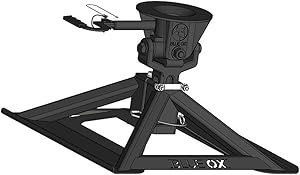
- Weight: Lightweight 122 lbs construction
- Height Adjustment: 17, 18, and 19 inches
- Coupling: 360-degree kingpin nesting
- Load Capacity: 21,000 lbs GTW
The Blue Ox BXR2100 is an innovative hybrid solution that converts a standard 2-5/16″ gooseneck ball into a secure, heavy-duty fifth-wheel attachment. At only 122 pounds, it is significantly lighter than traditional cast-iron hitches, making it much easier to install or remove from the truck bed without assistance. The funnel-shaped head acts as a precise guide, funneling the kingpin directly into the 360-degree nesting area to eliminate false hookups.
Adjustability is a core strength of this unit, offering three distinct height settings to ensure your trailer stays perfectly level regardless of your truck’s suspension height. The dual articulating head pivots both front-to-back and side-to-side, providing the flexibility needed for off-road towing or navigating steep driveways. It’s a versatile, high-capacity option for those who already have a gooseneck ball installed and want a secure connection without a heavy permanent rail system.
- Pros:
- Lightweight and easy to move solo
- Funnel head prevents false coupling
- Three adjustable height levels
- Cons:
- Not for use with high-rise balls
- Requires existing gooseneck ball
4. Reese 30119 Dual Jaw Fifth Wheel System
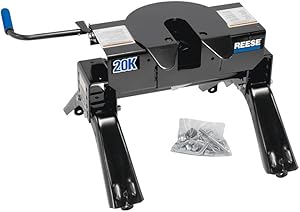
- Jaw System: Dual jaw wrap-around locking
- Mounting: Industry standard base rails
- Pivot: 44-degree fore/aft and 5-degree side
- Finish: Corrosion-resistant Black powder coat
The Reese 30119 is a robust, complete system designed for owners who prioritize long-term stability and heavy-duty performance. The dual jaw locking mechanism is its centerpiece, completely surrounding the kingpin to reduce friction and minimize metal-on-metal wear. This tight connection results in a more controlled feel on the road, significantly reducing the “jerkiness” often associated with lower-end single-jaw hitch designs during braking and acceleration.
Its wide-stance one-piece legs provide a rock-solid foundation, distributing the trailer’s weight evenly across the industry-standard rails in the truck bed. The hitch offers a generous vertical adjustment range from 13.5 to 17 inches, making it compatible with various truck and trailer configurations. Wrapped in a rugged E-coat and powder-coat finish, this unit is built to withstand harsh weather and road salts without corroding or losing its aesthetic appeal.
- Pros:
- Dual jaw reduces kingpin wear
- Very stable wide-leg design
- Superior corrosion protection
- Cons:
- Industrial look is quite bulky
- Rails often sold separately
5. B&W RVK3500 Companion 5th Wheel Hitch

- Bushings: Polyurethane for quiet towing
- GTW: 20,000 lbs rating
- VTW: 5,000 lbs vertical load
- Manufacturing: Made in America
The B&W RVK3500 Companion is widely regarded as one of the smoothest-operating and most reliable hitches on the market today. Unlike many competitors that use metal-on-metal contact points, this hitch utilizes high-quality polyurethane bushings. These bushings act as silencers, effectively eliminating the rattles and metallic clangs that can make a long towing journey exhausting. The structural integrity is designed for consistent performance under repeated heavy loads.
The cam-action handle ensures that unhooking at your destination is never a struggle, even if your truck is slightly angled or the trailer is putting pressure on the jaws. Its fully articulating head provides the necessary range of motion for navigating steep transitions without binding or stressing the truck’s frame. Backed by a limited lifetime warranty, this hitch is a top-tier choice for serious RVers who value precision American engineering and a silent, comfortable ride.
- Pros:
- Quiet, rattle-free polyurethane bushings
- American-made lifetime durability
- Smooth cam-action release handle
- Cons:
- Heavier than aluminum alternatives
- Fixed position not for short beds
6. Reese 30047 16K Standard Fifth Wheel
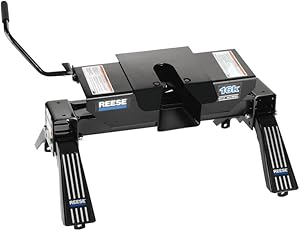
- Capacity: 16,000 lbs GTW
- Height Range: 14.5 to 18 inches
- Pivot: 6-degree side-to-side motion
- Legs: Wide stance one-piece design
The Reese 30047 is a reliable, standard-bearing powerhouse for those towing mid-sized fifth-wheel trailers. Its wide-leg stance is specifically engineered to improve stability during high-speed highway travel, preventing unwanted swaying. The 16,000-pound capacity is perfectly suited for the majority of standard family campers, offering an ideal balance between heavy-duty performance and a price point that is accessible for casual weekend travelers.
This hitch features a reliable two-jaw locking system that provides a secure, redundant hold on the trailer’s kingpin. The 6-degree side-to-side pivot helps accommodate hookups on uneven ground, which is a common scenario in more rustic or unpaved campgrounds. With adjustable heights reaching up to 18 inches, it provides the versatility needed to clear the bed rails of most modern 4×4 pickup trucks without needing additional spacers or modifications.
- Pros:
- Excellent stability with wide legs
- Affordable for mid-sized campers
- Adjustable height for high-bed trucks
- Cons:
- Requires base rail kit (sold separately)
- Lower capacity than A-series models
7. CURT 16115 E16 5th Wheel Hitch
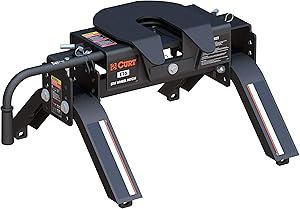
- Mechanism: Automatic locking coupler
- Lateral Movement: 10-degree dual-pivot head
- Vibration Control: Anti-rattle skid plate
- GTW Rating: 16,000 lbs
The CURT E16 is designed with the casual or first-time RVer in mind, focusing on ease of use and price efficiency. The standout feature is the auto-lock coupler, which simplifies the hitching process by automatically securing the kingpin upon contact with the hitch head. This reduces the chances of a “high hitch” or accidental trailer drop, providing extra peace of mind for those who may find the coupling process intimidating.
To improve ride quality, this 16K hitch is equipped with an anti-rattle skid plate and a dual-pivoting head that allows for 10 degrees of lateral movement. This ensures a smoother, more stable tow even when the road gets bumpy. It comes with standard legs that easily mount onto any industry-standard base rails, making it a versatile choice for anyone upgrading their truck while wanting to keep their existing rail installation.
- Pros:
- Auto-lock coupler adds safety
- Dual-pivot head for stability
- Budget-friendly entry level price
- Cons:
- Basic design lacks premium damping
- Not for heavy-duty 20K+ trailers
How to Choose 5th Wheel Hitches
Selecting the right fifth-wheel hitch is the most critical decision you will make regarding your towing safety and comfort. Unlike a standard bumper-pull hitch, a fifth-wheel hitch sits directly over your truck’s rear axle, offering superior weight distribution and a tighter turning radius. However, with various mounting styles, capacities, and features available, finding the “best” one requires understanding your specific vehicle and trailer needs.
Determine Your Gross Trailer Weight (GTW)
The most important factor in choosing a hitch is its weight rating. You must know the Gross Vehicle Weight Rating (GVWR) of your trailer—the maximum it can weigh when fully loaded. Hitches typically come in ratings like 16,000 lbs, 20,000 lbs, and 25,000 lbs. It is always safer to choose a hitch that is rated slightly higher than your trailer’s maximum weight to provide a safety margin and reduce strain on the components.
Short Bed vs. Long Bed Trucks
The length of your truck bed determines whether you need a fixed hitch or a slider hitch.
Fixed Hitches
If you have a long-bed truck (8 feet), a fixed hitch is usually the best choice. There is enough space between the truck cab and the trailer for tight turns. Fixed hitches are generally lighter, more affordable, and have fewer moving parts to maintain.
Slider Hitches
If you have a short-bed truck (typically 6 to 6.5 feet), you will likely need a slider hitch. These hitches can slide toward the tailgate, providing extra clearance so the front of the fifth-wheel trailer doesn’t strike your truck’s cab during sharp turns. Some sliders are manual, requiring you to get out of the truck to unlock them, while automatic sliders move on their own as you turn.
Mounting Systems: Rails vs. Pucks
How the hitch connects to your truck is determined by your truck’s existing setup.
Industry Standard Rails
These are metal rails that are permanently bolted into your truck bed. Most hitches are designed to fit these standard rails, making them highly versatile if you swap hitches or trucks later. However, the rails remain in the bed even when the hitch is removed, which can be an obstacle for hauling other cargo.
OEM Puck Systems
Many modern heavy-duty trucks (Ford, GM, and Ram) come with a factory-installed “towing prep package” known as a puck system. This consists of holes built directly into the truck’s frame. Hitches designed for puck systems are much easier to install and remove, and they leave the truck bed completely flat when taken out.
Single Jaw vs. Dual Jaw Locking
The jaw is the part of the hitch that physically grabs the trailer’s kingpin.
Single Jaw
These use a single piece of metal that slides across the opening. While secure, they often leave a small gap that can lead to “chucking” or a clunking noise as the kingpin moves slightly within the hitch.
Dual Jaw / Wrap-Around
These consist of two pieces of metal that close around the kingpin like a pair of hands. This provides a much tighter connection, significantly reducing noise and vibration. For high-end campers and long-distance travel, a dual-jaw or wrap-around jaw system is highly recommended for a smoother ride.
The Role of Articulation
Articulation refers to how much the hitch head can tilt. A hitch that only pivots forward and backward can be difficult to couple if your truck and trailer are on different slopes. The best 5th wheel hitches offer “4-way” or “fully articulating” heads that tilt side-to-side as well. This flexibility makes it much easier to hook up at a campsite that isn’t perfectly level and reduces stress on the truck’s frame while driving over uneven roads.
Weight and Maneuverability
Standard fifth-wheel hitches are heavy, often weighing between 150 and 250 pounds. If you plan to leave the hitch in your truck permanently, weight isn’t an issue. However, if you need to use your truck bed for other things, look for “lightweight” or “modular” hitches. Some models are made of high-strength aluminum, while others can be broken down into two pieces (the head and the base) to make them easier for one person to lift.
Chucking and Damping Systems
“Chucking” is the fore-and-aft jerking motion felt in the cab when the trailer pushes or pulls against the truck. To combat this, premium hitches include damping systems like polyurethane bushings or built-in shock absorbers. These features are worth the extra investment if you plan on taking long-distance trips, as they dramatically reduce driver fatigue.
Installation and Safety Indicators
Modern hitches now include features to prevent “high-hitching,” where the kingpin isn’t fully seated in the jaws. Look for hitches with color-coded indicators (Green for locked, Yellow for ready, Red for uncoupled) that are visible from the driver’s seat or via a quick glance from the side. An automatic locking feature can also simplify the process and ensure a secure connection every time.
Maintenance Requirements
Every hitch requires some maintenance to stay safe. You will need to grease the jaws and the top plate regularly to prevent metal-on-metal wear. Alternatively, many owners use a “lube plate”—a thin plastic disc that fits over the kingpin—to eliminate the need for messy grease on the hitch head. Check for hitches that have easily accessible grease zerks or self-lubricating bushings for easier upkeep.