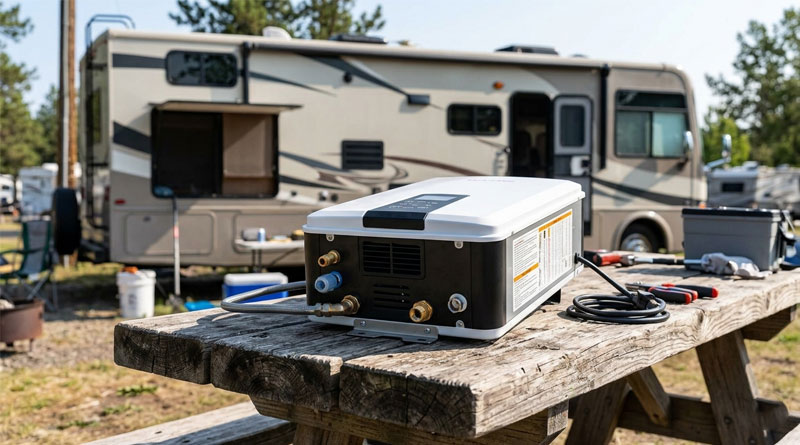
Traditional RV water heaters are often the “weak link” of life on the road—bulky, sluggish, and notorious for turning a relaxing shower into an icy surprise. For travelers seeking a more civilized experience, the tankless RV water heater is the ultimate upgrade. These compact powerhouses offer endless hot water on demand, whether you are boondocking in the silent desert or parked at a lively resort. Our guide explores the top units to keep your journey warm and uninterrupted.
1. DARTMOOR RV Tankless Water Heater

- BTU Output: 65,000 BTU
- Flow Rate: 2.4 GPM
- Max Temperature: 124°F
- Cut-out Size: 12.6″ x 12.6″
The DARTMOOR unit is a heavyweight performer designed for those who refuse to compromise on domestic comforts. With a powerful 65,000 BTU output, it handles the high demands of luxury RVing with ease. The standout feature is its staged combustion technology, which intelligently manages propane use to maintain a precise temperature. Even if you are camping at nearly 10,000 feet, this unit’s high-altitude capabilities ensure that the thin air won’t stand between you and a steaming hot shower after a long day of hiking.
Safety is woven into the DARTMOOR’s DNA, featuring a comprehensive protection suite that guards against everything from freezing to overpressure. The self-diagnosis system is a lifesaver for DIY travelers; rather than guessing what’s wrong, the digital panel provides clear fault codes. This transparency, combined with a user-friendly interface, makes it one of the most reliable options for full-time nomads who need a “set it and forget it” solution. It effectively balances high-output performance with sophisticated safety sensors for total peace of mind.
- Pros:
- Endless hot water with high-altitude reliability
- Sophisticated staged combustion for fuel efficiency
- Comprehensive safety and self-diagnosis features
- Cons:
- Requires consistent propane supply
- Specific installation footprint may require cabinet modification
2. Poukaran 65,000 BTU RV Tankless Water Heater

- BTU Output: 65,000 BTU
- Operating Voltage: DC 12V
- Temperature Range: 95°F – 123°F
- Door Size: 15″ x 15″ (Black)
The Poukaran model is built for the versatile traveler who needs hot water both inside and outside the rig. It utilizes an oxygen-free copper heat exchanger paired with a brushless DC fan to maximize thermal efficiency. This combination allows the unit to react instantly to water flow, eliminating the “cold water sandwich” effect often found in cheaper models. Its ability to maintain peak performance at high altitudes makes it a favorite for alpine explorers who don’t want to sacrifice efficiency when the elevation climbs.
What truly sets the Poukaran apart is its dual-outlet design. Having an external outlet is a game-changer for cleaning muddy gear, washing pets, or managing campsite chores without dragging dirt inside the RV. The microcomputer control system keeps the water temperature within a tight range, ensuring you never face a sudden scald. It is a robust, propane-powered workhorse that prioritizes energy savings without losing its ability to provide a high-pressure, high-temperature experience across multiple fixtures simultaneously, making it ideal for families.
- Pros:
- High-efficiency copper heat exchanger
- Dual water outlets for internal and external use
- Sleek black door design fits modern RV aesthetics
- Cons:
- Heavy reliance on 12V battery health
- Propane consumption increases at max temperature settings
3. Ranein 65,000 BTU RV Tankless Water Heater
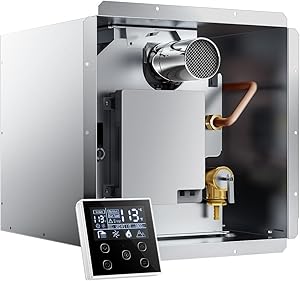
- BTU Output: 65,000 BTU
- Operating Voltage: 12V
- Temperature Range: 95°F – 124°F
- Compatibility: Replacement for Suburban/Atwood
Ranein has designed a heater for the data-conscious RVer. This unit features an upgraded remote control that does more than just set the temperature; it monitors your real-time gas usage and water flow rate. For those who enjoy off-grid boondocking, this level of transparency is vital for managing limited resources. By heating water only when necessary, it can reduce propane consumption by nearly 30% compared to old-school tank models, making it one of the most eco-conscious high-output heaters currently on the market.
Installation is another strong suit for the Ranein. It was engineered as a direct replacement for common Suburban and Atwood tank models, significantly reducing the “analysis paralysis” often associated with upgrading older rigs. The built-in thermostatic chamber ensures that the water temperature remains rock-steady, even if the incoming water is near freezing. This makes it an excellent choice for four-season campers who venture into snowy climates. It’s a smart, powerful, and highly compatible system that takes the guesswork out of both installation and daily resource management.
- Pros:
- Real-time resource monitoring via remote
- Direct replacement for major tank brands
- Exceptional gas savings for long-term travel
- Cons:
- Full feature set requires the remote to be connected
- Mounting doors are often sold as separate items
4. VEVOR RV Tankless Water Heater

- BTU Output: 42,000 BTU
- Door Size: 15″ x 15″ (White)
- Rear Chamber Size: 12.6″ x 12.6″ x 14″
- Water/Gas Connectors: 1/2″ NPT
The VEVOR tankless heater focuses on balanced performance and user-friendly tech. While it sports a lower 42,000 BTU rating, it uses segmented combustion technology to punch above its weight class. This feature allows the unit to adjust its heating intensity based on the season, preventing the system from overworking in the summer while still providing plenty of warmth during the spring and fall. The LED touch-control interface is intuitive, making it easy for any family member to adjust settings without a steep learning curve.
Safety and versatility are core to the VEVOR experience. It carries CSA certification and includes an external water outlet, perfect for those quick gear rinses after a day at the beach. Because it uses standard 1/2″ NPT connectors and a common 15×15 inch door size, it fits seamlessly into the majority of modern RV configurations. This model is perfect for the “weekend warrior” or the family traveler who wants a reliable, safe, and easy-to-operate system without the extreme fuel consumption of the highest-BTU units on the list.
- Pros:
- Segmented combustion saves energy in warm weather
- Intuitive LED touch controls and smart display
- Easy installation with standard plumbing connectors
- Cons:
- May struggle in extreme sub-zero temperatures
- 42,000 BTU is modest for high-flow multi-fixture use
5. GIRARD Tankless RV Water Heater

- BTU Output: 42,000 BTU
- Power: 12V (Low Draw)
- Temperature Range: 95°F – 124°F
- Key Feature: Onboard microprocessor control
GIRARD is a household name in the RV industry, and this tankless unit lives up to the reputation. It is specifically engineered to be the quietest unit in its class, utilizing a brushless motor that won’t disturb your campsite neighbors. The onboard microprocessor is the “brain” of the operation, constantly calculating the perfect air-to-fuel ratio and water flow to ensure that the output temperature never wavers. This level of precision eliminates the temperature spikes that can make showering in an RV a frustrating experience.
Efficiency is where the GIRARD truly shines for the long-haul traveler. It is designed to consume roughly half the propane of a standard 6-gallon tank heater, allowing you to stay off-grid for twice as long without a refill. The digital control panel is sleek and informative, providing real-time outlet temperatures so you can monitor performance as it happens. With built-in freeze protection and a low 3-amp draw, it is a sophisticated, reliable, and whisper-quiet addition to any motorhome or fifth-wheel trailer looking for a premium plumbing upgrade.
- Pros:
- Whisper-quiet brushless motor operation
- Extremely low electrical amperage draw
- Highly efficient propane management
- Cons:
- Professional installation is highly recommended
- Lower BTU rating compared to heavy-duty models
6. FOGATTI RV Tankless Water Heater

- Heating Output: 48,000 BTU / 2.5 GPM
- Operating Altitude: Up to 9,800 feet
- Safety Features: Anti-scald, flame failure shut-off
- Temperature Control: Wired remote (95°F – 123°F)
The FOGATTI heater is a high-altitude hero designed for mountain-loving families. It offers a generous 2.5 GPM flow rate, which is more than enough to maintain strong pressure while showering. The specialized altitude mode is a standout feature, as it prevents the burner from choking in the thinner air found at high elevations. This makes it an essential choice for anyone who frequents the Rockies or other high-country destinations where standard water heaters often struggle to ignite or maintain a consistent flame.
Safety and convenience are high priorities for FOGATTI. The unit comes with a 6.6-foot wired remote, allowing you to mount the controls exactly where you need them. The inclusion of a 150 PSI pressure relief valve and -22°F antifreeze protection ensures that the unit can withstand harsh environments and plumbing pressure spikes. Whether you are dealing with freezing winter nights or high-altitude summer adventures, the FOGATTI provides a steady, safe, and high-volume hot water supply that eliminates the “waiting period” between family members’ showers.
- Pros:
- Excellent 2.5 GPM flow rate for high pressure
- Superior cold-weather and high-altitude performance
- Long wired remote for flexible mounting
- Cons:
- Installation door panels often sold separately
- Requires a minimum flow rate to activate burners
7. Suburban RV Tankless 60,000 BTU Water Heater

- Heating Output: 60,000 BTU
- Safety Systems: Flame Out and Scald Protection
- Child Safety: Integrated child lock (max 113° F)
- Protection: Voltage and overcurrent protection
Suburban’s 60,000 BTU model is the “heavy hitter” of the lineup, engineered to tackle the coldest incoming water temperatures. If you camp in northern climates where the water in your hose is near-freezing, this heater has the raw power to boost those temps to a comfortable level instantly. It’s also arguably the most child-friendly unit on the market, thanks to a dedicated child lock feature that caps the temperature at 113° F, preventing any accidental burns when the kids are using the sink or shower.
The technical resilience of this unit is impressive. It features advanced voltage protection to shield its electronics from the power surges and dips common in crowded RV parks. Its Flame Out protection instantly cuts the gas if a burner malfunction or pressure drop is detected, providing a double layer of security. While it is a high-output machine, it remains an energy saver by only firing up when you turn the tap. For families who need safety, power, and long-term durability, the Suburban is a top-tier choice.
- Pros:
- Massive heating capacity for cold climates
- Best-in-class child safety features
- Protects electronics against RV park power fluctuations
- Cons:
- High BTU rating can use propane faster during peak use
- Requires specific, separately-sold door models
How to Purchase the Right Tankless RV Water Heater
Upgrading to a tankless RV water heater is one of the most significant quality-of-life improvements you can make for your mobile lifestyle. However, because this involves both propane gas and plumbing, the purchase process requires a deep dive into technical specifications and compatibility. This guide breaks down every variable to ensure you buy the right unit the first time.
1. Assess Your Hot Water Demand
The first step in purchasing is determining how you use water. Do you travel alone, or do you have a family of four trying to get ready in the morning?
- Flow Rate (GPM): Look for the Gallons Per Minute rating. A single shower typically needs 1.5 GPM. If you want to run the shower and wash dishes simultaneously, you’ll need a unit capable of 2.0 to 2.5 GPM.
- BTU Rating: British Thermal Units measure the “heat energy.” A 42,000 BTU unit is great for moderate climates. However, if you camp in freezing temperatures, a 60,000 or 65,000 BTU unit is necessary to heat that ice-cold incoming water to a comfortable shower temperature quickly.
2. Verify Installation Compatibility
Not all RV water heaters are interchangeable without some work. Before you click “buy,” you must measure your current setup.
- Cutout Dimensions: Measure the width, height, and depth of your current water heater opening. Many tankless units are designed to fit 12.6″ x 12.6″ or 15″ x 15″ openings.
- Door Fitment: Check if the unit comes with an access door. Some brands, like Suburban or Ranein, often sell the door separately to allow you to match the color (white, black, or silver) to your RV’s exterior.
- Retrofit Kits: If you are replacing an old 6-gallon or 10-gallon tank, ensure the new unit includes or is compatible with a flange kit to cover any gaps in the existing sidewall.
3. Understand Power and Fuel Requirements
Tankless units are “hybrid” appliances. While they burn propane to heat the water, they require electricity to function.
- 12V DC Power: The unit needs a constant 12V connection to power the circuit board, the ignition spark, and the exhaust fan. Ensure your RV battery system is healthy. Most units pull less than 3 amps, which is manageable for most setups.
- Propane (LP Gas): These units are high-intensity gas burners. You will need a standard 11-inch water column pressure from your propane regulator. If your regulator is old or failing, the heater may not ignite or may provide inconsistent heat.
4. Prioritize Altitude and Climate Features
Where you travel is just as important as how you travel.
- High-Altitude Modes: If you camp above 5,000 feet, standard combustion can struggle. Look for units like the FOGATTI or DARTMOOR that explicitly mention high-altitude performance or have automatic adjustment sensors.
- Freeze Protection: If you camp in the winter, look for units with built-in electric heating elements or “anti-freeze” modes that keep the heat exchanger from bursting when the temperature drops below freezing.
5. Control and Convenience Features
Modern tankless heaters offer varying levels of technological sophistication.
- Remote Controls: A wired remote allows you to adjust the temperature from inside the bathroom. This is much more convenient than walking outside to the side of the RV.
- Intelligent Microprocessors: These “smart” units monitor the incoming water temperature and flow. If the water coming in is warmer (like in the summer), the unit uses less gas. This saves you money and prevents the water from becoming dangerously hot.
- External Outlets: Some models offer a front-facing tap. This is an incredible bonus for washing off hiking boots or rinsing a sandy dog before they jump inside.
6. Brand Reputation and Warranty
A water heater is a long-term investment. Check the warranty terms carefully. Most reputable brands offer 1 to 2 years of coverage. More importantly, check if they have a robust customer service department in your region. Since RVing often takes you to remote areas, having access to a brand that can ship replacement parts quickly or has a wide network of certified technicians is invaluable.
7. Budgeting for the Hidden Costs
The sticker price isn’t always the final cost. When budgeting, consider the following:
- Professional Labor: Unless you are very comfortable with gas lines and 12V wiring, professional installation usually costs between $200 and $500.
- Installation Materials: You may need Butyl tape, high-quality silicone sealant, and potentially new PEX fittings or gas pipe connectors to complete the job.
- Maintenance Tools: Plan on buying a descaling kit (essentially a small pump and some vinegar solution) to clean the unit once a year.
By focusing on these technical and practical pillars, you can move from a frustrating “limited” water supply to the luxury of an endless hot shower. Take the time to measure your space, calculate your BTU needs, and verify your altitude requirements—your future, warm-showering self will thank you.