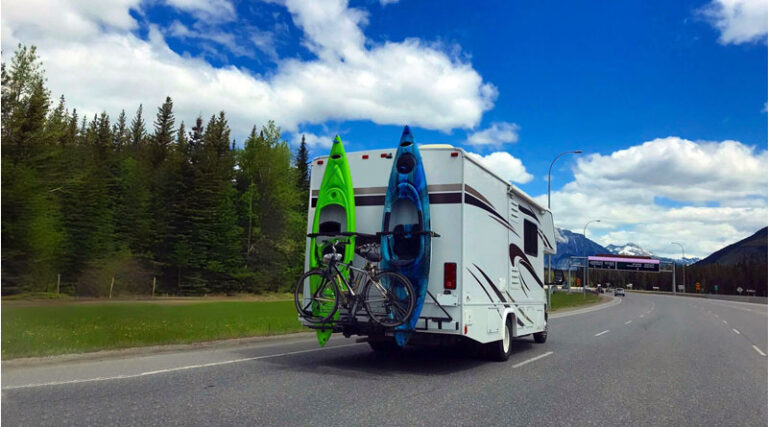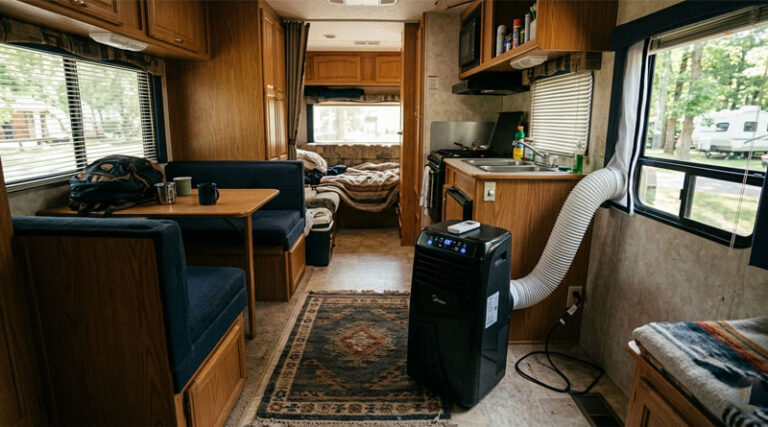
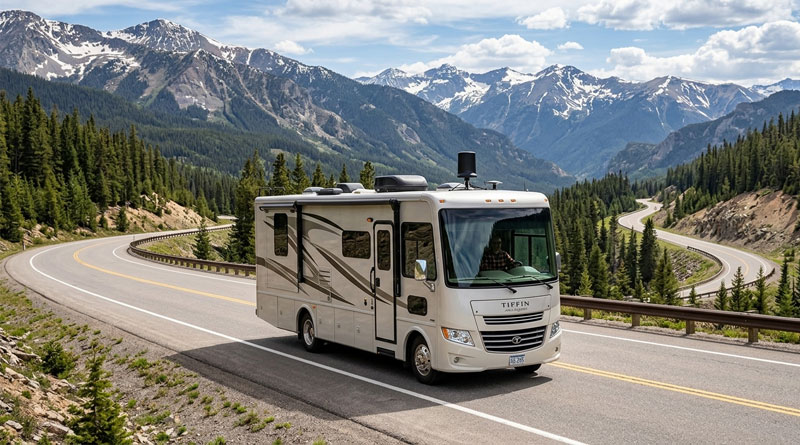
Ditch the digital dead zones and embrace the freedom of the open road without losing your connection. For the modern nomad, a reliable cellular signal is as vital as a full tank of gas. RV cellular signal boosters serve as your personal communication lifeline, pulling in faint tower signals and blasting them through your cabin. Whether you are navigating rugged terrain or remote parks, these devices ensure your hotspot stays active, your streams stay buffer-free, and your calls never drop.
1. HiBoost Travel 2.0 RV Cell Phone Signal Booster
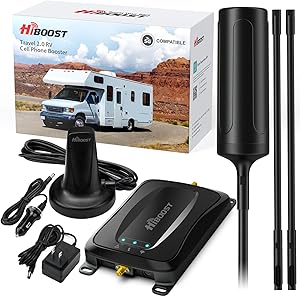
- Max Gain: 50dB
- Compatibility: All U.S. Carriers
- Approval: FCC Approved (OWWC110505S)
- Monitoring: Signal Supervisor App
The HiBoost Travel 2.0 acts as a high-octane megaphone for your mobile data. Engineered to support both 4G and 5G LTE, this kit is a universal solution for anyone toggling between Verizon, AT&T, or T-Mobile. It doesn’t just stop at voice quality; it aggressively targets slow data speeds, making it a favorite for remote workers who rely on stable hotspots. The FCC-approved hardware ensures you stay within regulatory bounds while significantly expanding your digital reach in stationary or mobile scenarios.
What truly sets this unit apart is its emphasis on user control. The 13-foot cable attached to the indoor antenna offers enough slack to move your “signal hub” from the dining nook to the bedroom as your day evolves. Paired with the Signal Supervisor app, you get a real-time window into your performance metrics, removing the guesswork from antenna placement. It is a smart, adaptable system for the RVer who demands precision and modern 5G compatibility without a complex permanent installation.
- Pros:
- Strong signal boost for calls, data, and streaming.
- Flexible indoor antenna for targeted signal.
- Wide compatibility with all major U.S. carriers and 5G.
- Cons:
- Requires manual repositioning of indoor antenna for optimal localized signal.
- Relies on an app for full performance monitoring.
2. weBoost Drive X RV Cell Phone Signal Booster Kit

- Carrier Compatibility: All U.S. & Canadian Carriers
- Range Improvement: Up to 33% farther than Drive Sleek
- FCC Approval: PWO460021
- Installation: DIY, no drilling required
The weBoost Drive X RV is a cross-border powerhouse designed for those whose adventures frequently take them across the 49th parallel. It offers a significant 33% range increase over entry-level models, effectively hunting down towers that other boosters might miss. This added reach is a game-changer for reducing dropped calls and stabilizing video streams in the deep woods. Because it supports multiple users simultaneously, every passenger enjoys the same high-speed benefits, making it the ultimate family-friendly companion for long-haul treks.
Installation is where this unit shines for the tool-shy owner. The “no-drill” philosophy means you can secure your connection without compromising the structural integrity or resale value of your RV. Its modular outdoor antenna is built to take a beating from the elements, reflecting its rugged, Made-in-the-USA pedigree. While it lacks a flashy monitoring app, its “set it and forget it” reliability makes it a top-tier choice for those who want professional-grade amplification without the need for constant technical tinkering or manual adjustments.
- Pros:
- Extended range for reaching distant cell towers.
- Multi-user support for all passengers and devices.
- Modular outdoor antenna design for flexible mounting.
- Cons:
- Does not specify maximum gain in dB.
- No app for active signal monitoring or fine-tuning.
3. SureCall Fusion2Go 3.0 RV Cell Signal Booster

- Technology: SureCall 2XP Technology (up to 2x output power)
- Compatibility: All North American Carriers, 5G Phone Compatible
- External Antenna: Permanent Omni-directional
- Internal Antenna: Whip-style
The SureCall Fusion2Go 3.0 RV utilizes proprietary 2XP technology to essentially double the uplink power compared to standard competitors. This focuses on the “return trip” of your signal, ensuring that even if you can hear the tower, the tower can hear your phone back—a common bottleneck in remote areas. By optimizing this two-way street, the Fusion2Go provides exceptionally clear voice quality and snappier data responses. It is a “workhorse” unit housed in a durable metal chassis, designed to survive the vibrations and heat of constant travel.
Setting up the hardware is straightforward thanks to the permanent omni-directional roof antenna. Unlike directional models that require precise aiming, this antenna grabs signals from 360 degrees, making it perfect for those who change locations daily. Inside, the simple whip antenna provides a concentrated “hot zone” for your devices. While the signal strength dissipates the further you move from the whip, its 5G compatibility and “Assembled in the USA” stamp of quality provide a future-proof solution for anyone traversing the diverse landscapes of North America.
- Pros:
- Enhances signal for multiple devices simultaneously.
- 2XP Technology extends range from cell towers.
- Compatible with all major North American carriers, including 5G.
- Cons:
- Signal is strongest near the indoor whip antenna, not uniform throughout RV.
- Permanent omni-directional antenna might offer less targeted gain than a directional antenna.
4. TFCFL 2G/3G/4G GSM Mobile Signal Amplifier Kit
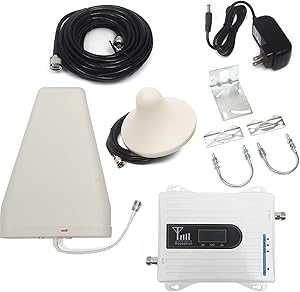
- Frequency Bands: GSM DCS WCDMA 900/1800/2100MHz (2G/3G/4G)
- Coverage Area: Up to 300-500㎡ (without barriers)
- Housing Material: Aluminum Alloy
- Simultaneous Users: Supports 20+ cell phones
The TFCFL Signal Amplifier is an industrial-style solution focused on sheer volume and coverage area. It is designed to blanket large spaces—up to 500 square meters—making it a potential candidate for massive motor coaches or stationary structures where multiple people need basic connectivity. Its aluminum alloy shell isn’t just for show; it serves as a massive heat sink to ensure the unit stays cool while managing up to 20 simultaneous connections. For those prioritizing coverage footprint over mobility, this unit offers a wide net for legacy cellular bands.
However, users must proceed with caution regarding its technical specs. This booster operates on international frequency bands (900/1800/2100MHz) which do not align perfectly with the primary LTE and 5G bands used by major North American carriers. Furthermore, the lack of FCC approval and 5G support makes it a niche product, likely better suited for international travel or very specific older network architectures. While the price point and coverage area are tempting, it lacks the specialized engineering required to navigate the modern, high-speed cellular landscape of the United States and Canada.
- Pros:
- Expansive coverage area of 300-500㎡.
- Durable aluminum alloy shell with good heat dissipation.
- Supports a large number of simultaneous users (20+).
- Cons:
- Limited frequency band compatibility, not ideal for modern North American LTE/5G.
- Does not boost 5G networks.
5. weBoost Destination RV Cell Phone Signal Booster

- Usage: Stationary RVs, trailers, campers
- Antenna Type: Directional, with 10-minute setup
- Compatibility: All U.S. & Canadian Carriers, 5G compatible
- Approval: FCC Approved
If your RV lifestyle involves setting up camp for weeks at a time, the weBoost Destination RV is your best bet. Unlike “on-the-go” boosters that sacrifice raw power for 360-degree convenience, this system uses a high-gain directional antenna to pinpoint a single tower. This results in the most stable and powerful connection possible for stationary setups. It is specifically optimized for high-bandwidth tasks like 4G/5G streaming and heavy remote work, ensuring that your temporary campsite feels like a high-speed home office.
The setup process is surprisingly painless, taking roughly 10 minutes to deploy or pack away. This “telescoping” approach to connectivity allows you to reach towers that are completely invisible to other mobile boosters. By using the weBoost app for guided installation, you can perfectly align the antenna for peak performance. It’s a specialized tool for the “destination” traveler who values a rock-solid, FCC-approved connection over the ability to boost signal while cruising the highway, offering unmatched reliability for those who stay put.
- Pros:
- Optimized for powerful stationary signal boosting.
- Quick 10-minute setup and takedown.
- Supports 5G and multiple users across all US/Canadian carriers.
- Cons:
- Not designed for use while the RV is in motion.
- Directional antenna requires manual aiming for optimal performance.
6. HiBoost Travel 3.0 RV Max Cell Phone Booster

- Max Gain: 50dB
- Antenna Mount: 180° Adjustable Folding Bracket
- Cable Length: Upgraded 26ft high-purity copper cable
- Compatibility: All U.S. Carriers (Band 12/17, 13, 5, 4, 25/2), 5G LTE
The Travel 3.0 RV Max is HiBoost’s 2025 flagship, designed to handle the most diverse fleet of mobile vehicles, from standard campers to luxury houseboats. With a 50dB gain and support for all critical U.S. frequency bands, it targets the specific gaps where 4G and 5G LTE signals typically fail. This model is built for the “always connected” traveler, facilitating seamless GPS navigation and remote meetings while on the move. The upgraded internal components are shielded to prevent interference, ensuring that every decibel of gain translates into usable speed.
Innovation shines in the mounting hardware. The 180° adjustable folding bracket is a masterclass in RV engineering, allowing you to lock the antenna into four distinct angles or fold it flat for low-clearance travel. HiBoost also addressed a common pain point by including a 26-foot high-purity copper cable, which slashes signal loss by 30% during the journey from the roof to the amplifier. While it requires a slightly more hands-on installation than a magnetic puck, the payoff is a weatherproof, impact-resistant system that survives the rigors of the road.
- Pros:
- High-gain design suitable for various RV types.
- Robust, weatherproof, and impact-resistant outdoor antenna.
- Flexible 180° adjustable and foldable mounting bracket.
- Cons:
- Max gain of 50dB might be insufficient for extremely weak signal areas.
- Requires a more involved installation compared to magnetic-mount options.
7. weBoost Drive Reach RV II Cell Phone Signal Booster Kit

- Signal Reach: Up to 3X distance from nearest tower
- Outside Antenna Mount: 180° versatile bracket (T-slot, pole, fixed)
- Inside Antenna: Powerful mini panel, directional
- Power Options: AC/DC wall power and hardwire connections
- Model Number: 474061
The Drive Reach RV II is the elite tier of mobile signal amplification, boasting the ability to reach towers three times further than standard models. This isn’t just a slight improvement; it’s a categorical shift that can reduce dropped calls by 90% in “no-man’s-land” territories. By supporting all major U.S. carriers on 4G and 5G, it serves as a universal backbone for your mobile network. The inclusion of hardwire power options alongside standard AC/DC plugs makes it the most flexible choice for professional custom RV builds or DIY enthusiasts alike.
The hardware design is equally impressive, featuring a new mini-panel indoor antenna that allows you to aim the boosted signal like a flashlight towards your workstation. On the roof, the versatile 180° bracket accommodates T-slots, poles, or fixed mounts, ensuring a perfect fit regardless of your roof rack configuration. A dedicated cable entry cover and a 25-foot low-attenuation cable ensure that the “clean” signal isn’t degraded before it reaches your devices. It is a premium, rugged, and intelligently designed kit for those who refuse to compromise on connectivity.
- Pros:
- Significantly extends signal reach (up to 3X distance).
- Versatile 180° mounting bracket for outdoor antenna.
- New cable entry cover and improved cable for easier routing.
- Cons:
- Directional indoor antenna requires optimal placement for concentrated signal.
- “Up to 3X distance” is a relative metric, not an absolute gain value.
How to Purchase RV Cellular Signal Booster
Buying an RV cellular signal booster is an investment in your safety and sanity on the road. However, walking into this purchase without a plan is like navigating without a map—you might end up with a high-priced paperweight. This section will guide you through the process of selecting and purchasing the perfect unit for your mobile lifestyle.
Step 1: Audit Your Connectivity Needs
Before you click “Add to Cart,” you need to understand how you actually use your data. Are you a digital nomad who spends 8 hours a day on Zoom calls? If so, you need a high-gain, 5G-compatible booster like the weBoost Drive Reach RV II. If you only need to check the weather and occasionally text family while at a campsite, a stationary-only model or a more affordable omni-directional unit will suffice. Consider the following:
- Stationary vs. Mobile: Do you need a signal while driving, or only when parked?
- Device Count: How many phones and tablets will be drawing signal simultaneously?
- Travel Zone: Are you staying in the US, or crossing into Canada and Mexico?
Step 2: Decode the Technical Specs
Don’t let the marketing jargon confuse you. When shopping, focus on three primary numbers: Decibels (dB), Frequency Bands, and FCC Approval.
Decibels (dB): This is the measure of “gain.” For mobile RV boosters, the legal limit is typically 50dB. For stationary units, it can go up to 65dB. A higher number means a better ability to amplify a whisper-thin signal into a shout. Frequency Bands: Ensure the booster supports the specific bands used by your carrier. In the US, bands 12, 13, 17, 5, 4, and 2 are standard. FCC Approval: This is non-negotiable. Using a non-approved booster is illegal in the US and can interfere with emergency services. Always look for the FCC ID on the product listing.
Step 3: Choose Your Antenna Architecture
The physical design of the antennas determines how much “work” you have to do to get a signal. You must choose between Omni-directional and Directional (Yagi) antennas.
- Omni-directional: Best for “set it and forget it” travel. It pulls signal from all directions, which is perfect for moving vehicles.
- Directional: Best for extreme remote camping. You have to manually aim it at the nearest tower, but it provides a much stronger boost than an omni antenna.
Step 4: Verify Installation Requirements
Review the installation manual before purchasing. Some kits, like the weBoost Drive X, offer “no-drill” options using magnetic mounts or existing ladder racks. Others require drilling a hole through your RV’s roof for cable entry. If you aren’t comfortable with DIY mechanics, look for a kit that includes a “cable entry cover” to simplify the process and prevent leaks. Also, check the power source—ensure the unit can run on your RV’s 12V DC system if you plan on boondocking without an inverter.
Step 5: Check for Future-Proofing (5G Support)
The cellular world is moving away from 3G and 4G. When purchasing today, it is highly recommended to select a booster that explicitly mentions 5G compatibility. Even if your current phone is 4G, your next one won’t be. Buying a 5G-ready booster ensures you won’t have to replace your entire system in two years as carriers upgrade their towers.
Step 6: Price vs. Performance
Expect to spend between $300 and $700 for a quality North American RV booster. Be wary of units under $200; these are often international models (like the TFCFL) that lack FCC approval and won’t work on major US carriers. While the initial cost of a premium brand like weBoost or HiBoost is higher, the inclusion of warranties, US-based support, and verified performance makes them the smarter long-term purchase.
Step 7: Finalize Your Purchase
Once you’ve identified your model, buy from a reputable retailer with a solid return policy. Signal boosters depend heavily on your specific location and RV construction; occasionally, a specific model might not play well with your layout. Having a 30-day return window allows you to test the unit in a real-world “dead zone” to ensure it meets your expectations. Check for “Kit” versions that include all necessary cables and mounts so you aren’t stuck making extra trips to the hardware store.
By following these steps, you transform a confusing technical purchase into a strategic upgrade for your RV. A good booster isn’t just an accessory; it’s the key to maintaining your digital lifestyle while enjoying the beauty of the wilderness.