The open road is a siren song for the modern nomad, but nothing strikes a sour note quite like the hiss of a failing tire. When you’re hauling several tons of home-on-wheels, a standard car jack is about as useful as a toothpick. Mastering the art of the roadside recovery starts with selecting a lifting partner that respects the sheer physics of your rig. From ingenious ramps to hydraulic muscle, let’s explore the heavy-hitters designed to keep your wanderlust unhindered.
1. Beech Lane RV Tire Changing Traction Ramp

- Lift Height: Approx. 5.5 – 6 inches
- Weight Capacity: Up to 15,000 lbs
- Material: Heavy-duty, weather-resistant polymer
- Compatibility: Designed for dual-axle RVs and trailers
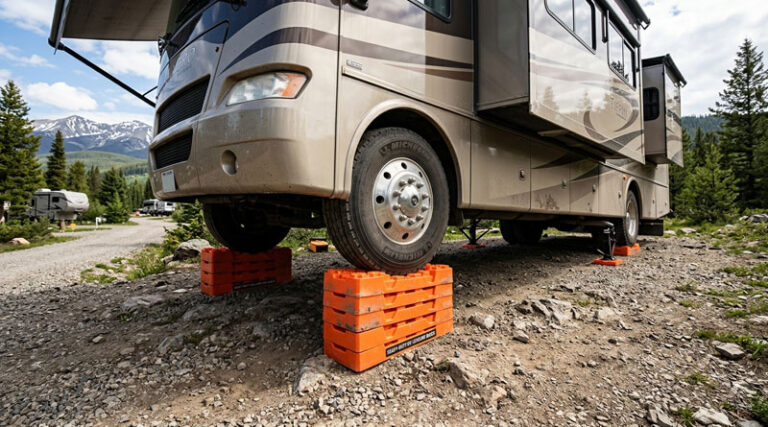
For those who prefer physics over pumping, the Beech Lane Traction Ramp is a masterclass in simplicity. This tool discards the mechanical complexity of traditional jacks in favor of a drive-on wedge design. By simply pulling your good tire onto the ramp, the adjacent flat is hoisted into the air through the natural leverage of your tandem axle setup. It’s an elegant solution that works exceptionally well on soft shoulders or gravel where a bottle jack might sink or tip, offering a stable, wide-base lift that feels significantly more secure than a narrow metal post.
Constructed from a high-density polymer, this ramp is built to survive the elements and the crushing weight of a fully loaded trailer. Its primary appeal lies in the lack of moving parts; there are no seals to leak, no valves to fail, and no manual labor involved beyond driving a few inches forward. It is the ultimate “set it and forget it” emergency tool for tandem-axle owners. While it requires a bit of space to store, the peace of mind it provides—knowing you won’t be struggling with a stubborn hydraulic handle in the rain—makes it a top-tier addition to any travel toolkit.
- Pros:
- Eliminates physical strain of manual pumping
- No hydraulic components to maintain or break
- Excellent stability on uneven or soft terrain
- Cons:
- Exclusively compatible with tandem axle trailers
- Requires the vehicle to be mobile to create lift
2. HEELP ZS1015 Electric Hydraulic Car Jack Kit

- Lift Capacity: 5 Ton (11,000 lbs)
- Lifting Range: 6.1 to 17.7 inches
- Power Source: 12V DC via car cigarette lighter
- Included: Electric impact wrench, tire inflator
The HEELP ZS1015 brings a pit-crew mentality to the solo traveler. This electric-hydraulic hybrid removes the “work” from “roadwork” by utilizing your RV’s 12V power to do the heavy lifting. With a 5-ton capacity, it is robust enough for most mid-sized campers and trailers. The kit is designed for those who might find manual bottle jacks physically taxing or simply want to minimize their time spent on a dangerous roadside shoulder. It’s a comprehensive emergency ecosystem, often packing an impact wrench and inflator into one case, ensuring you aren’t hunting for multiple tools in the dark.
Safety and speed are the dual pillars of this device. The internal hydraulic system provides a smooth, controlled ascent at the touch of a button, while the integrated safety features help prevent the jack from dropping if power is lost. The inclusion of an electric impact wrench is a game-changer for stubborn, rusted-on lug nuts that often defy manual cross-wrenches. While you do need to manage a power cord and ensure your 12V outlet is functioning, the sheer reduction in physical exertion makes this an invaluable asset for older travelers or anyone prioritizing a high-tech, low-effort recovery solution during a blowout.
- Pros:
- Effortless operation with push-button controls
- Comprehensive kit includes wrench and inflator
- Controlled lifting speed for better safety
- Cons:
- Dependent on a functional 12V power source
- More mechanical parts that could potentially fail
3. ROBLOCK Heavy-Duty Trailer Jack & Leveling Block

- Lift Height: Up to 6 inches
- Weight Capacity: Up to 35,000 lbs
- Material: UV-resistant polymer
- Functionality: Tire change aid and leveling block
In the world of RVing, space is the ultimate currency, and the ROBLOCK Heavy-Duty block is a high-value investment because of its dual personality. It isn’t just a tire-changing aid; it serves as a rugged leveling block for when you finally reach your destination. Boasting a massive 35,000-lb capacity, this block is engineered to handle even the heaviest fifth-wheels without flinching. The drive-on design for tire changes makes it a reliable companion for tandem axle owners, providing a high-visibility, high-stability platform that eliminates the precarious “balancing act” often associated with vertical bottle jacks on unpaved roads.
The UV-resistant polymer construction is specifically chosen to withstand years of sun exposure and heavy compression. Because it doubles as a leveling tool, you’re likely to have it accessible at all times rather than buried at the bottom of a storage bay. This accessibility is crucial during an emergency when every second counts. The textured surface ensures your tires maintain grip even in wet or muddy conditions, preventing the “slip-off” risks common with smoother metal jacks. For the RVer who values multi-purpose gear that can take a beating and still perform, this block is a quintessential piece of hardware for the long haul.
- Pros:
- Multi-functional: works for both repair and camping
- Extreme weight capacity for heavy rigs
- Virtually indestructible UV-resistant material
- Cons:
- Limited to tandem axle vehicles for tire lifting
- Requires enough space to drive the vehicle forward/backward
4. Camco Trailer Aid Plus Tandem Tire Ramp
- Lift Height: 5.5 inches
- Weight Capacity: 15,000 lbs
- Material: Strong, lightweight polymer
- Features: Waterproof, rustproof, no cargo unloading
The Camco Trailer Aid Plus is a legend in the towing community for a very specific reason: it respects your cargo. Whether you’re hauling horses, motorcycles, or a full kitchen, this ramp allows you to change a tire without the grueling process of unloading to reduce weight. The 5.5 inches of lift is meticulously calculated to provide enough ground clearance for the most common trailer tire sizes. Its bright yellow or stark black options offer high visibility, which is a subtle but vital safety feature when you’re working near traffic in low-light conditions or bad weather.
What truly separates the Camco model is its balance of weight and strength. At only 8 lbs, it won’t eat into your payload capacity, yet it stands firm under a 15,000-lb load. The waterproof and rustproof nature of the polymer means it can live in a damp exterior storage compartment for years without losing its structural integrity. It is designed with a “honeycomb” internal structure that provides maximum compression strength without the bulk of solid plastic. For tandem axle owners who want a proven, brand-name solution that has been stress-tested across thousands of miles, the Trailer Aid Plus remains the gold standard.
- Pros:
- Lightweight and extremely easy to transport
- Enables tire changes without unloading heavy cargo
- Proven durability from a trusted RV brand
- Cons:
- Not suitable for trailers with wide axle spacing
- May struggle with exceptionally low-profile trailers
5. OULEME Raised Tire Change Ramp & Leveling Blocks
- Lift Height: Up to 6 inches
- Weight Capacity: Up to 35,000 lbs
- Material: Premium anti-aging, UV-resistant polymers
- Safety Features: Double anti-slip design with rubber pads
When “heavy duty” isn’t just a label but a requirement, the OULEME Raised Tire Change Ramp steps up. This is the heavyweight champion of drive-on jacks, designed specifically for massive trailers and campers that exceed standard weight ratings. By providing a full 6 inches of lift, it ensures that even a completely shredded tire has enough clearance to be swapped out for a fresh spare. The “anti-aging” polymer blend is a thoughtful touch, ensuring that the block doesn’t become brittle after spending a few seasons in the baking sun of a desert campsite or the freezing humidity of the north.
Safety is the primary focus of the OULEME design. It features an integrated gear-mesh system between the ramp and the chock, creating a mechanical lock that prevents the trailer from rolling back while it’s elevated. Coupled with thickened rubber pads for the base, it grips the pavement or dirt with tenacity. This “double anti-slip” approach is vital for heavy RVs, where any shift in weight could be catastrophic. If you are operating a high-capacity tandem axle rig and want a tool that feels as over-engineered as your vehicle, OULEME provides that extra layer of security and professional-grade performance.
- Pros:
- Superior 6-inch lift for maximum clearance
- Massive 35,000-lb capacity for heavy trailers
- Exceptional grip with rubber pads and locking chocks
- Cons:
- Bulkier than standard ramps
- Limited to tandem-axle configurations
6. Andersen Hitches Single Rapid Jack
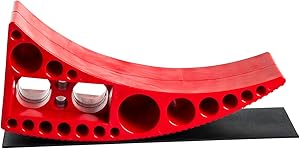
- Weight Capacity: 30,000 lbs
- Functionality: Jack, wheel chock, jack post block
- Construction: High-strength materials
- Origin: Made in the USA
The Andersen Hitches Rapid Jack is the Swiss Army knife of the RV world. It’s a crescent-shaped beast that performs three distinct roles: it’s a tire-changing jack, a sturdy wheel chock, and a jack post block for when you’re unhooking at the site. This Made-in-the-USA tool is born from a philosophy of efficiency. Instead of carrying three different pieces of plastic or wood, you carry one 30,000-lb capacity powerhouse. Its unique curve allows for a smooth “rocking” motion as you drive onto it, which provides a more controlled lift than many traditional stepped ramps.
Durability is where Andersen really shines. This isn’t just plastic; it’s a high-strength composite designed to resist chemicals, grease, and extreme pressure. Because it can be used under the tongue jack as a post block, it’s constantly proving its worth, meaning you’ll never have to dig for it during a tire emergency. The lifetime warranty is a rare find in the world of automotive accessories, signaling the manufacturer’s confidence in its longevity. For the RVer who demands premium quality and wants to declutter their storage bays without sacrificing safety, the Rapid Jack is an investment in long-term convenience.
- Pros:
- Three-in-one utility saves significant storage space
- Extremely high capacity and lifetime warranty
- Crescent design offers a smoother lifting experience
- Cons:
- Requires a specific amount of clearance between tires
- Not a replacement for a hydraulic jack on single-axle rigs
7. BIG RED Torin 10 Ton Hydraulic Bottle Jack
- Lift Capacity: 10 Ton (20,000 lbs)
- Lifting Range: 8-13/16″ to 17-5/8″
- Construction: Drop forged alloyed steel, welded structure
- Safety: Built-in oil-bypass and overload valve
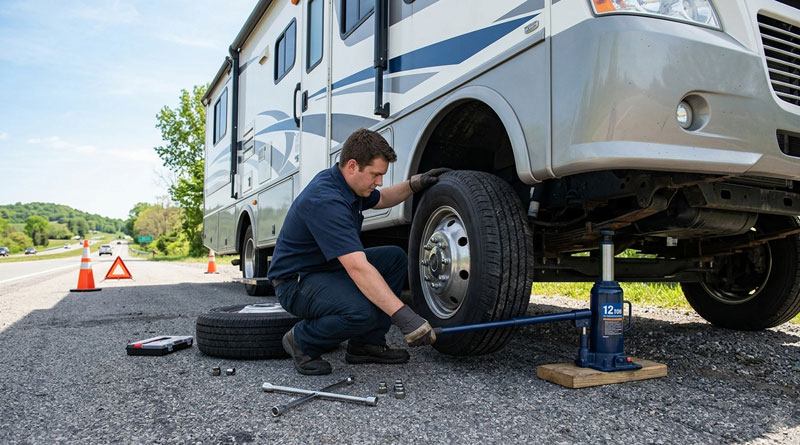
When the terrain gets tough and the axle configuration doesn’t allow for a ramp, the BIG RED Torin 10-Ton Bottle Jack is the tool you want in your hand. This is old-school mechanical muscle at its finest. Unlike consumer-grade car jacks, this bottle jack is built with drop-forged alloyed steel and a fully welded structure to prevent the leaks that plague cheaper models. Its 10-ton capacity provides a massive safety buffer for most RVs, and the serrated, heat-treated saddle ensures that once you find a jack point, the vehicle isn’t going anywhere. It’s the definitive “problem solver” for single-axle trailers.
The versatility of the Torin jack lies in its adjustable screw top. This allow you to bridge the gap between the jack and the frame without wasting precious hydraulic travel, maximizing your total lift height. It features a glide-action pressure pump that makes the manual work surprisingly manageable, even under heavy loads. Safety is reinforced by an internal bypass valve that prevents the jack from being over-extended, protecting the seals and the user. While it requires more “elbow grease” than an electric model, its reliability in extreme temperatures and its ability to work in tight spaces make it a mandatory backup for any serious traveler.
- Pros:
- Unrivaled lifting power for single-axle and heavy rigs
- Compact enough to fit in small toolboxes
- Professional-grade welded construction for leak prevention
- Cons:
- Requires manual pumping and physical effort
- Smaller base requires a very firm, level surface
How to Purchase the Right Jack For Your RV Tire Change
Selecting the right jack for an RV is not a “one size fits all” endeavor. It is a critical safety decision that requires a deep understanding of your vehicle’s specifications and your own physical capabilities. When you are stranded on the side of a highway, the last thing you want to discover is that your jack is two inches too short or 1,000 pounds under-rated. This guide will walk you through the nuances of purchasing the perfect recovery tool for your home on wheels.
Step 1: Know Your Numbers (Weight and GVWR)
The most common mistake RVers make is buying a jack based on their vehicle’s “dry weight.” Your jack doesn’t lift a dry vehicle; it lifts a vehicle filled with water, propane, gear, and groceries. You must look at your Gross Vehicle Weight Rating (GVWR). A good rule of thumb is to select a jack that can handle at least 50% to 75% of your total GVWR, as the jack will only be lifting one side or one corner at a time. However, for bottle jacks, higher is always better. A 10-ton jack is often easier to pump than a 5-ton jack when lifting the same 4,000-lb load because the internal hydraulics don’t have to work as hard.
Step 2: Assess Your Axle Configuration
Your axle setup dictates the type of jack you should buy:
- Tandem or Triple Axle: You have the luxury of using drive-on ramps (like the Camco or OULEME models). These are generally safer because the vehicle remains on its own tires and suspension while being lifted. They are also much faster to deploy in an emergency.
- Single Axle: You must use a vertical lift jack, such as a hydraulic bottle jack or an electric jack. Ramps will not work because there is no secondary tire to support the weight.
Step 3: Measure Your Clearance (The “Flat Tire” Factor)
This is where many travelers get stuck. A jack might fit under your RV frame when the tire is inflated, but what about when the tire is flat? When a tire loses air, the frame of the RV drops several inches.
Minimum Height: Ensure the jack’s “retracted” height is low enough to slide under the axle or frame even when the tire is on the rim.
Maximum Lift: Conversely, the jack must extend high enough to not only lift the rim off the ground but also provide enough space to slide a fully inflated spare tire back onto the lugs. Many bottle jacks require a “cribbing block” (a sturdy piece of 4×4 wood) to achieve this extra height safely.
Step 4: Consider the Operating Environment
Where do you travel? If you spend your time in paved RV parks, a standard bottle jack is fine. If you are a “boondocker” who frequents sandy deserts or muddy forest roads, a bottle jack becomes a liability because its small base will sink into the ground. In these cases, drive-on ramps or airbag jacks are superior because they distribute weight over a much larger surface area. If you stick with a bottle jack, you must also purchase a “jack pad” or a heavy-duty base plate to prevent it from sinking or tipping.
Step 5: Power vs. Manual
Be honest about your physical strength. Pumping a 10-ton manual jack while crouched under an RV is strenuous work. If you have back issues, joint pain, or simply want to minimize time in the “danger zone” next to traffic, an electric hydraulic jack is worth the extra cost. However, remember that electric tools require a power source. Always ensure your 12V system is accessible or carry a portable power jump-starter that can run the jack independently of the vehicle.
Step 6: Material and Build Quality
For ramps, look for UV-resistant polymers. Cheap plastic will become brittle after a summer in the sun and could crack under load. For hydraulic jacks, look for welded construction rather than “bolted” or “cast” parts. A welded jack is far less likely to develop hydraulic fluid leaks over time. Also, pay attention to the “saddle”—the part that touches the RV. A serrated or grooved saddle provides much better grip than a smooth one, reducing the risk of the jack slipping out from under the frame.
Final Checklist for Your Purchase:
- Weight Rating: Is it at least 2x the weight of the corner you are lifting?
- Storage Space: Does it fit in your storage bay without being buried?
- Ease of Use: Can you operate it alone in the dark/rain?
- Safety Certifications: Is it ASME PASE compliant (for jacks)?
- Warranty: Does the company stand behind the product for at least a year?
By prioritizing these factors, you transform a potential roadside disaster into a minor, manageable delay. A high-quality jack isn’t just a tool; it’s an insurance policy for your freedom on the road. Choose wisely, and you’ll spend more time at the campfire and less time on the shoulder.
Always prioritize safety. Never place any part of your body under a vehicle supported only by a jack. Use jack stands for any work that requires more than a simple tire swap.