Living in a metal box under the summer sun can quickly turn a dream road trip into a sweltering endurance test. Beyond just cooling things down, proper airflow is the silent guardian of your RV’s longevity, whisking away the moisture that invites mold and the cooking smells that linger far too long. Whether you’re looking for a high-tech breeze maker or a simple bathroom exhaust, the right vent fan transforms your mobile sanctuary into a fresh, breathable home.
1. Kohree 14″ RV Vent Fan 10 Speed Reversible

- Airflow: 934 CFM
- Speed Settings: 10 adjustable speeds
- Noise Level: Max 50dB
- Features: Remote control, temperature & rain sensor, auto lid
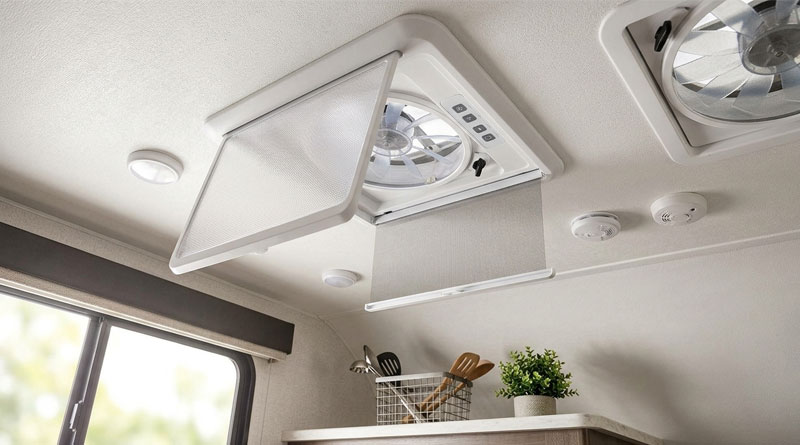
The Kohree 14″ Vent Fan is essentially the “smart home” upgrade for your rig’s ceiling. With a staggering 934 CFM capacity, it doesn’t just move air; it completely refreshes your interior environment in minutes. The built-in intelligence is the real draw here—a temperature sensor acts as a digital thermostat, kicking the fan into gear once the cabin hits 78.8°F. It’s a set-it-and-forget-it solution that ensures you never return to a localized oven after a day of hiking.
Crafted for the peace-seeking camper, this unit operates at a whisper-quiet 50dB even when pushed, making it ideal for light sleepers. The automated UV-proof lid is a mechanical marvel, lifting itself at your command or closing tight the second the rain sensor detects a drizzle. The kit is impressively DIY-friendly, arriving with all the necessary sealing tape and hardware to fit a standard 14″ opening. It’s a premium, high-efficiency powerhouse that consumes a mere 25W while offering total climate control via remote.
- Pros:
- Powerful airflow with smart temperature control
- Ultra-quiet operation at 10 speeds
- Automatic lid with rain sensor
- Cons:
- Lid caution in windy conditions
- Requires 14″x14″ opening
2. Ventline RV Roof Vent White with 12 Volt Fan

- Power: 12 Volt D.C. Fan
- Opening Size: 14.25″ X 14.25″ rough opening
- Lid Type: White plastic wedge shape aerodynamic
- Included: Garnish ring, putty tape, screws
If you believe that complexity is just another word for “something else that can break,” the Ventline RV Roof Vent is your kindred spirit. This is a foundational piece of hardware designed for reliability and straightforward utility. Featuring a classic aerodynamic wedge lid, it’s built to reduce wind drag while providing a dependable exit path for rising heat and humidity. It fits the slightly larger 14.25″ rough openings, making it a go-to replacement for many traditional trailer builds where standard sizing can be finicky.
While it skips the fancy sensors and remote-controlled bells and whistles, it wins on ease of installation. The package is a comprehensive “all-in-one” kit, including the garnish ring, putty tape, and mounting screws, saving you a frustrating trip to the hardware store. Users should handle the galvanized mounting flange with care, as the edges are notoriously sharp, but once installed, it provides a rugged, watertight seal. It is a no-nonsense, budget-friendly workhorse that does exactly what a vent should: keep the air moving without a fuss.
- Pros:
- Simple and reliable operation
- Includes all basic installation hardware
- Standard fit for many RVs
- Cons:
- Lacks advanced features (remote, sensor)
- Mounting flange can be sharp
3. RVMATE 14″ Remote RV Roof Vent Fan

- Control: Remote control (A/B/C buttons)
- Functions: Air in/out (reversible)
- Material: UV-resistant and waterproof plastic
- Included: Fan, remote, putty tape, manual handle (x2)
The RVMATE 14″ Remote Vent Fan strikes a perfect balance between modern convenience and rugged durability. Its most defining characteristic is the reversible motor, which grants you the power to choose between exhausting hot air or pulling in a cool evening breeze. This dual-action capability is a game-changer for those who cook inside their RVs, as it can clear out bacon smoke in seconds. The included remote control means no more standing on tiptoes or balancing on furniture to adjust your airflow settings.
Durability is baked into the design, utilizing high-grade UV-resistant plastic that won’t turn brittle or yellow under constant sun exposure. RVMATE has clearly thought about the installer’s experience, providing high-quality putty tape to ensure that “watertight” isn’t just a marketing claim but a reality. The process is streamlined, focusing on a standard 14″ footprint that makes it a painless swap for older, manual vents. It’s an mid-tier champion that brings the luxury of remote operation to a very accessible price point, focusing on the features that truly matter for daily comfort.
- Pros:
- Convenient remote control
- Reversible airflow (intake/exhaust)
- Durable, UV-resistant construction
- Cons:
- Lacks advanced features like thermostat
- Fan speed options not specified
4. PlusRoc RV Vent Fan Replacement 6 inches

- Blade Size: 6 inches
- Power: 12V D-Shaft Motor
- Compatibility: Heng’s, Elixir, Jensen 12-volt power vents
- Airflow Options: 130 CFM to 250 CFM
The PlusRoc 6-inch replacement is the precision instrument of the ventilation world, specifically designed to solve the “steam room” problem in RV bathrooms. Instead of replacing an entire roof unit, this motor and blade assembly allows you to breathe new life into existing housings from major brands like Jensen or Elixir. It’s a targeted strike against stagnant air and humidity, offering a range of power levels from a whisper-quiet 130 CFM to a more aggressive 250 CFM for those particularly steamy showers.
Engineered with a permanently lubricated D-shaft motor, this fan is built for a long, maintenance-free life in the most humid part of your vehicle. What sets PlusRoc apart is the inclusion of metal brackets, ensuring that even if your vent isn’t a “perfect” brand match, you can still achieve a secure, custom fit. The plastic blades are rust-proof and corrosion-resistant, which is vital for a component constantly exposed to bathroom moisture. It’s an economical and highly effective way to upgrade localized air quality without the labor of a full roof-cut installation.
- Pros:
- Enhanced targeted ventilation (bathroom)
- High compatibility with major brands
- Multiple CFM options for preference
- Cons:
- Smaller size, not for whole-RV ventilation
- May require customization for some vents
5. MAXXAIR Maxxfan Deluxe Vent Fan 00-07500K

- Speed Settings: 10-speed reversible fan
- Control: Thermostat, remote control
- Protection: Built-in rain cover
- Warranty: 2-year limited, lifetime on lid
The MAXXAIR Maxxfan Deluxe 07500K is widely considered the gold standard of RV ventilation, and for good reason. It is a 3-in-1 marvel that combines a high-volume fan, a roof vent, and a rain shield into a single, sleek silhouette. The most significant flex of this unit is its ability to operate while fully open in a downpour—thanks to the clever integrated rain cover. You can maintain a fresh breeze during a thunderstorm or even while cruising down the highway, something most other vents simply cannot handle without an expensive add-on cover.
Inside, the 10-speed reversible motor gives you surgical control over your environment, while the built-in thermostat manages the climate automatically. The smoke-colored lid is not only aesthetically pleasing but backed by a lifetime warranty, signaling Maxxair’s confidence in their materials. Maintenance is just as thoughtful; the interior insect screen pops out without tools, making it easy to keep the airflow clean. While it carries a higher price tag and a slightly more involved installation process, it is an investment in total comfort that pays dividends every time the weather turns sour.
- Pros:
- All-in-one ventilation solution
- Powerful 10-speed reversible fan
- Built-in rain cover allows use in any weather
- Cons:
- Higher price point
- Installation may be more complex than basic vents
6. Furrion 10-Blade 14″ RV Rooftop Vent Exhaust Fan

- Blades: 10-blade design
- Speed Settings: Four fan speeds
- Mount Design: Flush-mount for 2″ to 7″ thick roofs
- Included: Installation hardware, sealant, butyl tape, trim ring
Furrion is known for bringing high-end design to the RV world, and their 10-blade exhaust fan is no exception. This unit focuses on moving massive amounts of air efficiently through its aerodynamically optimized 10-blade configuration. It offers four distinct speeds, allowing you to cycle from a gentle “night mode” to a high-powered exhaust that clears out odors instantly. It’s specifically engineered for versatility, with a flush-mount design that accommodates a massive range of roof thicknesses from 2″ to 7″, making it a unicorn in the world of thick-roofed 5th wheels.
The user interface is centered around intuitive push-button controls that feel modern and tactile. Beyond the fan itself, Furrion wins the “Best Presentation” award by including every single chemical and fastener you could possibly need: self-leveling sealant, butyl tape, and a trim ring are all in the box. This eliminates the “forgotten part” frustration common in DIY projects. While it doesn’t offer intake (it’s exhaust only), it performs its primary job with a level of sleekness and efficiency that makes it a top-tier choice for owners looking for a clean, professional aesthetic.
- Pros:
- Robust 10-blade design with four speeds
- Energy-efficient Speed-1 setting
- Sleek flush-mount aesthetic
- Cons:
- Only exhaust (no intake specified)
- Lacks advanced features like remote/rain sensor
7. MAXXAIR Maxxfan Deluxe Vent Fan 00-06401K

- Power: 12V DC, variable-speed fan
- Speed Options: 4 speeds
- Fan Capacity: 900 CFM, 12″ diameter, 10 blades
- Roof Thickness: Fits roofs 1-1/8″ to 6-1/2″ thick
The MAXXAIR 00-06401K is the streamlined sibling of the flagship Deluxe series, offering the same legendary rain protection with a more focused feature set. It retains the powerful 900 CFM exhaust capacity that made the brand famous, utilizing a 12-inch, 10-blade fan to create a high-velocity air exit. This model is the perfect choice for RVers who prioritize heavy-duty exhaust performance—such as over a galley or in a toy hauler—but don’t feel the need for 10 different speeds or a remote control.
Controlled by a flush-mounted keypad on the unit itself, it offers four variable speeds that handle everything from moisture control to rapid heat evacuation. Like its more expensive counterparts, it features the integrated rain cover that allows for ventilation 24/7, regardless of the forecast. It is designed to be a “forever” vent, with an easy-to-clean bug screen and a robust construction that fits standard 14″ openings. For the practical traveler who wants the reliability and rain-proof benefits of a Maxxfan without the “deluxe” price tag of electronic automation, this model is the ideal compromise.
- Pros:
- All-in-one design with built-in rain cover
- Powerful 900 CFM exhaust capacity
- 4-speed variable control
- Cons:
- Exhaust air only (not reversible)
- Keypad control, not remote
- Requires specific roof thickness
How to Purchase the Perfect RV Vent Fan: The Ultimate Buyer’s Guide
Buying an RV vent fan might seem like a simple hardware purchase, but it is actually one of the most impactful upgrades you can make to your mobile lifestyle. A high-quality fan acts as the lungs of your RV, regulating temperature, managing humidity, and ensuring that the air you breathe is fresh. However, the market is flooded with options ranging from fifty-dollar plastic lids to four-hundred-dollar climate control systems. Navigating this landscape requires a deep dive into technical specifications, installation realities, and personal travel habits. This guide will break down everything you need to know to make a confident purchase.
1. Assessing Your Specific Ventilation Needs
Before you look at a single product page, you must evaluate how you actually use your RV. Not all fans are created equal, and their intended placement dictates the features you should prioritize. Are you a “boondocker” who camps off-grid without air conditioning? If so, high CFM (Cubic Feet per Minute) and low power draw are your top priorities. You need a fan that can move massive amounts of air to keep the cabin cool using only your 12V battery system.
If you primarily stay at luxury resorts with full hookups, your fan might serve a different purpose, such as quickly exhausting steam from the shower or cooking smells from the kitchen. In these cases, a smaller, specialized exhaust fan like the PlusRoc might be more appropriate than a whole-coach Maxxfan. Consider the “zones” of your RV. Most travelers find that a high-end, reversible fan in the main living area combined with a simpler exhaust fan in the bathroom provides the perfect balance of airflow and budget management.
2. Decoding the Tech Specs: CFM, Amps, and Decibels
When comparing fans, three numbers matter more than any others: CFM, Amps, and Decibels. CFM (Cubic Feet per Minute) tells you how much air the fan actually moves. For a standard 20-30 foot trailer, a fan with 900+ CFM can completely cycle the interior air every few minutes. If the CFM isn’t listed, look at the blade count and diameter; more blades typically equate to smoother, higher-volume airflow.
Amperage (Amps) is crucial for battery management. Most high-quality 12V fans pull between 1.5 and 5 amps on high speed, but significantly less on low settings. If you rely on solar power, look for fans with “variable speed” or many speed increments (like 10-speed models), as they allow you to find a “sweet spot” where you get decent airflow with minimal battery drain. Finally, check the Decibel (dB) rating. A fan that sounds like a jet engine will ruin a quiet night in the woods. Aim for fans that stay under 50dB on medium settings.
3. The Reversibility Factor: Intake vs. Exhaust
One of the biggest choices you’ll face is whether to buy an exhaust-only fan or a reversible model. Exhaust-only fans are cheaper and excellent for bathrooms or kitchens where the goal is to push “bad” air out. However, for a living or sleeping area, a reversible fan is vastly superior. By setting the fan to “Intake,” you can pull cool evening air directly onto your bed or seating area. When used in conjunction with a cracked window at the other end of the RV, a reversible fan creates a “wind tunnel” effect that can drop the perceived temperature by several degrees without the noise of an AC unit.
4. Smart Features: Do You Really Need a Rain Sensor?
In the world of RVing, automation is a luxury that quickly becomes a necessity. A rain sensor is perhaps the most valuable “smart” feature. It prevents the nightmare scenario of leaving your vent open while you’re out exploring, only to return to a soaked interior after a surprise storm. If your budget allows, a rain sensor (or an integrated rain cover like the Maxxfan Deluxe) provides invaluable peace of mind.
Similarly, a thermostat allows the fan to act like an HVAC system. You can set it to 75°F, and the fan will automatically turn on while you’re away, preventing the RV from reaching 100°F and damaging your electronics or upholstery. Remote controls are often dismissed as “lazy,” but in an RV with high ceilings, they are a safety feature. Reaching for a manual crank while the vehicle is in motion or in the middle of the night can be difficult and dangerous.
5. Compatibility and Installation Realities
Most modern RVs use a standard 14″ x 14″ roof opening, but “standard” is a loose term in the world of vintage campers or European models. Before clicking “buy,” climb onto your roof and measure the existing flange. Additionally, measure your roof thickness. Some fans are designed for thin aluminum roofs, while others include “trim rings” or “garnish rings” that can extend to accommodate 6 or 7 inches of insulation and ducting.
Check the “kit” contents. A fan might look like a bargain until you realize you need to spend another $40 on butyl tape, self-leveling lap sealant (like Dicor), and wiring connectors. Brands like Furrion and Kohree often include these “install kits” in the box, which adds significant value. If you are replacing an existing fan, ensure the new unit’s screw holes don’t overlap awkwardly with the old ones, or be prepared to use plenty of sealant to fill the gaps.
6. Material Quality and Longevity
Your vent fan lives in the most hostile environment on your RV: the roof. It is constantly bombarded by UV rays, hail, and low-hanging tree branches. Look for lids made of high-density, UV-stabilized polyethylene. Cheap plastic will turn yellow and brittle within two seasons, leading to cracks and leaks. Some premium fans even offer a lifetime warranty on the lid itself—this is a strong indicator of quality. Smoke-tinted or opaque lids are also a consideration; smoke lids allow some light in (like a skylight), while white lids keep the bedroom darker for those who like to sleep in.
7. Brand Reputation and Warranty Support
In the RV community, certain brands have earned their stripes through decades of support. Maxxair and Fantastic Fan (Dometic) are the industry titans. Buying from them means you can easily find replacement motors, screens, or lids at almost any RV supply store in the country. Newer players like Kohree and RVMATE offer more features for less money, which is tempting for budget-conscious builders. If you go with a newer brand, check the warranty terms carefully. A 2-year warranty is the standard for a quality fan; anything less should be approached with caution.
8. Final Checklist Before Checkout
- Opening Size: Is it exactly 14″x14″?
- Power Source: Do you have 12V DC wiring at the vent location?
- Height Clearance: Will the fan lid clear your solar panels or roof rack?
- Direction: Do you need just exhaust, or intake as well?
- Automation: Does your climate require a rain sensor or thermostat?
Choosing the right RV vent fan is about finding the intersection of your travel style and your technical requirements. Whether you opt for the “indestructible” simplicity of a Ventline or the “set-it-and-forget-it” luxury of a Maxxfan Deluxe, the improvement in your quality of life will be immediate. Fresh air isn’t just a comfort; it’s the difference between a cramped trailer and a true home on wheels.