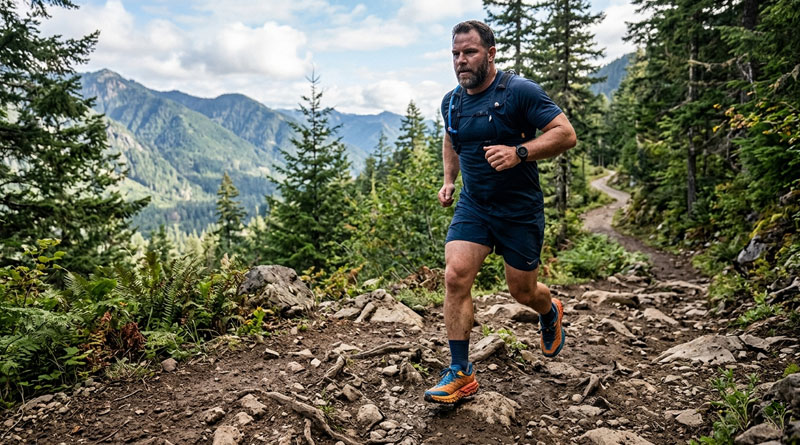
For heavy runners, finding the right trail running shoe isn’t just about comfort—it’s about staying injury-free and enjoying the run. You need extra cushioning to handle impact, strong support for stability, and durable grip on uneven ground. This guide breaks down the best trail shoes made for bigger bodies, focusing on fit, shock absorption, and long-lasting build. No fluff—just honest picks to keep you moving safely on any trail.
1. Topo Athletic Terraventure 5

- Trail Type: Rugged-Trail
- Heel-to-Toe Drop: 3 mm
- Outsole: Vibram Megagrip
- Weight: 1 lb. 4.6 oz. (pair)
The Topo Athletic Terraventure 5 is a rugged trail shoe built for runners who demand reliable traction and underfoot protection on technical terrain. ZipFoam EVA/TPU midsole delivers moderate cushioning with a responsive feel, while the low 3 mm drop encourages a natural foot strike. The recycled engineered mesh upper keeps things breathable and eco-conscious.
What sets this shoe apart is the combination of a Vibram Megagrip outsole and forefoot rock plate, giving trail runners both grip and protection on rocky, unpredictable surfaces. With a roomy Topo toe box and vegan construction, the Terraventure 5 is a well-rounded performer for runners seeking comfort without sacrificing durability.
- Pros: Excellent Vibram traction, forefoot rock plate, natural toe box, vegan-friendly
- Cons: Minimal arch support, not ideal for very high-mileage ultras
View Men’s at REI View Women’s at REI
2. Altra Lone Peak 9

- Trail Type: Rugged-Trail
- Heel-to-Toe Drop: 0 mm (zero drop)
- Outsole: MaxTrac rubber
- Weight: 1 lb. 6.4 oz. (pair)
The Altra Lone Peak 9 is a longtime favourite among trail runners and hikers alike, and the latest version keeps that legacy going strong. With a true zero-drop platform and a 25 mm stack height throughout, it promotes natural foot alignment and reduces strain on the lower legs during long efforts. The updated MaxTrac rubber outsole and rock plate add extra confidence on technical terrain.
Built on Altra EGO foam, the Lone Peak 9 strikes a balance between cushioning and ground feel. The ripstop mesh upper is lightweight yet durable enough for demanding conditions. Whether you’re tackling a local trail or a multi-day adventure, this shoe delivers the versatile, comfortable performance Altra fans expect.
- Pros: True zero drop, roomy toe box, versatile for running and hiking, rock plate protection
- Cons: Heavier than some competitors, takes adjustment for runners new to zero drop
View Men’s at REI View Women’s at REI
3. Saucony Peregrine 16

- Trail Type: Rugged-Trail
- Heel-to-Toe Drop: 4 mm
- Outsole: Vibram Megagrip rubber
- Weight: 1 lb. 3 oz. (pair)
Saucony’s Peregrine 16 is one of the lightest rugged-trail shoes in its class, making it a top pick for runners who want speed without sacrificing protection. The increased PWRRUN foam midsole delivers a noticeably more cushioned ride compared to previous versions, and the 4 mm drop keeps the feel natural and efficient underfoot.
Vibram Megagrip lugs provide outstanding traction on wet roots and slippery rocks, while the integrated rock plate shields your forefoot on sharp terrain. The synthetic and mesh upper with recycled PET lining is breathable and durable. If you want a fast, well-protected shoe for rugged trails, the Peregrine 16 is hard to beat at this weight.
- Pros: Lightweight, excellent Vibram grip, rock plate, increased cushioning vs. prior version
- Cons: Narrower fit may not suit wide feet, minimal heel collar padding
View Men’s at REI View Women’s at REI
4. HOKA Speedgoat 7

- Trail Type: Rugged-Trail
- Heel-to-Toe Drop: 5 mm
- Midsole: Supercritical foam EVA
- Weight: 1 lb. 3.4 oz. (pair)
The HOKA Speedgoat 7 raises the bar with a new supercritical foam midsole that delivers more energy return than its predecessor, all while keeping the shoe remarkably light. With a generous 37.3 mm heel stack and 33.3 mm forefoot, this is one of the most cushioned rugged-trail options available — ideal for runners who log high mileage on punishing terrain.
Vibram Megagrip rubber wraps the outsole, providing grip on trails of every variety — wet or dry, rocky or rooty. The textile and synthetic upper with woven rPET lining is both breathable and eco-conscious. For ultra-distance runners or anyone who values a plush, responsive ride on technical trails, the Speedgoat 7 is a benchmark shoe.
- Pros: Maximum cushioning, responsive supercritical foam, excellent Vibram grip, vegan-friendly
- Cons: No rock plate, higher stack may reduce ground feel for some runners
View Men’s at REI View Women’s at REI
5. Topo Athletic Pursuit 3

- Trail Type: Rugged-Trail
- Heel-to-Toe Drop: 0 mm (zero drop)
- Outsole: Vibram Megagrip
- Weight: 1 lb. 5.2 oz. (pair)
The Topo Athletic Pursuit 3 is designed for runners who want the benefits of a zero-drop platform paired with serious cushioning. With an even 28 mm stack front-to-back, this shoe encourages natural posture while keeping feet comfortable over long miles. The ZipFoam EVA/TPU midsole strikes a nice balance between plush comfort and responsive energy return.
Vibram Megagrip lugs bite into gritty terrain with confidence, and the recycled engineered mesh upper keeps the shoe breathable and sustainable. Without a rock plate, the Pursuit 3 is best suited for moderate to light rugged trails rather than highly technical rocky paths. Vegan runners will also appreciate the fully animal-free construction throughout.
- Pros: Plush zero-drop ride, Vibram grip, vegan construction, natural toe box
- Cons: No rock plate, may feel unstable on very technical rocky terrain
View Men’s at REI View Women’s at REI
6. Altra Superior 7

- Trail Type: Light-Trail
- Heel-to-Toe Drop: 0 mm (zero drop)
- Outsole: MaxTrac
- Weight: 1 lb. 3 oz. (pair)
The Altra Superior 7 is the go-to choice for runners who want a lightweight, nimble shoe for light trail adventures. At just 1 lb. 3 oz., it’s among the lightest in the Altra lineup, and the engineered knit upper with TPU overlays provides a snug, sock-like fit with added durability where it counts. The zero-drop platform and 21 mm stack keep you close to the ground.
MaxTrac rubber delivers adequate grip on hardpacked and moderately technical trails, though it won’t match dedicated rugged-trail outsoles in mud or wet rock conditions. Compression-molded EVA cushioning is minimal by design, appealing to runners who prefer direct ground feel. For shorter, faster efforts on less demanding trails, the Superior 7 is a lightweight gem.
- Pros: Very lightweight, zero-drop natural feel, snug knit upper, good for speed work
- Cons: Minimal cushioning, not suited for highly technical terrain, no rock plate
View Men’s at REI View Women’s at REI
7. Topo Athletic Ultraventure 4

- Trail Type: Light-Trail
- Heel-to-Toe Drop: 5 mm
- Outsole: Vibram XS Trek EVO
- Weight: 1 lb. 4.8 oz. (pair)
The Topo Athletic Ultraventure 4 is purpose-built for long miles on varied terrain. Maximum cushioning from the ZipFoam EVA/TPU blend midsole provides lasting comfort through extended efforts, while the 5 mm drop offers a gentle transition for runners who haven’t fully committed to zero-drop. The recycled mesh upper is both lightweight and environmentally responsible.
Vibram XS Trek EVO rubber on the outsole offers reliable multi-surface traction, performing well on packed dirt, gravel, and moderate technical terrain. Without a rock plate, it leans toward smoother light trails rather than gnarly rugged routes. The vegan-friendly build and high-cushion platform make the Ultraventure 4 an excellent choice for ultramarathon runners seeking all-day comfort.
- Pros: Maximum cushioning for long runs, Vibram outsole, vegan construction, wide toe box
- Cons: No rock plate, better suited to light trail than highly technical terrain
View Men’s at REI View Women’s at REI
8. Brooks Cascadia 19

- Trail Type: Rugged-Trail
- Heel-to-Toe Drop: 6 mm
- Midsole: DNA LOFT v3
- Weight: 1 lb. 5.4 oz. (pair)
The Brooks Cascadia 19 is a dependable, well-rounded rugged-trail shoe that has earned its reputation through consistent performance across diverse conditions. DNA LOFT v3 cushioning provides maximum comfort underfoot, absorbing impact effectively on long runs over rocky and rooted terrain. The 3D Fit Print air mesh upper is lightweight and adapts to the foot for a secure, adaptive fit.
TrailTack Green outsole rubber delivers all-around traction on everything from dry hardpack to muddy singletrack, and the integrated rock plate protects against sharp debris. The 6 mm drop makes for an easy transition for road runners heading onto trails. Vegan-friendly and built to last, the Cascadia 19 is a reliable all-terrain companion for runners of any experience level.
- Pros: Maximum cushioning, rock plate, versatile traction, vegan-friendly, adaptive fit
- Cons: Slightly heavier than competition, DNA LOFT may feel soft for runners preferring firm response
View Men’s at REI View Women’s at REI
9. New Balance Fresh Foam X Hierro v9

- Trail Type: Light-Trail
- Heel-to-Toe Drop: 4 mm
- Midsole: Fresh Foam X with bio-based EVA
- Weight: 1 lb. 4.6 oz. (pair)
New Balance’s Fresh Foam X Hierro v9 brings premium cushioning to the light-trail category. The Fresh Foam X midsole, enhanced with bio-based EVA, delivers an impressively plush underfoot experience — particularly notable given the generous 42 mm heel stack. This makes it a top contender for runners transitioning from road to trail or those who prioritize comfort over ruggedness.
Vibram Megagrip provides excellent traction across varied terrain, outperforming many competitors in this category. The synthetic and mesh upper is breathable and durable for light to moderate trail conditions. Without a rock plate, the Hierro v9 is best on smoother trails rather than sharp, technical ground. Overall, it offers a luxurious ride that trail runners with comfort-first priorities will appreciate.
- Pros: Exceptional cushioning, Vibram Megagrip outsole, bio-based sustainable materials, comfortable transition shoe
- Cons: No rock plate, very high stack may reduce stability on technical terrain
View Men’s at REI View Women’s at REI
10. La Sportiva Bushido III

- Trail Type: Rugged-Trail
- Heel-to-Toe Drop: 6 mm
- Outsole: Bi-compound FriXion XT 2.0 V-Groove rubber with 4 mm lugs
- Weight: 1 lb. 5 oz. (pair)
La Sportiva’s Bushido III is engineered for runners who take on the most demanding technical terrain. The updated bi-compound FriXion XT 2.0 V-Groove outsole with 4 mm lugs provides grip that excels on wet rock and loose dirt alike. A dual-density compressed EVA forefoot rock guard and MEMlex midsole work together to protect and stabilise the foot on sharp, unpredictable ground.
The multi-layer upper — featuring thermal adhesive microfiber, ripstop overlays, and a TPU toe cap — is built to withstand serious abuse while remaining breathable. Medial and lateral TPU STB inserts add torsional rigidity for confident footing on off-camber trails. For technical mountain runners who demand precision performance, the Bushido III is one of the most capable shoes in its class.
- Pros: Outstanding technical traction, excellent rock protection, durable multi-layer upper, precise fit
- Cons: Firmer ride may not suit comfort-first runners, complex construction adds cost
View Men’s at REI View Women’s at REI
Trail Running Shoes for Heavy Runners: A Comprehensive Selection Guide
Trail running offers an escape from the monotony of pavement, providing a dynamic environment that challenges the body and refreshes the mind. However, for heavier runners—often defined in the running community as men over 200 lbs (90 kg) and women over 160 lbs (72 kg)—the technical nature of trails combined with the increased force of impact necessitates a specific approach to footwear. Choosing the right trail shoe isn’t just about color or brand; it is about finding a tool that manages high-impact forces, provides stability on uneven terrain, and ensures long-term joint health. This article explores the critical factors heavy runners must consider when selecting trail running shoes.
Understanding the Impact: Physics and the Trail
Every time a runner’s foot strikes the ground, the body absorbs a force equivalent to several times its own weight. For heavier athletes, this “load” is significantly higher. On a flat road, this force is predictable. On a trail, the impact is complicated by rocks, roots, and inclines. A heavy runner requires a shoe that can dampen these forces effectively over hundreds of miles without the midsole material “bottoming out” or compressing permanently.
The Pillars of a Great Trail Shoe for Heavy Runners
When shopping for trail footwear, heavy runners should prioritize three main pillars: cushioning, structure, and traction. Balancing these three ensures that the shoe remains a help rather than a hindrance.
Maximalist vs. Traditional Cushioning
In recent years, the “maximalist” shoe trend—pioneered by brands like Hoka—has become a godsend for heavier runners. These shoes feature a high stack height, meaning there is a significant amount of foam between the foot and the ground. For a heavy runner, more foam often translates to a longer lifespan for the shoe’s shock-absorption capabilities. Traditional EVA (Ethylene Vinyl Acetate) foam can compress quickly under heavy loads. Look for advanced foam compounds like PEBA or high-density TPU-based foams, which offer better energy return and durability.
Stability and Torsional Rigidity
Heavier runners often put more lateral pressure on their shoes, especially when navigating technical descents or off-camber turns. A flimsy, highly flexible shoe may “fold” under a heavy runner’s weight, leading to ankle rolls or overpronation. Stability in trail shoes doesn’t always mean a “medial post” like in road shoes; rather, it refers to a wide platform (outsole base) and a degree of torsional rigidity. If you can easily twist the shoe like a pretzel, it may not provide the support needed for a larger frame on rugged terrain.
The Importance of a Rock Plate
A rock plate is a thin layer of hardened plastic or carbon fiber embedded in the midsole. For heavier runners, this is a vital feature. Because a larger runner’s foot strikes the ground with more force, a sharp rock can easily penetrate soft foam and cause “stone bruises.” A rock plate distributes that localized pressure across a wider area, protecting the metatarsi and providing a more stable “push-off” point.
Upper Construction and Lockdown
The “upper” of the shoe—the fabric part that holds your foot—must be robust. Heavier runners often experience more “foot splay” (the foot widening upon impact). A shoe with a cramped toe box can lead to blisters and blackened toenails. Conversely, the midfoot lockdown must be secure. If the foot slides around inside the shoe during a descent, the resulting friction and lack of control can be dangerous.
Reinforced Overlays
Look for shoes with TPU overlays around the midfoot and heel. These provide structural integrity to the fabric, ensuring the shoe doesn’t stretch out and lose its shape under the stress of heavy use. A reinforced toe cap is also essential to protect against impacts with trail debris.
Breathability vs. Durability
While breathability is important to prevent overheating, very thin “engineered mesh” uppers might tear more easily under the mechanical stress exerted by a heavier runner. Look for a balance: a double-layered mesh or a ripstop fabric that allows air to flow but can withstand the lateral forces of trail maneuvers.
Outsole Geometry and Traction
Traction is the interface between the runner and the earth. For the heavy runner, the lug design is paramount. Lugs are the “cleats” on the bottom of the shoe.
Lug Depth and Spacing
If you run on soft mud or loose dirt, deeper lugs (5mm to 7mm) are necessary. However, if your trails are hard-packed or rocky, shorter, broader lugs provide more surface area and better “stick.” Heavier runners benefit from a wider outsole footprint, which increases the contact patch with the ground, improving balance and confidence.
Rubber Compounds
Softer rubber compounds (like Vibram Megagrip) provide incredible stickiness on wet rocks but may wear down faster under a heavy load. Harder rubber lasts longer but can be slick on wet surfaces. For most heavy runners, a “sticky” rubber is preferred for safety, even if it means replacing the shoes slightly more often.
The Role of Heel-to-Toe Drop
Drop refers to the difference in height between the heel and the forefoot. Most trail shoes range from 0mm to 10mm.
High Drop (8mm-10mm)
A higher drop can be beneficial for runners with tight calves or Achilles issues, as it reduces the strain on the lower leg. Many heavy runners find this comfortable for long climbs.
Low or Zero Drop (0mm-5mm)
Lower drop shoes encourage a midfoot or forefoot strike, which can help distribute impact more evenly across the joints. However, transitioning to a low-drop shoe requires time to strengthen the calves and feet to avoid injury.
Replacing Your Shoes: The Heavy Runner’s Timeline
The general rule for shoe replacement is every 300 to 500 miles. However, heavier runners should stay on the lower end of that spectrum. Because the foam is under more stress, it will lose its “rebound” properties sooner. If you notice new aches in your knees or lower back, or if the midsole looks heavily creased and compressed, it is time for a new pair. Never wait for the tread to go bald; the internal cushioning usually dies long before the outsole does.
Final Advice for the Trail
When trying on shoes, always do so at the end of the day when your feet are at their largest due to natural swelling. Wear the socks you intend to use on the trail. Walk and, if possible, run on an incline to ensure your toes don’t hit the front of the shoe. For the heavy runner, the best shoe is one that disappears on the foot, providing a stable, cushioned, and confident platform to tackle the great outdoors. By focusing on stack height, platform width, and upper durability, you can ensure that your trail running journey is both sustainable and enjoyable.